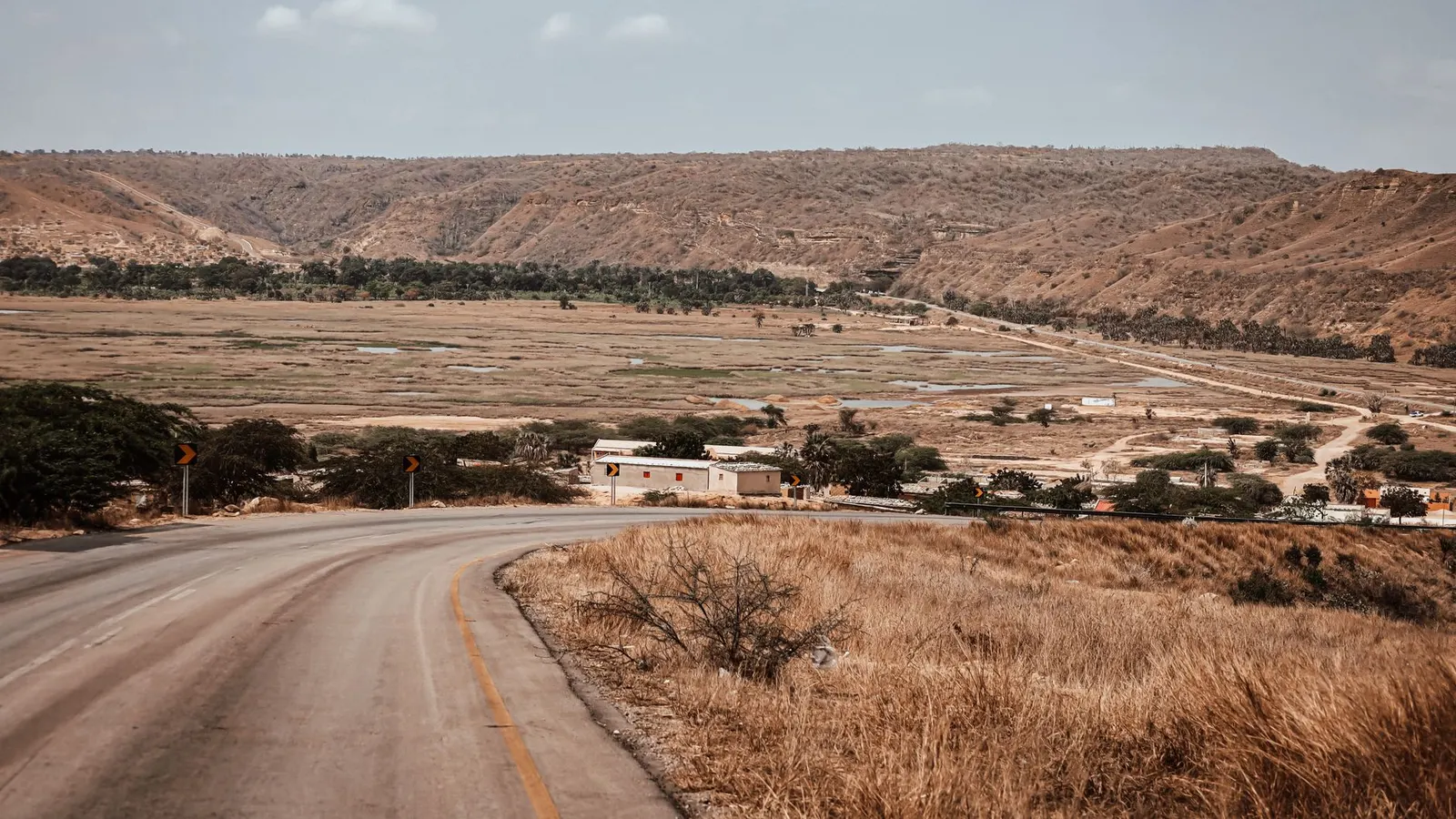
 TUBARONES PHOTOGRAPHY · Pexels License
Country Guide № 005 / 194 · Africa
Angola
Kalandula's falls, the Namibe desert and a country that just opened its doors.
“Kalandula's falls, the Namibe desert and a country that just opened its doors.”
Angola spent decades as one of the hardest countries in Africa to enter, then abolished visas for dozens of nationalities in 2023 and became one of the easiest. Almost nobody has noticed yet. Kalandula is among the largest waterfalls in Africa by volume and you may well have it to yourself; the Namibe desert in the southwest runs down to the Atlantic with welwitschia plants that live over a thousand years; and the Tundavala gap drops a kilometre off the escarpment near Lubango.
Luanda was for years ranked the most expensive city in the world for expatriates, an oil-boom distortion that has eased but not vanished. Outside the capital costs are normal. Portuguese is essential - English is rare - and the road network beyond the main corridors is poor. This is frontier travel in a country with real infrastructure gaps and correspondingly few other visitors.
Chapter 01
Highlights
Kalandula Falls
A 105-metre-wide horseshoe on the Lucala river in Malanje province, among the biggest waterfalls in Africa by volume, and typically visited by a handful of people at a time. Best in the wet season when the flow is enormous.
Tundavala Gap
The escarpment near Lubango drops around 1,000 metres in a single view over the plain below. Go early before the cloud builds; the road up passes the Cristo Rei statue.
Namibe and the welwitschia
Desert running to the Atlantic in the southwest, with the Arco lagoon, the Iona park dunes and welwitschia plants - two leaves, no trunk, over a thousand years old.
Luanda
The Fortress of São Miguel above the bay, the Marginal waterfront, the National Slavery Museum on the coast south of the city and Ilha do Cabo's restaurant strip.
Chapter 02
Entry requirements for Angola
Checking your passport…
up to 30 days · free entry
30 days on arrival
Official portal only
Paid look-alike sites charge for a process that is free or cheap on the government portal. Use the link below and nothing else.
www.smevisa.gov.ao →Before you fly
The detail
- Maximum stay
- up to 30 days
- Fee
- free entry
- Passport validity
- Most destinations want validity beyond your stay, and some want six months. Check yours against the return date.
- Onward travel
- Airlines may ask for a return or onward ticket at check-in.
- Health
- Yellow fever certificate is required for entry. Malaria year-round nationwide. Cholera outbreaks occur. Medical facilities are limited even in Luanda; evacuation insurance is essential.
- Money
- The kwanza has depreciated heavily and cash is dominant, though cards work in Luanda hotels and supermarkets. ATMs in cities dispense limited amounts. Bring euros or dollars as backup and change at a bank.
Angola asks a United States passport for no visa at all. The 2023 decree that abolished tourist visas for around a hundred nationalities covers it, the entry is granted at the border, and there is nothing to apply for, nothing to pay and nothing to print - which is worth saying plainly, because Angola was for decades one of the hardest visas in Africa to obtain and a great many sites still sell a service for it. Thirty days is the grant per entry and there is an annual ceiling of 90 days in a rolling year, which catches people who treat Luanda as a work commute rather than people on a holiday; longer or repeat stays go through the migration service's own portal. A yellow fever certificate is a condition of entry to Angola for every arriving traveller, not only for those coming from an affected country, and it is checked at the airline gate as often as at the border. The vaccine does not count until ten days after it is given, so this is the item to deal with first and not last; a certificate that is missing at check-in cannot be fixed at check-in, and at the border the choice is being vaccinated there at your own cost or being turned round. What immigration at Luanda does actually ask for, and asks for more often than most borders in this section, is the rest of the file: a passport valid six months, a return or onward ticket, an address for the whole stay and evidence that you can pay for it. Have them on the phone rather than in a bag in the hold. Kwanza cash matters once you are through - cards work in the better hotels in Luanda and almost nowhere else, and the informal exchange market is large enough to change the cost of a trip.
Check another destination with this passport →
Entry details: Editorial synthesis - Angolan Migration and Foreigners Service (SME) visa-waiver decree and portal terms (2025–2026) · compiled 18 Sept 2026
Who needs a visa for Angola
12 common passports| Passport | Requirement | Stay | Process |
|---|---|---|---|
| United States | Visa-free | up to 30 days | No process · €0 / $0 |
| United Kingdom | Visa-free | up to 30 days | No process · €0 / $0 |
| Germany | Visa-free | up to 30 days | No process · €0 / $0 |
| India | Visa-free | up to 30 days | No Other passports record yet |
| China | Visa-free | up to 30 days | No Other passports record yet |
| Brazil | Visa-free | up to 30 days | No Other passports record yet |
| Nigeria | Visa required | - | No Other passports record yet |
| Indonesia | Visa-free | up to 30 days | No Other passports record yet |
| Philippines | Visa required | - | No Other passports record yet |
| Vietnam | Visa required | - | No Other passports record yet |
| Egypt | Visa required | - | No Other passports record yet |
| Nepal | Visa required | - | No Other passports record yet |
Holding a passport that is not listed? The picker above answers for any of them. See where your passport takes you. Source: Passport Index, updated 14 Aug 2026.
Chapter 03
When to go
BestMay–Sep. AvoidNov–Feb.
Dry season opens - the best combination of conditions.
The band above each month is our editorial verdict - it weighs crowds, prices and access as well as weather. The line is average daily temperature, the bars are monthly rainfall. Select a month for the figures. Climate figures: ERA5 reanalysis via Open-Meteo, 2005–2024 normals.
Chapter 04
What it costs
A day in Angola
Comfortable · sample day
≈ $113
Line items are real prices we track. The daily budget is an editorial estimate for this level, not their sum.
Where this sits among 244 countries we have costed
Prices are driven by the Luanda business market rather than tourist seasons - weekday hotel rates in the capital exceed weekend ones.
Updated Sept 2026 · Editorial synthesis - market sampling and published tariffs (2025–2026) · confidence low
Excludes international flights - they depend on where you fly from.
Chapter 05
Regions to know
5Luanda and the coast
The capital, Ilha do Cabo, the Miradouro da Lua badlands south of the city and the Kissama national park.
Malanje
Kalandula Falls, the Pungo Andongo black rock monoliths and the Cangandala park's giant sable antelope.
Benguela and Lobito
The best beaches in the country, colonial-era architecture and the railway inland towards the Zambian border.
Huíla and Lubango
The southern plateau - Tundavala gap, Serra da Leba's hairpin pass and cooler highland weather.
Namibe and the southwest
Desert meeting the Atlantic, welwitschia plants, the Arco lagoon and the Iona dunes towards Namibia.
Chapter 06
Practical guide
Getting there
Luanda's new Dr António Agostinho Neto airport opened in 2024 and takes TAAG, TAP, Emirates, Ethiopian, Lufthansa, Air France and Brussels Airlines. Overland from Namibia at Oshikango/Santa Clara is straightforward and popular with self-drivers.
Getting around
TAAG covers the main cities. The Benguela railway from Lobito inland and the Luanda–Malanje line still carry passengers and are a genuinely good way to travel. Candongueiro minibuses do local transport. A 4x4 with clearance is needed for anything off the paved corridors.
Money & costs
The kwanza has depreciated heavily and cash is dominant, though cards work in Luanda hotels and supermarkets. ATMs in cities dispense limited amounts. Bring euros or dollars as backup and change at a bank.
Safety
Street crime in Luanda, particularly after dark and in the musseque districts, is the main risk. Police checkpoints are frequent and may seek informal payments. Landmine residue in remote former conflict areas - stay on established tracks. Photographing government or military buildings is prohibited.
Health
Yellow fever certificate is required for entry. Malaria year-round nationwide. Cholera outbreaks occur. Medical facilities are limited even in Luanda; evacuation insurance is essential.
SIM & internet
Unitel and Movicel; SIM registration needs a passport. 4G in Luanda and provincial capitals, sparse elsewhere. Data is relatively expensive.
Chapter 07
Driving
Luanda traffic is severe. Outside the main corridors, expect deep potholes and unmarked hazards; a 4x4 is not optional for the interior. Never drive at night outside cities, and never leave established tracks in former conflict zones.
Rules change - verify with an official source before you rent.
ExplWorld VerifiedNo verified partners here yet - all 6 country seats are open.
Become ExplWorld Verified →Chapter 08
Itineraries through this country
Chapter 09
From the Journal
Chapter 10
Before you go
AngolaChapter 11
Frequently asked questions
Do I need a visa?
Probably not. Since 2023 Angola has waived tourist visas for around 100 nationalities including all EU/EEA states, the UK, US, Canada and Australia, for stays up to 30 days. You still need a passport valid six months, a return ticket, proof of accommodation and evidence of funds - and these are checked at Luanda. Everyone else can use the official e-visa portal.
How expensive is Luanda really?
Hotel rooms in the capital run well above what the rest of the country charges, and imported goods are dear. The famous "most expensive city in the world" rankings measured an expatriate basket during the oil boom and overstate what a traveller pays today. Outside Luanda, Angola is priced like its neighbours.
How difficult is getting around?
The main north–south and Luanda–Malanje corridors are paved and fine. Beyond them roads deteriorate quickly and a 4x4 becomes necessary. Landmines from the civil war have been cleared along used routes but remain a reason never to walk off marked tracks in former conflict areas. TAAG flies domestically; three colonial-era rail lines still run passenger services.