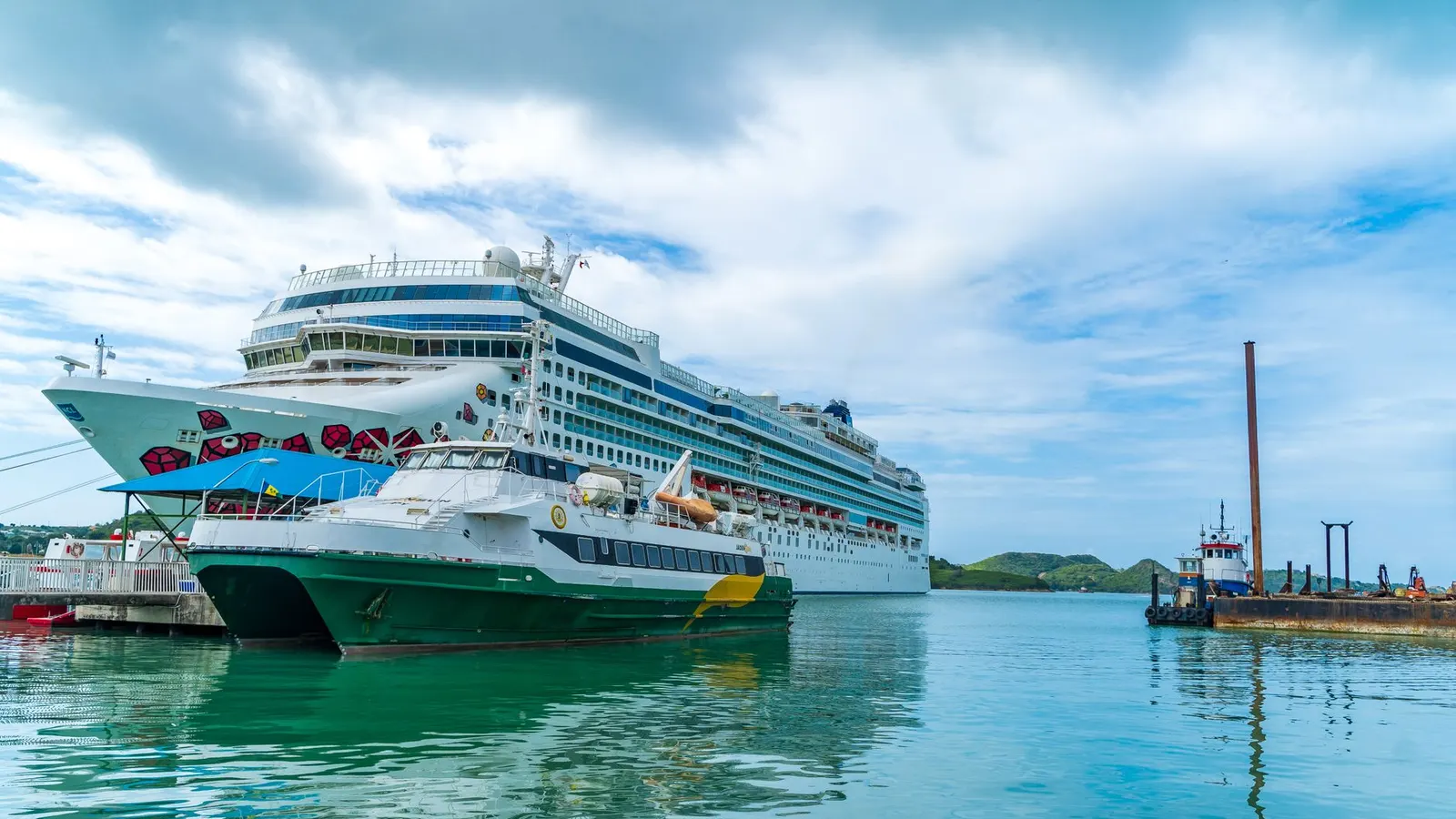
 Duren Williams · Pexels License
Country Guide № 006 / 194 · Caribbean
Antigua and Barbuda
A beach for every day of the year - and Nelson’s navy still in harbour.
“A beach for every day of the year - and Nelson’s navy still in harbour.”
Antigua sells itself on arithmetic - 365 beaches, one for every day - but the number undersells the variety: reef-locked coves on the Atlantic side, calm swimming bays in the west, and the best natural harbour in the eastern Caribbean at English Harbour, where Nelson’s Georgian dockyard still works as a marina. This is the sailing capital of the region, and it shows in the yacht crews, the rum bars and the Sunday drumming on Shirley Heights.
Cross the channel to Barbuda and the volume drops to almost nothing: a flat coral island with a 17-kilometre pink-sand beach, one of the world’s largest frigatebird colonies, and a few hundred residents rebuilding at their own pace. A week splits naturally - five days working through Antigua’s coasts and forts, a day or two of Barbuda’s emptiness.
Chapter 01
Highlights
Nelson’s Dockyard, English Harbour
The only continuously working Georgian dockyard in the world, UNESCO-listed and full of masts. Come for the museum, stay for sundowners on the quay.
Shirley Heights lookout
The classic Caribbean panorama - English and Falmouth Harbours 150 metres below. The Sunday barbecue with steel bands has run for four decades and earns the hype.
Barbuda’s pink-sand beach
Seventeen kilometres of blush-coloured sand with nobody on it, plus the Frigate Bird Sanctuary in Codrington Lagoon - thousands of birds inflating scarlet throats in season.
Devil’s Bridge and the wild east
A natural limestone arch where Atlantic swells detonate against the coast. Pair it with Half Moon Bay, the island’s most beautiful undeveloped beach.
Chapter 02
Entry requirements for Antigua and Barbuda
Checking your passport…
up to 180 days · free entry
180 days on arrival
Before you fly
The detail
- Maximum stay
- up to 180 days
- Fee
- free entry
- Passport validity
- Most destinations want validity beyond your stay, and some want six months. Check yours against the return date.
- Onward travel
- Airlines may ask for a return or onward ticket at check-in.
- Health
- No mandatory vaccinations from Europe. Dengue circulates, so bring repellent for dusk. Tap water is desalinated and generally fine, though most visitors drink bottled. Beware manchineel trees on beaches - sap and fruit are toxic; most are marked with red paint. The main hospital is in St John’s; serious cases are evacuated, so travel insurance is non-negotiable.
- Money
- The Eastern Caribbean dollar (XCD) is pegged at 2.70 to the US dollar, and US dollars are accepted almost everywhere - but change comes in EC and the street rate rounds against you. Cards work in restaurants, hotels and supermarkets; carry EC cash for buses, beach bars and Barbuda, where ATMs are scarce.
A United States passport needs no visa for Antigua and Barbuda, and the permission to land runs to six months - among the most generous first stamps in the region and twice what the neighbouring islands offer. The period recorded here is the maximum the law allows rather than the one you will be given: the officer writes a date in the passport, usually the date of your return flight, and it is that written date you must not overstay. Extensions beyond what you are given are applied for at the immigration department in St John’s, and the extension itself is capped at ninety days however long the original stamp was. Immigration here asks for more than a passport: an onward or return ticket, an address for every night you are booked, and, where the officer is not satisfied, some evidence that you can pay for the stay. Those questions come at the desk rather than at the gate, and the answer that gets people turned round is that they will work it out when they arrive. The islands promote an online arrival and departure form, ArriveAntigua, which produces a QR code within 72 hours of the flight and shortens the queue; at the time of writing it shortens the queue rather than permitting the journey, and the paper card is still handed out on the aircraft for anyone who has not used it - several neighbouring islands have made their own forms compulsory since 2024, so check the position when you book. Barbuda needs no separate formality - the ferry and the island hop are domestic. CARICOM is not a Schengen. It moves goods, capital and its own skilled nationals, and it creates no common visa, no common stamp and no common arrival form for visitors, so an island-hopping trip clears immigration from scratch every time it lands. The departure and security taxes these islands levy sit inside the air fare and are not an entry fee, but keep a little local cash back anyway for ferry departures and small-island counters, where they are still sometimes collected at a desk.
Check another destination with this passport →
Entry details: Editorial synthesis - Antigua and Barbuda Immigration Department entry and departure requirements, Antigua and Barbuda Tourism Authority arrival-form guidance (2025–2026) · compiled 18 Sept 2026
Who needs a visa for Antigua and Barbuda
12 common passports| Passport | Requirement | Stay | Process |
|---|---|---|---|
| United States | Visa-free | up to 180 days | No process · €0 / $0 |
| United Kingdom | Visa-free | up to 180 days | No process · €0 / $0 |
| Germany | Visa-free | up to 180 days | No process · €0 / $0 |
| India | e-Visa | - | No Other passports record yet |
| China | Visa-free | up to 30 days | No Other passports record yet |
| Brazil | Visa-free | up to 180 days | No Other passports record yet |
| Nigeria | e-Visa | - | No Other passports record yet |
| Indonesia | e-Visa | - | No Other passports record yet |
| Philippines | e-Visa | - | No Other passports record yet |
| Vietnam | e-Visa | - | No Other passports record yet |
| Egypt | e-Visa | - | No Other passports record yet |
| Nepal | e-Visa | - | No Other passports record yet |
Holding a passport that is not listed? The picker above answers for any of them. See where your passport takes you. Source: Passport Index, updated 14 Aug 2026.
Chapter 03
When to go
BestDec–Apr. AvoidSep–Oct.
Peak dry season - trade winds, low humidity, high prices.
The band above each month is our editorial verdict - it weighs crowds, prices and access as well as weather. The line is average daily temperature, the bars are monthly rainfall. Select a month for the figures. Climate figures: ERA5 reanalysis via Open-Meteo, 2005–2024 normals.
Chapter 04
What it costs
A day in Antigua and Barbuda
Comfortable · sample day
≈ $162
Line items are real prices we track. The daily budget is an editorial estimate for this level, not their sum.
Where this sits among 244 countries we have costed
High season (mid-December–April) pushes room rates 30–50 % above summer prices, peaking over Christmas–New Year and Sailing Week. June–November brings genuine discounts - 25–40 % off published rates - but September–October sees some hotels and restaurants close entirely. Food, transport and activity prices barely move with the seasons.
Updated Aug 2026 · Editorial synthesis - Budget Your Trip, hotel-rate surveys, Antigua tourism board price lists (2025–2026) · confidence medium
Excludes international flights - they depend on where you fly from.
Chapter 05
Regions to know
5St John’s & the northwest
The capital’s cathedral, market and cruise quays, plus the calm swimming beaches of Dickenson Bay and Runaway Bay a short hop north.
English Harbour & the south
Nelson’s Dockyard, Shirley Heights and the yachting scene - the island’s historic and social heart, ringed by Pigeon Point and Galleon Beach.
The Atlantic east
Devil’s Bridge, Long Bay’s reef-sheltered turquoise and Half Moon Bay’s wild crescent - emptier, windier, and the best light on the island.
The west coast
Jolly Harbour’s marina village and a run of leeward beaches - Ffryes, Darkwood, Turner’s - perfect for sunset swims on the drive back.
Barbuda
Flat, coral, nearly empty. Pink-sand beach, the Codrington Lagoon frigatebird colony and a pace that makes Antigua feel hurried.
Chapter 06
Practical guide
Getting there
V. C. Bird International (ANU) has year-round directs from London (British Airways, Virgin Atlantic) and the US East Coast, plus regional links across the Caribbean. From Central Europe count on one stop via London - 12–14 hours door to door. Antigua is also a major cruise and yacht hub; the Barbuda Express ferry (90 minutes) and short flights connect the two islands.
Getting around
Rent a car for at least a couple of days - the beaches you will remember are down unmarked lanes. Local minibuses cover the St John’s–English Harbour corridor cheaply but fade by evening and skip the east coast. Taxis run on fixed government rates rather than meters; agree the fare before you get in. Driving is on the left.
Money & costs
The Eastern Caribbean dollar (XCD) is pegged at 2.70 to the US dollar, and US dollars are accepted almost everywhere - but change comes in EC and the street rate rounds against you. Cards work in restaurants, hotels and supermarkets; carry EC cash for buses, beach bars and Barbuda, where ATMs are scarce.
Safety
Low-key by regional standards. Use hotel safes, do not leave anything visible in rental cars at trailheads or beaches, and treat St John’s cruise-port hustle as noise rather than threat. The sea deserves more respect than the streets: Atlantic-side currents are serious - swim leeward beaches unless you know the spot.
Health
No mandatory vaccinations from Europe. Dengue circulates, so bring repellent for dusk. Tap water is desalinated and generally fine, though most visitors drink bottled. Beware manchineel trees on beaches - sap and fruit are toxic; most are marked with red paint. The main hospital is in St John’s; serious cases are evacuated, so travel insurance is non-negotiable.
SIM & internet
Flow and Digicel both cover the island well; a tourist SIM with generous data costs €15–25, or land with an eSIM. 4G/LTE reaches every settled area on Antigua and most of Barbuda. Hotel wifi is standard if uneven; cafés around English Harbour cater to the yacht crowd and have the best connections.
Chapter 07
Driving
Limits are signed in mph locally (20 mph towns / 40 mph elsewhere). Roads are narrow, potholed and shared with goats - plan on a 40 km/h real average and avoid driving at night outside St John’s.
Rules change - verify with an official source before you rent.
ExplWorld VerifiedNo verified partners here yet - all 6 country seats are open.
Become ExplWorld Verified →Chapter 08
Itineraries through this country
Chapter 09
From the Journal
Chapter 10
Before you go
Antigua and BarbudaChapter 11
Frequently asked questions
Is Antigua and Barbuda safe?
One of the safer islands in the region - violent crime against visitors is rare. Petty theft from parked cars and beaches is the realistic risk: lock valuables away, avoid unlit lanes late at night in St John’s, and use licensed taxis after dark.
When is the best time to visit?
December to April is dry, breezy and glorious - with prices to match. Antigua Sailing Week (late April–early May) is a spectacle worth planning around. June to November is hurricane season; September and October are the months to skip.
How much does a day in Antigua cost?
Around €150 / $170 per day mid-range: this is a resort island with resort prices. €80–100 covers your half of a double, €35–45 food and drink, the rest transport and a boat trip. Determined budget travellers using local buses and cook-shops can hold €65–75.