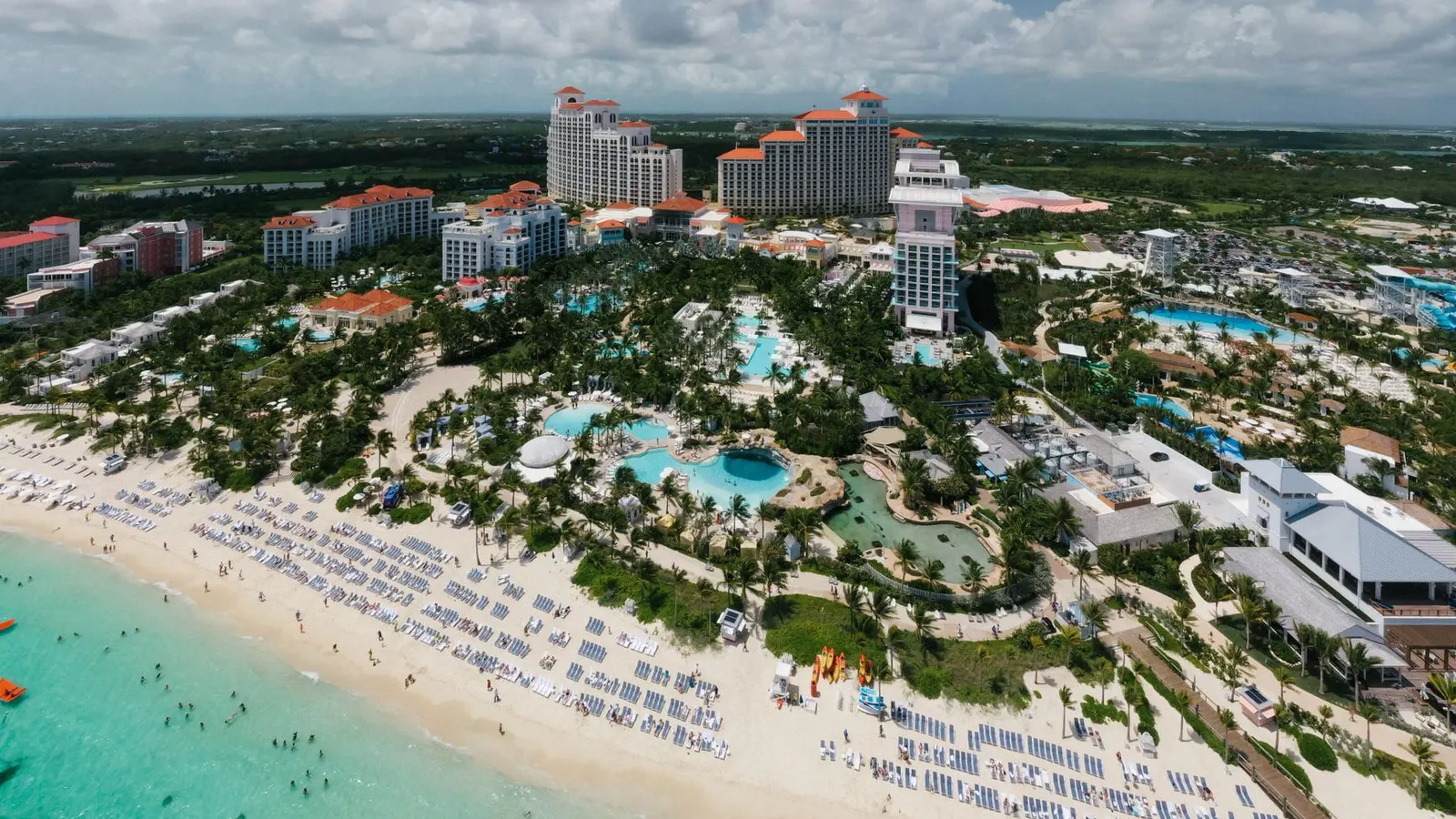
 Mikhail Nilov · Pexels License
Country Guide № 012 / 194 · Caribbean
Bahamas
Seven hundred islands, fifty shades of blue - and pigs that swim.
“Seven hundred islands, fifty shades of blue - and pigs that swim.”
The Bahamas is not an island, it is seven hundred of them, scattered across a shallow turquoise bank between Florida and Cuba. Most visitors see only Nassau and a cruise-ship beach - which is like judging a country by its airport. The real Bahamas starts where the crowds end: the Exuma cays’ gin-clear channels, Eleuthera’s pink sand and pineapple farms, Andros’ blue holes dropping through the third-largest barrier reef on earth.
Island-hopping takes intent - small planes and mail-boat ferries, not bridges - and the prices sting, pegged as everything is to the US dollar. But few places on the planet reward the effort with water like this: so clear that whole seascapes glow from the air, so shallow that sandbars appear and vanish with the tide.
Chapter 01
Highlights
The Exuma cays
Three hundred and sixty-five cays strung along the world’s clearest water - swimming pigs at Big Major Cay, nurse sharks at Compass Cay, Thunderball Grotto’s hidden dome.
Harbour Island’s pink sand
Five kilometres of genuinely pink beach on a golf-cart island of pastel loyalist cottages - the Caribbean’s most photogenic village, reached by fast ferry via Eleuthera.
Andros blue holes
The largest concentration of blue holes on the planet, inland and offshore, beside the third-largest barrier reef - bonefishing flats, dive walls and barely a tourist.
Junkanoo in Nassau
The Bahamas’ great street parade - goatskin drums, cowbells and cardboard-and-crepe artistry - storming Bay Street in the small hours of Boxing Day and New Year’s Day.
Chapter 02
Entry requirements for Bahamas
Checking your passport…
up to 240 days · free entry
240 days on arrival
Before you fly
The detail
- Maximum stay
- up to 240 days
- Fee
- free entry
- Passport validity
- Most destinations want validity beyond your stay, and some want six months. Check yours against the return date.
- Onward travel
- Airlines may ask for a return or onward ticket at check-in.
- Health
- No mandatory vaccinations. Nassau tap water is technically potable but most visitors drink bottled; on the Family Islands assume bottled or filtered. Dengue appears periodically - use repellent. Medical care is decent in Nassau and thin elsewhere; serious cases are flown to Florida, so insurance with evacuation cover is essential.
- Money
- The Bahamian dollar is pegged 1:1 to the US dollar and the two circulate interchangeably - you can pay in either everywhere. Cards are accepted almost universally on New Providence and Grand Bahama; carry cash for the Family Islands, where ATMs can be scarce or empty. Everything is imported and priced like it: budget honestly.
The Bahamas gives United States citizens one of the longest visitor allowances anywhere: no visa, and up to eight months as a bona fide visitor provided you can show you are able to support yourself for it. The period recorded here is the maximum the law allows rather than the one you will be given: the officer writes a date in the passport, usually the date of your return flight, and it is that written date you must not overstay. There is still no electronic arrival card for most travellers - the paper immigration and customs card is handed out on the aircraft, and the digital arrival card the tourism ministry began piloting in May 2026 was still limited to selected flights and ports through the summer, so assume the paper form and treat a digital one as a pleasant surprise. Immigration here asks for more than a passport: an onward or return ticket, an address for every night you are booked, and, where the officer is not satisfied, some evidence that you can pay for the stay. Those questions come at the desk rather than at the gate, and the answer that gets people turned round is that they will work it out when they arrive. Nassau is one of the handful of airports where departures to the United States clear American immigration before boarding, which means the trip home is a domestic arrival and the queue happens in the Bahamas instead. CARICOM is not a Schengen. It moves goods, capital and its own skilled nationals, and it creates no common visa, no common stamp and no common arrival form for visitors, so an island-hopping trip clears immigration from scratch every time it lands. The departure and security taxes these islands levy sit inside the air fare and are not an entry fee, but keep a little local cash back anyway for ferry departures and small-island counters, where they are still sometimes collected at a desk.
Check another destination with this passport →
Entry details: Editorial synthesis - Bahamas Department of Immigration entry requirements, Bahamas Ministry of Tourism digital arrival card announcements, United States preclearance arrangements (2025–2026) · compiled 18 Sept 2026
Who needs a visa for Bahamas
12 common passports| Passport | Requirement | Stay | Process |
|---|---|---|---|
| United States | Visa-free | up to 240 days | No process · €0 / $0 |
| United Kingdom | Visa-free | up to 240 days | No process · €0 / $0 |
| Germany | Visa-free | up to 90 days | No process · €0 / $0 |
| India | e-Visa | - | No Other passports record yet |
| China | Visa-free | up to 90 days | No Other passports record yet |
| Brazil | Visa-free | up to 90 days | No Other passports record yet |
| Nigeria | e-Visa | - | No Other passports record yet |
| Indonesia | e-Visa | - | No Other passports record yet |
| Philippines | e-Visa | - | No Other passports record yet |
| Vietnam | e-Visa | - | No Other passports record yet |
| Egypt | e-Visa | - | No Other passports record yet |
| Nepal | e-Visa | - | No Other passports record yet |
Holding a passport that is not listed? The picker above answers for any of them. See where your passport takes you. Source: Passport Index, updated 14 Aug 2026.
Chapter 03
When to go
BestDec–Apr. AvoidSep–Oct.
Dry and clear; occasional cool fronts reach the northern islands - the sea is briskest now.
The band above each month is our editorial verdict - it weighs crowds, prices and access as well as weather. The line is average daily temperature, the bars are monthly rainfall. Select a month for the figures. Climate figures: ERA5 reanalysis via Open-Meteo, 2005–2024 normals.
Chapter 04
What it costs
A day in Bahamas
Comfortable · sample day
≈ $173
Line items are real prices we track. The daily budget is an editorial estimate for this level, not their sum.
Where this sits among 244 countries we have costed
Winter high season (mid-December–April) lifts room rates 30–60 % over summer, with Christmas–New Year and US spring break the sharpest peaks. Hurricane-season months bring real discounts, but September–October closures on the Family Islands can make the cheap season a false economy. Food, fuel and inter-island transport barely discount at all.
Updated Aug 2026 · Editorial synthesis - Budget Your Trip, Bahamas hotel-rate surveys, ferry and airline published fares (2025–2026) · confidence medium
Excludes international flights - they depend on where you fly from.
Chapter 05
Regions to know
5New Providence & Nassau
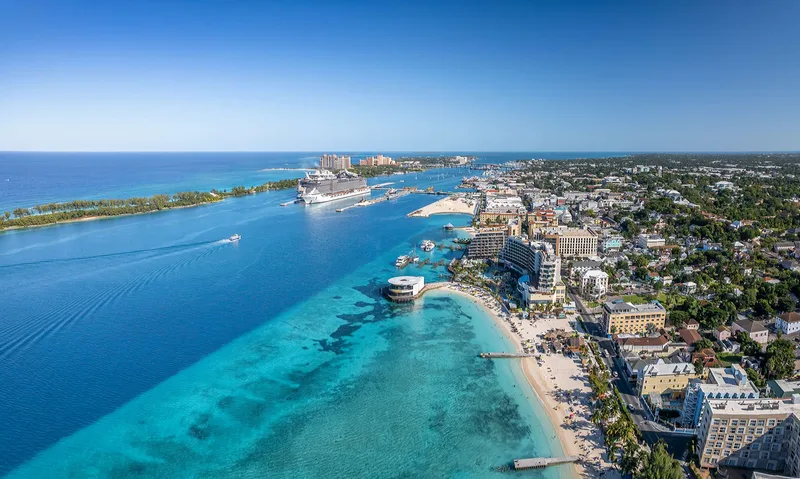
The capital’s colonial core, Fish Fry conch shacks at Arawak Cay, Junkanoo - plus Paradise Island’s mega-resort glitter across the bridge.
The Exumas
The archipelago’s showpiece water: 365 cays, swimming pigs, sandbars and Thunderball Grotto. Base in Georgetown or day-trip by fast boat from Nassau.
Eleuthera & Harbour Island
Pineapple farms, the Glass Window Bridge where Atlantic meets bank, and Harbour Island’s pink sand and pastel cottages at the northern tip.
Andros
The biggest and least-known island - blue holes, bonefishing flats and the third-largest barrier reef on earth. For divers and solitude-seekers.
The Abacos
The sailing Bahamas: Marsh Harbour, Hope Town’s candy-striped lighthouse and loyalist cays - rebuilt with spirit after Hurricane Dorian.
Chapter 06
Practical guide
Getting there
Nassau (NAS) is the hub: direct from London Heathrow (British Airways) and every major US East Coast gateway - Miami is 55 minutes. From Central Europe the fastest routings go via London or a US hub (US transit requires an ESTA). Nassau departures to the US clear American immigration in the Bahamas - preclearance shortens the trip home. Family Islands connect by Bahamasair and Western Air hops or fast ferries.
Getting around
Inter-island travel is by small plane (Nassau–Georgetown ~€100) or Bahamas Ferries; the mail boats are the slow, atmospheric budget option. On New Providence, jitney buses cost about a dollar; on the Family Islands you will want a rental car or golf cart. Driving is on the left - with mostly American left-hand-drive cars, a combination that demands attention.
Money & costs
The Bahamian dollar is pegged 1:1 to the US dollar and the two circulate interchangeably - you can pay in either everywhere. Cards are accepted almost universally on New Providence and Grand Bahama; carry cash for the Family Islands, where ATMs can be scarce or empty. Everything is imported and priced like it: budget honestly.
Safety
On the water is where judgement matters most: use licensed, life-jacketed operators for boat trips, respect current warnings at ocean-side beaches, and treat jet-ski rentals in Nassau with particular care. On land, standard city precautions in Nassau after dark; the out islands run on unlocked doors.
Health
No mandatory vaccinations. Nassau tap water is technically potable but most visitors drink bottled; on the Family Islands assume bottled or filtered. Dengue appears periodically - use repellent. Medical care is decent in Nassau and thin elsewhere; serious cases are flown to Florida, so insurance with evacuation cover is essential.
SIM & internet
BTC and Aliv both run LTE across the populated islands; tourist SIMs and eSIM packages are easy and reasonably priced by local standards (€20–30 for ample data). Coverage holds on the main Exuma and Eleuthera settlements but drops fast on remote cays - download charts and maps offline before a boat day.
Chapter 07
Driving
Drive on the left in mostly left-hand-drive American cars - overtake with extreme care. Speed limits are posted in mph. Family Island roads are narrow, unlit and shared with golf carts.
Rules change - verify with an official source before you rent.
ExplWorld VerifiedNo verified partners here yet - all 6 country seats are open.
Become ExplWorld Verified →Chapter 08
Itineraries through this country
Chapter 09
From the Journal
Chapter 10
Before you go
BahamasChapter 11
Frequently asked questions
Is the Bahamas safe?
The Family Islands (Exumas, Eleuthera, Andros, Abacos) are extremely safe. Nassau needs city sense: crime statistics are driven by neighbourhoods visitors have no reason to enter. Stick to lit, populated areas at night, use licensed taxis, and vet jet-ski and boat operators before handing over money.
When is the best time to visit?
Mid-December to April: dry, sunny, 24–28 °C, with the sea at its clearest. January can bring cool fronts to the northern islands - pack a light layer. June to November is hurricane season, peaking August–October, when some Family Island lodges close outright.
How much does a day in the Bahamas cost?
Around €160 / $185 per day mid-range - one of the Caribbean’s priciest countries, with the dollar peg and imported everything. €90–110 covers your half of a double, €40–50 food, the rest transport. Self-catering guesthouses on Eleuthera or Andros can pull a careful day down to €80–90.