 Anil Sharma · Pexels License
Country Guide № 020 / 194 · Asia
Bhutan
The country that charges you to visit, and is better for it.
“The country that charges you to visit, and is better for it.”
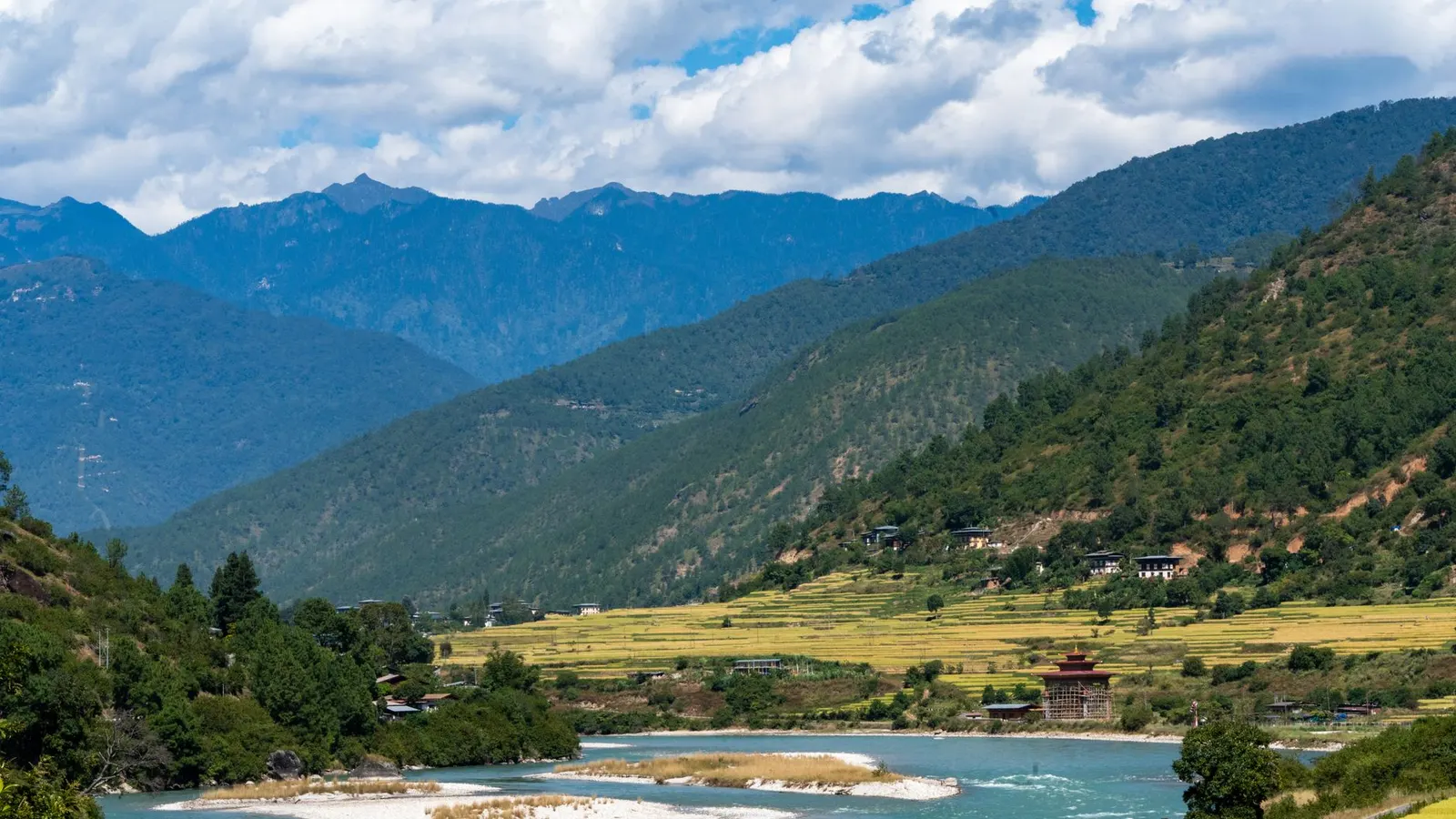
Bhutan is the one country that has made a policy of limiting its own tourism. Every visitor pays a Sustainable Development Fee for each night in the country - US$100 at the current rate - on top of all their actual costs. The result is a place where the trails are empty, the dzongs are working monasteries rather than museums, and the architecture code means every new building still looks like the old ones.
What you get for the money is genuine: forested valleys under 7,000-metre peaks, a monarchy that measures Gross National Happiness and means it, and a Buddhist culture that was never interrupted. What you do not get is spontaneity or budget travel. Plan on roughly €230–280 a day all in, and treat the fee as the price of the country staying the way it is.
Chapter 01
Highlights
Tiger's Nest (Paro Taktsang)
A monastery clinging to a cliff 900 metres above the Paro valley, reached by a two- to three-hour climb. The image of Bhutan, and worth the walk even knowing that.
Punakha Dzong
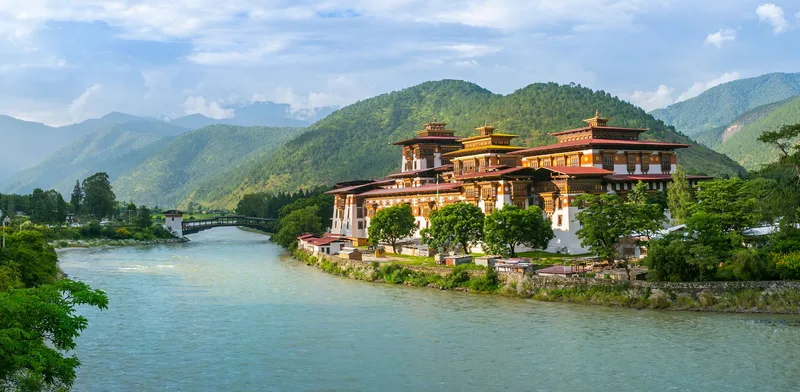
The most beautiful fortress-monastery in the country, at the confluence of two rivers, with jacarandas in spring. Still the winter seat of the central monastic body.
The Phobjikha valley
A glacial valley where black-necked cranes winter from late October to February, with no overhead power lines because they were buried to protect the birds.
The Druk Path trek
Five or six days between Paro and Thimphu over 4,000-metre passes and alpine lakes - the most accessible of Bhutan's treks and no less remote for it.
Chapter 02
Entry requirements for Bhutan
Checking your passport…
up to 30 days · €37 / $40 · e-visa
30 days on arrival
Official portal only
Paid look-alike sites charge for a process that is free or cheap on the government portal. Use the link below and nothing else.
bhutan.travel →Before you fly
The detail
- Maximum stay
- up to 30 days
- Process
- e-visa
- Fee
- €37 / $40
- Processing time
- Processing takes 5–7 days - apply with room to spare.
- Passport validity
- Most destinations want validity beyond your stay, and some want six months. Check yours against the return date.
- Onward travel
- Airlines may ask for a return or onward ticket at check-in.
- Arrival form
- Visa clearance letter issued by your tour operator via the Department of Immigration, plus proof of SDF payment.
- Health
- No vaccinations required; hepatitis A, typhoid and tetanus are standard advice, rabies for trekkers. Altitude illness matters on any trekking itinerary and on the higher passes. Medical facilities are basic outside Thimphu, and evacuation means a flight to Bangkok or Delhi - insurance with evacuation cover is essential. Tap water is not drinkable.
- Money
- The ngultrum is pegged to the Indian rupee and Indian rupees circulate. Cash is normal; cards work at larger hotels and handicraft shops in Thimphu and Paro. ATMs exist in the main towns and do not always accept foreign cards - bring cash for the trip and change it locally. Most of your costs are prepaid through the operator, so day-to-day spending is small.
A United States passport needs a visa for Bhutan, applied for online before travelling - but the visa is the small number on this page and it is important not to read it as the cost of the trip. The visa itself is US$40 per person, non-refundable, applied for through a licensed Bhutanese tour operator or on the official portal. The Sustainable Development Fee is the real price: US$100 per adult per night for every night of the stay, paid in advance, with children aged six to twelve at half and under-sixes free. A fortnight for two adults is US$2,800 in fee alone, before a flight, a bed or a meal - that is the number to plan around, and the stored fee above is the visa only. The fee came down from US$200 to US$100 in September 2023 to revive arrivals and has been extended since; it is a policy decision rather than a fixed rate, so confirm the figure in force for your dates rather than the figure you read somewhere. Approval takes about five working days once the fee is settled, and the visa is issued for the exact dates booked, which means the itinerary is fixed before you fly and changing it means going back through the operator. The passport should be valid six months. Paro is the only international airport and is served by Drukair and Bhutan Airlines from Delhi, Kathmandu, Bangkok and Singapore - the approach through the valley is flown by a small number of certified pilots and is part of the trip. Overland entry from India at Phuentsholing is possible and is arranged by your operator, not at the gate. Apply on the official Bhutanese portal or through a licensed operator and nowhere else: the commercial sites that sell "Bhutan visa services" add a fee to a process that already has one.
Check another destination with this passport →
Entry details: Editorial synthesis - Bhutan Department of Tourism visa and Sustainable Development Fee policy, official visa portal (2025–2026) · compiled 18 Sept 2026
Who needs a visa for Bhutan
12 common passports| Passport | Requirement | Stay | Process |
|---|---|---|---|
| United States | e-Visa | - | e-Visa · €37 / $40 · 5–7 d |
| United Kingdom | e-Visa | - | e-Visa · €37 / $40 · 5–7 d |
| Germany | e-Visa | - | e-Visa · €37 / $40 · 5–7 d |
| India | Visa-free | up to 14 days | e-Visa · €37 / $40 · 5–7 d |
| China | e-Visa | - | e-Visa · €37 / $40 · 5–7 d |
| Brazil | e-Visa | - | e-Visa · €37 / $40 · 5–7 d |
| Nigeria | e-Visa | - | e-Visa · €37 / $40 · 5–7 d |
| Indonesia | e-Visa | - | e-Visa · €37 / $40 · 5–7 d |
| Philippines | e-Visa | - | e-Visa · €37 / $40 · 5–7 d |
| Vietnam | e-Visa | - | e-Visa · €37 / $40 · 5–7 d |
| Egypt | e-Visa | - | e-Visa · €37 / $40 · 5–7 d |
| Nepal | e-Visa | - | e-Visa · €37 / $40 · 5–7 d |
Holding a passport that is not listed? The picker above answers for any of them. See where your passport takes you. Source: Passport Index, updated 14 Aug 2026.
Chapter 03
When to go
BestMar–Apr, Oct–Nov. AvoidJun–Aug.
Spring - rhododendrons, clear skies, Paro Tshechu.
The band above each month is our editorial verdict - it weighs crowds, prices and access as well as weather. The line is average daily temperature, the bars are monthly rainfall. Select a month for the figures. Climate figures: ERA5 reanalysis via Open-Meteo, 2005–2024 normals.
Chapter 04
What it costs
A day in Bhutan
Comfortable · sample day
≈ $270
Line items are real prices we track. The daily budget is an editorial estimate for this level, not their sum.
Where this sits among 244 countries we have costed
The Sustainable Development Fee is fixed year-round and dominates the budget - seasonality only moves hotel and flight prices around it. Spring and autumn festival weeks fill the better hotels in Paro and Thimphu and lift Drukair fares. There is no low-season discount on the fee itself, which is the point of it.
Updated Aug 2026 · Editorial synthesis - Department of Tourism SDF schedule, licensed operator quotations, Drukair fares (2025–2026) · confidence high
Excludes international flights - they depend on where you fly from.
Chapter 05
Regions to know
5Paro valley
The airport valley - Tiger's Nest, the National Museum in a watchtower and the country's biggest spring festival.
Thimphu
The capital with no traffic lights: the weekend market, the giant Buddha Dordenma and the textile academy.
Punakha & Wangdue
Lower, warmer valleys with the country's finest dzong and river rafting between the rice terraces.
Phobjikha & Trongsa
The crane valley and the ancestral dzong of the royal family, on the road east over the Pele La.
Bumthang & the east
Four valleys of ancient temples and the heartland of Bhutanese Buddhism, plus the rarely visited far east.
Chapter 06
Practical guide
Getting there
Paro (PBH) is the only international airport, served by Drukair and Bhutan Airlines from Delhi, Kathmandu, Bangkok, Singapore and a few Indian cities. The approach through the valley is flown by a small number of certified pilots and is spectacular. Overland entry from India at Phuentsholing is possible and must be arranged through your operator.
Entry formalities
Visa clearance letter issued by your tour operator via the Department of Immigration, plus proof of SDF payment.
Getting around
Your operator provides a vehicle and driver - that is the model, and there is no meaningful public alternative for visitors. Roads are winding and slow: Paro to Bumthang is 260 km and a full day. Domestic flights link Paro with Bumthang and Gelephu and save a great deal of driving in the east.
Money & costs
The ngultrum is pegged to the Indian rupee and Indian rupees circulate. Cash is normal; cards work at larger hotels and handicraft shops in Thimphu and Paro. ATMs exist in the main towns and do not always accept foreign cards - bring cash for the trip and change it locally. Most of your costs are prepaid through the operator, so day-to-day spending is small.
Safety
One of the safest countries anywhere - crime against visitors is close to nonexistent. The genuine risks are mountain roads, altitude on treks, and the weather. Smoking is heavily restricted and tobacco sales were long prohibited; import limits apply and duty is charged. Drug offences are treated seriously.
Health
No vaccinations required; hepatitis A, typhoid and tetanus are standard advice, rabies for trekkers. Altitude illness matters on any trekking itinerary and on the higher passes. Medical facilities are basic outside Thimphu, and evacuation means a flight to Bangkok or Delhi - insurance with evacuation cover is essential. Tap water is not drinkable.
SIM & internet
Tourist SIMs from Bhutan Telecom and TashiCell are cheap and easy; coverage follows the valleys and roads and disappears on treks. Hotel wifi is standard in the west, patchier in the east. Your guide handles most logistics, which reduces how much you need it.
Chapter 07
Driving
Mountain roads are narrow, frequently under repair and slow - average speeds of 30 km/h are normal. Distances that look short on a map take hours, which is worth knowing when your operator proposes an itinerary.
Rules change - verify with an official source before you rent.
ExplWorld VerifiedNo verified partners here yet - all 6 country seats are open.
Become ExplWorld Verified →Chapter 08
Itineraries through this country
Chapter 09
From the Journal
Chapter 10
Before you go
BhutanChapter 11
Frequently asked questions
What does the daily fee actually cover?
Nothing tangible - it is a Sustainable Development Fee of US$100 per adult per night paid to the government, and it is separate from your hotel, guide, transport and food. Children aged 6–12 pay half and under-sixes are exempt. The fee funds healthcare, education and conservation. Together with actual travel costs, a realistic all-in figure is €230–280 per person per day.
Do I have to travel with a guide?
Effectively yes. Visitors must book through a licensed Bhutanese tour operator, who arranges the visa, and a guide accompanies you for most itineraries. Independent wandering is not the model here. Indian, Bangladeshi and Maldivian nationals travel under different rules.
Is there a cheaper way to see it?
Not really, and that is deliberate. The fee was reduced from US$200 to US$100 in 2023 to revive visitor numbers, and discounted long-stay arrangements appear periodically. Beyond timing your visit to a shoulder month and choosing simpler hotels, the cost floor is set by policy rather than by market.