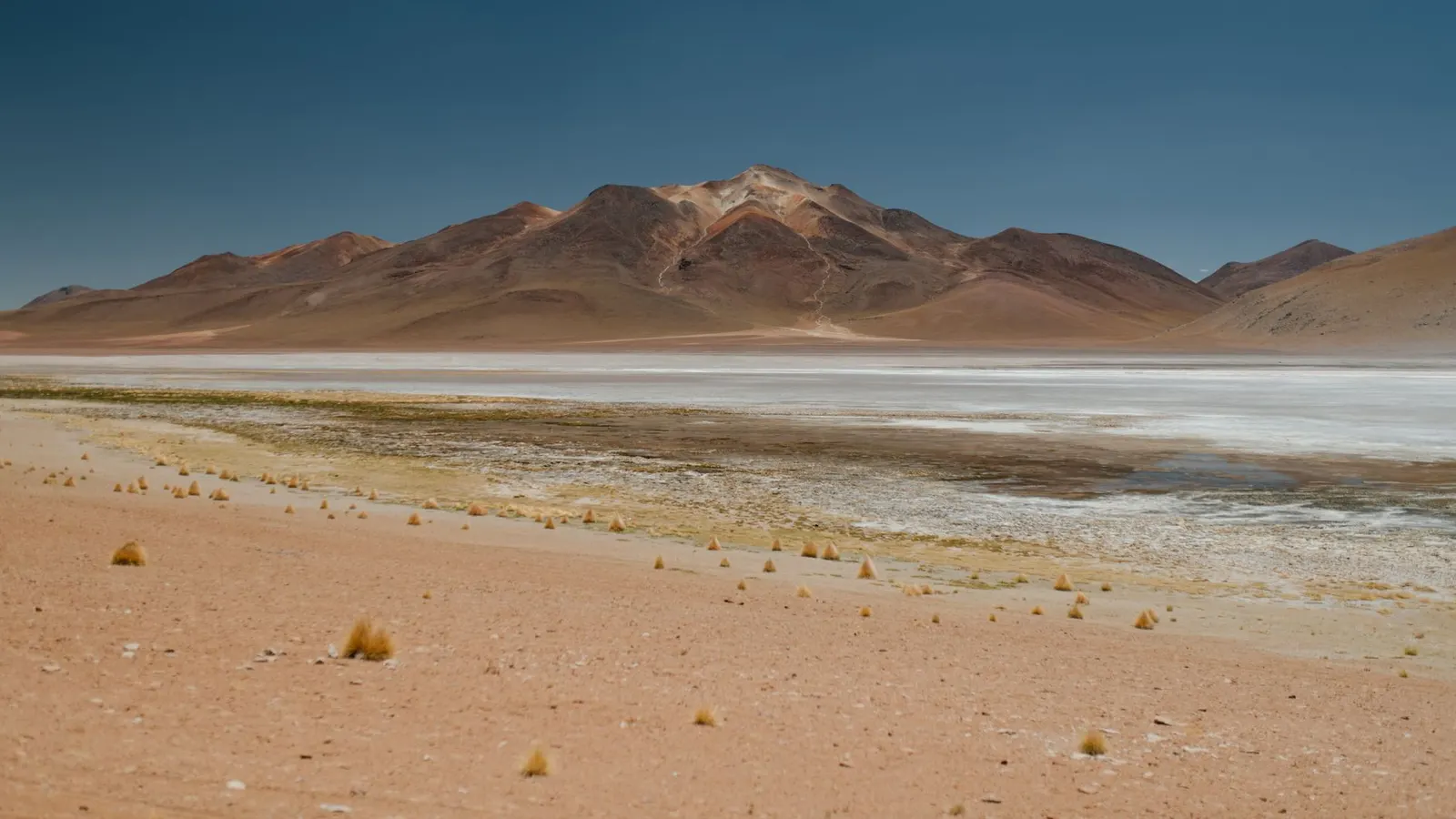
 Julia Volk · Pexels License
Country Guide № 021 / 194 · South America
Bolivia
The high, raw heart of South America - salt to the horizon, cities in the sky.
“The high, raw heart of South America - salt to the horizon, cities in the sky.”
Bolivia is the South America that other countries have smoothed away: cholitas wrestling in El Alto, witches' markets selling llama foetuses, a cable-car network doing the work of a metro above a city built in a canyon at 3,600 m. It is chaotic, high, cold at night and frequently magnificent - and it remains the cheapest country on the continent by a clear margin.
The set piece is the Salar de Uyuni, 10,000 square kilometres of salt that turns into the world's largest mirror after rain, but the deep cut is everything around it: flamingo-filled lagoons at 4,500 m in Sud Lípez, the silver mountain of Potosí, whitewashed Sucre, and Amazon lowlands a short flight from the Altiplano. Acclimatise slowly - most arrivals land at altitude.
Chapter 01
Highlights
Salar de Uyuni
The world's largest salt flat - blinding white hexagons in the dry season, an infinite sky-mirror after summer rain. The classic 3-day 4x4 loop adds coloured lagoons and flamingos.
La Paz & El Alto
A city poured into a canyon below 6,000-metre Illimani, stitched together by the Mi Teleférico cable cars - ride the red line at dusk and watch the bowl light up.
Isla del Sol, Lake Titicaca
Inca terraces, no cars, and the bluest lake light in the Andes. Walk the island ridge from north to south and sleep in a guesthouse above Copacabana's bay.
Sud Lípez lagoons
Laguna Colorada's red water, Laguna Verde under Licancabur volcano, geysers at dawn at 4,900 m - the far southwest is the most otherworldly landscape on the continent.
Chapter 02
Entry requirements for Bolivia
Checking your passport…
up to 90 days · free entry
90 days on arrival
Before you fly
The detail
- Maximum stay
- up to 90 days
- Fee
- free entry
- Passport validity
- Most destinations want validity beyond your stay, and some want six months. Check yours against the return date.
- Onward travel
- Airlines may ask for a return or onward ticket at check-in.
- Health
- Altitude is the big one: La Paz (3,600–4,100 m), Uyuni (3,660 m) and Potosí (4,090 m) all deserve a slow first 48 hours - hydrate, skip alcohol, consider arriving via lower Sucre (2,810 m). Coca tea helps; soroche pills are sold everywhere. Yellow fever vaccination is recommended (and may be asked for) if heading to the Amazon lowlands. Drink bottled or treated water throughout. Medical care is basic outside La Paz and Santa Cruz - insurance with evacuation cover matters here.
- Money
- Cash country. Cards work in better hotels and tour agencies (often with a 3–5 % surcharge), but markets, buses and most guesthouses want bolivianos. ATMs are reliable in cities and scarce elsewhere - stock up before Uyuni and the Salar loop. Note there has been a street premium on physical dollars/euros in recent years; rates move, so check on arrival. Haggling is expected in markets, gentle elsewhere.
What changed
A United States passport enters Bolivia visa-free for up to 90 days a year, with nothing to arrange before flying. That is a reversal rather than a long-standing position, so give it one check before you book: Bolivia charged American visitors a US$160 reciprocity visa for most of the past two decades and the figure is still quoted almost everywhere, which means a stale search result and a current rule look identical. Ask the nearest Bolivian consulate. The reassuring part is where that visa was always bought - at the airport counter, not at an embassy - so if it has come back since this was written you pay on arrival rather than being turned away at check-in: carry US$160 in clean cash, a passport photograph, a hotel booking, an onward ticket and a bank statement, and the worst case costs you money and an hour rather than the trip. The second trap is separate and quite reliable: the 90 days is an annual entitlement, but officers routinely stamp only 30. Extending to 60 and then to 90 is free at any Migración office - La Paz, Sucre, Santa Cruz, Uyuni - and it must be done before the current stamp expires, not after. Give the passport six months. A yellow fever certificate is recommended generally and checked in practice when travelling on to the Amazon lowlands.
Check another destination with this passport →
Entry details: Editorial synthesis - Dirección General de Migración Bolivia, Bolivian consular visa-group guidance, foreign-ministry entry advice (2025–2026) · compiled 18 Sept 2026
Who needs a visa for Bolivia
12 common passports| Passport | Requirement | Stay | Process |
|---|---|---|---|
| United States | Visa-free | up to 90 days | No process · €0 / $0 |
| United Kingdom | Visa-free | up to 90 days | No process · €0 / $0 |
| Germany | Visa-free | up to 90 days | No process · €0 / $0 |
| India | e-Visa | - | No Other passports record yet |
| China | e-Visa | - | No Other passports record yet |
| Brazil | Visa-free | up to 90 days | No Other passports record yet |
| Nigeria | e-Visa | - | No Other passports record yet |
| Indonesia | e-Visa | - | No Other passports record yet |
| Philippines | Visa-free | up to 90 days | No Other passports record yet |
| Vietnam | e-Visa | - | No Other passports record yet |
| Egypt | e-Visa | - | No Other passports record yet |
| Nepal | e-Visa | - | No Other passports record yet |
Holding a passport that is not listed? The picker above answers for any of them. See where your passport takes you. Source: Passport Index, updated 15 Aug 2026.
Chapter 03
When to go
BestMay–Oct.
Dry season begins: clear skies, firm salt, cold nights start.
The band above each month is our editorial verdict - it weighs crowds, prices and access as well as weather. The line is average daily temperature, the bars are monthly rainfall. Select a month for the figures. Climate figures: ERA5 reanalysis via Open-Meteo, 2005–2024 normals.
Chapter 04
What it costs
A day in Bolivia
Comfortable · sample day
≈ $49
Line items are real prices we track. The daily budget is an editorial estimate for this level, not their sum.
Where this sits among 244 countries we have costed
Prices barely move seasonally - the swing is in tour availability: Uyuni jeeps and Copacabana beds tighten in the July–August dry-season peak and around Bolivian holidays, when shared-tour seats cost a few euros more. The wet season brings discounts but also cancelled pampas tours when rivers flood. Cash payment often earns a 5–10 % discount on tours; card payments add a surcharge instead.
Updated Aug 2026 · Editorial synthesis - Budget Your Trip, published tour/bus fares, backpacker cost guides (2025–2026) · confidence medium
Excludes international flights - they depend on where you fly from.
Chapter 05
Regions to know
5La Paz & the Altiplano
The canyon capital, El Alto's Thursday market, Valle de la Luna and day trips to Tiwanaku - all above 3,600 m, all breathless in both senses.
Salar de Uyuni & Sud Lípez
Salt to the horizon, then three days of coloured lagoons, flamingos and geysers en route to the Chilean border at 4,500 m.
Lake Titicaca
Copacabana's basilica and trout lunches, then the car-free ridge walk of Isla del Sol - Inca terraces above the highest large lake on Earth.
Sucre & Potosí
Whitewashed constitutional capital with the country's mildest climate, and the silver mountain that bankrolled an empire - sobering mine tours optional.
Amazon lowlands
Fly (don't bus) to Rurrenabaque for Madidi jungle lodges and pampas wildlife safaris - capybaras, caimans and pink river dolphins.
Chapter 06
Practical guide
Getting there
No direct flights from Europe - connect via Madrid–Santa Cruz (Viru Viru, the main gateway), or via Lima, Bogotá or São Paulo to La Paz. Overland entries are classic routes: from Peru via Copacabana (Titicaca), from Chile via the Uyuni–San Pedro de Atacama jeep crossing, from Argentina at La Quiaca–Villazón. La Paz airport sits at 4,060 m - landing there is the hardest possible start for acclimatisation.
Getting around
Buses do the heavy lifting: overnight full-cama services link La Paz, Uyuni, Sucre and Potosí cheaply, with quality ranging from excellent to prayer-based - pay the extra €5 for the reputable companies. Domestic flights (BoA, EcoJet) cost €40–60 and save brutal road days, especially to the Amazon (Rurrenabaque). In La Paz, the Mi Teleférico cable-car network is transport and sightseeing in one.
Money & costs
Cash country. Cards work in better hotels and tour agencies (often with a 3–5 % surcharge), but markets, buses and most guesthouses want bolivianos. ATMs are reliable in cities and scarce elsewhere - stock up before Uyuni and the Salar loop. Note there has been a street premium on physical dollars/euros in recent years; rates move, so check on arrival. Haggling is expected in markets, gentle elsewhere.
Safety
Use registered radio taxis or apps in La Paz - express-kidnapping scams involving fake taxis and fake police have targeted tourists; a real officer will never demand to search your money on the street. Keep valuables off overhead racks on night buses. Bloqueos (road blockades) are political weather: check local news before long bus days. The Yungas "Death Road" is now a bike attraction with proper operators - choose one with maintained brakes.
Health
Altitude is the big one: La Paz (3,600–4,100 m), Uyuni (3,660 m) and Potosí (4,090 m) all deserve a slow first 48 hours - hydrate, skip alcohol, consider arriving via lower Sucre (2,810 m). Coca tea helps; soroche pills are sold everywhere. Yellow fever vaccination is recommended (and may be asked for) if heading to the Amazon lowlands. Drink bottled or treated water throughout. Medical care is basic outside La Paz and Santa Cruz - insurance with evacuation cover matters here.
SIM & internet
Entel has the widest coverage, Tigo is a solid second; a tourist SIM with data costs a few euros with a passport at official stores. 4G covers cities and towns; the Salar, Sud Lípez and Amazon lodges are offline for days - tell people. Wifi exists in most hostels but treat it as optional. Download maps and translation files before the jeep leaves Uyuni.
Chapter 07
Driving
Self-driving is for the experienced: unpaved altiplano routes, minimal signage, fuel stations that may refuse or surcharge foreign-plated cars, and altitude that saps engines and drivers alike. Most travellers are better served by buses, flights and tour 4x4s.
Rules change - verify with an official source before you rent.
ExplWorld VerifiedNo verified partners here yet - all 6 country seats are open.
Become ExplWorld Verified →Chapter 08
Itineraries through this country
Chapter 09
From the Journal
Chapter 10
Before you go
BoliviaChapter 11
Frequently asked questions
Is Bolivia safe for travellers?
Petty theft is the main issue - watch bags at bus terminals and on night buses, and use radio taxis or apps in La Paz rather than street hails. Road blockades (bloqueos) during protests can strand you for a day; build slack into the itinerary. Violent crime against tourists is uncommon.
When is the best time to visit?
May to October, the Andean dry season - clear skies, passable roads and the salt flat in its white polygon state. December to March brings rain, mud and the famous Uyuni mirror effect; it is a genuine trade-off, not a wrong answer.
How much does a day in Bolivia cost?
Bolivia is South America's cheapest country: €45 per day covers a comfortable trip with private rooms and tours, backpackers get by on €22–25, and a set almuerzo still costs around €2. The 3-day Uyuni jeep tour (~€130 shared) is the single biggest line item for most visitors.