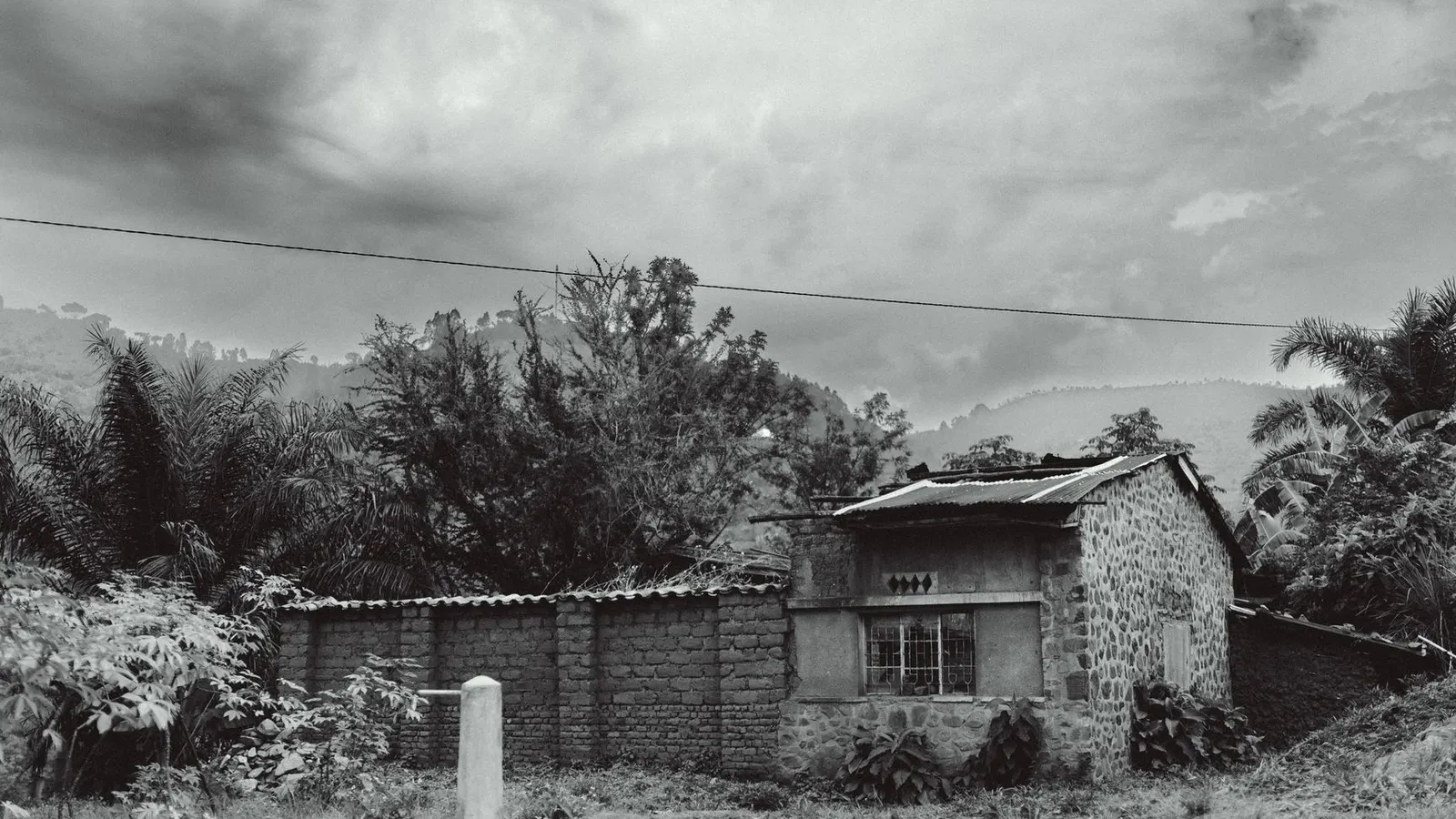
 Edouard MIHIGO · Pexels License
Country Guide № 028 / 194 · Africa
Burundi
Lake Tanganyika beaches, tea hills and the drummers of Gishora.
“Lake Tanganyika beaches, tea hills and the drummers of Gishora.”
Burundi is small, hilly, densely populated and almost never visited. Bujumbura sits on the northern tip of Lake Tanganyika - the second-deepest lake in the world - with genuine sandy beaches, hippos offshore and mountains rising immediately behind. The royal drummers of Gishora perform a tradition inscribed on UNESCO's intangible heritage list, and the tea hills around Teza and Rwegura are as green as anything in East Africa.
The country has been through mass violence - the 1972 and 1993 killings, a civil war that ended in 2005, and a political crisis in 2015 that displaced hundreds of thousands. It is calmer now and a small amount of travel has resumed, but infrastructure is minimal, advisories still apply in the western border areas, and the economy is among the poorest in the world. Come with French, patience and low expectations of tourism infrastructure.
Chapter 01
Highlights
Lake Tanganyika
Sandy beaches at Saga and Karera south of Bujumbura, warm clear freshwater, hippos and crocodiles further out, and sunsets over the Congolese mountains on the far shore.
The Gishora drummers
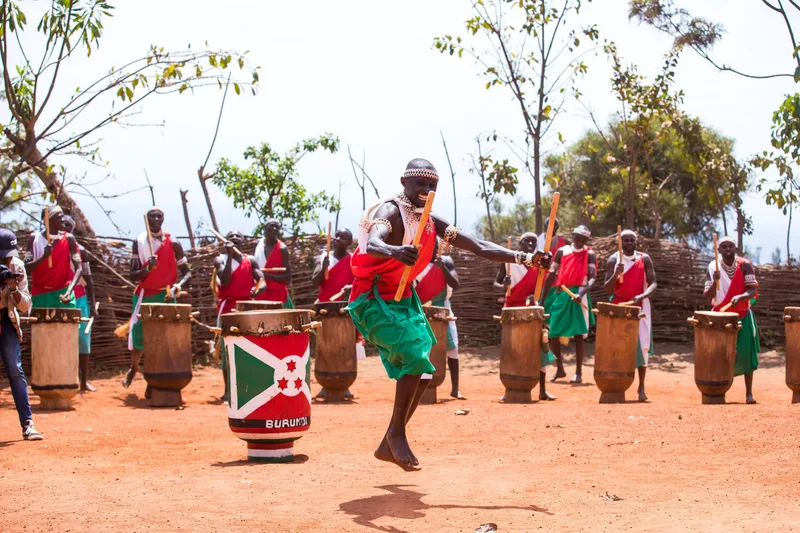
The ritual drumming of Burundi, on UNESCO's intangible heritage list, performed at the Gishora sanctuary near Gitega on drums that were historically tied to royal power.
Kibira National Park
Montane rainforest along the Congo-Nile divide, contiguous with Rwanda's Nyungwe, holding chimpanzees and primates in the country's largest remaining forest.
The southernmost source of the Nile
A pyramid marker at Rutovu above Bujumbura claims the Nile's southernmost headwater - one of several competing claims, and worth the drive for the hills more than the monument.
Chapter 02
Entry requirements for Burundi
Checking your passport…
up to 30 days · €85 / $92 · e-visa
30 days on arrival
Official portal only
Paid look-alike sites charge for a process that is free or cheap on the government portal. Use the link below and nothing else.
migration.gov.bi →Before you fly
The detail
- Maximum stay
- up to 30 days
- Process
- e-visa
- Fee
- €85 / $92
- Processing time
- Processing takes 3–15 days - apply with room to spare.
- Passport validity
- Most destinations want validity beyond your stay, and some want six months. Check yours against the return date.
- Onward travel
- Airlines may ask for a return or onward ticket at check-in.
- Health
- Yellow fever certificate compulsory for entry. Malaria year-round nationwide, lower in the highlands. Cholera outbreaks occur around the lake. Medical facilities are very limited; evacuation insurance is essential.
- Money
- Cash francs. Parallel exchange rates are a persistent feature. ATMs in Bujumbura are unreliable for foreign cards; card acceptance is negligible. Bring hard currency.
A United States passport needs a Burundian visa and the safe way to hold one is to apply on the migration service's portal before you fly rather than to plan on the counter at Bujumbura. Burundi does issue visas on arrival, and much published guidance, including the visa table on this page, answers "visa on arrival" for an American passport; what varies between accounts is which nationalities the counter actually serves, and the cost of being wrong about that is being refused boarding rather than losing an evening. Apply online, carry the approval, and treat the counter as the fallback it is. A single-entry tourist visa runs around US$90, the answer usually comes back within a fortnight, and the grant is commonly 30 days. A yellow fever certificate is a condition of entry to Burundi for every arriving traveller, not only for those coming from an affected country, and it is checked at the airline gate as often as at the border. The vaccine does not count until ten days after it is given, so this is the item to deal with first and not last; a certificate that is missing at check-in cannot be fixed at check-in, and at the border the choice is being vaccinated there at your own cost or being turned round. Have six months of passport validity, a return ticket, an address for the whole stay and evidence of funds; all four are asked for. Longer stays require registration with the immigration authorities once you are in the country, which is a form rather than an obstacle but has to be done in person. Citizens of the East African Community partner states enter freely, which is worth knowing if you are travelling with somebody on a Kenyan, Rwandan, Tanzanian, Ugandan, South Sudanese or Congolese passport - they are not buying what you are buying. Check the land borders rather than assuming them: the crossings to Rwanda north of Bujumbura have been closed for extended periods in recent years and their status has changed more than once, the Tanzanian posts are slow on the way out, and neither is a place to arrive an hour before a connection. Confirm the crossing you intend to use close to the date.
Check another destination with this passport →
Entry details: Editorial synthesis - Burundian Directorate General of Migration portal terms and consular requirements, East African Community free movement (2025–2026) · compiled 18 Sept 2026
Who needs a visa for Burundi
12 common passports| Passport | Requirement | Stay | Process |
|---|---|---|---|
| United States | Visa on arrival | - | e-Visa · €85 / $92 · 3–15 d |
| United Kingdom | Visa on arrival | - | e-Visa · €85 / $92 · 3–15 d |
| Germany | Visa on arrival | - | e-Visa · €85 / $92 · 3–15 d |
| India | Visa on arrival | - | e-Visa · €85 / $92 · 3–15 d |
| China | Visa on arrival | - | e-Visa · €85 / $92 · 3–15 d |
| Brazil | Visa on arrival | - | e-Visa · €85 / $92 · 3–15 d |
| Nigeria | Visa on arrival | - | e-Visa · €85 / $92 · 3–15 d |
| Indonesia | Visa on arrival | - | e-Visa · €85 / $92 · 3–15 d |
| Philippines | Visa on arrival | - | e-Visa · €85 / $92 · 3–15 d |
| Vietnam | Visa on arrival | - | e-Visa · €85 / $92 · 3–15 d |
| Egypt | Visa on arrival | - | e-Visa · €85 / $92 · 3–15 d |
| Nepal | Visa on arrival | - | e-Visa · €85 / $92 · 3–15 d |
Holding a passport that is not listed? The picker above answers for any of them. See where your passport takes you. Source: Passport Index, updated 14 Aug 2026.
Chapter 03
When to go
BestJun–Sep. AvoidMar–May, Oct–Nov.
Dry season opens - clear and comfortable.
The band above each month is our editorial verdict - it weighs crowds, prices and access as well as weather. The line is average daily temperature, the bars are monthly rainfall. Select a month for the figures. Climate figures: ERA5 reanalysis via Open-Meteo, 2005–2024 normals.
Chapter 04
What it costs
A day in Burundi
Comfortable · sample day
≈ $76
Line items are real prices we track. The daily budget is an editorial estimate for this level, not their sum.
Where this sits among 244 countries we have costed
There is effectively no tourist season. Bujumbura hotel demand is institutional and steady year-round.
Updated Aug 2026 · Editorial synthesis - market sampling and reported prices (2025–2026) · confidence low
Excludes international flights - they depend on where you fly from.
Chapter 05
Regions to know
5Bujumbura and the lake
The economic capital, the beaches south of the city, the Rusizi delta hippos and the Congolese mountains opposite.
Gitega and the centre
The political capital, the national museum, the Gishora drum sanctuary and the surrounding hills.
The Congo-Nile divide
Kibira national park, the tea estates at Teza and Rwegura and the ridge road along the watershed.
The south
Rutovu's Nile source marker, the Karera falls, the Nyakazu fault and the road towards Tanzania.
The east
Ruvubu national park along the river - savanna, buffalo and the country's largest protected area.
Chapter 06
Practical guide
Getting there
Bujumbura Melchior Ndadaye is served by Ethiopian, Kenya Airways, RwandAir, Brussels Airlines and Uganda Airlines. Overland from Rwanda at Kanyaru and from Tanzania at Kobero; the DRC crossings carry advisories.
Getting around
Minibuses cover the country on generally paved main roads, and distances are short - nowhere is more than a few hours from Bujumbura. Motorbike taxis do local trips. Car hire with a driver is the comfortable option.
Money & costs
Cash francs. Parallel exchange rates are a persistent feature. ATMs in Bujumbura are unreliable for foreign cards; card acceptance is negligible. Bring hard currency.
Safety
Western border provinces carry advisories. Petty crime in Bujumbura, especially after dark. Political demonstrations can turn dangerous. Photography of government buildings, the airport and military sites is prohibited and enforced.
Health
Yellow fever certificate compulsory for entry. Malaria year-round nationwide, lower in the highlands. Cholera outbreaks occur around the lake. Medical facilities are very limited; evacuation insurance is essential.
SIM & internet
Lumitel, Econet and Onatel; SIM registration requires a passport. 4G in Bujumbura and Gitega; sparse elsewhere. Internet restrictions have accompanied political events.
Chapter 07
Driving
Mountain roads are winding and busy with pedestrians and cyclists carrying loads downhill at speed. Do not drive at night. Checkpoints are frequent and routine.
Rules change - verify with an official source before you rent.
ExplWorld VerifiedNo verified partners here yet - all 6 country seats are open.
Become ExplWorld Verified →Chapter 08
Itineraries through this country
Chapter 09
From the Journal
Chapter 10
Before you go
BurundiChapter 11
Frequently asked questions
Is it safe to travel there?
More than it was, but advisories still cover the western provinces bordering the DRC and, for some governments, more broadly. Bujumbura and Gitega function. Political tension persists and demonstrations should be avoided. Check current advice, and note that consular presence in the country is thin.
What is the capital?
Gitega, since 2019 - the political capital moved inland from Bujumbura, which remains the economic capital and by far the larger city. Most visitors still arrive at Bujumbura and spend their time there and on the lake.
How do I handle money?
Cash francs, with a persistent gap between the official and parallel exchange rates. Foreign cards rarely work and ATMs are unreliable. Bring US dollars or euros in cash for the whole trip and change through a bank or your hotel.