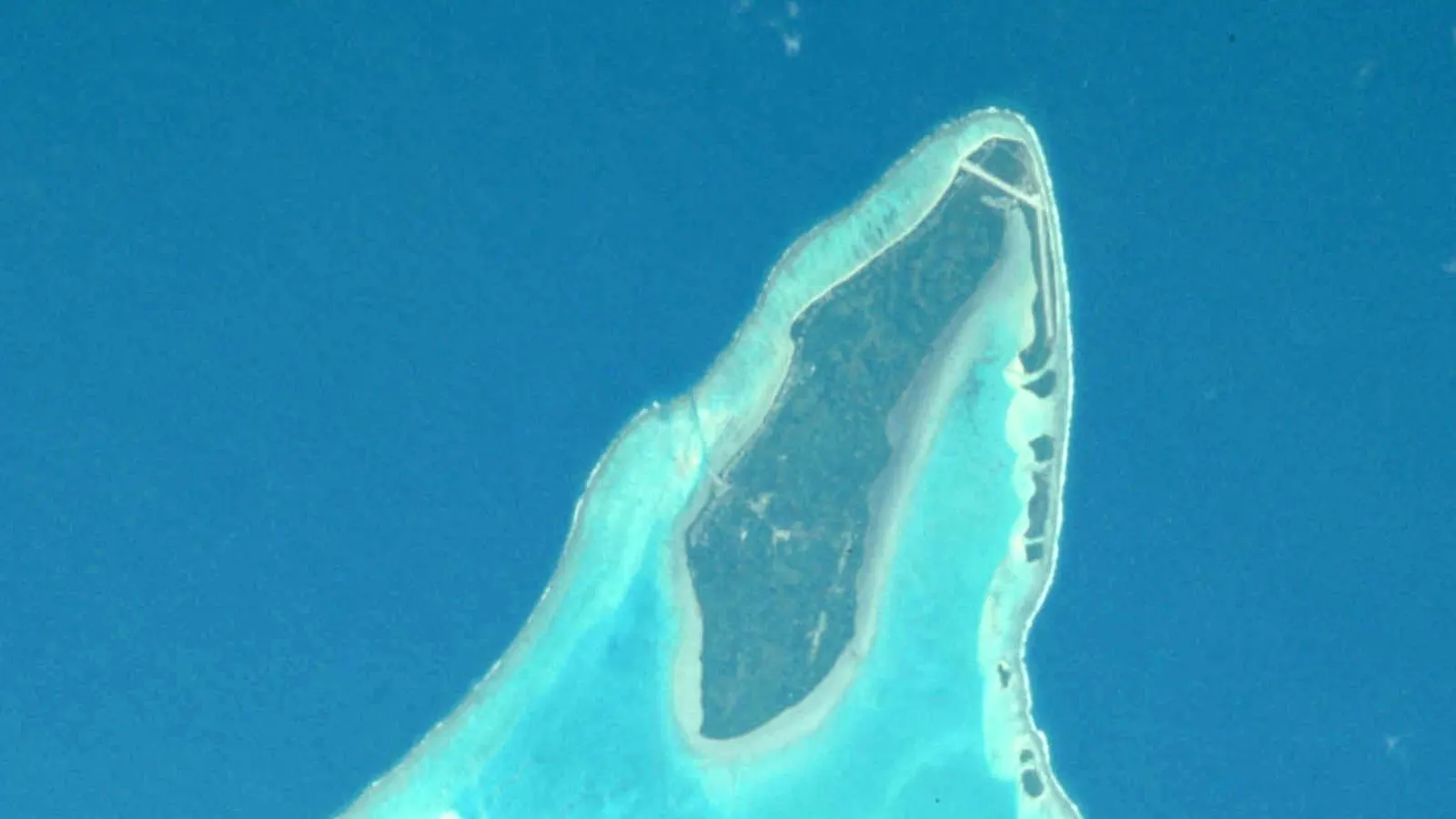
 NASA · Public domain
Cook Islands
Rarotonga's ring road, Aitutaki's lagoon and a country you can circle by bus in fifty minutes.
“Rarotonga's ring road, Aitutaki's lagoon and a country you can circle by bus in fifty minutes.”
The Cook Islands are fifteen islands spread over two million square kilometres of ocean, self-governing in free association with New Zealand, whose citizenship Cook Islanders hold. Rarotonga, the main island, is a volcanic peak ringed by a lagoon and a 32-kilometre road on which the bus runs clockwise and anticlockwise and that is the entire public transport system - which tells you most of what you need to know about the pace.
Aitutaki, 45 minutes north by air, has a triangular lagoon with a string of motu around the rim that is routinely called the most beautiful in the Pacific, and the lagoon cruise to One Foot Island is the standard day. Beyond those two, the outer islands - Atiu's caves, Mangaia's makatea limestone, the northern atolls - see almost nobody. New Zealand dollars are the currency and the country is unusually easy to arrange.
Chapter 01
Highlights
Aitutaki lagoon
A triangular lagoon with a rim of motu and water in improbable gradations of blue, crossed on a day cruise stopping at One Foot Island - where the tiny post office stamps your passport - and Honeymoon Island.
The Rarotonga cross-island track
A three- to four-hour traverse of the island past Te Rua Manga, the Needle, dropping to Wigmore's Waterfall on the south side. Steep, muddy and the best walk on the island.
Muri lagoon
Rarotonga's southeastern lagoon with four motu offshore, shallow warm water, kitesurfing and the Muri night market for food several evenings a week.
Atiu
A raised makatea island with limestone caves holding the kopeka swiftlet, coffee plantations, and tumunu bush-beer gatherings that descend from pre-missionary kava circles.
Chapter 02
Entry requirements for Cook Islands
Checking your passport…
We don't hold entry details for this passport group yet.
Before you fly
The detail
- Passport validity
- Most destinations want validity beyond your stay, and some want six months. Check yours against the return date.
- Onward travel
- Airlines may ask for a return or onward ticket at check-in.
- Health
- No malaria. Dengue outbreaks occur. Rarotonga hospital handles routine care; anything serious is evacuated to New Zealand. Tap water on Rarotonga is treated but many visitors drink bottled or filtered.
- Money
- New Zealand dollar, with local coinage including the distinctive triangular two-dollar. Cards work at most businesses; carry cash for markets and the outer islands.
Who needs a visa for Cook Islands
12 common passports| Passport | Requirement | Stay | Process |
|---|---|---|---|
| United States | Visa-free | up to 31 days | No United States record yet |
| United Kingdom | Visa-free | up to 31 days | No United Kingdom record yet |
| Germany | Visa-free | up to 31 days | No process · €0 / $0 |
| India | Visa-free | up to 31 days | No Other passports record yet |
| China | Visa-free | up to 31 days | No Other passports record yet |
| Brazil | Visa-free | up to 31 days | No Other passports record yet |
| Nigeria | Visa-free | up to 31 days | No Other passports record yet |
| Indonesia | Visa-free | up to 31 days | No Other passports record yet |
| Philippines | Visa-free | up to 31 days | No Other passports record yet |
| Vietnam | Visa-free | up to 31 days | No Other passports record yet |
| Egypt | Visa-free | up to 31 days | No Other passports record yet |
| Nepal | Visa-free | up to 31 days | No Other passports record yet |
Holding a passport that is not listed? The picker above answers for any of them. See where your passport takes you. Source: Passport Index, updated 14 Sept 2026.
Chapter 03
When to go
BestMay–Oct. AvoidDec–Mar.
Dry season opens - warm, calm and quiet.
The band above each month is our editorial verdict - it weighs crowds, prices and access as well as weather. The line is average daily temperature, the bars are monthly rainfall. Select a month for the figures. Climate figures: ERA5 reanalysis via Open-Meteo, 2005–2024 normals.
Chapter 04
What it costs
A day in Cook Islands
Comfortable · sample day
≈ $151
Line items are real prices we track. The daily budget is an editorial estimate for this level, not their sum.
Where this sits among 244 countries we have costed
The New Zealand school holidays in July and over Christmas are the peaks. May, September and October are the best combination of weather and price.
Updated Aug 2026 · Editorial synthesis - Cook Islands Tourism listings and accommodation sampling (2025–2026) · confidence high
Excludes international flights - they depend on where you fly from.
Chapter 05
Regions to know
5Rarotonga
The main island - Avarua, Muri lagoon, the cross-island track and the 32-kilometre ring road.
Aitutaki
The lagoon, One Foot Island, the motu and the small settlement at Arutanga.
Atiu and Mauke
Raised makatea islands with limestone caves, coffee, tumunu gatherings and almost no visitors.
Mangaia and Mitiaro
The southern group - the oldest island in the Pacific by some measures, with caves and burial sites.
The northern atolls
Manihiki's black pearls, Penrhyn and Pukapuka - low atolls a thousand kilometres north and rarely reached.
Chapter 06
Practical guide
Getting there
Rarotonga is served by Air New Zealand from Auckland, Jetstar from Sydney and seasonal services from Los Angeles and Tahiti. Air Rarotonga flies the domestic network.
Getting around
Rarotonga's bus circles the island clockwise and anticlockwise on a published timetable; scooters and small cars are widely hired. Air Rarotonga reaches Aitutaki and the outer islands. Bicycles work well on both main islands.
Money & costs
New Zealand dollar, with local coinage including the distinctive triangular two-dollar. Cards work at most businesses; carry cash for markets and the outer islands.
Safety
Extremely safe. Scooter accidents involving visitors are the leading cause of injury - helmets are now compulsory, and the roads have gravel and potholes. Reef cuts and currents at the passes are the other hazards.
Health
No malaria. Dengue outbreaks occur. Rarotonga hospital handles routine care; anything serious is evacuated to New Zealand. Tap water on Rarotonga is treated but many visitors drink bottled or filtered.
SIM & internet
Vodafone Cook Islands; SIMs at the airport. 4G on Rarotonga and Aitutaki. The outer islands have limited service.
Chapter 07
Driving
Left-hand traffic and a 50 km/h island maximum, 30 in villages. Helmets are compulsory on scooters. Buying the local licence at the Avarua police station is a genuine local ritual and takes about ten minutes.
Rules change - verify with an official source before you rent.
ExplWorld VerifiedNo verified partners here yet - all 6 country seats are open.
Become ExplWorld Verified →Chapter 08
Before you go
Cook IslandsChapter 09
Frequently asked questions
Do I need a visa?
No - every nationality enters visa-free for up to 31 days on arrival, extendable monthly to six months. You need an onward ticket and confirmed accommodation for at least the first night, and both are actually checked. Cook Islanders are New Zealand citizens but the entry regime is the country's own.
Rarotonga or Aitutaki?
Rarotonga has the mountains, the walks, the restaurants and the road. Aitutaki has the lagoon - which is the better lagoon by a distance - but very little else and higher prices. Most trips do a week on Rarotonga with three or four nights on Aitutaki, and that balance works.
What is Sunday like?
Quiet. Church is central and the singing is worth attending. Many shops close, though tourism operations run. Some villages ask that you do not swim from their beaches on Sunday morning - a sign or your host will tell you.