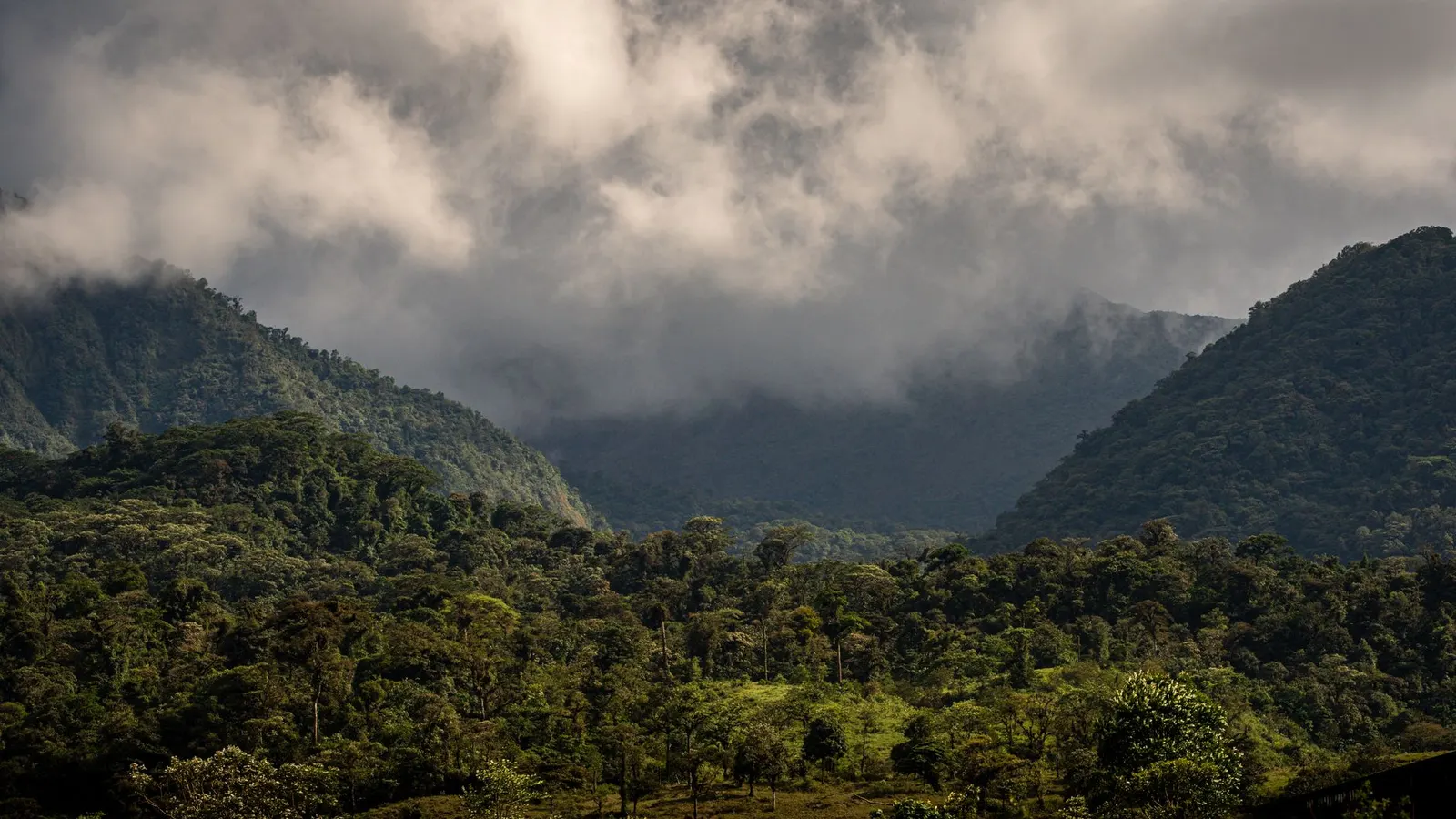
 Mario Spencer · Pexels License
Country Guide № 039 / 194 · Central America
Costa Rica
Pura vida, priced accordingly - cloud forests, two coasts and half a percent of everything alive on Earth.
“Pura vida, priced accordingly - cloud forests, two coasts and half a percent of everything alive on Earth.”
Costa Rica compressed an entire continent’s worth of nature into a country you can drive across in a day: cloud forest at Monteverde, a textbook volcano cone at Arenal, sloths hanging over Caribbean beaches, and Pacific swells that break year-round. A quarter of the territory is protected, the wildlife is genuinely easy to see, and the tourism machine runs smoother than anywhere between Mexico and Chile.
The honest caveat: it is by far the most expensive country in Central America - a daily budget here buys two days in Nicaragua or Guatemala. You are paying for infrastructure, safety and guides who can find a pygmy owl in the dark. Come in the green season (May–November), eat casados at sodas, and ride public buses, and the bill drops to something reasonable.
Chapter 01
Highlights
Arenal & La Fortuna
A near-perfect volcano cone above hot springs, waterfalls and hanging bridges - the adventure-sports capital of the country.
Monteverde cloud forest
Walk suspension bridges through the canopy at dawn listening for the resplendent quetzal - ecotourism’s birthplace still delivers.
Corcovado & the Osa Peninsula
The most biologically intense place on Earth by some counts: tapirs on the beach, scarlet macaws overhead, all four monkey species in a morning.
The Caribbean south - Puerto Viejo
Reggae, rice-and-beans in coconut milk, and sloths over the road to Manzanillo. A different country from the Pacific coast, on a different weather clock.
Chapter 02
Entry requirements for Costa Rica
Checking your passport…
up to 180 days · free entry
180 days on arrival
Before you fly
The detail
- Maximum stay
- up to 180 days
- Fee
- free entry
- Passport validity
- Most destinations want validity beyond your stay, and some want six months. Check yours against the return date.
- Onward travel
- Airlines may ask for a return or onward ticket at check-in.
- Health
- Tap water is safe in most of the country - the Caribbean coast and remote lodges are the bottled/filtered exception. No mandatory vaccinations; dengue exists in the lowlands year-round. The medical system is the region’s best, and the private hospitals in San José are of European standard. Sun and dehydration on hikes cause more evacuations than wildlife does.
- Money
- The colón floats around 550 per euro; US dollars are accepted almost everywhere (change comes in colones at an unfavourable rate - pay in colones where you can). Cards, including contactless, work in most of the tourist economy; sodas, buses and rural pulperías are cash. ATMs are everywhere in towns; note that a 13 % tax plus 10 % service is baked into restaurant bills - extra tipping is optional.
A US passport is admitted without a visa for up to 180 days, the period Costa Rica raised from 90 in 2023 - but the officer writes the days granted in the stamp and is entitled to give fewer, so read it before you leave the hall rather than discovering the number three months later. The onward ticket is what actually gets people turned away, and it is enforced by the airline at check-in rather than by immigration on arrival: a one-way ticket into San José without a booked exit is a conversation in your departure city, and a refundable onward flight is the usual answer. Proof of funds of around US$100 for each month of the stay can be asked for, and occasionally is. Costa Rica dropped the six-month passport rule and now asks only that the document be valid for the length of your stay, though airlines do not all know that. There is a departure tax of about US$29, normally inside the air fare but collected separately at land borders, and the days you are given do not renew by stepping into Nicaragua and back - repeated border runs invite refusal.
Check another destination with this passport →
Entry details: Editorial synthesis - Costa Rican Dirección General de Migración y Extranjería (2025–2026) · compiled 15 Sept 2026
Who needs a visa for Costa Rica
12 common passports| Passport | Requirement | Stay | Process |
|---|---|---|---|
| United States | Visa-free | up to 180 days | No process · €0 / $0 |
| United Kingdom | Visa-free | up to 180 days | No process · €0 / $0 |
| Germany | Visa-free | up to 180 days | No process · €0 / $0 |
| India | Visa required | - | No Other passports record yet |
| China | Visa required | - | No Other passports record yet |
| Brazil | Visa-free | up to 180 days | No Other passports record yet |
| Nigeria | Visa required | - | No Other passports record yet |
| Indonesia | Visa required | - | No Other passports record yet |
| Philippines | Visa-free | up to 30 days | No Other passports record yet |
| Vietnam | Visa required | - | No Other passports record yet |
| Egypt | Visa required | - | No Other passports record yet |
| Nepal | Visa required | - | No Other passports record yet |
Holding a passport that is not listed? The picker above answers for any of them. See where your passport takes you. Source: Passport Index, updated 14 Aug 2026.
Chapter 03
When to go
BestDec–Apr.
Peak dry season on the Pacific - book parks and lodges ahead.
The band above each month is our editorial verdict - it weighs crowds, prices and access as well as weather. The line is average daily temperature, the bars are monthly rainfall. Select a month for the figures. Climate figures: ERA5 reanalysis via Open-Meteo, 2005–2024 normals.
Chapter 04
What it costs
A day in Costa Rica
Comfortable · sample day
≈ $119
Line items are real prices we track. The daily budget is an editorial estimate for this level, not their sum.
Where this sits among 244 countries we have costed
Green season (May–November) brings genuine 20–40 % accommodation discounts and negotiable tours; the dry season (December–April) is full price, with Christmas–New Year and Easter spiking a further 30–50 % on the coasts. Park fees and shuttles stay flat year-round. September–October: Pacific-side bargains, Caribbean-side high demand.
Updated Aug 2026 · Editorial synthesis - Budget Your Trip, hostel and tour operator price lists, regional backpacker cost guides (2025–2026) · confidence medium
Excludes international flights - they depend on where you fly from.
Chapter 05
Regions to know
5Arenal & the northern lowlands
La Fortuna’s volcano views, hot springs, canyoning and the Río Celeste’s impossible blue - the adventure hub.
Monteverde
Cloud-forest reserves, hanging bridges and dawn quetzal walks up a famously bad road that keeps the crowds honest.
Guanacaste & Nicoya
The dry-season beach coast: Tamarindo’s surf schools, Nosara’s yoga-and-longboard scene, and Blue Zone villages inland.
Central Pacific & Manuel Antonio
The country’s most-visited park - squirrel monkeys and sloths above white-sand coves - plus Uvita’s whale-tail sandbar.
The Caribbean coast
Tortuguero’s canal-boat turtles in the north, Puerto Viejo’s Afro-Caribbean beach towns in the south - driest in Sep–Oct.
Chapter 06
Practical guide
Getting there
San José (SJO) has direct flights from Madrid, Frankfurt, Zurich, Paris, Amsterdam and London plus every major US hub; Liberia (LIR) in Guanacaste takes the beach charters. From Central Europe count on one stop, 13–16 hours door to door. Overland, comfortable Ticabus coaches connect Managua and Panama City to San José.
Getting around
This is Central America’s rental-car country: distances are short but roads are slow, and a 4x4 earns its cost in the green season (river fords, potholed gravel to Monteverde and the Osa). Public buses are cheap, extensive and slow; shared tourist shuttles (€50–60 a hop) link the hubs door to door. Domestic Sansa flights save a day to the Osa. Trust GPS times, not distances - 100 km can mean three hours.
Money & costs
The colón floats around 550 per euro; US dollars are accepted almost everywhere (change comes in colones at an unfavourable rate - pay in colones where you can). Cards, including contactless, work in most of the tourist economy; sodas, buses and rural pulperías are cash. ATMs are everywhere in towns; note that a 13 % tax plus 10 % service is baked into restaurant bills - extra tipping is optional.
Safety
Violent crime against tourists is rare; property crime is the national sport. The rules: nothing visible in a parked car (thieves work beach car parks systematically), nothing unattended on the sand, taxis or Uber at night in San José. Rip currents are the most lethal hazard in the country - ask before swimming, and treat red flags as law.
Health
Tap water is safe in most of the country - the Caribbean coast and remote lodges are the bottled/filtered exception. No mandatory vaccinations; dengue exists in the lowlands year-round. The medical system is the region’s best, and the private hospitals in San José are of European standard. Sun and dehydration on hikes cause more evacuations than wildlife does.
SIM & internet
Kolbi (state-run) has the widest rural coverage; Liberty and Claro compete hard on prepaid data - €10 buys roughly 15–20 GB. eSIMs work seamlessly. 4G/5G covers the tourist circuit; Monteverde, the Osa and Tortuguero have real dead zones - download maps offline before leaving the highway.
Chapter 07
Driving
Limits shift constantly with signage - 25 km/h at schools, up to 100 signed on stretches of Ruta 27. Green-season driving means river fords and washouts on gravel routes; check with lodges before attempting the Osa or Monteverde back roads in a 2WD.
Rules change - verify with an official source before you rent.
ExplWorld VerifiedNo verified partners here yet - all 6 country seats are open.
Become ExplWorld Verified →Chapter 08
Itineraries through this country
Chapter 09
From the Journal
Chapter 10
Before you go
Costa RicaChapter 11
Frequently asked questions
Is Costa Rica safe?
It is the region’s most comfortable country for first-timers - no army since 1948, solid infrastructure, tourism police in the hubs. The real risks are unglamorous: theft from parked rental cars (never leave anything visible, ever), bag snatches on beaches while you swim, and rip currents, which kill more visitors than crime does. Swim where locals swim.
When is the best time to visit Costa Rica?
December to April is the Pacific-side dry season - reliable sun and peak prices. May to November is the green season: morning sun, afternoon downpours, 20–40 % discounts and better wildlife. The Caribbean coast runs its own calendar, with September–October its driest, sunniest window - exactly when the Pacific is at its wettest.
How much does a day in Costa Rica cost?
Around €110 ($119) per day mid-range: €50–60 for your half of a double, €25–30 for food, the rest for transport and one paid activity. Backpackers need €55 ($59) with dorms, sodas and public buses - still roughly double what Nicaragua or Guatemala costs. National-park fees (€15–25 each) and guided tours add up fastest.