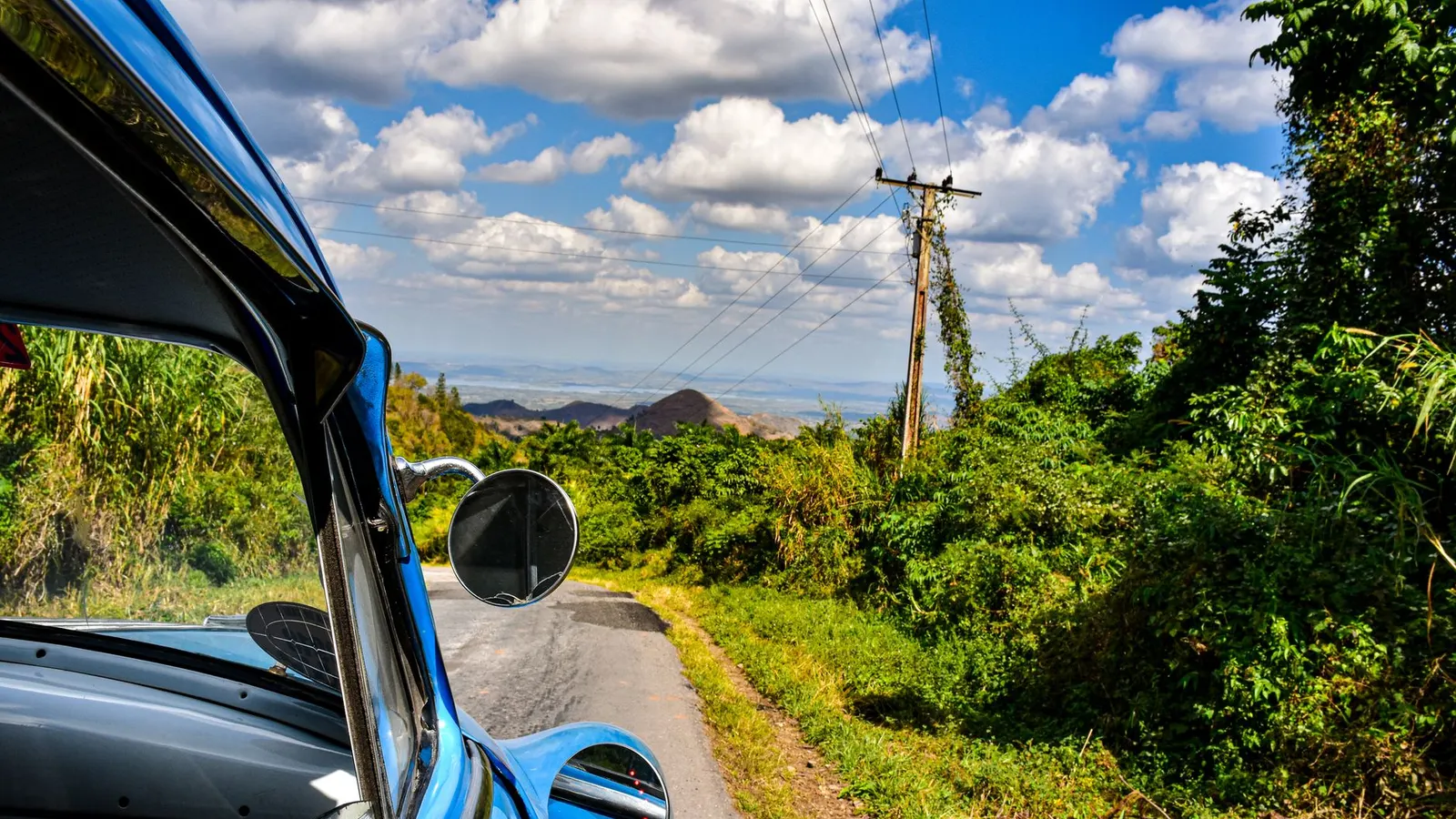
 AXP Photography · Pexels License
Country Guide № 042 / 194 · Caribbean
Cuba
Time travel with a soundtrack - crumbling grandeur, tobacco valleys and the warmest people in the hemisphere.
“Time travel with a soundtrack - crumbling grandeur, tobacco valleys and the warmest people in the hemisphere.”
Nowhere else looks like Cuba: Havana’s colonnades dissolving into the salt air along the Malecón, 1950s Chevrolets running on invention, tobacco fields ploughed by oxen under limestone mogotes. The island runs on a dual economy and daily improvisation, shortages are a fact of life, and independent travel demands more patience here than anywhere else in this hemisphere - which is precisely why it rewards like nowhere else.
The compensation is human. Stay in casas particulares - family homes with a licence and a rocking chair - and the country opens: grandmothers who fix you lobster dinners, taxi drivers with engineering degrees, musicians in every second doorway. Go with cash in euros, low logistical expectations and high human ones, and Cuba will exceed all of them.
Chapter 01
Highlights
Habana Vieja & the Malecón
Four plazas of restored baroque splendour fading block by block into lived-in decay - then the world’s greatest seafront promenade at sunset, waves breaking over the wall.
Viñales valley
Limestone mogotes rising from red tobacco fields, farm-to-hand cigar rolling, and horseback mornings through Cuba’s most painterly landscape. UNESCO-listed and rightly.
Trinidad
A sugar-boom time capsule: cobbled streets, pastel palaces and casa dancefloors - with the Escambray mountains and Playa Ancón’s beach twenty minutes away.
Santiago and the Oriente
Cuba’s Caribbean soul - son and trova were born here, the Moncada barracks made history here, and the Sierra Maestra rises behind it all.
Chapter 02
Entry requirements for Cuba
Checking your passport…
up to 90 days · €25 / $27 · e-visa
90 days on arrival
Official portal only
Paid look-alike sites charge for a process that is free or cheap on the government portal. Use the link below and nothing else.
evisacuba.cu →Before you fly
The detail
- Maximum stay
- up to 90 days
- Process
- e-visa
- Fee
- €25 / $27
- Passport validity
- Most destinations want validity beyond your stay, and some want six months. Check yours against the return date.
- Onward travel
- Airlines may ask for a return or onward ticket at check-in.
- Arrival form
- Cuba requires the free D’Viajeros form (dviajeros.mitrans.gob.cu) - a combined immigration, customs and health declaration filled online within 7 days before arrival. One form per traveller, children included; save the QR code offline, as airlines check it at the gate and airport wifi cannot be counted on.
- Health
- Bring a full personal pharmacy - painkillers, stomach remedies, plasters, prescriptions - because Cuban pharmacies have chronic shortages. Drink bottled or filtered water only. Travel medical insurance valid in Cuba is an entry requirement and is checked sporadically; carry printed proof. Medical staff are excellent; supplies are the constraint.
- Money
- Bring your entire budget in cash - euros are best. Cards issued by US banks never work, and all other foreign cards are unreliable and settle at the punitive official rate. The informal exchange rate for euros runs several times the official one; casas and private restaurants often quote directly in EUR. Change money through your casa host, never on the street, and keep small notes - change is a national shortage.
Cuba replaced the paper tourist card with an electronic visa in 2024, so the document is now applied for online before travel rather than bought from an airline desk or a consulate; tourist entry allows up to 90 days, extendable in country. What it costs depends on where you buy it and it has ranged from roughly €20 through a European consulate to around US$100 through a US carrier, so take the figure from the official portal at evisacuba.cu at the moment you apply rather than from any number quoted here. The larger obstacle for a US passport is American law rather than Cuban: tourism is prohibited under the embargo regulations, travel must fit one of twelve authorised categories - most independent visitors use Support for the Cuban People - and you are expected to keep a full-time schedule of qualifying activities and the records for five years. The State Department also publishes a Cuba Restricted List of hotels and companies Americans may not transact with, which rules out several of the obvious Havana addresses. Everyone must file the free D’Viajeros traveller form online in the days before arrival, and proof of travel medical insurance can be demanded at the airport; on most carriers the premium is already inside the fare.
Check another destination with this passport →
Entry details: Editorial synthesis - Cuban Ministry of Foreign Affairs and Ministry of Transport (D’Viajeros), US Treasury OFAC Cuban Assets Control Regulations, US State Department Cuba Restricted List (2025–2026) · compiled 15 Sept 2026
Who needs a visa for Cuba
12 common passports| Passport | Requirement | Stay | Process |
|---|---|---|---|
| United States | e-Visa | - | e-Visa · €25 / $27 |
| United Kingdom | e-Visa | - | e-Visa · €25 / $27 |
| Germany | e-Visa | - | e-Visa · €25 / $27 · 1–5 d |
| India | Visa required | - | No Other passports record yet |
| China | Visa-free | up to 90 days | No Other passports record yet |
| Brazil | e-Visa | - | No Other passports record yet |
| Nigeria | Visa required | - | No Other passports record yet |
| Indonesia | e-Visa | - | No Other passports record yet |
| Philippines | Visa required | - | No Other passports record yet |
| Vietnam | e-Visa | - | No Other passports record yet |
| Egypt | e-Visa | - | No Other passports record yet |
| Nepal | Visa required | - | No Other passports record yet |
Holding a passport that is not listed? The picker above answers for any of them. See where your passport takes you. Source: Passport Index, updated 14 Aug 2026.
Chapter 03
When to go
BestNov–Apr. AvoidSep–Oct.
Peak dry season - cool nights, clear days, Havana at its best. Book casas ahead.
The band above each month is our editorial verdict - it weighs crowds, prices and access as well as weather. The line is average daily temperature, the bars are monthly rainfall. Select a month for the figures. Climate figures: ERA5 reanalysis via Open-Meteo, 2005–2024 normals.
Chapter 04
What it costs
A day in Cuba
Comfortable · sample day
≈ $76
Line items are real prices we track. The daily budget is an editorial estimate for this level, not their sum.
Where this sits among 244 countries we have costed
Casa and private-restaurant prices rise 20–40 % from mid-December to March and around Easter, and fall hard in the September–October trough - but in Cuba the bigger variable is the informal exchange rate, which moves month to month and reprices everything paid in pesos. High season also strains supply: book casas and colectivos ahead December–February.
Updated Aug 2026 · Editorial synthesis - traveller cost reports, casa particular rate surveys, Viazul published fares (2025–2026) · confidence low
Excludes international flights - they depend on where you fly from.
Chapter 05
Regions to know
5Havana
Habana Vieja’s plazas, Centro’s crumbling drama, Vedado’s mid-century swagger and the Malecón binding it all at sunset. Give it four days.
Viñales & Pinar del Río
Tobacco country: mogotes, red-earth farms, cave systems and horseback valley rides - Cuba rural and unhurried, three hours west of Havana.
Trinidad & the centre
The colonial showpiece plus the Escambray mountains, Topes de Collantes waterfalls, Playa Ancón, and Cienfuegos’ French-laid elegance en route.
Santiago & the Oriente
The hot, musical east: son’s birthplace, Castillo del Morro, the Sierra Maestra and Baracoa’s chocolate-and-jungle isolation beyond.
Varadero & the cayos
The all-inclusive Cuba - 20 km of genuinely superb sand at Varadero, flamingo shallows off Cayo Coco and Cayo Santa María. A different country from the casa circuit.
Chapter 06
Practical guide
Getting there
Havana (HAV) has year-round directs from Madrid (Iberia, Air Europa), Paris (Air France) and other European hubs - from Central Europe count on one stop and 14–16 hours door to door. Charters also serve Varadero and the cayos. Avoid routings through the US, and know before booking that any Cuba trip affects future US ESTA eligibility regardless of routing.
Entry formalities
Cuba requires the free D’Viajeros form (dviajeros.mitrans.gob.cu) - a combined immigration, customs and health declaration filled online within 7 days before arrival. One form per traveller, children included; save the QR code offline, as airlines check it at the gate and airport wifi cannot be counted on.
Getting around
Viazul coaches link the tourist towns cheaply but sell out days ahead; shared colectivo taxis cost slightly more, leave when full and halve the journey time. Renting a car is possible but expensive and hostage to fuel shortages - most independent travellers stitch colectivos together. In cities, agree taxi fares before getting in; classic-car rides are priced as experiences, not transport.
Money & costs
Bring your entire budget in cash - euros are best. Cards issued by US banks never work, and all other foreign cards are unreliable and settle at the punitive official rate. The informal exchange rate for euros runs several times the official one; casas and private restaurants often quote directly in EUR. Change money through your casa host, never on the street, and keep small notes - change is a national shortage.
Safety
Violent crime is rare; scams are not. Politely disengage from jineteros steering you to “their” casa or cigar deal, photograph nothing military, and keep passports and cash split across bags. The genuine risks are infrastructural: potholed unlit roads, sporadic blackouts, and pharmacies with empty shelves.
Health
Bring a full personal pharmacy - painkillers, stomach remedies, plasters, prescriptions - because Cuban pharmacies have chronic shortages. Drink bottled or filtered water only. Travel medical insurance valid in Cuba is an entry requirement and is checked sporadically; carry printed proof. Medical staff are excellent; supplies are the constraint.
SIM & internet
Expect the weakest connectivity in the hemisphere and plan around it. ETECSA tourist SIMs and eSIMs sell data packages that work adequately in cities when the network cooperates; blackouts take towers down with them. Many casas have wifi of a sort. Download maps, translations and bookings offline before arrival, and warn people at home you will be intermittently dark.
Chapter 07
Driving
The hazards are the road itself: unmarked potholes, unlit cyclists, horse carts and oxen on the Autopista Nacional. Never drive at night intercity. Fuel shortages are chronic - fill at every opportunity and carry cash for it.
Rules change - verify with an official source before you rent.
ExplWorld VerifiedNo verified partners here yet - all 6 country seats are open.
Become ExplWorld Verified →Chapter 08
Itineraries through this country
Chapter 09
From the Journal
Chapter 10
Before you go
CubaChapter 11
Frequently asked questions
Is Cuba safe?
For violent crime, Cuba is among the safest countries in the Americas - police are everywhere and gun crime is nearly nonexistent. The real frictions are non-violent: jinetero hustle in Havana, taxi overcharging, and pickpocketing in crowds. The practical hazards are shortages - fuel, medicine, sometimes power - rather than people.
When is the best time to visit?
November to April: dry, warm and mosquito-light, with peak crowds and prices from mid-December to March. May starts the wet season; June to November is hurricane season, with September and October the months to avoid outright.
How much does a day in Cuba cost?
Around €70 / $80 per day mid-range, paid almost entirely in cash: €30–35 for a casa particular double, €20–25 for meals, the rest transport and activities. Backpackers sharing colectivos manage €35–45. Resort Varadero runs on different, higher arithmetic. Bring every euro you plan to spend - cards are unreliable at best.