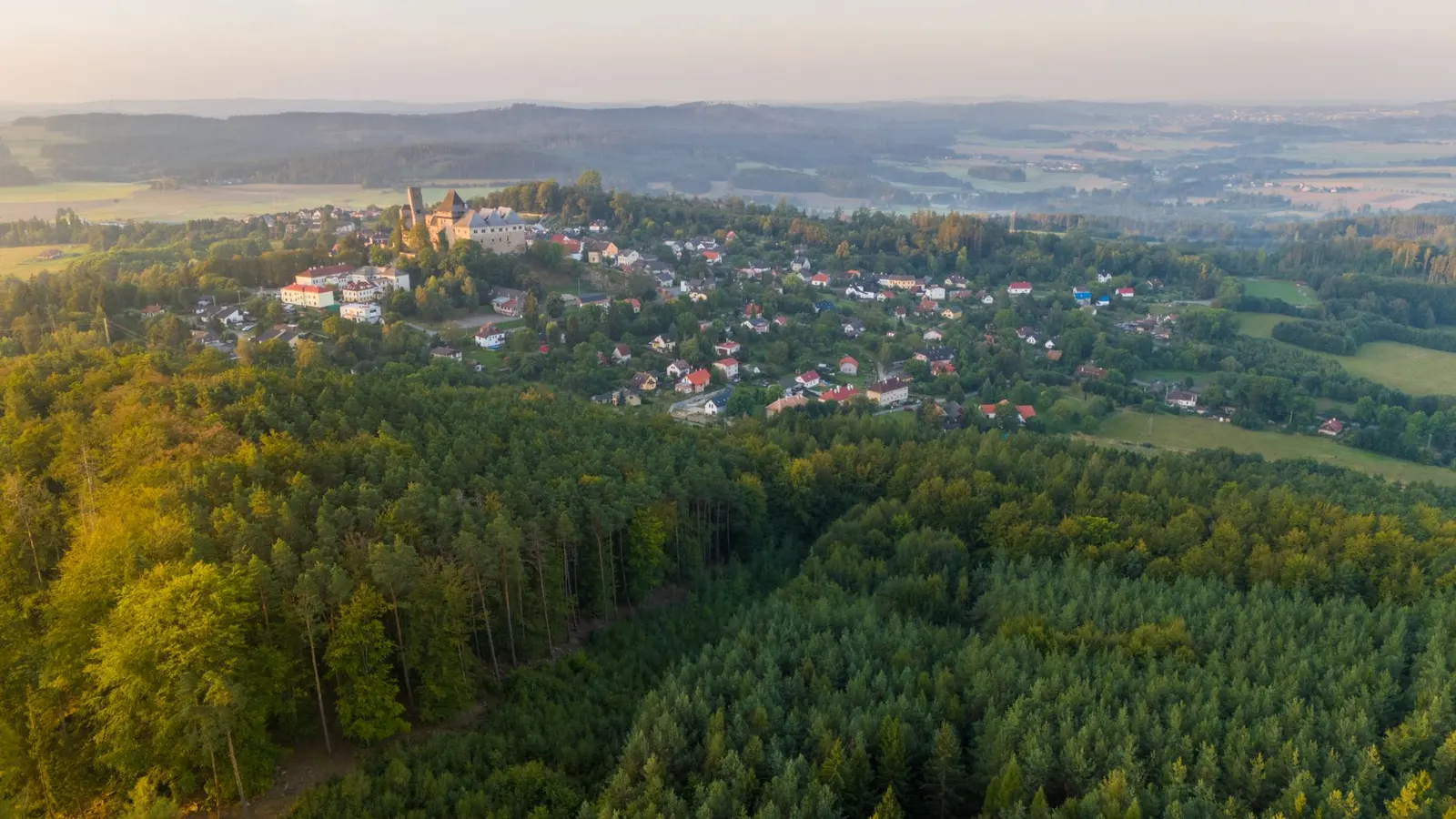
 Stepan Vrany · Pexels License
Country Guide № 044 / 194 · Europe
Czech Republic
Prague, and the nine tenths of the country that is not Prague.
“Prague, and the nine tenths of the country that is not Prague.”
Prague absorbs the overwhelming majority of visitors and deserves a good share of them - the medieval core survived the twentieth century almost untouched, which is rarer in this part of Europe than it sounds. It is also, in the centre, thoroughly overwhelmed, and the country beyond it is empty by comparison.
That country is small and surprisingly varied: the sandstone rock cities of Bohemian Switzerland, the spa triangle at Karlovy Vary, Český Krumlov on its river bend, Moravian wine country in the southeast, and more castles per square kilometre than anywhere in Europe. Beer is genuinely central - the Czech Republic drinks more per head than any nation on earth, Pilsner was invented here, and a half litre in a pub costs less than a coffee.
Chapter 01
Highlights
Prague at dawn
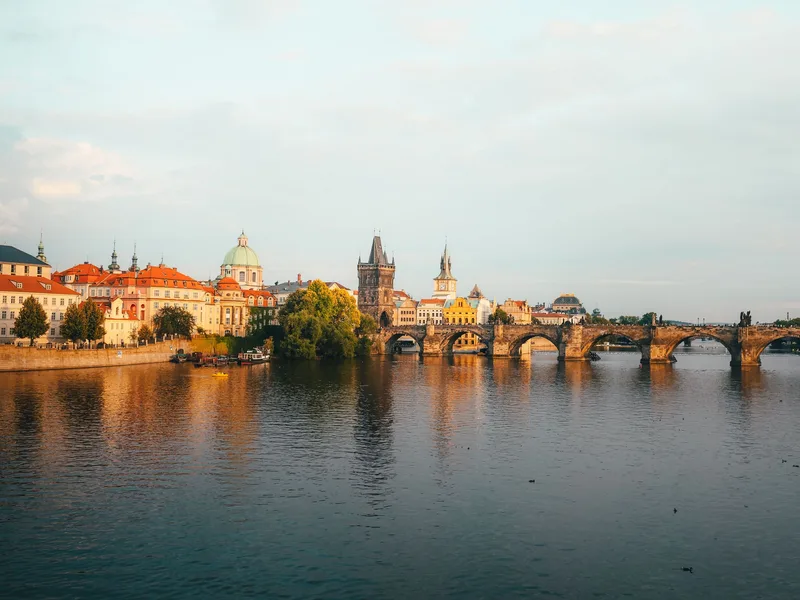
Charles Bridge at six in the morning is empty and worth the alarm; by ten it is impassable. The castle, the Jewish quarter and Vyšehrad are the other essentials, and Letná for the view.
Bohemian Switzerland
Sandstone gorges and the Pravčická brána arch on the German border, an hour and a half from Prague. Parts were damaged by the 2022 wildfire and have reopened progressively.
Český Krumlov
A UNESCO town wrapped in a bend of the Vltava under a castle with a baroque theatre. Day-tripped heavily from Prague and much better stayed in.
Moravia
Wine country around Mikulov and Valtice, the Lednice-Valtice cultural landscape, and Olomouc - a university town with a spectacular square and a fraction of Prague's crowds.
Chapter 02
Entry requirements for Czech Republic
Checking your passport…
up to 90 days · free entry
90 days on arrival
Before you fly
The detail
- Maximum stay
- up to 90 days
- Fee
- free entry
- Passport validity
- Most destinations want validity beyond your stay, and some want six months. Check yours against the return date.
- Onward travel
- Airlines may ask for a return or onward ticket at check-in.
- Health
- No vaccinations required. Healthcare is good; EHIC/GHIC covers EU and UK visitors. Tick-borne encephalitis is common in Czech forests and vaccination is routine among residents - worth considering for extended time outdoors. Tap water is safe. Winter air quality in Ostrava and the industrial north is poor.
- Money
- Koruna. Cards are accepted almost everywhere; carry some cash for small pubs and rural areas. Exchange booths in central Prague are notorious for poor rates and hidden commissions - use ATMs at proper banks and always decline dynamic currency conversion. Tipping is around 10 %, usually by rounding up when you pay.
No visa and nothing to arrange before flying: a US passport is admitted for up to 90 days in any 180 - but that allowance belongs to the Schengen area as a whole, not to Czechia, and it is the single thing American visitors most often get wrong. Days spent in Germany, Austria, Poland, Italy or any of the other twenty-eight Schengen states come out of the same 90, the window rolls rather than resetting on a calendar date, and both the day you arrive and the day you leave count as whole days. Since 10 April 2026 the Entry/Exit System has recorded the crossing biometrically instead of stamping the passport, so the count is now automatic and an overstay is detected rather than noticed - fines and a re-entry ban follow, and they are applied at the airport. Your passport must have been issued within the previous ten years and stay valid three months beyond the date you intend to leave the area. The ETIAS authorisation for visa-exempt visitors has been announced but was not required at the time of writing, so check its status when you book rather than assuming either way. One local obligation: a non-EU visitor not staying in registered accommodation is expected to report their address to the Foreign Police within three working days, which a hotel or a licensed apartment does for you at check-in and a friend’s spare room does not. The currency is the koruna, not the euro, and the exchange booths near the Old Town Square are the worst rates in the country.
Check another destination with this passport →
Entry details: Editorial synthesis - Schengen Borders Code, Czech Ministry of the Interior guidance, EU Entry/Exit System rollout (2025–2026) · compiled 16 Sept 2026
Who needs a visa for Czech Republic
12 common passports| Passport | Requirement | Stay | Process |
|---|---|---|---|
| United States | Visa-free | up to 90 days | No process · €0 / $0 |
| United Kingdom | Visa-free | up to 90 days | No process · €0 / $0 |
| Germany | Visa-free | - | No process · €0 / $0 |
| India | Visa required | - | No Other passports record yet |
| China | Visa required | - | No Other passports record yet |
| Brazil | Visa-free | up to 90 days | No Other passports record yet |
| Nigeria | Visa required | - | No Other passports record yet |
| Indonesia | Visa required | - | No Other passports record yet |
| Philippines | Visa required | - | No Other passports record yet |
| Vietnam | Visa required | - | No Other passports record yet |
| Egypt | Visa required | - | No Other passports record yet |
| Nepal | Visa required | - | No Other passports record yet |
Holding a passport that is not listed? The picker above answers for any of them. See where your passport takes you. Source: Passport Index, updated 14 Aug 2026.
Chapter 03
When to go
BestMay–Jun, September. AvoidJan–Feb, November.
Warm, green and long-dayed - the best month.
The band above each month is our editorial verdict - it weighs crowds, prices and access as well as weather. The line is average daily temperature, the bars are monthly rainfall. Select a month for the figures. Climate figures: ERA5 reanalysis via Open-Meteo, 2005–2024 normals.
Chapter 04
What it costs
A day in Czech Republic
Comfortable · sample day
≈ $81
Line items are real prices we track. The daily budget is an editorial estimate for this level, not their sum.
Where this sits among 244 countries we have costed
Prague accommodation rises from April to October and spikes hard over Christmas, New Year and Easter; January and February are dramatically cheaper. The rest of the country moves far less. Beer, rail and transport prices are effectively flat year-round, which is why the country stays inexpensive even in high season outside the capital.
Updated Aug 2026 · Editorial synthesis - České dráhy and RegioJet published fares, Prague Castle tariffs, Czech statistical office price data (2025–2026) · confidence high
Excludes international flights - they depend on where you fly from.
Chapter 05
Regions to know
5Prague & central Bohemia
The capital, Karlštejn castle, Kutná Hora's cathedral and ossuary, and the Elbe valley north.
South Bohemia
Český Krumlov, České Budějovice and the Budvar brewery, and the fishpond landscape around Třeboň.
West Bohemia
The spa triangle at Karlovy Vary, Mariánské Lázně and Františkovy Lázně, and Pilsen's original brewery.
North Bohemia
Bohemian Switzerland's sandstone gorges and arches, and the Krkonoše mountains on the Polish border.
Moravia
Brno and Olomouc, the wine country around Mikulov, and the Moravian Karst caves north of Brno.
Chapter 06
Practical guide
Getting there
Prague (PRG) is well connected across Europe, with Brno and Ostrava taking some flights. Trains link to Berlin, Vienna, Bratislava, Budapest and Kraków - the Berlin to Prague line along the Elbe is one of the more scenic in central Europe. All land borders are internal Schengen crossings.
Getting around
Czech Railways is comprehensive and cheap, with RegioJet and Leo Express competing on the main routes and offering better service for the money. Buses reach the rest. Prague has an excellent metro, tram and bus network on one ticket. A car is useful for the Bohemian countryside and Moravia and unnecessary in Prague.
Money & costs
Koruna. Cards are accepted almost everywhere; carry some cash for small pubs and rural areas. Exchange booths in central Prague are notorious for poor rates and hidden commissions - use ATMs at proper banks and always decline dynamic currency conversion. Tipping is around 10 %, usually by rounding up when you pay.
Safety
Safe, with pickpocketing in Prague's old town, on tram 22 and around the main station the significant risk. Taxi overcharging was endemic and is largely solved by using apps. Some currency-exchange operations in the centre are effectively scams and are best avoided entirely. Otherwise ordinary precautions suffice.
Health
No vaccinations required. Healthcare is good; EHIC/GHIC covers EU and UK visitors. Tick-borne encephalitis is common in Czech forests and vaccination is routine among residents - worth considering for extended time outdoors. Tap water is safe. Winter air quality in Ostrava and the industrial north is poor.
SIM & internet
EU roaming applies. Coverage is comprehensive and data is cheap and fast. Free wifi is widespread.
Chapter 07
Driving
The zero-tolerance alcohol rule is absolute and enforced with roadside testing - in a country with this beer culture, that separation is taken seriously. The digital vignette must be bought before joining the motorway, and rental cars usually have one but confirm it.
Rules change - verify with an official source before you rent.
ExplWorld VerifiedNo verified partners here yet - all 6 country seats are open.
Become ExplWorld Verified →Chapter 08
Itineraries through this country
Chapter 09
From the Journal
Chapter 10
Before you go
Czech RepublicChapter 11
Frequently asked questions
How do I avoid the worst of Prague?
Stay outside the old town - Vinohrady, Žižkov and Karlín are all a few tram stops away and where people actually live. Do the centre early or late. And give at least two of your days to Kutná Hora, Bohemian Switzerland or Karlštejn, all under two hours away.
Is beer really cheaper than water?
In many pubs, yes - a half litre of Pilsner runs €1.80–2.50, often below the bottled water. Czech pub culture has its own rules: you sit where there is space, the waiter marks a tally slip, and a fresh beer arrives unasked until you signal otherwise by putting a coaster on the glass.
Do I need the koruna?
Yes. Czechia is in the EU but not the eurozone, and places that accept euros give terrible rates. Use cards, which work almost everywhere, and withdraw koruna from bank ATMs. Avoid the Euronet machines and the currency-exchange booths in the old town, which are among the worst-value in Europe.