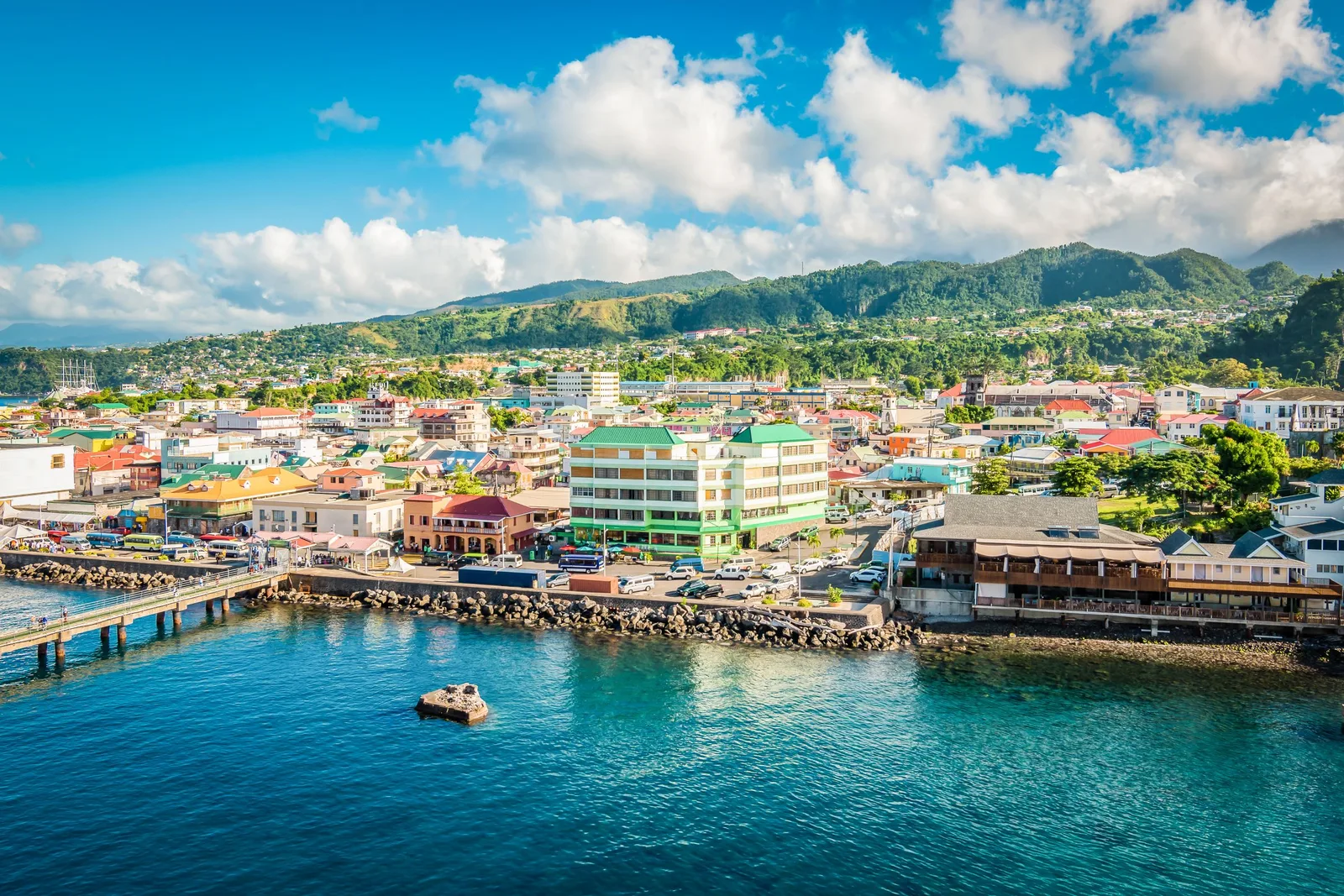
 Nancy Pauwels / stock.adobe.com
Country Guide № 048 / 194 · Caribbean
Dominica
The Nature Island - boiling lakes, sperm whales and a rainforest that never ends.
“The Nature Island - boiling lakes, sperm whales and a rainforest that never ends.”
Dominica is the Caribbean before the brochures: a young, volcanic, extravagantly green island where the mountains claw clouds out of the sky and feed - locals will tell you - a river for every day of the year. There is no international-brand resort strip and only a modest airport, which is exactly why the hikers, divers and whale-watchers who make it here find the region’s wildest island intact.
The centrepiece is Morne Trois Pitons National Park, UNESCO-listed for its fumaroles, crater lakes and one of the world’s largest boiling lakes - reached by a hard, glorious six-hour round trek. Offshore, a resident population of sperm whales patrols the deep leeward trench year-round, and the reef at Champagne fizzes with volcanic gas. Dominica asks more effort than its neighbours and returns it doubled.
Chapter 01
Highlights
Boiling Lake trek
Six hours through the Valley of Desolation’s steaming vents to a grey-blue cauldron rolling at a full boil - the Caribbean’s greatest day hike, guide strongly advised.
Sperm whales year-round
The leeward trench hosts a resident sperm-whale population all year - boat trips out of Roseau meet them most days, and a strict permit system keeps encounters regulated.
Waitukubuli National Trail
One hundred and eighty-four kilometres in 14 segments - the Caribbean’s first long-distance trail, running village to village the length of the island. Day-hike the famous segments or thru-hike the lot.
Champagne Reef & the marine west
Snorkel through curtains of volcanic bubbles at Champagne, then dive the Scotts Head drop-off where a crater rim plunges into blue.
Chapter 02
Entry requirements for Dominica
Checking your passport…
up to 180 days · free entry
180 days on arrival
Official portal only
Paid look-alike sites charge for a process that is free or cheap on the government portal. Use the link below and nothing else.
edcard.dominica.gov.dm →Before you fly
The detail
- Maximum stay
- up to 180 days
- Fee
- free entry
- Passport validity
- Most destinations want validity beyond your stay, and some want six months. Check yours against the return date.
- Onward travel
- Airlines may ask for a return or onward ticket at check-in.
- Health
- No mandatory vaccinations. Tap water comes off the mountains and is generally good; bottled is safest right after storms. Dengue appears seasonally - repellent at dusk. The main hospital is in Roseau, with serious cases evacuated to Martinique or Barbados; comprehensive travel insurance with evacuation cover is essential for a hiking trip here.
- Money
- The Eastern Caribbean dollar (XCD, pegged 2.70 to USD) is the currency; US dollars are often accepted, euros rarely. Cards work in Roseau hotels and larger restaurants, but this is a cash island by regional standards - stock EC dollars for buses, snackettes, site passes and villages. ATMs cluster in Roseau and Portsmouth.
No visa is needed on a United States passport, and the stay recorded for Dominica is a long one - but plan around the date the officer writes rather than around the maximum. Six months is the ceiling the rules allow, not the period handed out at the counter, and arrivals here are routinely stamped for a good deal less. What is not optional is the electronic embarkation and disembarkation card: since 18 October 2024 every traveller completes it online before arrival and shows the QR code with the passport at the counter. It is free on the government address given here and on no other: the sites that outrank it in search charge twenty to a hundred dollars to type your answers into the same boxes. The card covers arrivals by sea as well as by air, which matters here more than anywhere - the ferry from Guadeloupe or Martinique into Roseau is a normal way in, and it clears the same immigration. The period recorded here is the maximum the law allows rather than the one you will be given: the officer writes a date in the passport, usually the date of your return flight, and it is that written date you must not overstay. Immigration here asks for more than a passport: an onward or return ticket, an address for every night you are booked, and, where the officer is not satisfied, some evidence that you can pay for the stay. Those questions come at the desk rather than at the gate, and the answer that gets people turned round is that they will work it out when they arrive. CARICOM is not a Schengen. It moves goods, capital and its own skilled nationals, and it creates no common visa, no common stamp and no common arrival form for visitors, so an island-hopping trip clears immigration from scratch every time it lands. The departure and security taxes these islands levy sit inside the air fare and are not an entry fee, but keep a little local cash back anyway for ferry departures and small-island counters, where they are still sometimes collected at a desk.
Check another destination with this passport →
Entry details: Editorial synthesis - Commonwealth of Dominica online embarkation and disembarkation card, Dominica immigration arrival guidance (2024–2026) · compiled 18 Sept 2026
Who needs a visa for Dominica
12 common passports| Passport | Requirement | Stay | Process |
|---|---|---|---|
| United States | Visa-free | up to 180 days | No process · €0 / $0 |
| United Kingdom | Visa-free | up to 180 days | No process · €0 / $0 |
| Germany | Visa-free | up to 180 days | No process · €0 / $0 |
| India | Visa-free | up to 180 days | No Other passports record yet |
| China | Visa-free | up to 180 days | No Other passports record yet |
| Brazil | Visa-free | up to 90 days | No Other passports record yet |
| Nigeria | Visa-free | up to 180 days | No Other passports record yet |
| Indonesia | Visa-free | up to 21 days | No Other passports record yet |
| Philippines | Visa-free | up to 21 days | No Other passports record yet |
| Vietnam | Visa-free | up to 21 days | No Other passports record yet |
| Egypt | Visa-free | up to 21 days | No Other passports record yet |
| Nepal | Visa-free | up to 21 days | No Other passports record yet |
Holding a passport that is not listed? The picker above answers for any of them. See where your passport takes you. Source: Passport Index, updated 14 Aug 2026.
Chapter 03
When to go
BestDec–Apr. AvoidSep–Oct.
Dry(ish) season - trails firm up, seas calm for whale trips.
The band above each month is our editorial verdict - it weighs crowds, prices and access as well as weather. The line is average daily temperature, the bars are monthly rainfall. Select a month for the figures. Climate figures: ERA5 reanalysis via Open-Meteo, 2005–2024 normals.
Chapter 04
What it costs
A day in Dominica
Comfortable · sample day
≈ $113
Line items are real prices we track. The daily budget is an editorial estimate for this level, not their sum.
Where this sits among 244 countries we have costed
High season (December–April) lifts lodge and guesthouse rates 20–35 % - modest by Caribbean standards, because Dominica has no mass-tourism price ladder. The deepest discounts come in the September–October storm trough, when some lodges close and boat operators pause. Guides, passes and transport hold flat year-round; cruise-ship days inflate Roseau taxi and tour quotes.
Updated Aug 2026 · Editorial synthesis - Budget Your Trip, eco-lodge rate surveys, Dominica national-park fee schedules (2025–2026) · confidence medium
Excludes international flights - they depend on where you fly from.
Chapter 05
Regions to know
4Roseau & the southwest
The compact capital, Trafalgar Falls and Wotten Waven’s sulphur spas just uphill, Champagne Reef and Scotts Head down the coast - most beds and boats are here.
Morne Trois Pitons interior
The UNESCO heart: Boiling Lake, the Valley of Desolation, Freshwater and Boeri crater lakes, Middleham Falls - the island’s serious hiking concentrated in one massif.
Portsmouth & the north
Cabrits National Park’s Fort Shirley, the Indian River rowed in silence, and Douglas Bay - the second town, calmer seas, and Waitukubuli’s northern segments.
The Kalinago Territory & Atlantic east
Home of the Caribbean’s last Indigenous Kalinago community - model village, craft traditions and a wave-battered coastline of red cliffs and river mouths.
Chapter 06
Practical guide
Getting there
No direct long-haul flights: connect through Antigua, Barbados, St Lucia, Sint Maarten or San Juan to Douglas–Charles (DOM), or arrive by L’Express des Îles ferry from Guadeloupe or Martinique into Roseau - often the cheapest and most scenic approach. From Central Europe count on two segments and 16–20 hours door to door. The airport transfer to Roseau crosses the island and takes about an hour.
Getting around
Shared minibuses (green-plate vans) fan out from Roseau cheaply on weekdays but thin out by evening and on Sundays. A rental 4x4 unlocks the trailheads; roads are paved but steep, narrow and hairpinned. Taxis run on fixed rates - agree before boarding. Many visitors combine a few guided days (Boiling Lake, canyoning) with self-driving.
Money & costs
The Eastern Caribbean dollar (XCD, pegged 2.70 to USD) is the currency; US dollars are often accepted, euros rarely. Cards work in Roseau hotels and larger restaurants, but this is a cash island by regional standards - stock EC dollars for buses, snackettes, site passes and villages. ATMs cluster in Roseau and Portsmouth.
Safety
Respect the island’s scale: trails are steeper and rougher than their distances suggest, rivers rise within minutes of upstream rain, and rescue capacity is limited. Take guides for the Boiling Lake and interior segments, tell someone your route, and never canyon after rain. Road hazards are hairpins and downpours, not other people.
Health
No mandatory vaccinations. Tap water comes off the mountains and is generally good; bottled is safest right after storms. Dengue appears seasonally - repellent at dusk. The main hospital is in Roseau, with serious cases evacuated to Martinique or Barbados; comprehensive travel insurance with evacuation cover is essential for a hiking trip here.
SIM & internet
Flow and Digicel cover the coastal settlements with LTE; the mountainous interior is dead air for hours at a time - never depend on a phone signal on a trail. Tourist SIMs cost €15–20; eSIMs work. Guesthouse wifi is adequate in Roseau and Portsmouth, slower elsewhere. Download maps offline before hiking.
Chapter 07
Driving
Limits are rarely posted and largely academic: hairpins, grades and rain cap real speeds at 30–40 km/h. Sound your horn on blind corners - locals do. There are no motorways.
Rules change - verify with an official source before you rent.
ExplWorld VerifiedNo verified partners here yet - all 6 country seats are open.
Become ExplWorld Verified →Chapter 08
Itineraries through this country
Chapter 09
From the Journal
Chapter 10
Before you go
DominicaChapter 11
Frequently asked questions
Is Dominica safe?
Among the safest islands in the Caribbean - serious crime against visitors is genuinely rare. The risks are natural, not human: flash floods after heavy rain, slippery trails, and strong currents on the Atlantic coast. Hike the big routes with a guide and check the weather before river canyons.
When is the best time to visit?
February to April is the driest, most reliable window for the big hikes. Expect showers year-round - this is a rainforest island. June to November is hurricane season, and Dominica’s exposure is real (Maria in 2017 was catastrophic); September–October are best avoided. The World Creole Music Festival brightens late October.
How much does a day in Dominica cost?
Around €105 / $120 per day mid-range - cheaper than the beach islands: €50–60 for your half of a guesthouse or eco-lodge double, €25 food, the rest transport, site passes and a guided hike amortised. Budget travellers using minibuses and cook-shops can hold €50–60.