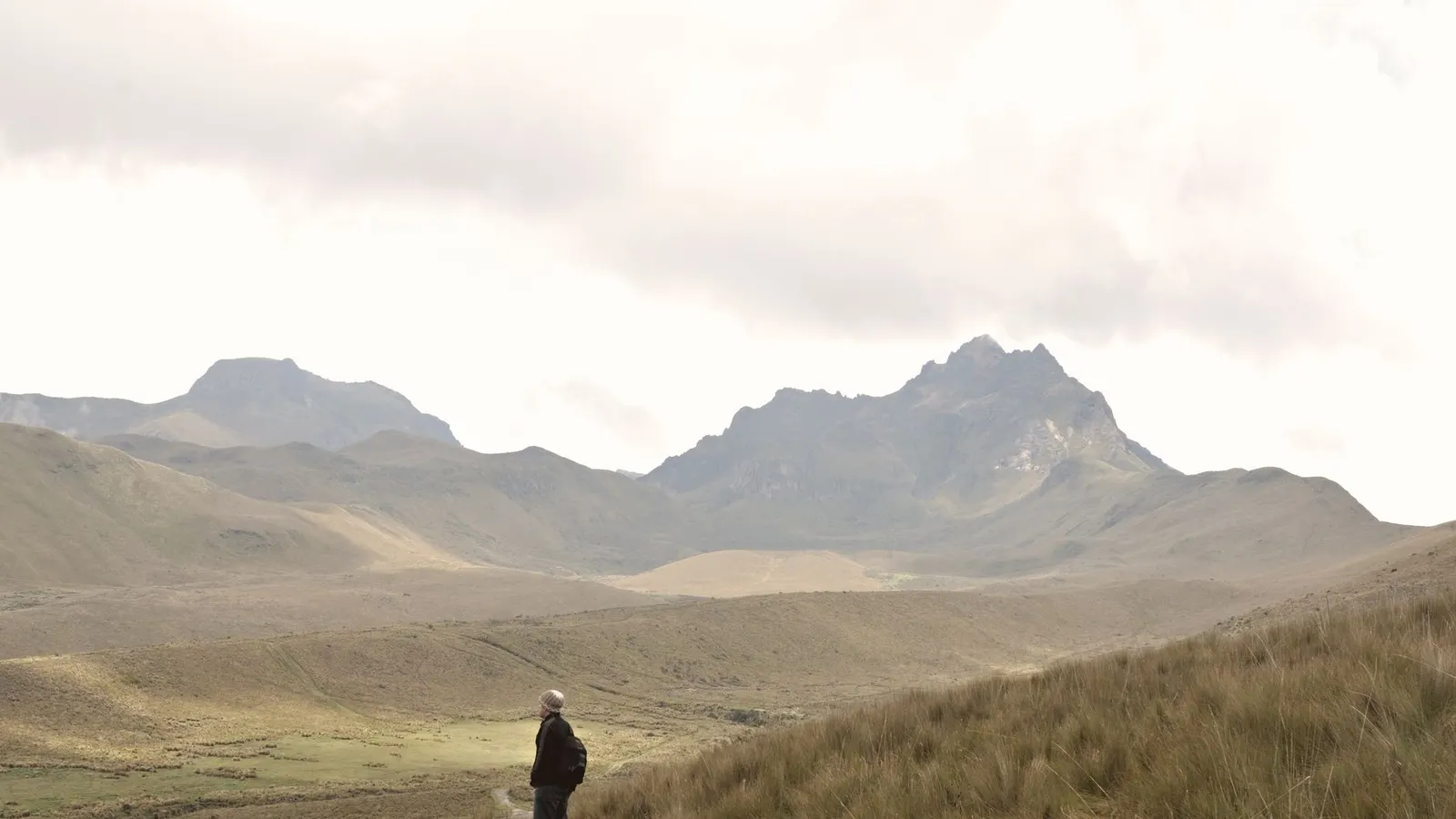
 DΛVΞ GΛRCIΛ · Pexels License
Country Guide № 050 / 194 · South America
Ecuador
Four worlds in one small country - Andes, Amazon, Pacific and the Galápagos.
“Four worlds in one small country - Andes, Amazon, Pacific and the Galápagos.”
Ecuador's pitch is density: breakfast at 2,850 m in Quito's colonial old town, lunch in cloud forest full of hummingbirds, dinner at the edge of the Amazon - with the Pacific and the Galápagos a short flight away. For travellers with two weeks rather than two months, no South American country converts time into variety at a better rate.
It is also refreshingly practical: distances are short, buses constant and cheap, and the US dollar is the currency, which removes a whole layer of arithmetic. Security has been a genuine national struggle since 2023, concentrated in coastal cities most itineraries skip - the Andean spine, the jungle lodges and the islands have carried on, and honesty about that geography is part of travelling here well.
Chapter 01
Highlights
The Galápagos Islands
Wildlife with no fear-of-human setting: sea lions on the benches, blue-footed boobies mid-dance, marine iguanas sneezing salt. Land-based island-hopping makes it affordable; liveaboards make it legendary.
Quito old town
The best-preserved colonial center in the Americas - gold-drenched La Compañía, plazas at 2,850 m and the Virgin of El Panecillo above it all. Acclimatise here first.
Quilotoa loop
A turquoise crater lake at 3,900 m and a 3-day village-to-village hike through Andean farmland - Ecuador's finest walking, with hostels ready at each stage.
Amazon lodges
Cuyabeno and Yasuní put you on blackwater lagoons with pink dolphins, ten kinds of monkey and lodges reached only by canoe - the continent's most accessible deep jungle.
Chapter 02
Entry requirements for Ecuador
Checking your passport…
up to 90 days · free entry
90 days on arrival
Before you fly
The detail
- Maximum stay
- up to 90 days
- Fee
- free entry
- Passport validity
- Most destinations want validity beyond your stay, and some want six months. Check yours against the return date.
- Onward travel
- Airlines may ask for a return or onward ticket at check-in.
- Health
- Quito's 2,850 m deserves an easy first day, and volcano climbs (Cotopaxi 5,897 m) need real acclimatisation. Yellow fever vaccination recommended for Amazon itineraries; dengue precautions on the coast. Tap water: drink bottled or filtered outside Quito and Cuenca (many say Cuenca's is fine - locals drink it). The Galápagos has clinics only; serious cases evacuate to Guayaquil, which is exactly what insurance is for.
- Money
- Ecuador uses the US dollar outright - no exchange arithmetic, but bring small bills: nothing kills a $50 note faster than a village shop, and even $20s draw sighs outside cities. Cards work in better restaurants and hotels; markets, buses and rural everything run on cash. ATMs are fine in cities (Banco Pichincha, Guayaquil); the Galápagos has few - arrive with cash for the park fee.
A United States passport enters Ecuador visa-free, but read the allowance carefully: it is 90 days in any rolling twelve months, not 90 days per visit, so two long trips in one year need a visa for the second. One extension of a further 90 days can be bought online or at a Migración office for roughly €130. Ecuadorian law formally requires visitors to hold travel or health insurance covering the stay; it is checked sporadically rather than systematically, which is exactly why people are caught by it - carry the policy document. Airlines ask for onward travel at check-in more often than officers ask at the border, and the passport should have six months left on it. The Galápagos are a separate transaction and not a mainland requirement: a US$20 Transit Control Card issued at the mainland airport before you board, the park entrance fee of US$200 in cash on landing - it doubled in August 2024, so older guidance understates it by half - and a confirmed return flight. A yellow fever certificate is asked for only when arriving from an endemic country. Ecuador has been under recurring states of emergency since January 2024 and several provinces carry standing travel advice; none of it changes the entry rule, but it should change how you plan the route.
Check another destination with this passport →
Entry details: Editorial synthesis - Ministerio de Gobierno / Migración Ecuador, Galápagos Governing Council fee schedule, foreign-ministry travel advisories (2025–2026) · compiled 18 Sept 2026
Who needs a visa for Ecuador
12 common passports| Passport | Requirement | Stay | Process |
|---|---|---|---|
| United States | Visa-free | up to 90 days | No process · €0 / $0 |
| United Kingdom | Visa-free | up to 90 days | No process · €0 / $0 |
| Germany | Visa-free | up to 90 days | No process · €0 / $0 |
| India | e-Visa | - | No Other passports record yet |
| China | e-Visa | - | No Other passports record yet |
| Brazil | Visa-free | up to 90 days | No Other passports record yet |
| Nigeria | e-Visa | - | No Other passports record yet |
| Indonesia | Visa-free | up to 90 days | No Other passports record yet |
| Philippines | e-Visa | - | No Other passports record yet |
| Vietnam | e-Visa | - | No Other passports record yet |
| Egypt | e-Visa | - | No Other passports record yet |
| Nepal | e-Visa | - | No Other passports record yet |
Holding a passport that is not listed? The picker above answers for any of them. See where your passport takes you. Source: Passport Index, updated 14 Aug 2026.
Chapter 03
When to go
BestJun–Feb.
Coast and Galápagos in their warm, sunny season; Andes mixed with sunny mornings.
The band above each month is our editorial verdict - it weighs crowds, prices and access as well as weather. The line is average daily temperature, the bars are monthly rainfall. Select a month for the figures. Climate figures: ERA5 reanalysis via Open-Meteo, 2005–2024 normals.
Chapter 04
What it costs
A day in Ecuador
Comfortable · sample day
≈ $59
Line items are real prices we track. The daily budget is an editorial estimate for this level, not their sum.
Where this sits among 244 countries we have costed
The mainland barely swings - buses, almuerzos and hostels cost the same in June and January. The Galápagos is the split economy: land-based island-hopping runs €150–250 per day, liveaboards €400–800, with last-minute boat deals in Puerto Ayora discounting 30–50 % in the May–June and September–November lulls. The park fee doubled to $200 (~€185) in August 2024 - payable in cash on arrival.
Updated Aug 2026 · Editorial synthesis - Budget Your Trip, Galápagos operator rates, backpacker cost guides (2025–2026) · confidence medium
Excludes international flights - they depend on where you fly from.
Chapter 05
Regions to know
5Quito & the northern Andes
The colonial capital, Otavalo's Saturday market, Mindo's cloud-forest hummingbirds and Cotopaxi's perfect cone - all within two hours.
Central highlands
The Avenue of the Volcanoes: Quilotoa's crater lake, adventure-sport Baños and the railway country around Riobamba beneath Chimborazo.
Cuenca & the southern Andes
Ecuador's loveliest city - river walks, panama-hat workshops - with the moor-and-lake wilderness of Cajas National Park at the door.
The Amazon (Oriente)
Canoe-access lodges on the Cuyabeno reserve and Yasuní's record biodiversity, staged from Tena or a short flight to Coca.
Galápagos Islands
Darwin's laboratory, 1,000 km offshore - island-hop from Santa Cruz and Isabela, or liveaboard to the far islands. Budget it as its own trip.
Chapter 06
Practical guide
Getting there
Quito (UIO) and Guayaquil (GYE) connect to Europe via Madrid (direct on Iberia/Air Europa) or via Bogotá, Panama City and Amsterdam - from Central Europe count on one stop and 15–17 hours. Quito airport sits a scenic 45–60 minutes from the old town. Overland arrivals from Peru use the Huaquillas or La Balsa crossings; the Colombian border at Rumichaca reopens and closes with regional politics - check before planning it.
Getting around
Buses go everywhere constantly for about $1–1.5 per hour of travel - Quito–Baños 3.5 h, Quito–Cuenca 9 h; take daytime services and keep bags on your lap, not overhead. Domestic flights (LATAM, Avianca) link Quito, Guayaquil, Cuenca and Coca cheaply. Galápagos flights leave from both Quito and Guayaquil. In cities, use registered taxis with meters or apps; Quito also has a modern metro.
Money & costs
Ecuador uses the US dollar outright - no exchange arithmetic, but bring small bills: nothing kills a $50 note faster than a village shop, and even $20s draw sighs outside cities. Cards work in better restaurants and hotels; markets, buses and rural everything run on cash. ATMs are fine in cities (Banco Pichincha, Guayaquil); the Galápagos has few - arrive with cash for the park fee.
Safety
Follow the geography: avoid Guayaquil beyond airport transits, Esmeraldas province and border zones; treat Quito with standard capital care - apps after dark, valuables light, the Teleférico and old town are fine by day. Long-distance night buses have a bag-theft problem: ride by day. The Andean tourist axis (Otavalo–Cotopaxi–Baños–Cuenca), the Amazon lodges and the Galápagos feel like a different, calmer country. State of emergency decrees come and go - they rarely touch tourist zones but check current advisories.
Health
Quito's 2,850 m deserves an easy first day, and volcano climbs (Cotopaxi 5,897 m) need real acclimatisation. Yellow fever vaccination recommended for Amazon itineraries; dengue precautions on the coast. Tap water: drink bottled or filtered outside Quito and Cuenca (many say Cuenca's is fine - locals drink it). The Galápagos has clinics only; serious cases evacuate to Guayaquil, which is exactly what insurance is for.
SIM & internet
Claro and Movistar cover the Andean corridor well; tourist SIMs are cheap with a passport, eSIMs easier still. 4G in all cities and most towns; jungle lodges are offline by design (some sell Starlink hours), and the Galápagos crawls - download everything before the flight. WhatsApp runs bookings countrywide.
Chapter 07
Driving
Mountain roads are dramatic, landslide-prone in the rainy season and shared with fearless bus drivers - average 50 km/h in planning. The Quito–Baños and Cuenca–Guayaquil (Cajas) drives are spectacular; leave night driving to people who know the potholes personally.
Rules change - verify with an official source before you rent.
ExplWorld VerifiedNo verified partners here yet - all 6 country seats are open.
Become ExplWorld Verified →Chapter 08
Itineraries through this country
Chapter 09
From the Journal
Chapter 10
Before you go
EcuadorChapter 11
Frequently asked questions
Is Ecuador safe for travellers?
Regionally split, and it pays to be honest: the security crisis since 2023 centers on coastal cities - Guayaquil, Esmeraldas, Durán - which most itineraries can simply avoid or transit by air. Quito demands normal big-city care (apps at night, phones off the street, caution around La Mariscal after dark); Cuenca, the Quilotoa villages, jungle lodges and the Galápagos remain calm. Check current advisories, then go where the travellers are.
When is the best time to visit?
June to September is the Andean dry season and the best all-rounder for hiking and volcanoes. The coast and Galápagos run warmer and sunnier December–May (with calmer seas for snorkelling); Galápagos wildlife performs year-round, so let the mainland pick your dates.
How much does a day in Ecuador cost?
The mainland is a bargain: €55 per day comfortable, €28 backpacker - set lunches run €3, dorms €9, and mainland national parks like Cotopaxi are free. The Galápagos is another economy: €185 park fee on arrival, ~€430 return flights, and €150–250 per day even land-based.