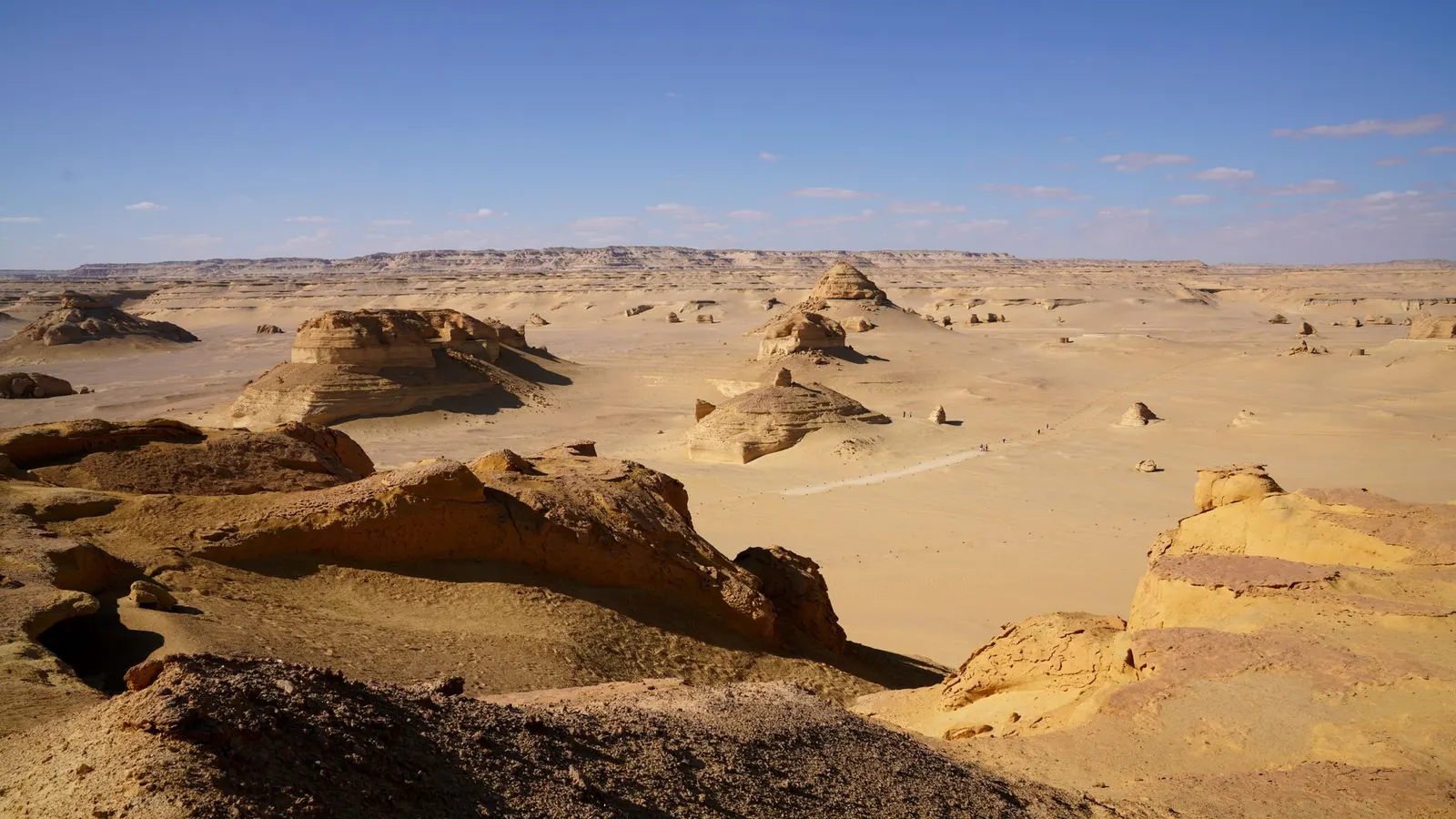
 George Wang · Pexels License
Country Guide № 051 / 194 · Middle East
Egypt
Five thousand years of monuments along one river.
“Five thousand years of monuments along one river.”
Egypt's monuments are older relative to classical Greece than classical Greece is to us - Cleopatra lived closer in time to the Moon landing than to the building of the Great Pyramid. Along a thousand kilometres of Nile there are pyramids, temple complexes at Karnak and Luxor, the painted tombs of the Valley of the Kings, and at the far southern end Abu Simbel, cut from a cliff and moved wholesale in the 1960s to escape the rising lake.
It is also demanding travel. The heat is severe from May to September, the hassle around major sites is persistent and wearing, and the gap between the price a local pays and the price you are quoted is wide. The Grand Egyptian Museum opened near Giza after two decades of construction and is the single biggest change to visiting Egypt in a generation. The Red Sea coast is a separate country in practice - resorts and diving with little connection to the Nile valley.
Chapter 01
Highlights
Giza and the Grand Egyptian Museum
The pyramids and the Sphinx, with the new museum beside them holding the complete Tutankhamun collection for the first time. Go to the plateau at opening; by ten it is hot and crowded.
Luxor
Karnak's hypostyle hall, the Valley of the Kings and Queens, and Hatshepsut's terraced temple - the greatest concentration of ancient monuments on earth, on both banks of the river.
Abu Simbel
Ramesses II's rock-cut temples near the Sudanese border, relocated block by block in the 1960s. Reached by a three-hour drive or a short flight from Aswan.
Sailing the Nile
A felucca between Aswan and Kom Ombo, or a dahabiya for something slower than the cruise boats. The river is how the country was always seen and still the best way to see it.
Chapter 02
Entry requirements for Egypt
Checking your passport…
up to 30 days · €23 / $25 · e-visa
30 days on arrival
Official portal only
Paid look-alike sites charge for a process that is free or cheap on the government portal. Use the link below and nothing else.
visa2egypt.gov.eg →Before you fly
The detail
- Maximum stay
- up to 30 days
- Process
- e-visa
- Fee
- €23 / $25
- Processing time
- Processing takes 3–7 days - apply with room to spare.
- Passport validity
- Most destinations want validity beyond your stay, and some want six months. Check yours against the return date.
- Onward travel
- Airlines may ask for a return or onward ticket at check-in.
- Arrival form
- E-visa or visa on arrival sticker, plus arrival card.
- Health
- Hepatitis A and typhoid are standard; rabies for longer stays. Travellers' diarrhoea is very common - bottled water only, including for teeth, and be careful with salads, ice and unpeeled fruit. Heat illness is a genuine risk in summer. Schistosomiasis is present in the Nile, so do not swim in it. Private hospitals in Cairo are adequate; Red Sea diving areas have decompression chambers.
- Money
- Egyptian pound, which has been devalued repeatedly and is volatile - figures age fast. Carry cash; cards work in hotels, larger restaurants and the new museum but little else. ATMs are widespread in cities. Tipping (baksheesh) is a structural part of the economy rather than a bonus: small notes for everything, constantly, and it is expected rather than optional.
United States passports need a visa: US$25 for a 30-day single entry, taken either as an e-visa at visa2egypt.gov.eg or as a sticker bought in cash at the airport before the immigration desk, which most arrivals still do and which takes a few minutes. Apply only on the government domain; the resellers are numerous, rank well in search and charge three to four times the fee. Arriving at Sharm el-Sheikh, Taba or Saint Catherine for a stay confined to the South Sinai resorts gives a free 15-day entry permit instead - but it does not admit you to the rest of the country, so the day trip to Cairo or Luxor that people book from Sharm needs the full visa, and that is the mistake this rule generates every season. Passport valid six months. A multiple-entry version costs around US$60 and earns its keep only if you plan to cross into Jordan or Israel and come back. Treat US$25 as the floor rather than the price: Egypt has moved to raise this fee more than once in recent years and the counters have not all moved together, so carry more cash than the figure beside this row if you are buying the sticker on arrival.
Check another destination with this passport →
Entry details: Editorial synthesis - Egyptian Ministry of Interior e-visa portal, South Sinai entry-permit rules (2025–2026) · compiled 15 Sept 2026
Who needs a visa for Egypt
11 common passports| Passport | Requirement | Stay | Process |
|---|---|---|---|
| United States | Visa on arrival | - | e-Visa · €23 / $25 · 3–7 d |
| United Kingdom | Visa on arrival | - | e-Visa · €23 / $25 · 3–7 d |
| Germany | Visa on arrival | - | e-Visa · €23 / $25 · 3–7 d |
| India | e-Visa | - | No Other passports record yet |
| China | Visa on arrival | - | No Other passports record yet |
| Brazil | Visa on arrival | - | No Other passports record yet |
| Nigeria | Visa required | - | No Other passports record yet |
| Indonesia | Visa required | - | No Other passports record yet |
| Philippines | Visa required | - | No Other passports record yet |
| Vietnam | Visa required | - | No Other passports record yet |
| Nepal | Visa on arrival | - | No Other passports record yet |
Holding a passport that is not listed? The picker above answers for any of them. See where your passport takes you. Source: Passport Index, updated 14 Aug 2026.
Chapter 03
When to go
BestOct–Mar. AvoidMay–Aug.
Cool and clear - the best month for the Nile valley, and the busiest.
The band above each month is our editorial verdict - it weighs crowds, prices and access as well as weather. The line is average daily temperature, the bars are monthly rainfall. Select a month for the figures. Climate figures: ERA5 reanalysis via Open-Meteo, 2005–2024 normals.
Chapter 04
What it costs
A day in Egypt
Comfortable · sample day
≈ $59
Line items are real prices we track. The daily budget is an editorial estimate for this level, not their sum.
Where this sits among 244 countries we have costed
The Nile valley is a winter destination and prices follow - accommodation and cruises rise from October to April and spike over Christmas and New Year, then fall sharply in the summer heat. The Red Sea resorts run their own European charter seasons. The pound has been devalued repeatedly, so euro-denominated figures fall while local prices climb; anything older than six months should be re-checked.
Updated Aug 2026 · Editorial synthesis - Ministry of Tourism and Antiquities site tariffs, Egyptian Railways fares, operator sampling (2025–2026) · confidence medium
Excludes international flights - they depend on where you fly from.
Chapter 05
Regions to know
5Cairo & Giza
The pyramids and the Grand Egyptian Museum, Islamic and Coptic Cairo, and Saqqara and Dahshur to the south.
Luxor & the Nile valley
Karnak, the Valley of the Kings, Hatshepsut's temple, and the river temples at Edfu and Kom Ombo.
Aswan & Nubia
The cataracts, Philae temple, Nubian villages and Abu Simbel near the Sudanese border.
The Red Sea & Sinai
Diving at Hurghada, Marsa Alam and Dahab, plus St Catherine's monastery and Mount Sinai.
Alexandria & the Western Desert
The Mediterranean city and its library, plus the White Desert, Siwa oasis and the desert circuit inland.
Chapter 06
Practical guide
Getting there
Cairo (CAI) is the main gateway with dense international service; Hurghada and Sharm el-Sheikh take heavy charter traffic, and Luxor and Aswan have some international flights. Overland from Israel via Taba and from Sudan is possible but complicated; the Sudanese border is affected by the war there.
Entry formalities
E-visa or visa on arrival sticker, plus arrival card.
Getting around
Domestic flights (EgyptAir) link Cairo, Luxor, Aswan and the Red Sea cheaply and save long days. Sleeper trains run Cairo to Luxor and Aswan and are a decent option. Day trains are cheap and slow. Within cities, use Uber or Careem rather than negotiating with taxis - it removes the single biggest daily friction. Convoys and police escorts, once mandatory on some routes, have largely ended.
Money & costs
Egyptian pound, which has been devalued repeatedly and is volatile - figures age fast. Carry cash; cards work in hotels, larger restaurants and the new museum but little else. ATMs are widespread in cities. Tipping (baksheesh) is a structural part of the economy rather than a bonus: small notes for everything, constantly, and it is expected rather than optional.
Safety
The main tourist circuit is heavily policed and visitors are rarely victims of serious crime. Foreign ministries advise against travel to North Sinai, the Western Desert near the Libyan border and some frontier areas; the Sinai resorts at Sharm el-Sheikh are treated separately and more permissively. Road accidents are the largest practical risk. Women travellers report significant street harassment, and it shapes how many choose to travel here.
Health
Hepatitis A and typhoid are standard; rabies for longer stays. Travellers' diarrhoea is very common - bottled water only, including for teeth, and be careful with salads, ice and unpeeled fruit. Heat illness is a genuine risk in summer. Schistosomiasis is present in the Nile, so do not swim in it. Private hospitals in Cairo are adequate; Red Sea diving areas have decompression chambers.
SIM & internet
Local SIMs are cheap and require passport registration. Coverage is good along the Nile and the coasts and thin in the deserts. Wifi is standard in hotels and slow. VoIP services have been restricted at times.
Chapter 07
Driving
Do not drive in Cairo. Traffic is dense, lane markings are advisory and the accident rate is among the highest in the region. A car with a driver costs €40–60 a day and is the normal arrangement. Desert routes require permits in some areas and should not be attempted alone.
Rules change - verify with an official source before you rent.
ExplWorld VerifiedNo verified partners here yet - all 6 country seats are open.
Become ExplWorld Verified →Chapter 08
Itineraries through this country
Chapter 09
From the Journal
Chapter 10
Before you go
EgyptChapter 11
Frequently asked questions
How do I handle the hassle?
It is persistent around every major site - touts, camel handlers, unofficial guides, and demands for tips for unrequested help. A firm, polite, repeated "la shukran" and continuing to walk works. Agree every price before accepting any service, including a photograph with an animal. Hiring a good private guide for the big sites removes most of it and is inexpensive.
Is a Nile cruise worth it?
Between Luxor and Aswan, yes - it covers Edfu and Kom Ombo, which are awkward to reach otherwise, and the river is the point. The large boats are comfortable and standardised; a dahabiya is smaller, slower and more expensive. Three or four nights is the usual length, and the alternative of trains plus taxis is cheaper and more work.
When is it too hot?
May to September in the Nile valley, where Luxor and Aswan regularly exceed 40 °C and touring at midday is genuinely unwise. October to April is the season, with December and January cool and pleasant. The Red Sea coast is manageable year-round with sea breezes.