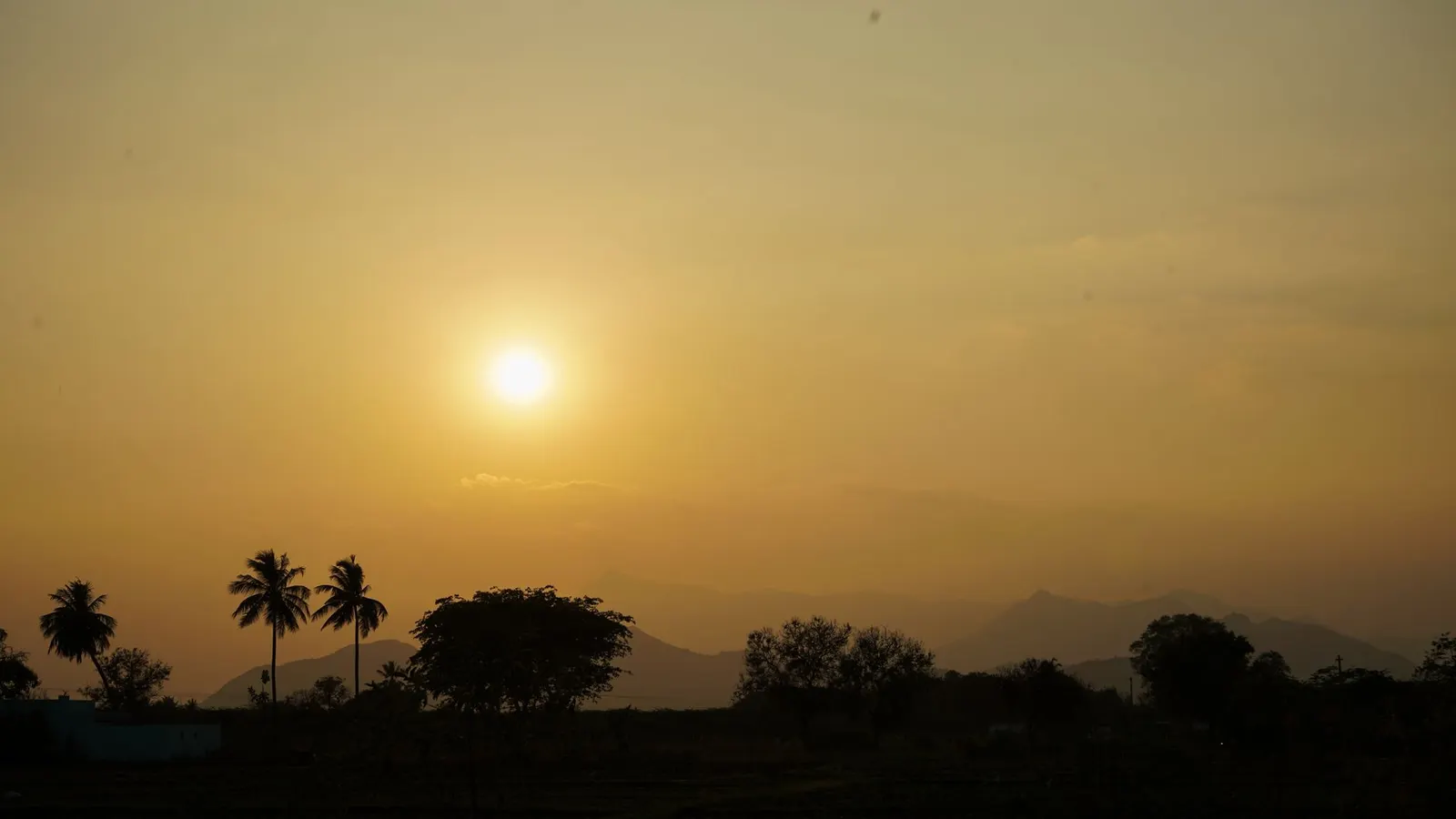
 Jai Suriya · Pexels License
Country Guide № 076 / 194 · Asia
India
Not a country you visit - a region you pick one corner of.
“Not a country you visit - a region you pick one corner of.”
India defeats the itinerary. It is larger than the European Union in population and comparable in internal diversity: Kerala and Ladakh share a flag and almost nothing else - not language, not script, not food, not climate. The travellers who have a good time here pick one region and give it three weeks. The ones who try to see the country in a fortnight spend most of it on trains.
It is also demanding in a way that no amount of preparation entirely softens. The crowds are real, the touts at the major sites are relentless, and the first three days are usually the hardest. Then something shifts. What is on the other side - the Himalayan foothills at dawn, a Rajasthani stepwell with nobody in it, a thali served on a banana leaf for under a euro - is why people come back for decades.
Chapter 01
Highlights
Rajasthan's forts and stepwells
Jaisalmer's living fort, the blue city of Jodhpur, Udaipur's lake palaces and the geometric depths of Chand Baori. The most photogenic circuit in the country and the easiest to travel.
Kerala's backwaters and hills
A houseboat night on the Alleppey channels, then up to the tea estates at Munnar. Kerala is the gentle introduction to India - literate, green and comparatively calm.
Ladakh
High-altitude desert monasteries at 3,500 metres, the Nubra valley and passes over 5,000 metres. Accessible June to September, and the acclimatisation is not optional.
Varanasi at dawn
The ghats on the Ganges at first light, from a rowing boat - cremations, ritual bathing and the oldest continuously inhabited city in India. Confronting and unforgettable.
Chapter 02
Entry requirements for India
Checking your passport…
up to 180 days · €36 / $39 · e-visa
180 days on arrival
Official portal only
Paid look-alike sites charge for a process that is free or cheap on the government portal. Use the link below and nothing else.
indianvisaonline.gov.in/evisa →Before you fly
The detail
- Maximum stay
- up to 180 days
- Process
- e-visa
- Fee
- €36 / $39
- Processing time
- Processing takes 3–5 days - apply with room to spare.
- Passport validity
- Most destinations want validity beyond your stay, and some want six months. Check yours against the return date.
- Onward travel
- Airlines may ask for a return or onward ticket at check-in.
- Arrival form
- E-visa approval letter, printed. Airlines check it at the gate and immigration will ask for a copy.
- Health
- Hepatitis A, typhoid and tetanus are standard; rabies is worth serious consideration given the street-dog and monkey population; Japanese encephalitis for long rural stays. Malaria and dengue are both present, dengue increasingly in cities during and after the monsoon. Do not drink tap water anywhere. Private hospitals in the major cities are excellent and inexpensive by European standards; rural facilities are minimal. Travel insurance with evacuation cover is essential for Himalayan travel.
- Money
- Digital payment is far more advanced than most visitors expect - UPI QR codes work at street stalls, though foreigners usually need a local number to use them. Cards work in hotels, malls and mid-range restaurants. Carry cash for markets, rickshaws and rural travel; ATMs are plentiful with €2–4 fees and low caps. Note that importing or exporting rupees is restricted. Tipping around 10 % is normal in restaurants.
A visa is required, and for tourism the practical route is the e-Tourist visa at indianvisaonline.gov.in, issued in 30-day double-entry, one-year and five-year multiple-entry forms - United States passports are eligible for all three, and the one-year visa at around US$40 is the one most visitors take. American, British, Canadian and Japanese nationals may stay up to 180 continuous days per visit on the one-year and five-year visas, where most nationalities are capped at 90; the cheaper 30-day product is exactly what it says, 30 days and two entries, and the stay stored beside this row is the longer one the stored fee buys. Apply only on that government domain: India has the largest ecosystem of lookalike sites of any destination in this dataset and they charge three to four times the fee for the same document. The fee is banded by nationality and, for the 30-day option, by season, so take the figure the portal quotes at the moment you apply rather than the one stored here. Apply at least four days before travel, enter only at a listed airport or seaport because the e-visa is not valid at land borders, and carry a passport with six months of validity and two blank pages; Arunachal Pradesh, Nagaland, Mizoram, parts of Sikkim and Lakshadweep need separate Inner Line Permits on top.
Check another destination with this passport →
Entry details: Editorial synthesis - Bureau of Immigration e-visa portal, Ministry of Home Affairs visa manual (2025–2026) · compiled 15 Sept 2026
Who needs a visa for India
11 common passports| Passport | Requirement | Stay | Process |
|---|---|---|---|
| United States | e-Visa | - | e-Visa · €36 / $39 · 3–5 d |
| United Kingdom | e-Visa | - | e-Visa · €36 / $39 · 3–5 d |
| Germany | e-Visa | - | e-Visa · €36 / $39 · 3–5 d |
| China | Visa required | - | No Other passports record yet |
| Brazil | e-Visa | - | No Other passports record yet |
| Nigeria | Visa required | - | No Other passports record yet |
| Indonesia | e-Visa | - | No Other passports record yet |
| Philippines | e-Visa | - | No Other passports record yet |
| Vietnam | e-Visa | - | No Other passports record yet |
| Egypt | Visa required | - | No Other passports record yet |
| Nepal | Visa-free | - | No Other passports record yet |
Holding a passport that is not listed? The picker above answers for any of them. See where your passport takes you. Source: Passport Index, updated 14 Aug 2026.
Chapter 03
When to go
BestOct–Feb. AvoidApr–Jun.
Cool and dry across most of the country; heavy smog on the northern plains.
The band above each month is our editorial verdict - it weighs crowds, prices and access as well as weather. The line is average daily temperature, the bars are monthly rainfall. Select a month for the figures. Climate figures: ERA5 reanalysis via Open-Meteo, 2005–2024 normals.
Chapter 04
What it costs
A day in India
Comfortable · sample day
≈ $43
Line items are real prices we track. The daily budget is an editorial estimate for this level, not their sum.
Where this sits among 244 countries we have costed
Rajasthan, Kerala and Goa lift accommodation 40–70 % from December to February and spike hardest over Christmas and New Year, when Goa roughly doubles. Hill stations invert this and peak in May and June when the plains are unbearable. Trains, domestic flights and food are flat, apart from festival weeks - Diwali fills every train in the country.
Updated Aug 2026 · Editorial synthesis - IRCTC published fares, ASI monument tariffs, Budget Your Trip (2025–2026) · confidence high
Excludes international flights - they depend on where you fly from.
Chapter 05
Regions to know
5The north & Rajasthan
Delhi, the Taj Mahal at Agra, and Rajasthan's desert forts and lake palaces - the classic first circuit.
The Himalaya
Ladakh's high desert monasteries, Himachal's valleys, Rishikesh on the Ganges and the tea hills of Darjeeling.
The south
Kerala's backwaters and tea estates, Tamil Nadu's temple towns and Karnataka's ruins at Hampi.
The west
Mumbai's scale and energy, Goa's beaches and Portuguese churches, and the Buddhist caves at Ajanta and Ellora.
The east & northeast
Kolkata's intellectual life, Odisha's temples, and the seven states beyond - Meghalaya's living root bridges and Assam's rhinos.
Chapter 06
Practical guide
Getting there
Delhi (DEL) and Mumbai (BOM) take direct flights from most European hubs in 8–9 hours; Bengaluru, Chennai, Kochi and Kolkata are well served via the Gulf. Choose the entry airport by region - flying into Delhi for a Kerala trip wastes a day and a half. Open-jaw tickets are usually the same price and worth it in a country this size.
Entry formalities
E-visa approval letter, printed. Airlines check it at the gate and immigration will ask for a copy.
Getting around
Trains are the backbone and the experience - AC 2-tier for overnight legs, and book on IRCTC weeks ahead. Domestic flights (IndiGo, Air India, Vistara) are cheap and save days on the long diagonals. In cities, use Uber and Ola rather than negotiating with auto-rickshaws, and use the metro in Delhi, Mumbai, Bengaluru and Kolkata where it exists. For a region like Rajasthan or Kerala, hiring a car with a driver at €35–50 a day is common and removes a great deal of friction.
Money & costs
Digital payment is far more advanced than most visitors expect - UPI QR codes work at street stalls, though foreigners usually need a local number to use them. Cards work in hotels, malls and mid-range restaurants. Carry cash for markets, rickshaws and rural travel; ATMs are plentiful with €2–4 fees and low caps. Note that importing or exporting rupees is restricted. Tipping around 10 % is normal in restaurants.
Safety
Petty crime, scams and traffic are the everyday risks; violent crime against tourists is rare but harassment of women is common enough to plan around. The classic scams cluster around Delhi's railway station and Paharganj - "your hotel is closed", fake tourist offices, gem-export schemes. Air pollution in Delhi and the northern plains from November to January is a genuine health hazard, not an inconvenience - check AQI and bring an N95 if you have any respiratory condition. Some border regions (parts of Kashmir, the northeast) carry specific advisories and permit requirements.
Health
Hepatitis A, typhoid and tetanus are standard; rabies is worth serious consideration given the street-dog and monkey population; Japanese encephalitis for long rural stays. Malaria and dengue are both present, dengue increasingly in cities during and after the monsoon. Do not drink tap water anywhere. Private hospitals in the major cities are excellent and inexpensive by European standards; rural facilities are minimal. Travel insurance with evacuation cover is essential for Himalayan travel.
SIM & internet
Airtel and Jio tourist SIMs cost €5–10 with generous data but need passport, photo and a verification call, which takes an hour at an official store; eSIM avoids the paperwork. 4G is fast and near-universal, including in small towns. Wifi is common but often slow. WhatsApp is how everything is arranged.
Chapter 07
Driving
Hire a car with a driver. It costs €35–50 a day, is the local norm, and removes the single largest source of stress in Indian travel. Motorbike touring in Ladakh and Himachal is popular and genuinely dangerous - take the altitude and the road edges seriously.
Rules change - verify with an official source before you rent.
ExplWorld VerifiedNo verified partners here yet - all 6 country seats are open.
Become ExplWorld Verified →Chapter 08
Itineraries through this country
Chapter 09
From the Journal
Chapter 10
Before you go
IndiaChapter 11
Frequently asked questions
How do I avoid getting sick?
Most travellers get some stomach trouble; most of it is mild and passes. The rules that actually help: bottled or filtered water only, including for teeth; hot freshly cooked food over anything sitting out; busy stalls over empty restaurants; peel your own fruit; and be careful with ice, salads and dairy outside good establishments. Carry oral rehydration salts and know that street food from a busy vendor is often safer than a lukewarm hotel buffet.
Is India safe for solo women travellers?
It requires more planning than most destinations, and many women travel here happily every year. Practical measures: dress conservatively (covered shoulders and knees), avoid arriving in a new city after dark, use women-only carriages on metros and trains where they exist, book pre-paid taxis or app-based rides rather than street cabs, and treat unwanted attention as something to walk away from firmly. Harassment ranges from staring to groping in crowds and is common enough that it should shape planning, not deter it.
How do I book trains?
Through IRCTC, the state railway system, which now accepts foreign cards and needs an account with an OTP-capable phone number. Book as far ahead as possible - popular routes sell out weeks in advance - and target AC 2-tier or AC 3-tier for long journeys. The tourist quota reserves a few berths on major routes for foreign passport holders and can rescue a full train.