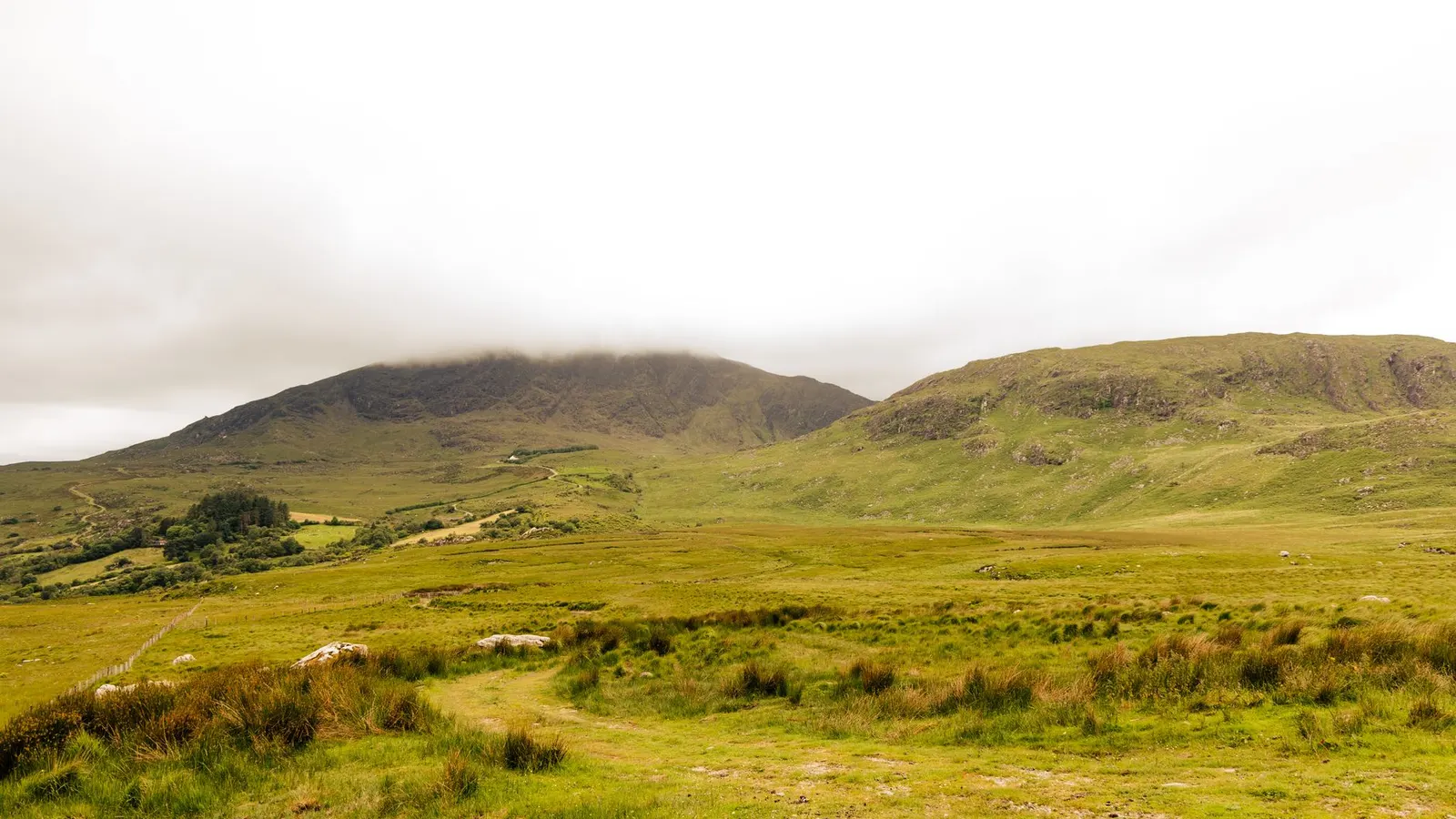
 Tanita Lupa · Pexels License
Country Guide № 080 / 194 · Europe
Ireland
Atlantic weather, prehistoric tombs and the best conversation in Europe.
“Atlantic weather, prehistoric tombs and the best conversation in Europe.”
Ireland is small, green and shaped by the Atlantic, which arrives from the west with weather that changes every twenty minutes. The Wild Atlantic Way runs 2,500 kilometres of that coast from Cork to Donegal, past the Cliffs of Moher, the limestone pavement of the Burren and the empty headlands of Mayo. Inland is bog, drumlin and monastic ruin - and at Brú na Bóinne, passage tombs built five hundred years before the pyramids at Giza.
The pub is not a cliché here so much as the country's living room, and traditional music sessions in Doolin, Dingle or Galway are the real thing rather than a floor show. The costs, though, have risen hard: Dublin accommodation is now among the most expensive in Europe, and rural Ireland has followed. Renting a car is close to essential outside the cities, and the road on the left with hedged single lanes is its own skill.
Chapter 01
Highlights
The Wild Atlantic Way
Two and a half thousand kilometres of coastal route from Kinsale to Donegal - Slea Head, the Burren, Achill Island and Slieve League's sea cliffs, which are three times the height of the Cliffs of Moher.
Brú na Bóinne
Newgrange and Knowth in the Boyne valley - Neolithic passage tombs from around 3200 BC, with a winter-solstice light box that still works. Access is by timed tour from the visitor centre only.
Traditional music sessions
Doolin, Dingle, Galway and Miltown Malbay. The good ones are unamplified, unannounced and in the corner of a pub - go for the second half of the evening and do not talk over the slow airs.
The Aran Islands and Connemara
Stone-walled fields and Iron Age forts on Inis Mór, and the bogs, mountains and Irish-speaking villages of Connemara facing them across the bay.
Chapter 02
Entry requirements for Ireland
Checking your passport…
up to 90 days · free entry
90 days on arrival
Before you fly
The detail
- Maximum stay
- up to 90 days
- Fee
- free entry
- Passport validity
- Most destinations want validity beyond your stay, and some want six months. Check yours against the return date.
- Onward travel
- Airlines may ask for a return or onward ticket at check-in.
- Health
- No vaccinations required. Healthcare is good; EHIC/GHIC covers EU and UK visitors for state care. Pharmacies handle minor issues. Tap water is safe, with occasional local boil notices in the west. Sun is weaker than the wind chill suggests but burns on clear days regardless.
- Money
- Euro in the Republic, pounds sterling in Northern Ireland - a genuine practical consideration if you cross. Cards are accepted almost everywhere including small pubs. Tipping is 10–12 % in restaurants and not expected in pubs where you order at the bar. ATMs are widespread and generally free.
Ireland is in the European Union but not in the Schengen area, and that single fact is worth more to an American itinerary than anything else on this page. A US passport is admitted without a visa for up to 90 days, granted by the officer at the desk rather than by a form, and those days do not touch the Schengen 90/180 allowance at all - which makes Ireland the standard way to sit out part of a rolling window before returning to the continent. There is no pre-travel authorisation to buy, no ETIAS, no Entry/Exit System and no biometric enrolment: Ireland stamps passports and asks questions instead, so expect to be asked where you are staying, how long for and how the trip is paid for, and to have a return or onward ticket to show. The length written in the stamp is at the officer’s discretion and can be less than ninety days. A Schengen visa does not admit you here and an Irish permission does not admit you there. The one real trap is Northern Ireland: the land border is open, unmarked and crossed without any check at all, but crossing it is legally entering the United Kingdom, and a US citizen visiting the UK needs a UK Electronic Travel Authorisation obtained in advance, unless they are legally resident in Ireland and can show it - the absence of a border post is not an absence of a requirement, and a day trip to the Giant’s Causeway is a trip to another country.
Check another destination with this passport →
Entry details: Editorial synthesis - Irish Naturalisation and Immigration Service, Common Travel Area rules, UK Home Office Electronic Travel Authorisation guidance (2025–2026) · compiled 16 Sept 2026
Who needs a visa for Ireland
12 common passports| Passport | Requirement | Stay | Process |
|---|---|---|---|
| United States | Visa-free | up to 90 days | No process · €0 / $0 |
| United Kingdom | Visa-free | - | No process · €0 / $0 |
| Germany | Visa-free | - | No process · €0 / $0 |
| India | Visa required | - | No Other passports record yet |
| China | Visa required | - | No Other passports record yet |
| Brazil | Visa-free | up to 90 days | No Other passports record yet |
| Nigeria | Visa required | - | No Other passports record yet |
| Indonesia | Visa required | - | No Other passports record yet |
| Philippines | Visa required | - | No Other passports record yet |
| Vietnam | Visa required | - | No Other passports record yet |
| Egypt | Visa required | - | No Other passports record yet |
| Nepal | Visa required | - | No Other passports record yet |
Holding a passport that is not listed? The picker above answers for any of them. See where your passport takes you. Source: Passport Index, updated 14 Aug 2026.
Chapter 03
When to go
BestMay–Jun, September. AvoidJan–Feb, November.
The best month - long days, wildflowers, and before the crowds.
The band above each month is our editorial verdict - it weighs crowds, prices and access as well as weather. The line is average daily temperature, the bars are monthly rainfall. Select a month for the figures. Climate figures: ERA5 reanalysis via Open-Meteo, 2005–2024 normals.
Chapter 04
What it costs
A day in Ireland
Comfortable · sample day
≈ $146
Line items are real prices we track. The daily budget is an editorial estimate for this level, not their sum.
Where this sits among 244 countries we have costed
Car hire is the volatile line - rates can triple between February and July, and availability genuinely runs out in summer. Dublin accommodation is expensive year-round and spikes for rugby internationals, concerts and conferences regardless of season. Rural B&Bs largely close from November to March.
Updated Aug 2026 · Editorial synthesis - Irish Rail published fares, OPW site tariffs, rental and accommodation sampling (2025–2026) · confidence high
Excludes international flights - they depend on where you fly from.
Chapter 05
Regions to know
5Dublin & the east
The capital, the Boyne valley passage tombs, the Wicklow mountains and Glendalough's monastic city.
The southwest
Cork and Kinsale, the Ring of Kerry and the quieter Dingle peninsula, and Killarney's lakes and mountains.
The west
Galway, the Burren's limestone pavement, the Cliffs of Moher, the Aran Islands and Connemara.
The northwest
Sligo's surf and Yeats country, Mayo's empty coast and Achill Island, and Donegal's Slieve League cliffs.
The midlands & Shannon
Bog and lakeland, the monastic ruins at Clonmacnoise and the river cruising country of the Shannon.
Chapter 06
Practical guide
Getting there
Dublin (DUB) is the main hub with dense European and transatlantic service; Cork, Shannon and Knock take European flights. Ferries run from Holyhead, Liverpool, Pembroke and Cherbourg. Dublin airport has US preclearance, so transatlantic passengers clear American immigration before boarding.
Getting around
Irish Rail links Dublin with Cork, Galway, Limerick and Belfast reasonably well and reaches little else. Bus Éireann and private coaches cover more. For the west coast, a car. Dublin has trams, buses and a Leap card; contactless works on much of it now. Driving is on the left, and rural roads are narrow, hedged and faster than they look.
Money & costs
Euro in the Republic, pounds sterling in Northern Ireland - a genuine practical consideration if you cross. Cards are accepted almost everywhere including small pubs. Tipping is 10–12 % in restaurants and not expected in pubs where you order at the bar. ATMs are widespread and generally free.
Safety
Safe, with normal city precautions in Dublin, where opportunistic theft and bike theft are common. The genuine hazards are outdoors and weather-driven: coastal cliffs with no barriers, rip currents, and hill fog on Kerry and Wicklow mountains that comes down fast. Rural driving at night on unlit single-lane roads is the most likely way to come to harm.
Health
No vaccinations required. Healthcare is good; EHIC/GHIC covers EU and UK visitors for state care. Pharmacies handle minor issues. Tap water is safe, with occasional local boil notices in the west. Sun is weaker than the wind chill suggests but burns on clear days regardless.
SIM & internet
EU roaming applies in the Republic; Northern Ireland is UK and may incur charges - watch for your phone hopping networks near the border. Coverage is good on main routes and patchy in the west and in mountain valleys. Wifi is standard in accommodation.
Chapter 07
Driving
The M50 barrier-free toll catches almost every visitor: there is no booth, and an unpaid toll becomes a fine that reaches the rental company. Rural roads are narrow with stone walls and hedges right at the edge, and the posted 80 km/h on a boreen is a limit rather than a suggestion of speed. Speed limits are in km/h in the Republic and mph in Northern Ireland.
Rules change - verify with an official source before you rent.
ExplWorld VerifiedNo verified partners here yet - all 6 country seats are open.
Become ExplWorld Verified →Chapter 08
Itineraries through this country
Chapter 09
From the Journal
Chapter 10
Before you go
IrelandChapter 11
Frequently asked questions
Do I need a car?
Outside Dublin, Galway, Cork and the rail corridors, effectively yes. Rural bus services are sparse and the best coastal scenery is not on a public route. Rentals are expensive in summer and often require a substantial credit-card deposit; check the insurance excess carefully, because Irish rental excess charges are notoriously high.
How expensive is Dublin?
Very. The city has one of the tightest accommodation markets in Europe and hotel rates reflect it - €200 a night midweek is normal, and event weekends are worse. The rest of the country is cheaper but no longer cheap. Budgeting €135 a day is realistic; Dublin alone will push past that.
Is Northern Ireland a separate trip?
It is a separate country - part of the UK, using pounds sterling, with its own entry rules - but the land border is entirely open and unmarked. You can drive across without stopping. Car rental agreements often restrict or surcharge cross-border driving, so check before you cross, and note your phone may roam onto a UK network.