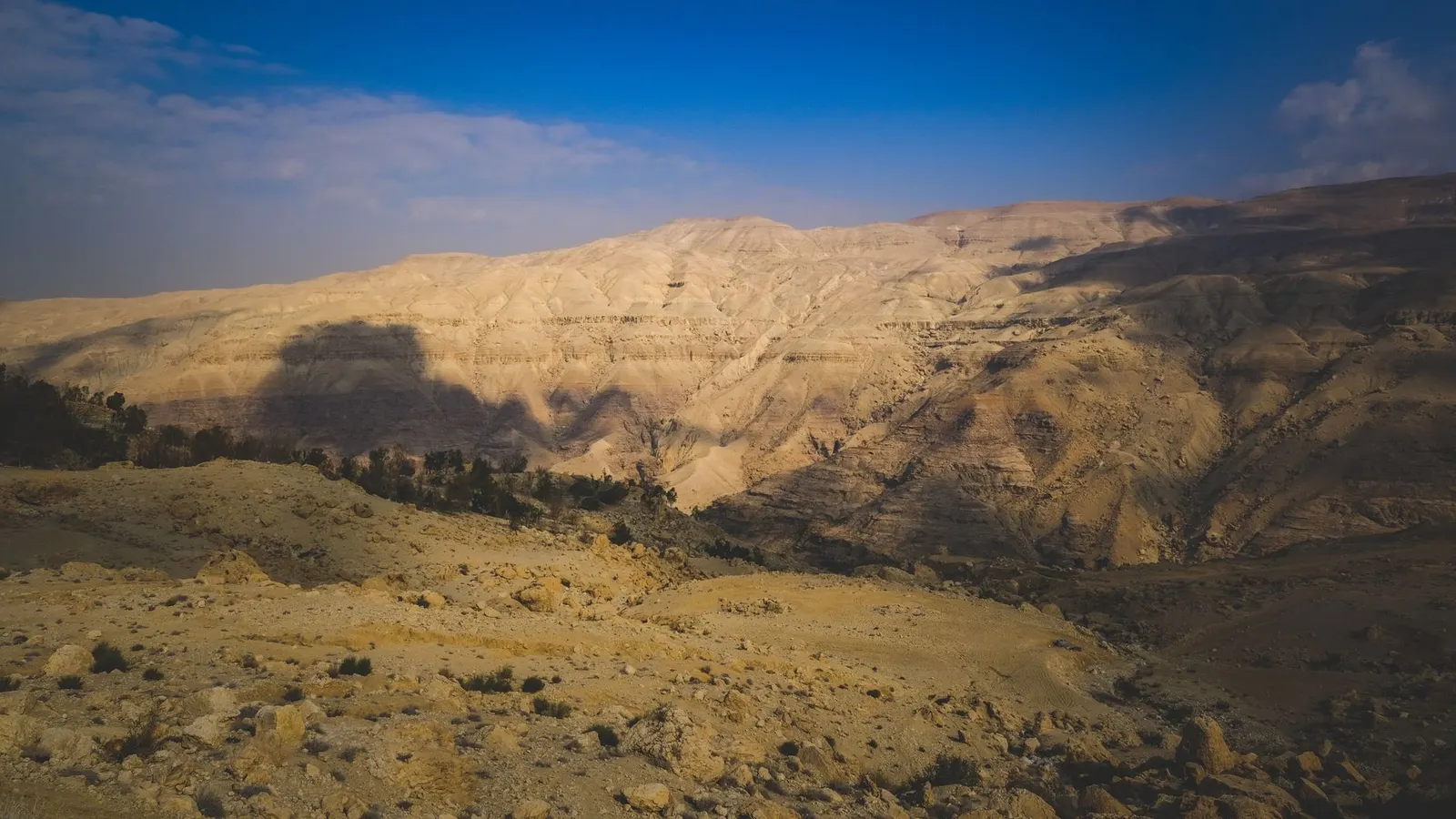
 Francesco Ungaro · Pexels License
Country Guide № 085 / 194 · Middle East
Jordan
Petra, Wadi Rum and a Roman city that is still standing.
“Petra, Wadi Rum and a Roman city that is still standing.”
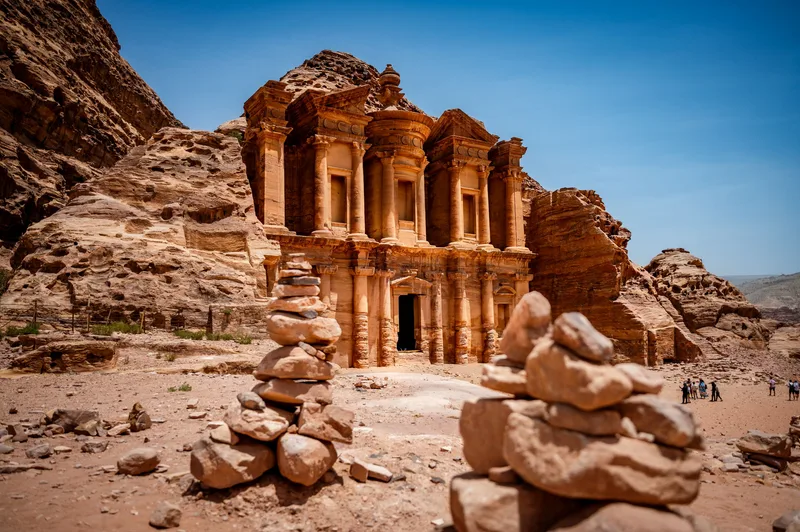
Jordan is small, stable and holds an improbable concentration of things worth crossing a continent for. Petra is the obvious one - a Nabataean city carved into rose sandstone, approached through a kilometre-long crack in the rock, and far larger than the one famous facade suggests. Two days there is a minimum and most people wish they had booked three.
Wadi Rum is red sand and granite towers where Bedouin camps take visitors overnight, Jerash is arguably the best-preserved Roman provincial city in the world, and the Dead Sea is 430 metres below sea level and salty enough to hold you up. The Jordan Trail runs 675 kilometres end to end. Tourism is a large part of the economy and the regional situation has hit it hard since 2023, which means fewer visitors and a country that would like you to come.
Chapter 01
Highlights
Petra
The Siq, the Treasury, the Monastery up 800 steps, and a whole city of tombs and temples most visitors never reach. Two days minimum; the back route in via Little Petra avoids the morning crowd entirely.
Wadi Rum
Red sand, granite and sandstone towers, rock art and Bedouin camps. Stay a night - the desert at dusk and the sky afterwards are the reason to be there rather than the day tour.
Jerash
A Roman provincial city with its colonnaded street, oval forum, theatres and temples largely intact, forty minutes north of Amman and far less visited than it should be.
The Dead Sea and Wadi Mujib
Floating at 430 metres below sea level, and the Mujib gorge nearby where you wade and swim upstream between canyon walls between April and October.
Chapter 02
Entry requirements for Jordan
Checking your passport…
up to 30 days · €52 / $56 · visa on arrival
30 days on arrival
Before you fly
The detail
- Maximum stay
- up to 30 days
- Process
- visa on arrival
- Fee
- €52 / $56
- Passport validity
- Most destinations want validity beyond your stay, and some want six months. Check yours against the return date.
- Onward travel
- Airlines may ask for a return or onward ticket at check-in.
- Arrival form
- Jordan Pass QR code or visa on arrival, plus a customs declaration.
- Health
- Hepatitis A and typhoid are standard advice. Healthcare in Amman is good and Jordan is a regional medical-tourism centre. Tap water is chlorinated but most people drink bottled. Heat and dehydration are the main risks; Petra involves several hours of walking with limited shade. The Dead Sea's salinity is hard on eyes and any cuts, and floating face-down is genuinely dangerous.
- Money
- Dinar, pegged to the US dollar and one of the stronger currencies in the region - prices are higher than neighbours as a result. Cards work in hotels and larger restaurants; markets, small towns and Bedouin camps are cash. ATMs are widespread. Tipping around 10 % is normal. Alcohol is available but heavily taxed.
Jordan issues a visa on arrival to United States passports at Queen Alia and at most land and sea crossings - JOD 40 for a single entry, payable by card or in dinars at the desk. Almost nobody should pay it: the Jordan Pass, bought online before you fly from the tourism ministry’s own scheme, waives the visa fee entirely provided you stay at least three consecutive nights, and it includes entry to Petra and some forty other sites, so it pays for itself on the first morning. The exception is the crossing most travellers from Israel and the West Bank use - at the King Hussein, or Allenby, Bridge no visa is issued on arrival and the Jordan Pass waives nothing, so a visa must be obtained in advance unless you are returning on a Jordanian entry that is still valid. Arriving through Aqaba is the opposite case: the special economic zone grants a free visa at the border on condition that you spend a night inside the zone. Stays run to 30 days, and anything longer must be registered at a police station before the month is out - a small errand and an expensive fine when it is forgotten.
Check another destination with this passport →
Entry details: Editorial synthesis - Jordanian Ministry of Interior visa rules, Ministry of Tourism and Antiquities Jordan Pass, Aqaba Special Economic Zone Authority (2025–2026) · compiled 15 Sept 2026
Who needs a visa for Jordan
12 common passports| Passport | Requirement | Stay | Process |
|---|---|---|---|
| United States | Visa on arrival | - | Visa on arrival · €52 / $56 |
| United Kingdom | Visa on arrival | - | Visa on arrival · €52 / $56 |
| Germany | Visa on arrival | - | Visa on arrival · €52 / $56 |
| India | Visa on arrival | - | No Other passports record yet |
| China | Visa on arrival | - | No Other passports record yet |
| Brazil | Visa on arrival | - | No Other passports record yet |
| Nigeria | Visa required | - | No Other passports record yet |
| Indonesia | Visa on arrival | - | No Other passports record yet |
| Philippines | Visa required | - | No Other passports record yet |
| Vietnam | Visa on arrival | - | No Other passports record yet |
| Egypt | Visa-free | up to 30 days | No Other passports record yet |
| Nepal | Visa required | - | No Other passports record yet |
Holding a passport that is not listed? The picker above answers for any of them. See where your passport takes you. Source: Passport Index, updated 14 Aug 2026.
Chapter 03
When to go
BestMar–May, Sep–Nov. AvoidJun–Aug.
Warm days, wildflowers and the best walking of the year.
The band above each month is our editorial verdict - it weighs crowds, prices and access as well as weather. The line is average daily temperature, the bars are monthly rainfall. Select a month for the figures. Climate figures: ERA5 reanalysis via Open-Meteo, 2005–2024 normals.
Chapter 04
What it costs
A day in Jordan
Comfortable · sample day
≈ $92
Line items are real prices we track. The daily budget is an editorial estimate for this level, not their sum.
Where this sits among 244 countries we have costed
Spring and autumn are the peak and accommodation in Petra and Wadi Rum rises accordingly; summer is cheap because it is too hot. The dinar's dollar peg keeps prices stable in a region where they usually are not. Note that visitor numbers have fallen sharply since 2023 and some operators are discounting well below the historical norm.
Updated Aug 2026 · Editorial synthesis - Jordan Pass official tariff, Petra Development Authority prices, operator sampling (2025–2026) · confidence high
Excludes international flights - they depend on where you fly from.
Chapter 05
Regions to know
5Amman & the north
The capital's citadel and Roman theatre, Jerash's Roman city, Ajloun's castle and the Umm Qais ruins over the Golan.
The Dead Sea & the Jordan valley
Floating at 430 metres below sea level, the Mujib gorge, Bethany beyond the Jordan and the resort strip.
The King's Highway
Madaba's mosaic map, Mount Nebo, Karak's crusader castle and Dana Biosphere Reserve on the way south.
Petra
The Nabataean city - the Siq, the Treasury, the Monastery and the high places, plus Little Petra to the north.
Wadi Rum & Aqaba
Desert of red sand and granite with Bedouin camps, and the Red Sea diving and beaches at Aqaba.
Chapter 06
Practical guide
Getting there
Amman Queen Alia (AMM) is the main airport with good European and Gulf connections; Aqaba (AQJ) serves the south and the Red Sea. The land border with Israel at the Sheikh Hussein and Wadi Araba crossings is used regularly, with conditions depending on the regional situation. Ferries link Aqaba and Nuweiba in Egypt.
Entry formalities
Jordan Pass QR code or visa on arrival, plus a customs declaration.
Getting around
JETT buses connect Amman with Petra, Aqaba and the main sites reliably; local minibuses cover more and run to no timetable. Renting a car is straightforward and the roads are good - the Desert Highway is fast and the King's Highway is the scenic alternative through Karak and Dana. Taxis and Uber/Careem work in Amman. Wadi Rum requires a 4×4 with a local driver, which is arranged through the camps.
Money & costs
Dinar, pegged to the US dollar and one of the stronger currencies in the region - prices are higher than neighbours as a result. Cards work in hotels and larger restaurants; markets, small towns and Bedouin camps are cash. ATMs are widespread. Tipping around 10 % is normal. Alcohol is available but heavily taxed.
Safety
Very safe by any regional measure, with low crime and a heavy tourist-police presence. The border areas with Syria and Iraq carry advisories. The practical risks are flash floods in the wadis - which have killed visitors, including at Petra - and heat. Check the forecast before entering any canyon, and follow site closures, which are issued for good reason.
Health
Hepatitis A and typhoid are standard advice. Healthcare in Amman is good and Jordan is a regional medical-tourism centre. Tap water is chlorinated but most people drink bottled. Heat and dehydration are the main risks; Petra involves several hours of walking with limited shade. The Dead Sea's salinity is hard on eyes and any cuts, and floating face-down is genuinely dangerous.
SIM & internet
Local SIMs are cheap and sold at the airport with passport registration. Coverage is good across the populated west and along the highways, thinner in the eastern desert. Wifi is standard in hotels. WhatsApp is universal.
Chapter 07
Driving
Roads are good and self-driving is genuinely easy here, which is unusual in the region. The King's Highway is the scenic route south and worth the extra hours. Speed cameras are numerous and fines reach the rental company. Wadi Rum needs a 4×4 and a local driver, and going in alone is neither permitted nor sensible.
Rules change - verify with an official source before you rent.
ExplWorld VerifiedNo verified partners here yet - all 6 country seats are open.
Become ExplWorld Verified →Chapter 08
Itineraries through this country
Chapter 09
From the Journal
Chapter 10
Before you go
JordanChapter 11
Frequently asked questions
Is the Jordan Pass worth it?
Almost always. Bought online before arrival, it waives the tourist visa fee and includes Petra and around forty other sites for roughly the price of a two-day Petra ticket alone. The condition is that you stay at least three nights. For any normal itinerary it is a straightforward saving.
Is it safe given the region?
Jordan itself is stable and safe for visitors, and the tourist areas are well policed. Foreign ministries advise against travel to the immediate Syrian and Iraqi border areas. The regional situation since 2023 has caused a sharp fall in visitor numbers rather than a change in conditions on the ground. Check current advice, as always, but the country is not the story.
How much time do I need?
A week covers Amman, Jerash, the Dead Sea, Petra and Wadi Rum, which is the classic circuit. Ten days lets you add Aqaba for diving, the desert castles, and Dana Biosphere Reserve, which is the best walking in the country and consistently overlooked.