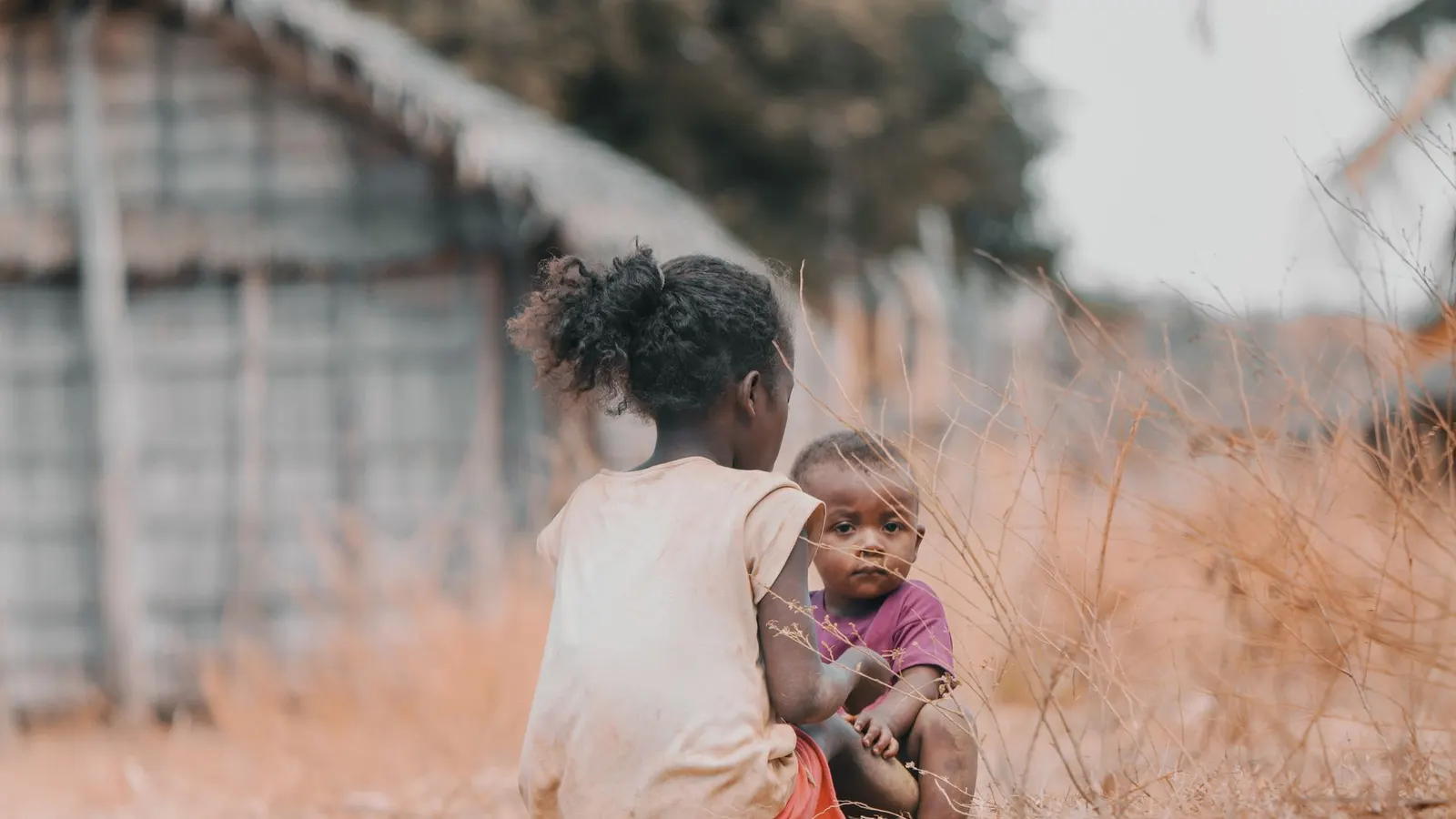
 Chrystopher Huyghensnot · Pexels License
Country Guide № 100 / 194 · Africa
Madagascar
An island continent where nine in ten species live nowhere else.
“An island continent where nine in ten species live nowhere else.”
Madagascar broke away from the African mainland roughly 160 million years ago and from India about 88 million years ago, and everything evolved separately after that. Around 90% of its wildlife exists nowhere else: over 100 lemur species, most of the world's chameleons, six of the nine baobab species. Ecologically there is nothing else like it.
Getting to any of it is the hard part. The road network is poor and deteriorating, distances are long, and internal flights are expensive and unreliable. Antananarivo to Morondava - for the Avenue of the Baobabs - is a full day of driving on a good day. Almost everyone travels with a driver and vehicle for the whole trip, budgets three weeks for a proper circuit, and accepts that the schedule will slip.
Chapter 01
Highlights
Avenue of the Baobabs
A dirt road near Morondava lined with Grandidier's baobabs up to 30 metres tall and 800 years old. Sunset is the classic shot; sunrise has better light and almost nobody there.
Andasibe-Mantadia
The most accessible rainforest, three hours east of the capital, and the place to hear the indri - the largest living lemur, whose call carries for kilometres. Night walks find chameleons and mouse lemurs.
Tsingy de Bemaraha
A UNESCO-listed forest of limestone pinnacles sharp enough to shred boots, crossed on via ferrata and rope bridges. Reachable only in the dry season and only after a hard two-day journey from Morondava.
Isalo and the RN7
The southern highway from Antananarivo to Tuléar passes Ranomafana's rainforest, Anja's ring-tailed lemurs and Isalo's sandstone canyons and natural pools - the best-organised route in the country.
Chapter 02
Entry requirements for Madagascar
Checking your passport…
up to 30 days · €35 / $38 · visa on arrival
30 days on arrival
Official portal only
Paid look-alike sites charge for a process that is free or cheap on the government portal. Use the link below and nothing else.
www.evisamada.gov.mg →Before you fly
The detail
- Maximum stay
- up to 30 days
- Process
- visa on arrival
- Fee
- €35 / $38
- Passport validity
- Most destinations want validity beyond your stay, and some want six months. Check yours against the return date.
- Onward travel
- Airlines may ask for a return or onward ticket at check-in.
- Health
- Malaria is present nationwide, highest on the coasts and lowest in the highlands. Plague occurs seasonally in some rural areas - a real if small risk. Yellow fever certificate required from endemic countries. Medical facilities are very limited outside the capital; evacuation insurance is not optional.
- Money
- The ariary is cash-only for most purposes. ATMs in Antananarivo and larger towns dispense small amounts; carry euros to change. Cards work at upmarket hotels in the capital and almost nowhere else. Withdraw generously before heading into the parks.
Madagascar is one of the few remaining destinations where the visa is genuinely a transaction at the airport: an American passport is issued a tourist visa on arrival at Ivato in Antananarivo, at Nosy Be and at the other international airports, and nothing has to be arranged first. The tariff is banded by length - roughly €35 for a stay up to thirty days and around €45 for thirty-one to sixty - and a stay longer than sixty days is a different animal that has to be applied for at a Malagasy consulate before you travel, so decide the length before you fly rather than at the desk. The fee on very short stays has been waived, restored and waived again more than once over the past few years; at the time of writing a fee is charged on every tourist stay, so budget for one and treat a free fifteen days as a bonus if the desk applies it that day. Pay in cash - euros or United States dollars are taken, ariary too, and the card terminal is the thing that fails; bring the amount close to exact, because change at the counter is nobody’s priority. The official e-visa portal takes the application in advance and is worth using for one reason above all others, which is the queue: Ivato processes a widebody arrival through two windows, one to pay and one to stamp, and a pre-filled application moves you through the first of them. It does not replace the counter and it is not required. Your passport needs six months of validity and two blank pages, and the desk will ask for a return or onward ticket and an address in Madagascar. Madagascar asks for a yellow fever certificate from anyone arriving from a country where the disease is a risk of transmission - the International Health Regulations list, which is wider than the handful of countries people think of as endemic - and the threshold that catches travellers is not the ticket but the layover: a transit of MORE THAN TWELVE HOURS in an airport of such a country brings the requirement with it, while a shorter connection does not. The certificate counts only from ten days after the injection, so it is a fortnight’s job rather than a week’s, and one that has been reissued or replaced should travel with the original. Read your own itinerary for the length of the stop before you decide you do not need one. The ariary is a closed currency you cannot buy before you arrive, cash machines thin out quickly outside Antananarivo, and the same counter that issues your visa is the last dependable place to change money for some distance.
Check another destination with this passport →
Entry details: Editorial synthesis - Madagascar Ministry of the Interior visa tariff, Immigration Service arrival procedure and the official e-visa portal (2025–2026) · compiled 18 Sept 2026
Who needs a visa for Madagascar
12 common passports| Passport | Requirement | Stay | Process |
|---|---|---|---|
| United States | Visa on arrival | - | Visa on arrival · €35 / $38 |
| United Kingdom | Visa on arrival | - | Visa on arrival · €35 / $38 |
| Germany | Visa on arrival | - | Visa on arrival · €35 / $38 |
| India | Visa on arrival | - | Visa on arrival · €35 / $38 |
| China | Visa on arrival | - | Visa on arrival · €35 / $38 |
| Brazil | Visa on arrival | - | Visa on arrival · €35 / $38 |
| Nigeria | Visa on arrival | - | Visa on arrival · €35 / $38 |
| Indonesia | Visa on arrival | - | Visa on arrival · €35 / $38 |
| Philippines | Visa on arrival | - | Visa on arrival · €35 / $38 |
| Vietnam | Visa on arrival | - | Visa on arrival · €35 / $38 |
| Egypt | Visa on arrival | - | Visa on arrival · €35 / $38 |
| Nepal | Visa on arrival | - | Visa on arrival · €35 / $38 |
Holding a passport that is not listed? The picker above answers for any of them. See where your passport takes you. Source: Passport Index, updated 14 Aug 2026.
Chapter 03
When to go
BestMay, Sep–Nov. AvoidDec–Mar.
Dry, mild and quiet - excellent conditions.
The band above each month is our editorial verdict - it weighs crowds, prices and access as well as weather. The line is average daily temperature, the bars are monthly rainfall. Select a month for the figures. Climate figures: ERA5 reanalysis via Open-Meteo, 2005–2024 normals.
Chapter 04
What it costs
A day in Madagascar
Comfortable · sample day
≈ $92
Line items are real prices we track. The daily budget is an editorial estimate for this level, not their sum.
Where this sits among 244 countries we have costed
Nosy Be and Sainte-Marie peak in July–August and over Christmas. The mainland circuit prices are steady; vehicle hire is the dominant cost year-round.
Updated Aug 2026 · Editorial synthesis - operator tariffs, park fees and market sampling (2025–2026) · confidence medium
Excludes international flights - they depend on where you fly from.
Chapter 05
Regions to know
5Antananarivo and the highlands
The hill capital, the Rova palace, Ambohimanga's royal hill and the rice terraces towards Antsirabe.
The RN7 south
Ranomafana, Ambalavao, Anja, Isalo and the road down to Tuléar and Ifaty's reef - the country's best-organised route.
The east coast
Andasibe's indri, the Pangalanes canal, Masoala's rainforest and Île Sainte-Marie for humpback whales from July to September.
The west and Morondava
The Avenue of the Baobabs, Kirindy's fossa and the hard road north to the Tsingy de Bemaraha.
The north
Nosy Be's beaches and diving, Ankarana's tsingy and caves, Amber Mountain's rainforest and Diego Suarez's enormous bay.
Chapter 06
Practical guide
Getting there
Ivato International near Antananarivo is served by Air France, Turkish, Ethiopian, Kenya Airways, Air Austral and Corsair. Réunion and Mauritius connections are frequent and often the cheapest way in from the Indian Ocean side.
Getting around
Almost everyone hires a 4x4 with a driver for the duration - it is the only practical way to cover the country and costs €70–120 a day including fuel. Taxi-brousse minibuses are the local option: very cheap, very slow, and departures happen when full. Tsaradia flies domestically.
Money & costs
The ariary is cash-only for most purposes. ATMs in Antananarivo and larger towns dispense small amounts; carry euros to change. Cards work at upmarket hotels in the capital and almost nowhere else. Withdraw generously before heading into the parks.
Safety
Urban theft in Antananarivo, particularly around Analakely and after dark. Some southern routes carry banditry advisories. Vanilla-region tensions in the northeast flare periodically. Do not travel by road at night anywhere in the country.
Health
Malaria is present nationwide, highest on the coasts and lowest in the highlands. Plague occurs seasonally in some rural areas - a real if small risk. Yellow fever certificate required from endemic countries. Medical facilities are very limited outside the capital; evacuation insurance is not optional.
SIM & internet
Telma, Orange and Airtel; SIMs need passport registration. 4G in Antananarivo and larger towns; expect nothing in the parks and on long road sections.
Chapter 07
Driving
Self-driving is impractical for most visitors - road conditions, navigation and security combine badly. Hire a vehicle with a driver, which is the local norm and not expensive by the standards of what it saves you.
Rules change - verify with an official source before you rent.
ExplWorld VerifiedNo verified partners here yet - all 6 country seats are open.
Become ExplWorld Verified →Chapter 08
Itineraries through this country

Chapter 09
From the Journal
Chapter 10
Before you go
MadagascarChapter 11
Frequently asked questions
How long do I need?
Three weeks for a real circuit. Two weeks covers the RN7 south from the capital to Tuléar, or the east coast rainforests, but not both. One week means Antananarivo plus one park, and you will spend much of it in a vehicle. Domestic flights on Tsaradia buy back days but are expensive and prone to schedule changes.
Is it safe?
Petty crime and occasional armed robbery in Antananarivo, especially after dark, are the urban risk. Rural banditry - dahalo cattle raiders - affects parts of the south and southwest, and some routes carry specific advisories. Political demonstrations recur. Travel with a reputable operator and do not drive at night.
What about cyclones?
The east coast is hit most years between January and March, sometimes severely, and the rains close roads across the whole country. Nothing on the eastern seaboard should be planned for that window. The dry season from April to November is the only reliable time to travel.