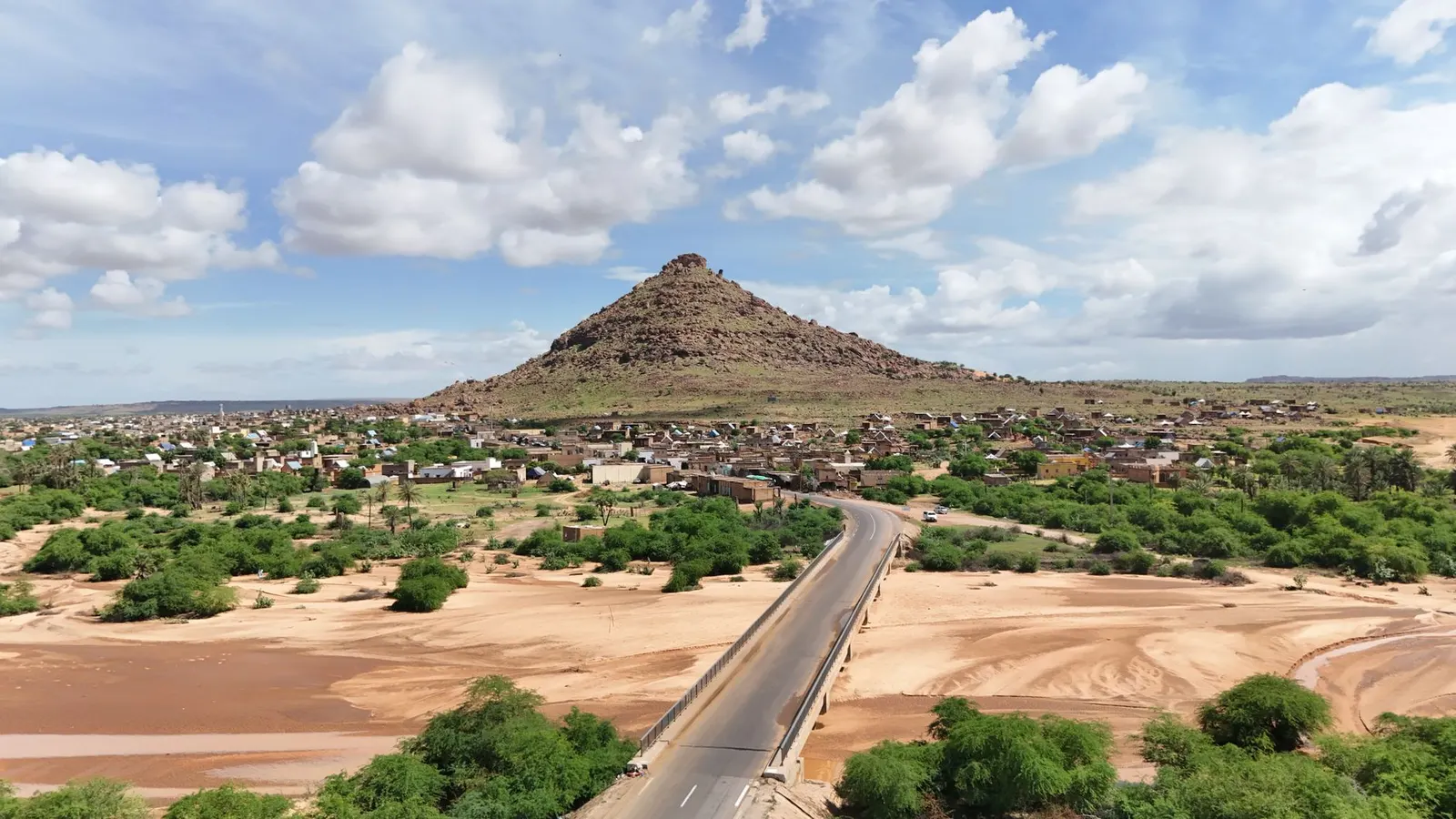
 Ben Khatry · Pexels License
Country Guide № 104 / 194 · Africa
Mali
Timbuktu, Djenné's mud mosque and the Niger bend - behind an against-all-travel advisory.
Advisory - travel not recommended · checked 26 Sept 2026
Foreign ministries advise against ALL travel to Mali. Jihadist groups control or contest large areas of the north and centre, kidnapping of foreigners is a severe risk, improvised explosive devices are used on rural roads and attacks have reached Bamako. Standard scores are suspended while this alert is active.
Official advisory →Every advisory in force →“Timbuktu, Djenné's mud mosque and the Niger bend - behind an against-all-travel advisory.”
Mali holds four UNESCO World Heritage sites and a cultural record that runs from the Ghana Empire through Mansa Musa's Mali to the Songhai. The Great Mosque of Djenné is the largest mud-brick building on earth, replastered every year by the whole town in a single day. Timbuktu's manuscript libraries preserved scholarship that Europe was not producing at the time. The music - Ali Farka Touré, Toumani Diabaté, Tinariwen, Salif Keita - is arguably the continent's richest.
Since 2012 the country has been in armed conflict. Jihadist groups control or contest large areas of the north and centre, the state has changed hands by coup twice since 2020, and French and UN forces have withdrawn. Most governments advise against all travel to the entire country. This guide exists because the record deserves documenting and because the people who do go - researchers, diaspora, journalists - need accurate practical detail. It is not a recommendation.
Chapter 01
Highlights
Great Mosque of Djenné
The largest mud-brick structure in the world, rebuilt in 1907 on a much older foundation, and replastered every spring by the entire town in a communal day of work. Non-Muslims cannot enter the building.
Timbuktu
The Sankoré and Djinguereber mosques and the manuscript collections - tens of thousands of texts, many evacuated to Bamako in 2012 when armed groups destroyed mausoleums in the city.
The Bandiagara escarpment
A 150-kilometre cliff in Dogon country with villages built into the rock face, granaries, masked funerary ceremonies and Tellem structures predating Dogon settlement.
The Niger river
The great bend through Ségou, Mopti and Gao, carrying pinasses and pirogues, with the inland delta flooding seasonally into one of Africa's most important wetlands.
Chapter 02
Entry requirements for Mali
Advisory - travel not recommended · checked 26 Sept 2026
Foreign ministries advise against ALL travel to Mali. Jihadist groups control or contest large areas of the north and centre, kidnapping of foreigners is a severe risk, improvised explosive devices are used on rural roads and attacks have reached Bamako. Standard scores are suspended while this alert is active.
Official advisory →Every advisory in force →Checking your passport…
up to 30 days · €80 / $86 · embassy application
30 days on arrival
Before you fly
The detail
- Maximum stay
- up to 30 days
- Process
- embassy application
- Fee
- €80 / $86
- Processing time
- Processing takes 7–30 days - apply with room to spare.
- Passport validity
- Most destinations want validity beyond your stay, and some want six months. Check yours against the return date.
- Onward travel
- Airlines may ask for a return or onward ticket at check-in.
- Health
- Yellow fever certificate compulsory for entry. Malaria year-round nationwide. Meningitis risk in the dry season. Medical facilities are limited to Bamako and evacuation is complicated by the security situation.
- Money
- CFA franc, pegged to the euro. Cash dominates. ATMs in Bamako work for some foreign cards; nothing reliable elsewhere. Bring euros.
An American passport needs a Malian visa obtained before travel, from a Malian mission, and there is no online route and nothing issued at Bamako on arrival for an ordinary visitor. The file is a consular one in the old sense: an application form, photographs, a passport with six months of validity, a return ticket, proof of where you will stay - a hotel booking or a letter of invitation from a host in Mali, which in practice is what moves a file - and the yellow fever certificate, which is part of the application rather than something checked only at the border. Allow a month; a week is what the fee schedule implies and it is not what the calendar does, particularly where the passport has to travel by post. Treat the figure shown against this record as the order of the fee rather than a schedule: missions set their own charges, quote them in different currencies, distinguish single from multiple entry, and change them without announcement, and a service charge is sometimes added on top. It is normally paid in cash - United States dollars in good condition, more often than not - before the file is opened, and it is not returned if the visa is refused. Confirm the amount with the mission that will actually handle your application before you budget for the trip, and budget above it. Thirty days is the usual single-entry grant, and an extension is a matter for the immigration authorities in Bamako rather than something arranged from outside. A yellow fever certificate is a condition of entry to Mali for every arrival old enough to be vaccinated - not only for arrivals from a country where the disease is a risk, which is the rule at most of its neighbours - and it is genuinely checked at the border, and often at the airline gate, rather than merely filed. The vaccination counts only from ten days after the injection, so it is the one part of the trip that cannot be arranged in the last week: get it before you book anything non-refundable, carry the yellow booklet rather than a photograph of it, and understand that there is nothing to be done about a missing one on the day. Two things about the journey rather than the paperwork, and they are the reason the paperwork looks the way it does. The security situation across the centre and north of the country has closed most overland routes and the mission will want to know exactly where you intend to go. And an insurer will almost certainly not cover a trip into a country under an all-travel advisory - check the policy wording before you buy it rather than after, because the standard exclusion is written to bite precisely here. None of the above is a recommendation. Foreign ministries advise against all, or all but essential, travel to Mali, and that advisory is not a formality: ordinary travel insurance does not cover a journey to a country under one and policies that appear to are usually void on the first claim, medical evacuation cover goes with it, several carriers do not fly there, it sharply limits what any embassy can do for you once you are inside the country, and the standard scores on this guide are suspended for as long as the alert stands. The border’s answer and the advice are two different questions, and this record answers only the first - a visa being obtainable is not evidence that the advisory has eased.
Check another destination with this passport →
Entry details: Editorial synthesis - Malian consular application requirements at accredited missions, International Health Regulations yellow-fever conditions and published foreign-ministry travel advice (2025–2026) · compiled 18 Sept 2026
Who needs a visa for Mali
12 common passports| Passport | Requirement | Stay | Process |
|---|---|---|---|
| United States | Visa required | - | Embassy visit · €80 / $86 · 7–30 d |
| United Kingdom | Visa required | - | Embassy visit · €80 / $86 · 7–30 d |
| Germany | Visa required | - | Embassy visit · €80 / $86 · 7–30 d |
| India | Visa required | - | Embassy visit · €80 / $86 · 7–30 d |
| China | Visa required | - | Embassy visit · €80 / $86 · 7–30 d |
| Brazil | Visa required | - | Embassy visit · €80 / $86 · 7–30 d |
| Nigeria | Visa-free | - | Embassy visit · €80 / $86 · 7–30 d |
| Indonesia | Visa-free | up to 30 days | Embassy visit · €80 / $86 · 7–30 d |
| Philippines | Visa required | - | Embassy visit · €80 / $86 · 7–30 d |
| Vietnam | Visa required | - | Embassy visit · €80 / $86 · 7–30 d |
| Egypt | Visa required | - | Embassy visit · €80 / $86 · 7–30 d |
| Nepal | Visa required | - | Embassy visit · €80 / $86 · 7–30 d |
Holding a passport that is not listed? The picker above answers for any of them. See where your passport takes you. Source: Passport Index, updated 14 Aug 2026.
Chapter 03
When to go
BestNov–Feb. AvoidApr–Sep.
Dry and cooler; harmattan dust.
The band above each month is our editorial verdict - it weighs crowds, prices and access as well as weather. The line is average daily temperature, the bars are monthly rainfall. Select a month for the figures. Climate figures: ERA5 reanalysis via Open-Meteo, 2005–2024 normals.
Chapter 04
What it costs
A day in Mali
Comfortable · sample day
≈ $70
Line items are real prices we track. The daily budget is an editorial estimate for this level, not their sum.
Where this sits among 244 countries we have costed
Prices do not follow a tourist season; Bamako hotel demand comes from NGOs, mining and diplomatic traffic. What moves them is scarcity: since September 2025 an armed blockade of fuel imports has brought repeated shortages to Bamako, and while it lasts, fuel bought on the street and the transport that depends on it cost far more than the official pump price.
Updated Sept 2026 · Editorial synthesis - market sampling and reported prices (2025–2026) · confidence low
Excludes international flights - they depend on where you fly from.
Chapter 05
Regions to know
5Bamako and the southwest
The capital on the Niger, the national museum, and the Manding hills towards the Guinean border.
Ségou and the inner delta
The old Bambara capital, the Niger's seasonal floodplain and the fishing economy of the Bozo.
Mopti and Djenné
The river port, the great mosque and the route into Dogon country - all under advisory.
Dogon country
The Bandiagara escarpment, cliff villages and masked ceremonies. Off-limits since 2012.
The north
Timbuktu, Gao, Kidal and the Sahara beyond - contested territory with no visitor access.
Chapter 06
Practical guide
Getting there
Bamako-Sénou is served by Turkish, Royal Air Maroc, Ethiopian, Air Algérie and ASKY. Land borders are open in principle but the roads to them run through contested territory. Air is the only route that makes sense.
Getting around
Bamako has taxis and minibuses. Intercity road travel carries substantial risk outside the immediate southwest. Domestic flights to Timbuktu and Gao have been intermittent. Any movement should be arranged through people with current local knowledge.
Money & costs
CFA franc, pegged to the euro. Cash dominates. ATMs in Bamako work for some foreign cards; nothing reliable elsewhere. Bring euros.
Safety
Armed conflict, kidnapping of foreigners, improvised explosive devices on roads in the centre and north, and periodic attacks in Bamako itself. Most governments advise against all travel to the whole country. Consular assistance is severely limited.
Health
Yellow fever certificate compulsory for entry. Malaria year-round nationwide. Meningitis risk in the dry season. Medical facilities are limited to Bamako and evacuation is complicated by the security situation.
SIM & internet
Orange Mali and Moov; SIM registration requires a passport. 4G in Bamako and regional capitals. Network shutdowns accompany security incidents.
Chapter 07
Driving
Self-driving outside Bamako is not advisable under the current security situation. Improvised explosive devices have been used on roads in the centre and north, and checkpoints may be operated by non-state groups.
Rules change - verify with an official source before you rent.
ExplWorld VerifiedNo verified partners here yet - all 6 country seats are open.
Become ExplWorld Verified →Chapter 08
Itineraries through this country
Chapter 09
From the Journal
Chapter 10
Before you go
MaliChapter 11
Frequently asked questions
Can anyone visit at all?
Bamako functions and has an international airport, and a small number of people fly in for work, family or research. Overland movement outside the capital carries serious risk of kidnapping and attack, and most governments advise against all travel to the entire country. There is no responsible way to present Mali as a destination in the current situation.
What happened to the manuscripts?
When armed groups took Timbuktu in 2012, librarians and families smuggled an estimated 350,000 manuscripts down the Niger and by road to Bamako in trunks and rice sacks. Most survived. Conservation continues in the capital, and the story is one of the more remarkable acts of cultural rescue on record.
Is the music scene still going?
Yes, though displaced. The Festival au Désert near Timbuktu has been in exile since 2012. Bamako's clubs still function, and many of the country's musicians tour internationally. The tradition has not stopped; the ability to hear it in its home region has.