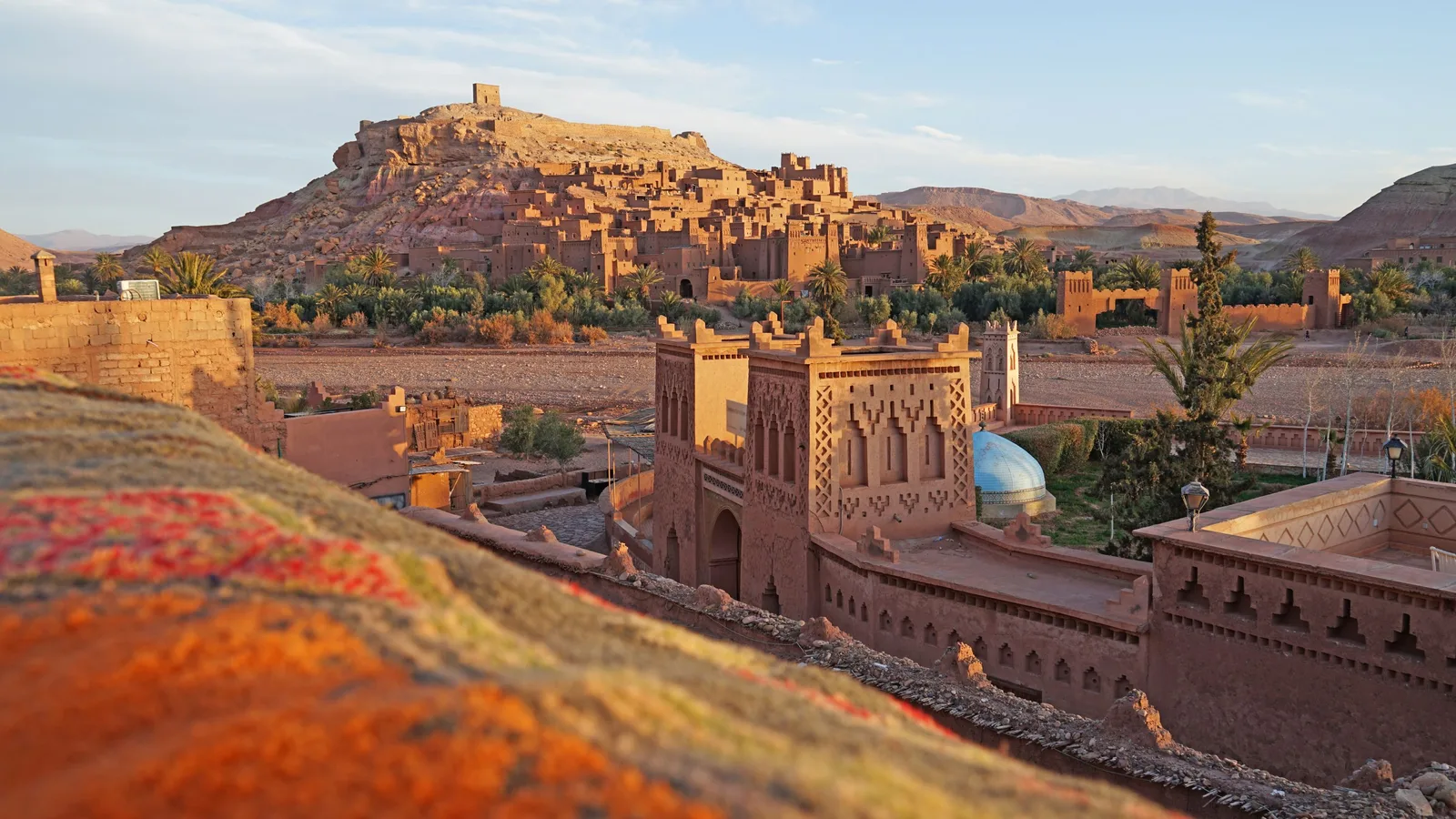
 Milan / stock.adobe.com
Country Guide № 115 / 194 · Africa
Morocco
Atlas peaks, Saharan dunes and four imperial cities, three hours from Europe.
“Atlas peaks, Saharan dunes and four imperial cities, three hours from Europe.”
Morocco is fourteen kilometres from Europe at its closest point and feels a great deal further. Fez's medina is the largest car-free urban area in the world and is genuinely disorienting; Marrakech's Jemaa el-Fna fills with food stalls and storytellers every evening; and behind both, the High Atlas rises to 4,167 metres at Toubkal, with Berber villages and mule tracks on the way up.
The country divides into the imperial cities, the mountains, the Atlantic coast and the desert, and the mistake is to try all four in a week. The Sahara is a long drive from anywhere - Merzouga is ten hours from Marrakech - and the hard sell in the medinas wears people down when they are tired. Give it two weeks, pick two regions, and the country becomes what people rave about instead of what they complain about.
Chapter 01
Highlights
Fez medina
Nine thousand alleys, the world's oldest continuously operating university at al-Qarawiyyin, and the tanneries. Hire a guide for the first morning - not for information, but so you learn how the geometry works.
The High Atlas
Toubkal at 4,167 metres, climbable in two days from Imlil with a guide, and the Aït Bougmez valley beyond it. Berber villages, mule tracks and a mountain culture the coach tours never reach.
The Sahara at Erg Chebbi
Dunes up to 150 metres near Merzouga, reached by a long drive over the Atlas via the Dades and Todra gorges. Camp overnight; the point is the sky after the generators go off.
Chefchaouen and the Rif
A blue-painted hill town in the northern mountains, small enough to walk in an hour and photogenic enough that it stays busy. The Rif behind it is barely visited.
Chapter 02
Entry requirements for Morocco
Checking your passport…
up to 90 days · free entry
90 days on arrival
Before you fly
The detail
- Maximum stay
- up to 90 days
- Fee
- free entry
- Passport validity
- Most destinations want validity beyond your stay, and some want six months. Check yours against the return date.
- Onward travel
- Airlines may ask for a return or onward ticket at check-in.
- Health
- No vaccinations required; hepatitis A and typhoid are standard advice. Healthcare is adequate in the cities and private clinics in Casablanca and Marrakech are good. Tap water is chlorinated but most visitors drink bottled. Stomach upsets are common - be careful with salads, ice and unpasteurised dairy. Heat in the south and the desert is severe from May to September.
- Money
- Dirham, a closed currency you cannot obtain outside the country - withdraw on arrival. Cash dominates outside hotels and larger restaurants. ATMs are widespread. Bargaining is expected in souks and not in shops. Tipping is small and constant. Note that you should spend or change back your dirhams before leaving, as exporting them is restricted.
US passports enter visa-free for 90 days, stamped on arrival at the airports and at the ferry ports from Spain, with no form to file beforehand. Passport validity of six months is the working standard. Staying beyond 90 days means applying for a residence card at a local police prefecture within the period - an overstay is dealt with at departure, where it becomes a fine and a conversation rather than a formality. The land frontier with Algeria has been shut since 1994 and there is no crossing at any point, so an overland route between the two does not exist; Ceuta and Melilla are Spanish cities on the African coast and their borders into Morocco function as external Schengen crossings, with the queues to match. Western Sahara to the south is administered by Morocco and carries its own advisory from several governments, including a warning against the border area with Mauritania.
Check another destination with this passport →
Entry details: Editorial synthesis - Moroccan Ministry of Foreign Affairs visa-exemption list, US State Department country information (2025–2026) · compiled 15 Sept 2026
Who needs a visa for Morocco
12 common passports| Passport | Requirement | Stay | Process |
|---|---|---|---|
| United States | Visa-free | up to 90 days | No process · €0 / $0 |
| United Kingdom | Visa-free | up to 90 days | No process · €0 / $0 |
| Germany | Visa-free | up to 90 days | No process · €0 / $0 |
| India | e-Visa | - | No Other passports record yet |
| China | Visa-free | up to 90 days | No Other passports record yet |
| Brazil | Visa-free | up to 90 days | No Other passports record yet |
| Nigeria | Visa required | - | No Other passports record yet |
| Indonesia | Visa-free | up to 90 days | No Other passports record yet |
| Philippines | Visa-free | up to 90 days | No Other passports record yet |
| Vietnam | Visa required | - | No Other passports record yet |
| Egypt | Visa required | - | No Other passports record yet |
| Nepal | Visa required | - | No Other passports record yet |
Holding a passport that is not listed? The picker above answers for any of them. See where your passport takes you. Source: Passport Index, updated 14 Aug 2026.
Chapter 03
When to go
BestMar–May, Sep–Nov. AvoidJul–Aug.
Warm and green - the best month, with the Atlas still snow-capped.
The band above each month is our editorial verdict - it weighs crowds, prices and access as well as weather. The line is average daily temperature, the bars are monthly rainfall. Select a month for the figures. Climate figures: ERA5 reanalysis via Open-Meteo, 2005–2024 normals.
Chapter 04
What it costs
A day in Morocco
Comfortable · sample day
≈ $70
Line items are real prices we track. The daily budget is an editorial estimate for this level, not their sum.
Where this sits among 244 countries we have costed
Riads in Marrakech, Fez and Essaouira rise sharply in spring and autumn and over Christmas and New Year, and are cheap in the July and August heat. Desert camps follow the same pattern. Rail and bus fares are fixed. Ramadan changes the experience considerably - many restaurants close during daylight and the pace shifts - and prices soften.
Updated Aug 2026 · Editorial synthesis - ONCF published fares, riad and operator sampling, Moroccan tourism data (2025–2026) · confidence high
Excludes international flights - they depend on where you fly from.
Chapter 05
Regions to know
5Marrakech & the south
The red city and Jemaa el-Fna, the Atlas foothills, Essaouira on the coast and the Agafay stony desert.
Fez, Meknes & the middle
The largest living medieval medina, Volubilis' Roman mosaics, and the cedar forests and lakes of the Middle Atlas.
The High Atlas
Toubkal, Imlil and the Aït Bougmez valley - Berber villages, mule tracks and the country's best walking.
The Sahara & the gorges
The Dades and Todra gorges, Aït Benhaddou's kasbah, Merzouga's dunes and the road east to Algeria.
The north & the coast
Tangier and the Strait, Chefchaouen's blue town and the Rif, Rabat, and the Atlantic surf coast south.
Chapter 06
Practical guide
Getting there
Marrakech (RAK), Casablanca (CMN), Fez, Tangier and Agadir all take low-cost and legacy flights from across Europe - often under three hours and very cheap. Ferries cross from Spain to Tangier Med in an hour, and from Algeciras and Tarifa. The land border with Algeria is closed; Ceuta and Melilla are Spanish enclaves with land crossings.
Getting around
ONCF trains link Tangier, Rabat, Casablanca, Fez and Marrakech, with the Al Boraq high-speed line covering Tangier to Casablanca in just over two hours. CTM and Supratours buses cover everywhere the trains do not. Grands taxis are shared and cheap. For the desert and the Atlas, hiring a car with a driver at €70–90 a day is the standard approach and avoids the mountain roads.
Money & costs
Dirham, a closed currency you cannot obtain outside the country - withdraw on arrival. Cash dominates outside hotels and larger restaurants. ATMs are widespread. Bargaining is expected in souks and not in shops. Tipping is small and constant. Note that you should spend or change back your dirhams before leaving, as exporting them is restricted.
Safety
Generally safe, with petty theft, aggressive commission-based touting and taxi overcharging the everyday issues. Violent crime against visitors is uncommon. The Western Sahara territory in the south carries a specific advisory. Mountain weather and flash floods in the gorges are the environmental risks. Traffic in cities is chaotic and pedestrian crossings are theoretical.
Health
No vaccinations required; hepatitis A and typhoid are standard advice. Healthcare is adequate in the cities and private clinics in Casablanca and Marrakech are good. Tap water is chlorinated but most visitors drink bottled. Stomach upsets are common - be careful with salads, ice and unpasteurised dairy. Heat in the south and the desert is severe from May to September.
SIM & internet
Maroc Telecom, Orange and inwi sell cheap tourist SIMs. Coverage is good in cities, along main roads and in the popular desert areas. Wifi is standard in riads and cafés. Some VoIP services have been restricted intermittently.
Chapter 07
Driving
Motorways are excellent and the mountain roads are not - the Tizi n'Tichka over the Atlas is spectacular, slow and busy with lorries. Police checkpoints are frequent and routine. Speed cameras and radar traps are common and fines are collected on the spot. City driving in Marrakech and Fez is not worth attempting.
Rules change - verify with an official source before you rent.
ExplWorld VerifiedNo verified partners here yet - all 6 country seats are open.
Become ExplWorld Verified →Chapter 08
Itineraries through this country
Chapter 09
From the Journal
Chapter 10
Before you go
MoroccoChapter 11
Frequently asked questions
How do I handle the medina hassle?
It is real, concentrated in Marrakech and Fez, and it eases enormously once you stop engaging. Unsolicited guides, "the tannery is this way", "the square is closed today" - a firm no and continuing to walk is the whole technique. Hiring an official guide for a half day removes most of it and is worth it. Prices in souks are negotiated; start well below and be prepared to walk away.
Is it safe for solo women travellers?
Many travel here without difficulty, and it requires more planning than in Europe. Street harassment is common and mostly verbal. Practical measures: dress covering shoulders and knees, avoid walking in medinas alone late, use official taxis, and stay in riads where the staff know you. Female-led tour groups and riad-based itineraries are widely used and effective.
How much time do I need for the desert?
Three days minimum from Marrakech or Fez - the drive to Merzouga is around ten hours each way, usually broken at Dades or Todra. The two-day version means twenty hours in a minibus for one night in a camp. If you only have a few days, the smaller dunes at Zagora are closer, or skip the desert and take the Atlas instead.