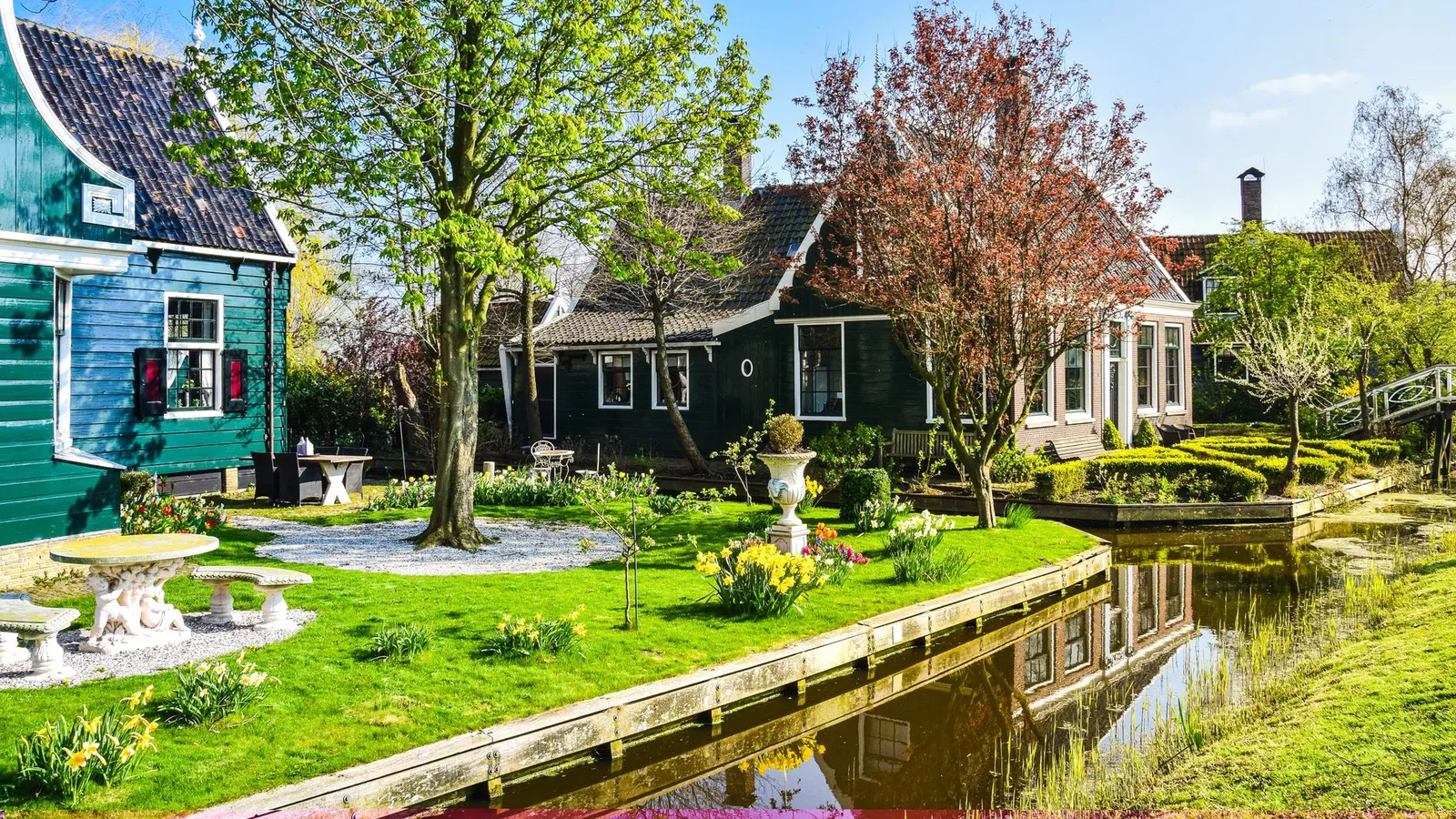
 AXP Photography · Pexels License
Country Guide № 121 / 194 · Europe
Netherlands
A country built on purpose, and best seen from a bicycle.
“A country built on purpose, and best seen from a bicycle.”
A quarter of the Netherlands sits below sea level and the whole country is a deliberate construction - polders drained, dunes reinforced, a storm barrier the size of a motorway. That engineering produced the flattest landscape in Europe and, with it, the most complete cycling infrastructure anywhere: 35,000 kilometres of dedicated path with its own signage system, and a culture in which everyone from schoolchildren to government ministers cycles.
Amsterdam absorbs most visitors and has been actively pushing back - the city has restricted new hotels, banned some tour buses and run campaigns discouraging stag parties. It remains superb and is a quarter of the country at most. Utrecht, Rotterdam, Haarlem and Maastricht are all under two hours away, and the Wadden islands and the Hoge Veluwe are the landscapes nobody mentions.
Chapter 01
Highlights
Amsterdam's museums
The Rijksmuseum, the Van Gogh Museum and the Anne Frank House - all timed-entry and all requiring booking weeks ahead, the last of them months.
Cycling the countryside
The national junction network (knooppunten) numbers every intersection, so you plan a route as a list of numbers. Waterland north of Amsterdam and the Veluwe are the easy starts.
The Wadden islands
Texel, Terschelling and Vlieland in the UNESCO-listed Wadden Sea - dunes, seals, dark skies and mudflat walking at low tide with a guide.
Rotterdam and the Delta Works
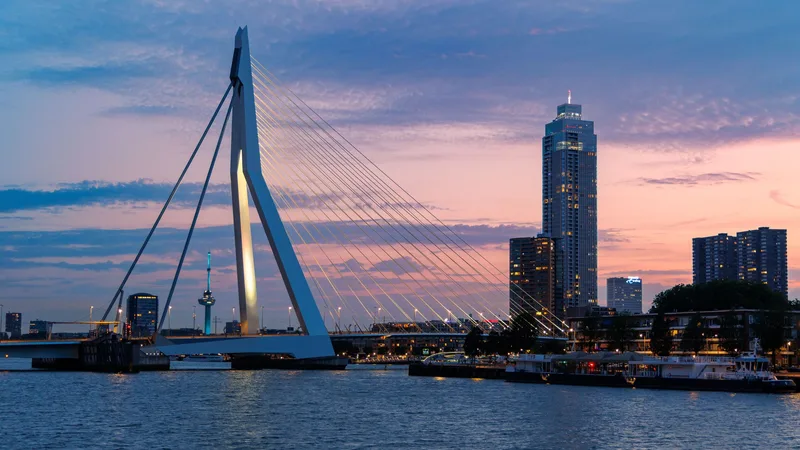
A city rebuilt in modern architecture after 1940, and the storm-surge barriers south of it - the largest flood-defence engineering on earth, and open to visit.
Chapter 02
Entry requirements for Netherlands
Checking your passport…
up to 90 days · free entry
90 days on arrival
Before you fly
The detail
- Maximum stay
- up to 90 days
- Fee
- free entry
- Passport validity
- Most destinations want validity beyond your stay, and some want six months. Check yours against the return date.
- Onward travel
- Airlines may ask for a return or onward ticket at check-in.
- Health
- No vaccinations required. Healthcare is excellent; EHIC/GHIC covers EU and UK visitors. Dutch GPs are conservative prescribers, which surprises visitors expecting antibiotics for minor complaints. Tap water is excellent. Note that while cannabis is tolerated in licensed coffeeshops, it is not legal, quantities are limited, and taking any across a border is a criminal offence.
- Money
- Card-first, and specifically debit-first - many Dutch shops, supermarkets and restaurants accept Maestro and local debit cards but not Visa or Mastercard credit cards. This catches visitors out constantly. Carry a debit card and some cash. Tipping is rounding up or about 5–10 %.
A United States passport enters the Netherlands without a visa for 90 days in any rolling 180, and the allowance belongs to the twenty-nine-country Schengen area rather than to the Netherlands - count backwards 180 days from any date and add up every day spent anywhere in it. Schiphol is one of Europe’s busiest external borders and, since the Entry/Exit System became fully operational on 10 April 2026, a first crossing there takes a facial image and fingerprints in person; there is no stamp afterwards and the count keeps itself. Allow for the queue on a first arrival, particularly on a morning bank of transatlantic flights. The Dutch trap is geographic rather than procedural: the Caribbean Netherlands - Bonaire, Sint Eustatius and Saba - are special municipalities outside Schengen with their own entry rules, and Aruba, Curaçao and Sint Maarten are separate constituent countries of the same kingdom with separate immigration regimes. Permission to be in Amsterdam carries over to none of them, and time spent there does not count against the ninety. ETIAS was announced but not required at the time of writing; check when you book. Your passport must remain valid three months beyond the date you intend to leave the Schengen area.
Check another destination with this passport →
Entry details: Editorial synthesis - Schengen Borders Code, Dutch IND entry guidance and Caribbean Netherlands entry rules, EU Entry/Exit System rollout (2025–2026) · compiled 16 Sept 2026
Who needs a visa for Netherlands
12 common passports| Passport | Requirement | Stay | Process |
|---|---|---|---|
| United States | Visa-free | up to 90 days | No process · €0 / $0 |
| United Kingdom | Visa-free | up to 90 days | No process · €0 / $0 |
| Germany | Visa-free | - | No process · €0 / $0 |
| India | Visa required | - | No Other passports record yet |
| China | Visa required | - | No Other passports record yet |
| Brazil | Visa-free | up to 90 days | No Other passports record yet |
| Nigeria | Visa required | - | No Other passports record yet |
| Indonesia | Visa required | - | No Other passports record yet |
| Philippines | Visa required | - | No Other passports record yet |
| Vietnam | Visa required | - | No Other passports record yet |
| Egypt | Visa required | - | No Other passports record yet |
| Nepal | Visa required | - | No Other passports record yet |
Holding a passport that is not listed? The picker above answers for any of them. See where your passport takes you. Source: Passport Index, updated 14 Aug 2026.
Chapter 03
When to go
BestApr–Jun, September. AvoidJan–Feb, November.
Tulip season and King's Day on the 27th - the country's biggest party.
The band above each month is our editorial verdict - it weighs crowds, prices and access as well as weather. The line is average daily temperature, the bars are monthly rainfall. Select a month for the figures. Climate figures: ERA5 reanalysis via Open-Meteo, 2005–2024 normals.
Chapter 04
What it costs
A day in Netherlands
Comfortable · sample day
≈ $130
Line items are real prices we track. The daily budget is an editorial estimate for this level, not their sum.
Where this sits among 244 countries we have costed
Amsterdam hotel rates are driven by the events calendar - conferences, King's Day at the end of April, Pride in August and the tulip weeks all push rates sharply. The rest of the country is far steadier and 30–40 % cheaper than the capital for equivalent rooms. Train fares and museum entry are fixed year-round.
Updated Aug 2026 · Editorial synthesis - NS published fares, museum tariffs, CBS price data (2025–2026) · confidence high
Excludes international flights - they depend on where you fly from.
Chapter 05
Regions to know
5Amsterdam & North Holland
The capital, Haarlem, the Zaanse Schans windmills and the dunes and beaches of the North Sea coast.
The Randstad south
Rotterdam's modern architecture, The Hague and its museums, Delft, and Utrecht's wharf-level canals.
The Veluwe & the east
Heath and forest national park with the Kröller-Müller museum inside it, plus Deventer and the Hanseatic river towns.
The Wadden islands & the north
Texel, Terschelling and Vlieland in the UNESCO Wadden Sea, plus Friesland's lakes and its own language.
The south
Maastricht's Roman and Meuse-valley character, Zeeland's Delta Works, and the Brabant carnival country.
Chapter 06
Practical guide
Getting there
Amsterdam Schiphol (AMS) is one of Europe's biggest hubs with a train station under the terminal reaching the centre in 15 minutes; Eindhoven and Rotterdam take low-cost flights. Eurostar runs from London to Amsterdam in about four hours, and Thalys/Eurostar services reach Paris and Brussels quickly. Overnight ferries link Rotterdam and IJmuiden to the UK.
Getting around
The train network is dense and frequent - buy an OV-chipkaart or tap a contactless bank card, which now works nationwide on trains, trams and buses. Nothing is more than three hours from anything. Bicycles are genuinely a mode of transport rather than a leisure activity; OV-fiets rental at stations costs a few euros a day. A car is unnecessary and parking in the cities is punitive.
Money & costs
Card-first, and specifically debit-first - many Dutch shops, supermarkets and restaurants accept Maestro and local debit cards but not Visa or Mastercard credit cards. This catches visitors out constantly. Carry a debit card and some cash. Tipping is rounding up or about 5–10 %.
Safety
Very safe. The dominant risk is bicycle-related - as a pedestrian, wandering onto a cycle path is genuinely dangerous, and bike theft is endemic. Pickpocketing occurs in Amsterdam's centre and on trams. The Red Light District has an aggressive-nuisance problem the city is actively policing; photography of sex workers is prohibited and enforced.
Health
No vaccinations required. Healthcare is excellent; EHIC/GHIC covers EU and UK visitors. Dutch GPs are conservative prescribers, which surprises visitors expecting antibiotics for minor complaints. Tap water is excellent. Note that while cannabis is tolerated in licensed coffeeshops, it is not legal, quantities are limited, and taking any across a border is a criminal offence.
SIM & internet
EU roaming applies. Coverage and fixed broadband are among the best in the world. Free wifi is everywhere including on trains.
Chapter 07
Driving
The motorway limit is 100 km/h between 06:00 and 19:00 and 130 at night on some stretches - an unusual arrangement, camera-enforced, and the most common way visitors get fined. Many city centres are 30 km/h zones. Cyclists have priority in more situations than drivers from elsewhere expect.
Rules change - verify with an official source before you rent.
ExplWorld VerifiedNo verified partners here yet - all 6 country seats are open.
Become ExplWorld Verified →Chapter 08
Itineraries through this country
Chapter 09
From the Journal
Chapter 10
Before you go
NetherlandsChapter 11
Frequently asked questions
Should I base myself in Amsterdam?
Only partly. Trains reach Rotterdam in 40 minutes, Utrecht in 25 and Haarlem in 15, so day trips are easy - but Amsterdam is the most expensive accommodation in the country by a wide margin. Basing in Haarlem or Utrecht and commuting in costs materially less and is a nicer place to come back to in the evening.
When are the tulips?
Roughly mid-April to early May, with Keukenhof open for about eight weeks from late March. The bulb fields are around Lisse and north of Haarlem and are free to cycle past, which is better than the gardens themselves. Book Keukenhof timed entry ahead; the car parks are chaos.
Can I just rent a bike anywhere?
Yes, and you should - but city cycling in Amsterdam is fast, dense and unforgiving of hesitation. Learn the rules first: cycle paths are not shared with pedestrians, you signal by hand, and trams have priority. The OV-fiets rental scheme at every station is cheap and designed for exactly this.