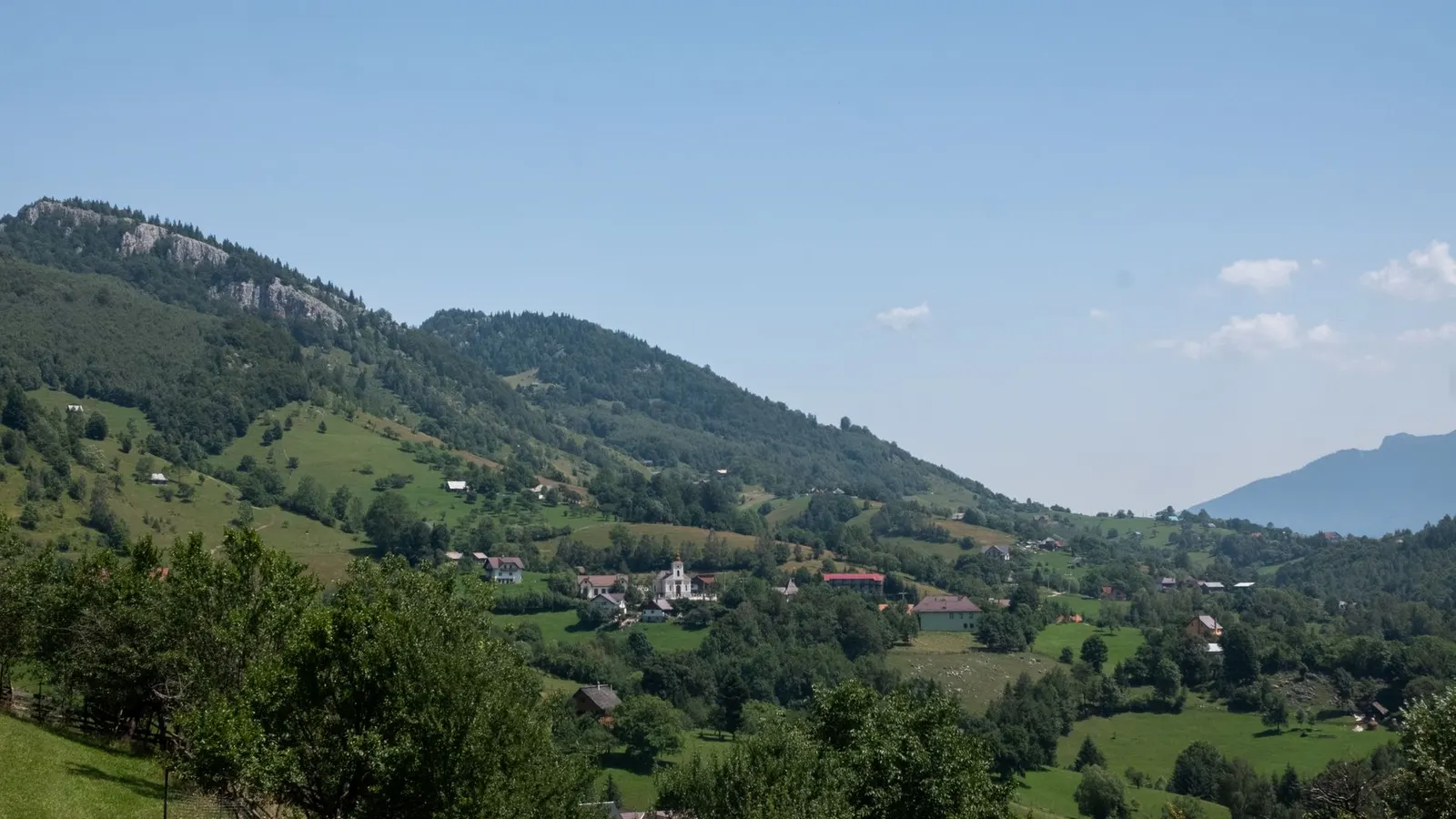
 Anastasia Haritonov · Pexels License
Country Guide № 141 / 194 · Europe
Romania
Carpathian forest, painted monasteries and the largest brown bear population in Europe.
“Carpathian forest, painted monasteries and the largest brown bear population in Europe.”
Romania holds the largest remaining populations of brown bear, wolf and lynx in Europe outside Russia, in a Carpathian arc of forest that runs through the middle of the country. It also holds Saxon villages with fortified churches, painted Orthodox monasteries in Bucovina with their exterior frescoes intact after five hundred years, and wooden churches in Maramureș where a pre-industrial rural life has not entirely ended.
The country joined Schengen fully in 2025 after years of partial membership, and it remains among the cheapest in the EU. Bucharest is a chaotic and interesting capital that repays a couple of days; the Danube Delta at the eastern edge is the largest wetland in Europe and a birdwatching destination of the first rank. Distances are longer than they look and the roads are the limiting factor.
Chapter 01
Highlights
The Saxon villages of Transylvania
Viscri, Biertan and dozens more with fortified churches at their centre, built by German settlers from the twelfth century. Several have been restored through conservation trusts and take guests.
The painted monasteries of Bucovina
Voroneț, Sucevița and Moldovița - sixteenth-century Orthodox monasteries with exterior frescoes that have survived five centuries of weather. UNESCO-listed and genuinely astonishing.
The Carpathians
The Făgăraș range with Romania's highest peaks, the Transfăgărășan road over them, and marked trails through forest holding bears, wolves and lynx. Open roughly July to October.
The Danube Delta
The largest and best-preserved delta in Europe, reached from Tulcea by boat - pelicans, three hundred bird species and fishing villages with no road access.
Chapter 02
Entry requirements for Romania
Checking your passport…
up to 90 days · free entry
90 days on arrival
Before you fly
The detail
- Maximum stay
- up to 90 days
- Fee
- free entry
- Passport validity
- Most destinations want validity beyond your stay, and some want six months. Check yours against the return date.
- Onward travel
- Airlines may ask for a return or onward ticket at check-in.
- Health
- No vaccinations required. Public healthcare is uneven; private clinics in the cities are good and inexpensive. EHIC/GHIC covers EU and UK visitors for state care. Tap water is safe in cities and questionable in some rural areas. Tick-borne encephalitis and rabies are both worth considering for extended rural or forest stays.
- Money
- Leu, not euros - Romania is in the EU but not the eurozone. Cards are widely accepted in cities and less so in villages; carry cash outside the main towns. ATMs are widespread. Tipping is around 10 %. Prices remain among the lowest in the EU.
Romania asks a United States passport for no visa and no fee: 90 days in any rolling 180. What changed here recently is not the number but whose number it is. Romania completed its Schengen accession in 2025 - air and sea borders in March 2024, land borders on 1 January 2025 - so the allowance now belongs to the twenty-nine-country Schengen area rather than to Romania, and days in Budapest, Vienna or Rome come out of the same ninety. Any itinerary built on the old arrangement, in which a month in Transylvania sat outside the count and was a standard way to stretch a European summer, is now wrong rather than merely dated. The window rolls: count backwards 180 days from any date and add up every day you were anywhere in the area, arrival and departure days included. The frontiers with Serbia, Moldova and Ukraine are external borders of the area with full controls, so a run to Chișinău or across to Serbia leaves Schengen and the return is a fresh entry counted against the same ninety. Since 10 April 2026 the Entry/Exit System has been fully operational, after a phased start in October 2025: your first crossing records a facial image and fingerprints, the passport is no longer stamped, and the count is now kept by a machine rather than by an officer finding the right inky page. ETIAS was announced but not required at the time of writing; check when you book. Your passport must be valid three months beyond your intended departure from the Schengen area. Romania is in the EU but not the eurozone, and the leu is the currency.
Check another destination with this passport →
Entry details: Editorial synthesis - Schengen Borders Code (Regulation 2016/399), Romanian Border Police accession guidance, EU Entry/Exit System rollout (2025–2026) · compiled 17 Sept 2026
Who needs a visa for Romania
12 common passports| Passport | Requirement | Stay | Process |
|---|---|---|---|
| United States | Visa-free | up to 90 days | No process · €0 / $0 |
| United Kingdom | Visa-free | up to 90 days | No process · €0 / $0 |
| Germany | Visa-free | - | No process · €0 / $0 |
| India | Visa required | - | No Other passports record yet |
| China | Visa required | - | No Other passports record yet |
| Brazil | Visa-free | up to 90 days | No Other passports record yet |
| Nigeria | Visa required | - | No Other passports record yet |
| Indonesia | Visa required | - | No Other passports record yet |
| Philippines | Visa required | - | No Other passports record yet |
| Vietnam | Visa required | - | No Other passports record yet |
| Egypt | Visa required | - | No Other passports record yet |
| Nepal | Visa required | - | No Other passports record yet |
Holding a passport that is not listed? The picker above answers for any of them. See where your passport takes you. Source: Passport Index, updated 14 Aug 2026.
Chapter 03
When to go
BestMay–Jun, September. AvoidJan–Feb, November.
The best month - wildflowers in the Saxon villages, warm and green.
The band above each month is our editorial verdict - it weighs crowds, prices and access as well as weather. The line is average daily temperature, the bars are monthly rainfall. Select a month for the figures. Climate figures: ERA5 reanalysis via Open-Meteo, 2005–2024 normals.
Chapter 04
What it costs
A day in Romania
Comfortable · sample day
≈ $65
Line items are real prices we track. The daily budget is an editorial estimate for this level, not their sum.
Where this sits among 244 countries we have costed
The Black Sea coast fills in July and August and empties completely otherwise; Carpathian ski towns peak from January to February. Transylvania and Bucharest move relatively little. Romania remains among the cheapest EU countries and the rural guesthouse network is unusually good value.
Updated Aug 2026 · Editorial synthesis - CFR published fares, rovinieta tariffs, Romanian statistical office price data (2025–2026) · confidence medium
Excludes international flights - they depend on where you fly from.
Chapter 05
Regions to know
5Bucharest & the south
The capital with its Belle Époque and Ceaușescu-era layers, plus the Wallachian plain and Danube toward Bulgaria.
Transylvania
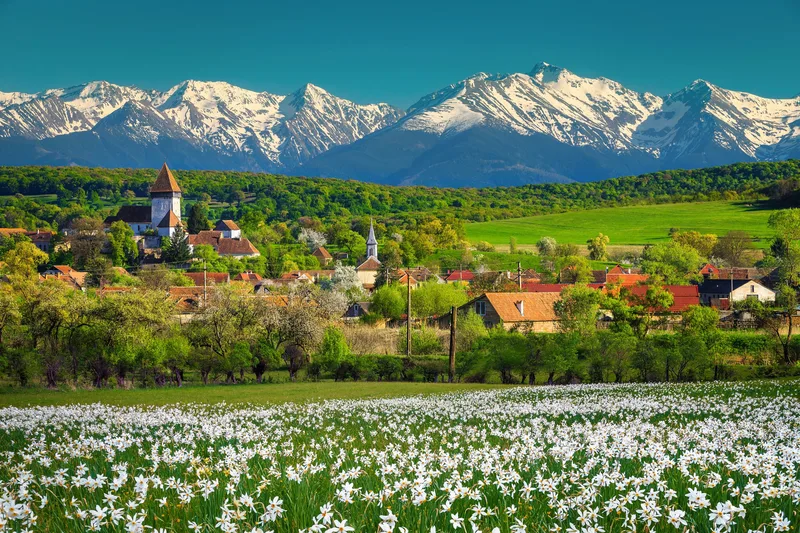
Brașov, Sibiu and Sighișoara, the Saxon fortified churches, and Cluj as the region's university city.
The Carpathians
The Făgăraș peaks, the Transfăgărășan and Transalpina roads, and Europe's densest large-carnivore populations.
Maramureș & Bucovina
Wooden churches and an intact rural culture in the north, and the painted monasteries in the northeast.
The Delta & the coast
The Danube Delta's channels and pelicans, plus Constanța and the Black Sea beaches south of it.
Chapter 06
Practical guide
Getting there
Bucharest (OTP) is the main hub, with Cluj, Timișoara, Iași and Sibiu well served by low-cost carriers from across Europe. Trains link to Budapest, Vienna and Sofia. Land borders with Hungary and Bulgaria are internal Schengen crossings since 2025; Serbia, Moldova and Ukraine are external.
Getting around
CFR trains are cheap, slow and cover the country, with the Bucharest to Brașov line the most useful and scenic. Buses and minibuses (maxi-taxi) fill the gaps and are often faster. A car is genuinely useful for Transylvania's villages, Maramureș and Bucovina, where public transport is sparse. The Danube Delta is boat-only beyond Tulcea.
Money & costs
Leu, not euros - Romania is in the EU but not the eurozone. Cards are widely accepted in cities and less so in villages; carry cash outside the main towns. ATMs are widespread. Tipping is around 10 %. Prices remain among the lowest in the EU.
Safety
Safe, with petty theft in Bucharest and on trains the main risk. Stray dogs are common in rural areas and around towns and can be aggressive in packs. Bears are a genuine hazard in the Carpathians. Driving is the biggest practical risk - Romania has one of the highest road-fatality rates in the EU, and overtaking on two-lane roads is the reason.
Health
No vaccinations required. Public healthcare is uneven; private clinics in the cities are good and inexpensive. EHIC/GHIC covers EU and UK visitors for state care. Tap water is safe in cities and questionable in some rural areas. Tick-borne encephalitis and rabies are both worth considering for extended rural or forest stays.
SIM & internet
EU roaming applies. Romania has some of the fastest and cheapest mobile data in Europe, with good coverage even in rural areas. Free wifi is widespread.
Chapter 07
Driving
The rovinieta covers national roads, not just motorways, which catches visitors who assume it is a motorway-only vignette. The Transfăgărășan and Transalpina mountain roads are spectacular and open only from roughly July to October. Horse-drawn carts, stray dogs and unlit pedestrians make night driving on rural roads genuinely dangerous.
Rules change - verify with an official source before you rent.
ExplWorld VerifiedNo verified partners here yet - all 6 country seats are open.
Become ExplWorld Verified →Chapter 08
Itineraries through this country
Chapter 09
From the Journal
Chapter 10
Before you go
RomaniaChapter 11
Frequently asked questions
How real is the bear situation?
Romania has around six thousand brown bears and encounters are a genuine issue, particularly where bears have been habituated by roadside feeding around Brașov and on the Transfăgărășan. Do not feed or photograph them from a car window. On trails, make noise, hike in groups, and follow local guidance. Organised hide-based viewing exists and is the sensible way to see them.
Is Dracula tourism worth anything?
Bran Castle is marketed as Dracula's castle and has essentially no connection to Vlad III, who is himself only loosely connected to Stoker's novel. It is a pleasant castle in a beautiful setting, thoroughly commercialised. Corvin Castle at Hunedoara and Sighișoara's citadel are both more rewarding.
How are the roads?
The limiting factor. Motorway coverage is thin and improving, and most intercity driving is on two-lane national roads through every village, which makes journeys much longer than the distance suggests. Budget generously, avoid night driving on rural roads, and expect horse-drawn carts in the countryside.