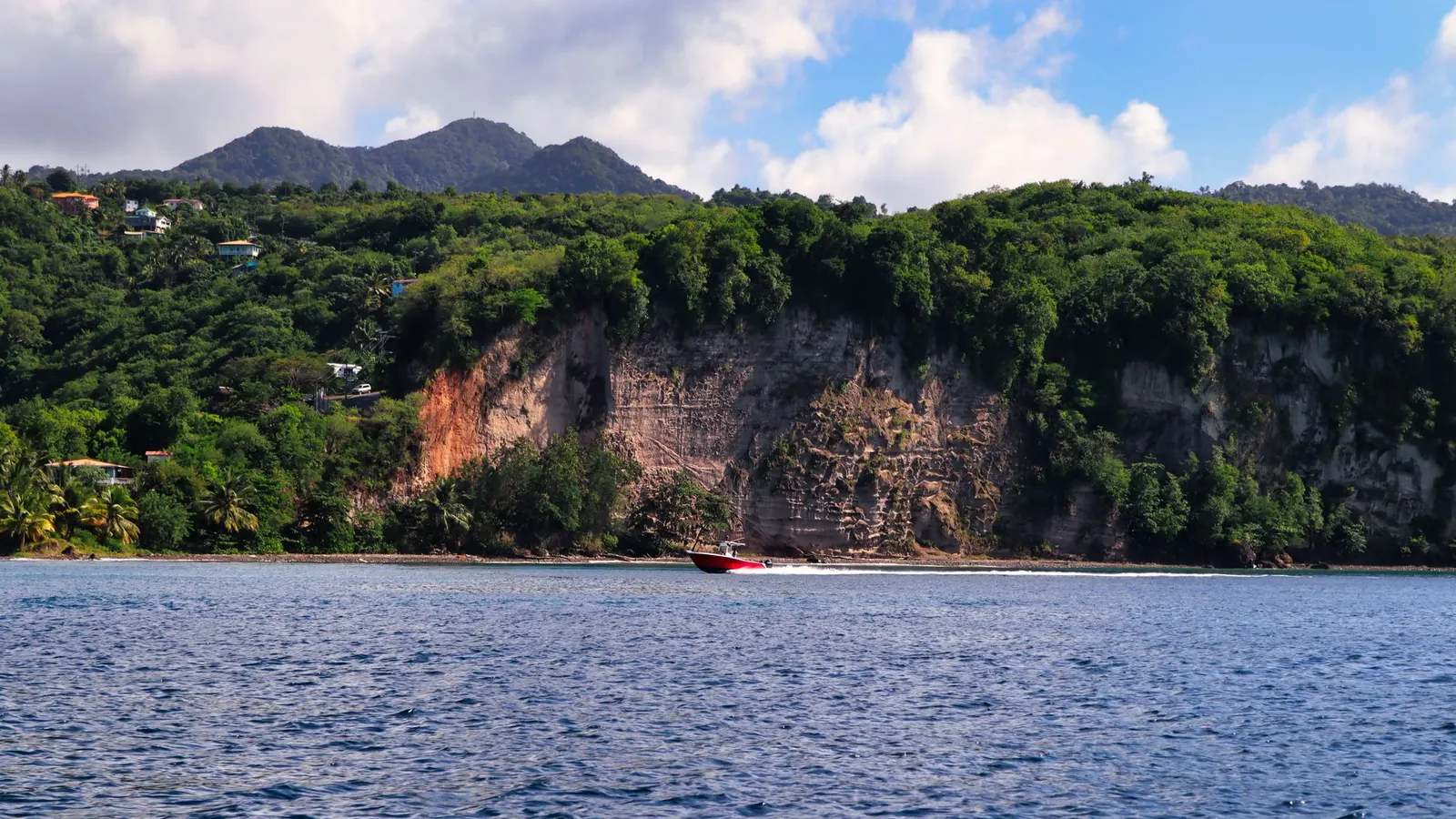
 Katie Schankula · Pexels License
Country Guide № 145 / 194 · Caribbean
Saint Lucia
The Pitons rise straight from the sea - a honeymoon island with a hiker’s heart.
“The Pitons rise straight from the sea - a honeymoon island with a hiker’s heart.”
No Caribbean silhouette beats the Pitons: two volcanic spires rising 700-odd metres sheer from the sea beside Soufrière, so improbable they made the UNESCO list and the national flag alike. Around them steams the rest of the island’s volcanic inheritance - the “drive-in volcano” at Sulphur Springs, hot mud baths, black-sand coves and a rainforest interior laced with waterfalls and trails.
Saint Lucia sells itself as a honeymoon island, and the west-coast resorts earn the postcard. But the better trip mixes registers: climb Gros Piton at dawn, soak in the mud baths at noon, eat a €4.50 roti from a Castries market stall, and finish the week at the Gros Islet Friday-night jump-up, where the whole north of the island dances in the street. English is official, but listen for Kwéyòl - the French-Creole heartbeat under everything.
Chapter 01
Highlights
Climbing Gros Piton
A steep, guided half-day up the larger of the two spires to 771 m - the summit lookouts take in Petit Piton, Soufrière bay and, on clear days, Saint Vincent on the horizon.
Sulphur Springs mud baths
The Caribbean’s famous “drive-in volcano”: a steaming collapsed crater outside Soufrière where you slather on warm volcanic mud and rinse off in hot pools.
Pigeon Island
A causeway-linked national landmark at the island’s northern tip - 18th-century fort ruins, two small beaches and the best sunset panorama over Rodney Bay.
Gros Islet Friday night
The island’s longest-running street party: sound systems in the lanes, grilled conch and chicken off oil-drum barbecues, and everyone - visitor and local - dancing till late.
Chapter 02
Entry requirements for Saint Lucia
Checking your passport…
up to 42 days · free entry
42 days on arrival
Official portal only
Paid look-alike sites charge for a process that is free or cheap on the government portal. Use the link below and nothing else.
travelslu.govt.lc →Before you fly
The detail
- Maximum stay
- up to 42 days
- Fee
- free entry
- Passport validity
- Most destinations want validity beyond your stay, and some want six months. Check yours against the return date.
- Onward travel
- Airlines may ask for a return or onward ticket at check-in.
- Health
- No special vaccinations required; hepatitis A and typhoid are standard recommendations, and dengue circulates in the wet months - pack repellent. Tap water is treated and generally safe, though most visitors drink bottled. The main hospital is near Castries; serious cases go to Martinique or Barbados, so insurance with evacuation cover matters. Watch for manchineel trees on some beaches - their sap and fruit are toxic.
- Money
- The East Caribbean dollar is pegged at EC$2.70 to the US dollar (about EC$3.1 to the euro); US dollars are accepted almost everywhere at a rough rate, with change in EC. Resorts and restaurants take cards; minibuses, market stalls and beach grills are cash. ATMs are reliable in Castries, Rodney Bay, Soufrière and Vieux Fort. A 10 % service charge often lands on bills - check before tipping twice.
Saint Lucia needs no visa from a United States passport, and the stamp it writes is the shortest in this group: six weeks, not the three months most of the Caribbean gives. That is arrival practice rather than an accident - ask at the desk if you need longer, or extend afterwards at the immigration office in Castries, but do not plan a two-month winter on the assumption of ninety days. The embarkation and disembarkation form is online: complete it on the government's immigration and customs portal up to three days before you travel, one form per family, and present the QR code it emails you on arrival. It is free on the government address given here and on no other: the sites that outrank it in search charge twenty to a hundred dollars to type your answers into the same boxes. Immigration here asks for more than a passport: an onward or return ticket, an address for every night you are booked, and, where the officer is not satisfied, some evidence that you can pay for the stay. Those questions come at the desk rather than at the gate, and the answer that gets people turned round is that they will work it out when they arrive. Six months of passport validity beyond your return is the standard the airlines apply whatever the island itself requires. Budget the transfer as well as the flight - Hewanorra in the south is an hour and a half from the northern resorts. CARICOM is not a Schengen. It moves goods, capital and its own skilled nationals, and it creates no common visa, no common stamp and no common arrival form for visitors, so an island-hopping trip clears immigration from scratch every time it lands. The departure and security taxes these islands levy sit inside the air fare and are not an entry fee, but keep a little local cash back anyway for ferry departures and small-island counters, where they are still sometimes collected at a desk.
Check another destination with this passport →
Entry details: Editorial synthesis - Government of Saint Lucia online immigration and customs portal, Saint Lucia immigration arrival guidance (2023–2026) · compiled 18 Sept 2026
Who needs a visa for Saint Lucia
12 common passports| Passport | Requirement | Stay | Process |
|---|---|---|---|
| United States | Visa-free | up to 42 days | No process · €0 / $0 |
| United Kingdom | Visa-free | up to 42 days | No process · €0 / $0 |
| Germany | Visa-free | up to 90 days | No process · €0 / $0 |
| India | Visa on arrival | - | No Other passports record yet |
| China | Visa-free | up to 42 days | No Other passports record yet |
| Brazil | Visa-free | up to 42 days | No Other passports record yet |
| Nigeria | Visa required | - | No Other passports record yet |
| Indonesia | Visa required | - | No Other passports record yet |
| Philippines | Visa on arrival | - | No Other passports record yet |
| Vietnam | Visa on arrival | - | No Other passports record yet |
| Egypt | Visa required | - | No Other passports record yet |
| Nepal | Visa required | - | No Other passports record yet |
Holding a passport that is not listed? The picker above answers for any of them. See where your passport takes you. Source: Passport Index, updated 14 Aug 2026.
Chapter 03
When to go
BestDec–Apr. AvoidSep–Oct.
Dry-season peak; book Soufrière stays ahead.
The band above each month is our editorial verdict - it weighs crowds, prices and access as well as weather. The line is average daily temperature, the bars are monthly rainfall. Select a month for the figures. Climate figures: ERA5 reanalysis via Open-Meteo, 2005–2024 normals.
Chapter 04
What it costs
A day in Saint Lucia
Comfortable · sample day
≈ $162
Line items are real prices we track. The daily budget is an editorial estimate for this level, not their sum.
Where this sits among 244 countries we have costed
Resort-driven pricing: west-coast rooms run 40–60 % higher mid-December to mid-April and sell out around Christmas and the May Jazz Festival. Guesthouse, minibus and market prices barely move all year. September–October discounts are the deepest, but a share of Soufrière’s hotels and restaurants close for the hurricane-peak weeks.
Updated Aug 2026 · Editorial synthesis - Budget Your Trip, Eastern Caribbean cost guides, hotel-rate surveys (2025–2026) · confidence medium
Excludes international flights - they depend on where you fly from.
Chapter 05
Regions to know
5Soufrière & the Pitons
The scenic heart: the twin spires, Sulphur Springs, black-sand Anse Chastanet snorkelling and waterfalls in the hills. Base here for the island’s best three days.
Rodney Bay, Gros Islet & Pigeon Island
The lively north - marina restaurants, Reduit Beach, the Friday-night jump-up and fort ruins with sunset views at Pigeon Island.
Castries & Marigot Bay
The market-town capital (go for the Central Market and the cathedral) and, just south, the yacht-filled green pocket of Marigot Bay.
Vieux Fort & the south
The workaday south around Hewanorra airport - kite-surfing off Sandy Beach and the Maria Islands nature reserve just offshore.
The rainforest interior & east coast
The Enbas Saut and Des Cartiers rainforest trails and zip-lines, then the wild Atlantic side around Dennery - turtle nesting on remote beaches in season.
Chapter 06
Practical guide
Getting there
Long-haul flights land at Hewanorra (UVF) in the far south - nonstop from London (British Airways, Virgin Atlantic) plus US links from Miami, New York, Atlanta and Charlotte. Budget the transfer: Hewanorra to the northern resorts is a solid 75–90 minutes over the hills (Soufrière is closer, around 45 minutes). The small George F. L. Charles airport (SLU) by Castries handles island-hoppers from Barbados and the neighbouring islands.
Getting around
Shared minibuses link Castries with Gros Islet, Soufrière and Vieux Fort cheaply - frequent in the day, thin after dark and on Sundays. Taxis are plentiful but fix the (US-dollar) price before boarding. A rental car opens up the island best; drive on the left and buy the temporary local permit with your rental. Water taxis between Castries, Marigot and Soufrière beat the winding coast road and double as sightseeing.
Money & costs
The East Caribbean dollar is pegged at EC$2.70 to the US dollar (about EC$3.1 to the euro); US dollars are accepted almost everywhere at a rough rate, with change in EC. Resorts and restaurants take cards; minibuses, market stalls and beach grills are cash. ATMs are reliable in Castries, Rodney Bay, Soufrière and Vieux Fort. A 10 % service charge often lands on bills - check before tipping twice.
Safety
Petty, opportunistic theft is the realistic issue: nothing visible in cars, nothing unattended on beaches. Violent incidents involving visitors are rare. Use registered taxis or your hotel’s driver after late nights in Rodney Bay or Gros Islet, and hike the interior and the Pitons with guides - trails are steeper and less marked than they look.
Health
No special vaccinations required; hepatitis A and typhoid are standard recommendations, and dengue circulates in the wet months - pack repellent. Tap water is treated and generally safe, though most visitors drink bottled. The main hospital is near Castries; serious cases go to Martinique or Barbados, so insurance with evacuation cover matters. Watch for manchineel trees on some beaches - their sap and fruit are toxic.
SIM & internet
Digicel and Flow both run solid LTE along the populated west coast and the north; the rainforest interior and parts of the east drop signal. A visitor SIM or eSIM with 10 GB or so costs €15–20. Hotel and villa wifi is standard, and cafés in Rodney Bay make easy remote-work perches.
Chapter 07
Driving
Drive on the left. Roads are steep, narrow and winding - the Castries–Soufrière run takes well over an hour for barely 50 km, and rain makes the hills slick. Limits are low and rarely posted; the road itself sets the pace.
Rules change - verify with an official source before you rent.
ExplWorld VerifiedNo verified partners here yet - all 6 country seats are open.
Become ExplWorld Verified →Chapter 08
Itineraries through this country
Chapter 09
From the Journal
Chapter 10
Before you go
Saint LuciaChapter 11
Frequently asked questions
Is Saint Lucia safe?
Broadly yes - crime against visitors is uncommon and mostly opportunistic. Lock the rental car, keep valuables off the beach while swimming, use licensed taxis late at night, and take a guide for remote trails and Piton climbs (mandatory for Gros Piton anyway). The Atlantic east coast has strong currents - swim on the Caribbean side.
When is the best time to visit Saint Lucia?
December to April is the dry, breezy high season; early May adds the Saint Lucia Jazz Festival at still-reasonable rates. June to November is hurricane season - often fine, but September and October carry the highest storm risk and some Soufrière hotels use them for closures. The Friday jump-up runs all year.
How much does a day in Saint Lucia cost?
Around €150 (≈ $160) a day mid-range - the west-coast resort economy keeps rooms and restaurants at the pricier end of the Caribbean. Travelling on guesthouses, minibuses and market food you can hold €75 (≈ $80); a resort-based trip runs well beyond €300. Day costs in Soufrière drop fast once you eat where the locals do.