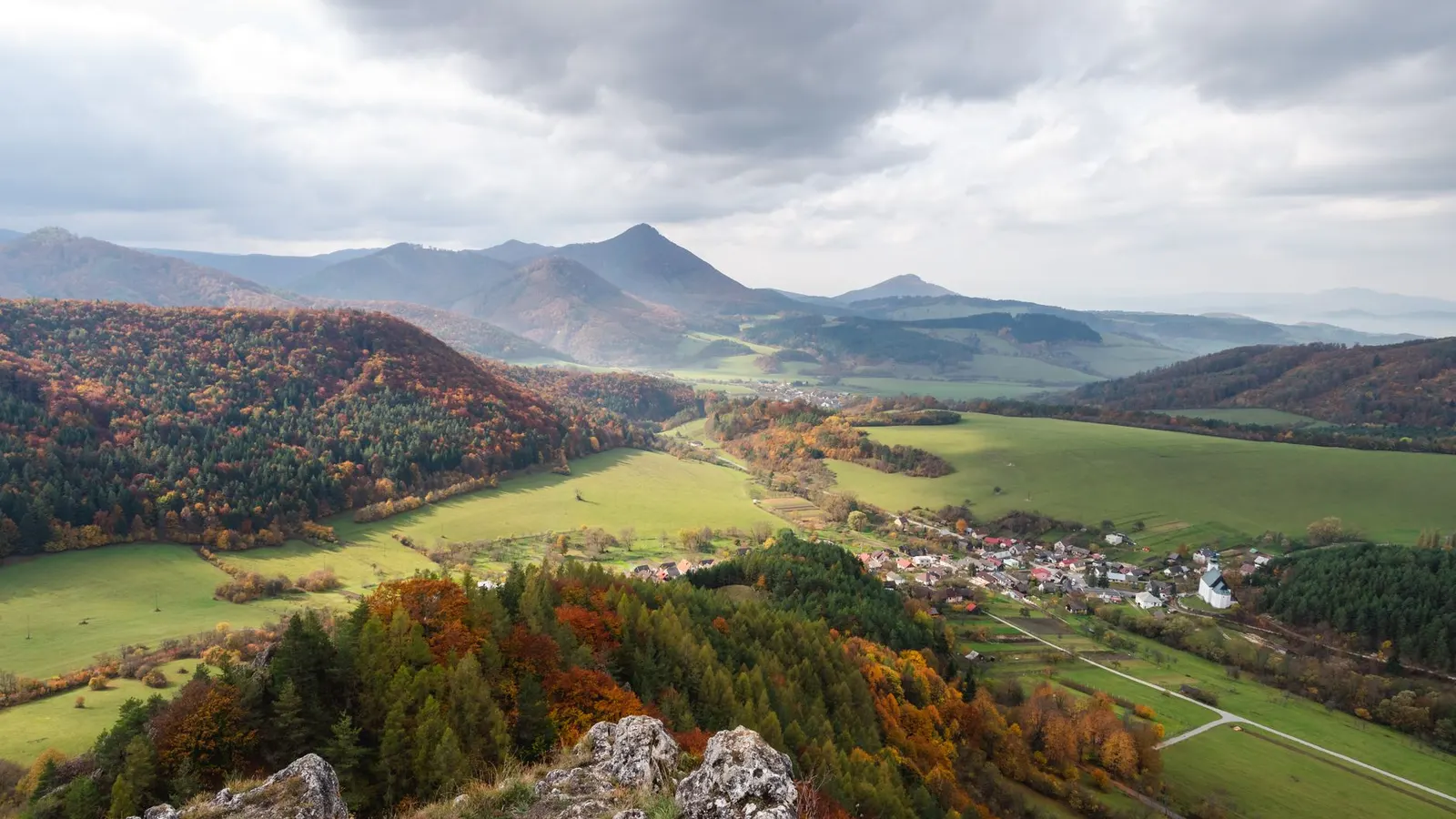
 Peter Pazdera · Pexels License
Country Guide № 156 / 194 · Europe
Slovakia
High Tatras, wooden churches and more castles than any country its size.
“High Tatras, wooden churches and more castles than any country its size.”
Slovakia is small, mountainous and consistently skipped by people heading between Prague, Vienna and Budapest. The High Tatras are the compact star: the smallest high-alpine range in the world, with 2,600-metre peaks, marked trails, mountain huts and a cable-car system, packed into an area you can cross on foot in two days.
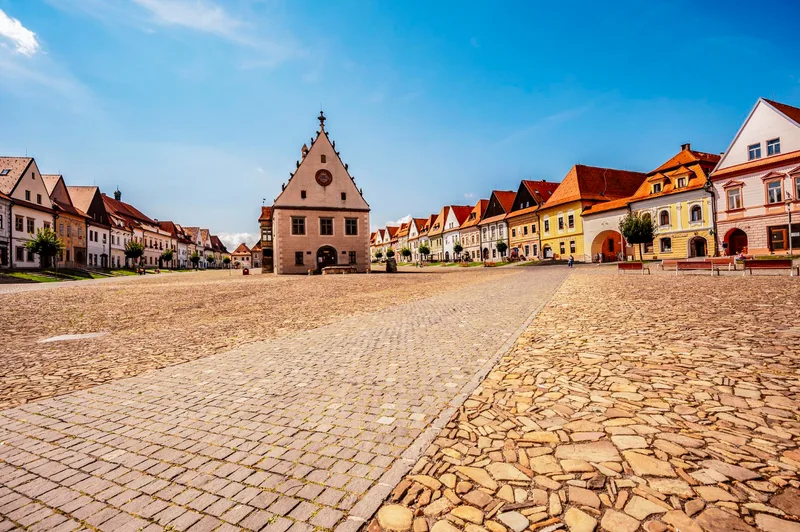
The rest of the country is a scatter of medieval mining towns - Banská Štiavnica, Levoča, Bardejov - with UNESCO-listed wooden churches in the northeast, Europe's densest concentration of castles, and a karst region of caves on the Hungarian border. Bratislava is an hour from Vienna by train and is a small, walkable capital rather than a major one, which suits it.
Chapter 01
Highlights
The High Tatras
Alpine terrain with granite peaks, tarns and a network of marked trails and huts, all within a small area. Trails above the tree line close from November to mid-June for safety and avalanche risk.
Slovak Paradise
A national park of narrow gorges climbed on ladders and chains alongside waterfalls - one-way routes that are genuinely exhilarating and not technical.
The wooden churches
Eight UNESCO-listed churches in the northeast, built without a single nail, Catholic, Protestant and Greek Catholic - a record of the region's religious layering.
Spiš Castle and the mining towns
One of the largest castle complexes in central Europe, plus Levoča, Bardejov and Banská Štiavnica - medieval towns preserved because the mining money stopped.
Chapter 02
Entry requirements for Slovakia
Checking your passport…
up to 90 days · free entry
90 days on arrival
Before you fly
The detail
- Maximum stay
- up to 90 days
- Fee
- free entry
- Passport validity
- Most destinations want validity beyond your stay, and some want six months. Check yours against the return date.
- Onward travel
- Airlines may ask for a return or onward ticket at check-in.
- Health
- No vaccinations required. Healthcare is adequate; EHIC/GHIC covers EU and UK visitors. Tick-borne encephalitis is prevalent and vaccination is routine among residents who spend time outdoors. Tap water is excellent. Mountain rescue is well organised, and rescue in the Tatras is charged to the person rescued, so insurance covering mountain activity matters here more than usual.
- Money
- Euro. Cards are widely accepted; mountain huts and rural areas often want cash. ATMs are widespread. Tipping is around 10 % by rounding up. Mountain huts in the Tatras are cash-only and must be booked ahead in summer.
Slovakia asks nothing of a United States passport beyond the passport: 90 days in any rolling 180, and the allowance belongs to the twenty-nine-country Schengen area rather than to Slovakia. That matters more here than in most places, because Slovakia is a country people pass through rather than fly to - Bratislava is an hour from Vienna by train or bus and the crossing has no border post at all, and the same is true of the Czech, Polish and Hungarian frontiers. You can spend a week here without once being checked, and every day of it comes out of the same ninety. The window rolls: count backwards 180 days from any date and add up every day you were anywhere in the area, arrival and departure days included. The one exception on the map is Ukraine: the crossing at Vyšné Nemecké is Slovakia’s only external Schengen border, waiting times there are measured in hours, and coming back is a fresh entry counted against the same ninety rather than a reset. Since 10 April 2026 the Entry/Exit System has been fully operational, after a phased start in October 2025: your first crossing records a facial image and fingerprints, the passport is no longer stamped, and the count is now kept by a machine rather than by an officer finding the right inky page. If you flew into Vienna or Prague, that first crossing happened there and not here. ETIAS was announced but not required at the time of writing; check when you book. Your passport must be valid three months beyond your intended departure from the Schengen area. Slovakia uses the euro, unlike Czechia, Hungary and Poland around it.
Check another destination with this passport →
Entry details: Editorial synthesis - Schengen Borders Code (Regulation 2016/399), Slovak Ministry of Interior guidance, EU Entry/Exit System rollout (2025–2026) · compiled 17 Sept 2026
Who needs a visa for Slovakia
12 common passports| Passport | Requirement | Stay | Process |
|---|---|---|---|
| United States | Visa-free | up to 90 days | No process · €0 / $0 |
| United Kingdom | Visa-free | up to 90 days | No process · €0 / $0 |
| Germany | Visa-free | - | No process · €0 / $0 |
| India | Visa required | - | No Other passports record yet |
| China | Visa required | - | No Other passports record yet |
| Brazil | Visa-free | up to 90 days | No Other passports record yet |
| Nigeria | Visa required | - | No Other passports record yet |
| Indonesia | Visa required | - | No Other passports record yet |
| Philippines | Visa required | - | No Other passports record yet |
| Vietnam | Visa required | - | No Other passports record yet |
| Egypt | Visa required | - | No Other passports record yet |
| Nepal | Visa required | - | No Other passports record yet |
Holding a passport that is not listed? The picker above answers for any of them. See where your passport takes you. Source: Passport Index, updated 14 Aug 2026.
Chapter 03
When to go
BestJun–Sep. AvoidApril, November.
High trails open from the 16th; wildflowers and long days.
The band above each month is our editorial verdict - it weighs crowds, prices and access as well as weather. The line is average daily temperature, the bars are monthly rainfall. Select a month for the figures. Climate figures: ERA5 reanalysis via Open-Meteo, 2005–2024 normals.
Chapter 04
What it costs
A day in Slovakia
Comfortable · sample day
≈ $76
Line items are real prices we track. The daily budget is an editorial estimate for this level, not their sum.
Where this sits among 244 countries we have costed
The Tatra resorts peak twice, from Christmas to February for skiing and again in July and August for walking - accommodation roughly doubles in both. Bratislava is steady and driven by weekend and business demand. Mountain huts are fixed-price and must be booked well ahead for summer weekends.
Updated Aug 2026 · Editorial synthesis - ZSSK published fares, Tatra hut tariffs, Slovak statistical office price data (2025–2026) · confidence high
Excludes international flights - they depend on where you fly from.
Chapter 05
Regions to know
5Bratislava & the west
The Danube capital, Devín castle, the Small Carpathian wine road and Trenčín's clifftop fortress.
Central Slovakia
Banská Štiavnica's mining town, the Low Tatras and the caves and gorges of Slovak Paradise.
The High Tatras
The compact alpine range with peaks over 2,600 metres, mountain huts, tarns and the electric railway between resorts.
Spiš & the east
Spiš Castle, Levoča and Bardejov, Košice's cathedral, and the UNESCO wooden churches of the northeast.
Orava & the north
Orava castle above the river, folk architecture museums, and the Slovak Karst caves on the Hungarian border.
Chapter 06
Practical guide
Getting there
Bratislava (BTS) has limited service and Vienna airport is an hour away by bus, which is how most visitors arrive. Košice (KSC) serves the east. Trains link Bratislava to Vienna, Prague, Budapest and Kraków; the Tatras are reached via Poprad on the main east-west line.
Getting around
Trains link the main towns along the corridor from Bratislava to Košice, with Poprad the gateway to the Tatras. The Tatra Electric Railway connects the mountain resorts. Buses reach the smaller towns and the wooden-church region. A car is genuinely useful in the east and the Orava and Spiš regions, where public transport is thin.
Money & costs
Euro. Cards are widely accepted; mountain huts and rural areas often want cash. ATMs are widespread. Tipping is around 10 % by rounding up. Mountain huts in the Tatras are cash-only and must be booked ahead in summer.
Safety
Safe, with petty theft in Bratislava the main urban risk. The genuine hazards are in the mountains - the High Tatras have a serious accident rate, weather changes fast, and the winter trail closure exists for a reason. Slovakia has a substantial brown bear population and encounters have increased; make noise on forest trails and follow local guidance, which is issued seriously.
Health
No vaccinations required. Healthcare is adequate; EHIC/GHIC covers EU and UK visitors. Tick-borne encephalitis is prevalent and vaccination is routine among residents who spend time outdoors. Tap water is excellent. Mountain rescue is well organised, and rescue in the Tatras is charged to the person rescued, so insurance covering mountain activity matters here more than usual.
SIM & internet
EU roaming applies. Coverage is good in towns and valleys, with gaps on high trails. Free wifi is standard in accommodation.
Chapter 07
Driving
Winter tyres are required in wintry conditions from November to March. Mountain roads in the north and east are winding and can close in snow. The e-vignette is camera-enforced with no grace period.
Rules change - verify with an official source before you rent.
ExplWorld VerifiedNo verified partners here yet - all 6 country seats are open.
Become ExplWorld Verified →Chapter 08
Itineraries through this country
Chapter 09
From the Journal
Chapter 10
Before you go
SlovakiaChapter 11
Frequently asked questions
When can I walk in the Tatras?
The high trails are officially closed from 1 November to 15 June because of snow and avalanche risk, and the closure is enforced with fines. Mid-June to September is the season, with September usually the most stable weather. Below the tree line, valley trails stay open year-round.
Is Bratislava worth a stay?
A day or two. The old town is small and pleasant, the castle overlooks the Danube, and it is an hour from Vienna by train, which makes it an easy add-on. It is not a city that fills a week. The Tatras and the eastern towns are what justify a longer trip.
How cheap is it?
Cheaper than Austria or Czechia, roughly level with Hungary. A restaurant main runs €10–13, a beer €2.20, a mountain hut €25. Slovakia uses the euro, which makes budgeting simpler than in the neighbours that do not.