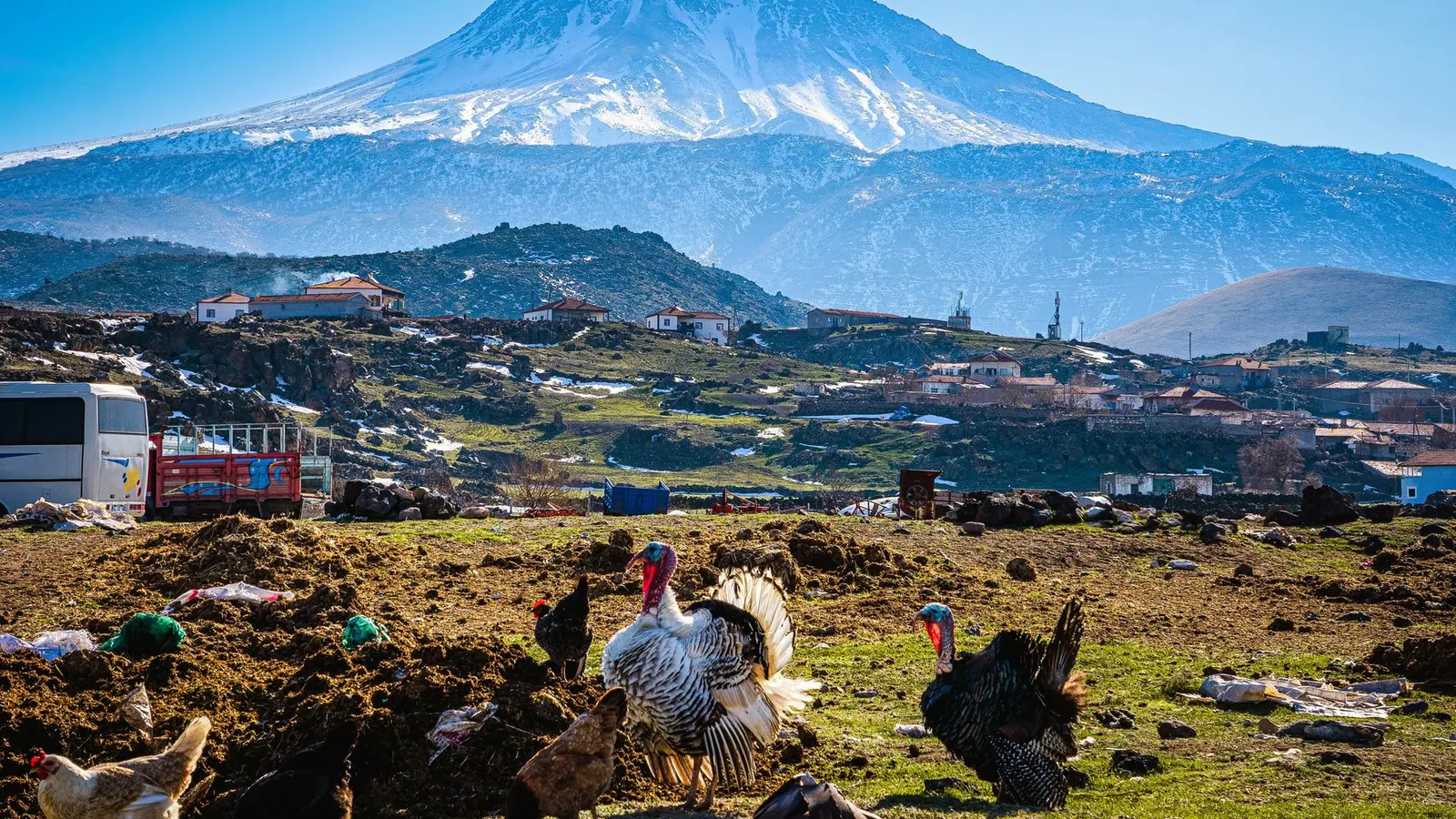
 Cafer SEVİNÇ · Pexels License
Country Guide № 178 / 194 · Middle East
Turkey
Two continents, eighteen UNESCO sites and the oldest temple ever built.
“Two continents, eighteen UNESCO sites and the oldest temple ever built.”
Türkiye holds Göbekli Tepe, a temple complex from around 9500 BC - six thousand years older than Stonehenge and built by people who had not yet invented pottery or agriculture. It also holds Troy, Ephesus, Hagia Sophia, the Lycian coast and Cappadocia's volcanic valleys, which is an unusual density even by Mediterranean standards.
Istanbul is the entry point for most trips and is genuinely one of the great cities - sixteen million people across two continents, with Byzantine and Ottoman layers stacked on each other. Beyond it the country is enormous: the Aegean and Mediterranean coasts, the Anatolian plateau, the Black Sea's tea-terraced hills and the southeast, which is Kurdish, Arab and quite unlike the west. The lira's collapse has made it inexpensive for foreign visitors and painfully expensive for residents.
Chapter 01
Highlights
Istanbul
Hagia Sophia, the Blue Mosque, Topkapı and the Basilica Cistern in one square kilometre - plus the Bosphorus ferries, which are public transport and the best sightseeing in the city for a euro.
Cappadocia
Volcanic tuff eroded into valleys of fairy chimneys, with Byzantine cave churches, underground cities and a balloon flight at dawn that is worth the money and the alarm clock.
The Lycian coast
Ruins at Patara, Xanthos and Olympos on a pine-backed Mediterranean shore, with the 540-kilometre Lycian Way running along it and gulet boats working the bays.
Göbekli Tepe
The oldest known monumental architecture on earth, near Şanlıurfa in the southeast - carved T-shaped pillars from around 9500 BC that overturned the assumed order of settlement and religion.
Chapter 02
Entry requirements for Turkey
Checking your passport…
up to 90 days · free entry
90 days on arrival
Official portal only
Paid look-alike sites charge for a process that is free or cheap on the government portal. Use the link below and nothing else.
www.evisa.gov.tr →Before you fly
The detail
- Maximum stay
- up to 90 days
- Fee
- free entry
- Passport validity
- Most destinations want validity beyond your stay, and some want six months. Check yours against the return date.
- Onward travel
- Airlines may ask for a return or onward ticket at check-in.
- Arrival form
- E-visa where required, printed or on the phone; some nationalities are visa-free.
- Health
- No vaccinations required; hepatitis A and typhoid are standard advice. Healthcare in private hospitals in the big cities is good and inexpensive, which is why Türkiye is a major medical-tourism destination. Tap water is chlorinated but not generally drunk - use bottled. Summer heat on the coast and in the southeast is severe.
- Money
- Lira. Cards are widely accepted in cities and tourist areas; bazaars and rural areas are cash. ATMs are everywhere and dispense lira; always decline dynamic currency conversion. Bargaining is expected in bazaars, not in shops. Note that some tourist businesses now quote in euros or dollars, which is generally worse value than paying in lira.
What changed
Türkiye lifted the visa requirement for United States passports in a foreign-ministry decision of late 2023 that covered Canada and several Gulf states with it, and the allowance is 90 days in any 180 - the same shape as Schengen, counted entirely separately, which is what makes the country useful for resetting a long European trip. Anyone who remembers buying a Turkish e-visa is remembering the older rule; confirm your own case at evisa.gov.tr, which is the only official portal and which states whether a given nationality needs one. Passport validity is the detail that catches people out: the rule is 60 days beyond the intended stay, so a full 90-day visit needs 150 days of validity. The land and sea borders with Greece and Bulgaria are external Schengen crossings in both directions, so the Schengen clock stops when you cross in and restarts when you cross back. Property purchase, study and any kind of work sit outside a tourist entry and need a residence permit applied for in country.
Check another destination with this passport →
Entry details: Editorial synthesis - Turkish Ministry of Foreign Affairs visa-exemption announcements, e-visa portal (2025–2026) · compiled 15 Sept 2026
Who needs a visa for Turkey
12 common passports| Passport | Requirement | Stay | Process |
|---|---|---|---|
| United States | Visa-free | up to 90 days | No process · €0 / $0 |
| United Kingdom | Visa-free | up to 90 days | No process · €0 / $0 |
| Germany | Visa-free | up to 90 days | No process · €0 / $0 |
| India | Visa required | - | No Other passports record yet |
| China | e-Visa | - | No Other passports record yet |
| Brazil | Visa-free | up to 90 days | No Other passports record yet |
| Nigeria | Visa required | - | No Other passports record yet |
| Indonesia | Visa-free | up to 30 days | No Other passports record yet |
| Philippines | Visa required | - | No Other passports record yet |
| Vietnam | Visa required | - | No Other passports record yet |
| Egypt | Visa required | - | No Other passports record yet |
| Nepal | Visa required | - | No Other passports record yet |
Holding a passport that is not listed? The picker above answers for any of them. See where your passport takes you. Source: Passport Index, updated 14 Aug 2026.
Chapter 03
When to go
BestApr–May, Sep–Oct. AvoidJul–Aug.
Warm, green and flowering - an excellent month.
The band above each month is our editorial verdict - it weighs crowds, prices and access as well as weather. The line is average daily temperature, the bars are monthly rainfall. Select a month for the figures. Climate figures: ERA5 reanalysis via Open-Meteo, 2005–2024 normals.
Chapter 04
What it costs
A day in Turkey
Comfortable · sample day
≈ $65
Line items are real prices we track. The daily budget is an editorial estimate for this level, not their sum.
Where this sits among 244 countries we have costed
Coastal accommodation doubles in July and August and much of it closes from November to April; Cappadocia peaks in spring and autumn. The variable that matters more than season is the currency - the lira has depreciated steeply for years while domestic prices rise fast, so euro-denominated figures fall even as lira prices climb. Treat anything over six months old as unreliable.
Updated Aug 2026 · Editorial synthesis - Turkish Airlines and rail published fares, Ministry of Culture site tariffs, accommodation sampling (2025–2026) · confidence medium
Excludes international flights - they depend on where you fly from.
Chapter 05
Regions to know
5Istanbul & Marmara
The city across two continents, plus Bursa's Ottoman core, Troy and the Gallipoli battlefields.
The Aegean coast
Ephesus, Pergamon and Aphrodisias, the travertine terraces at Pamukkale, and Bodrum and Çeşme on the sea.
The Mediterranean & Lycia
Antalya, the Lycian Way, ruins at Patara and Olympos, and the gulet coast around Fethiye.
Cappadocia & central Anatolia
The rock valleys, underground cities and cave churches, plus Konya's Mevlana shrine and Ankara's museums.
The east & southeast
Göbekli Tepe and Şanlıurfa, Mardin's stone terraces, Nemrut Dağı's statues and Lake Van - with border provinces under advisory.
Chapter 06
Practical guide
Getting there
Istanbul (IST) is one of the world's largest hubs with Turkish Airlines connecting almost everywhere; Sabiha Gökçen (SAW) on the Asian side takes low-cost flights. Antalya, Izmir, Dalaman and Bodrum take heavy seasonal charters. Ferries cross from the Greek islands - Rhodes to Marmaris, Kos to Bodrum, Samos to Kuşadası - in under two hours.
Entry formalities
E-visa where required, printed or on the phone; some nationalities are visa-free.
Getting around
Domestic flights for the long hops. High-speed trains link Istanbul, Ankara and Konya. Intercity buses are the backbone - comfortable, frequent and cheap, with an attendant serving tea. In Istanbul, get an İstanbulkart, which covers metro, tram, bus, funicular and the Bosphorus ferries. A car helps on the coast and in Cappadocia.
Money & costs
Lira. Cards are widely accepted in cities and tourist areas; bazaars and rural areas are cash. ATMs are everywhere and dispense lira; always decline dynamic currency conversion. Bargaining is expected in bazaars, not in shops. Note that some tourist businesses now quote in euros or dollars, which is generally worse value than paying in lira.
Safety
Broadly safe, with pickpocketing and the well-known Istanbul scams - the shoe-shine drop, the invitation to a bar that produces a huge bill - the main risks. Terrorism advisories exist and the borders with Syria and Iraq carry standing warnings. Earthquakes are a genuine hazard: the 2023 earthquakes killed over 50,000 people in the southeast. Traffic is assertive and pedestrian crossings are advisory.
Health
No vaccinations required; hepatitis A and typhoid are standard advice. Healthcare in private hospitals in the big cities is good and inexpensive, which is why Türkiye is a major medical-tourism destination. Tap water is chlorinated but not generally drunk - use bottled. Summer heat on the coast and in the southeast is severe.
SIM & internet
Local SIMs are cheap but foreign phones must be registered with the authorities after around 120 days or they are blocked - irrelevant for short visits, a problem for long ones. Coverage is excellent. Some platforms have been intermittently restricted; a VPN is worth having. Free wifi is widespread.
Chapter 07
Driving
The HGS electronic tolling has no cash option and driving a bridge or motorway without a transponder generates a fine - confirm your rental has one. Driving standards are assertive and rural roads carry slow agricultural traffic. Distances are large: Istanbul to Cappadocia is 730 km.
Rules change - verify with an official source before you rent.
ExplWorld VerifiedNo verified partners here yet - all 6 country seats are open.
Become ExplWorld Verified →Chapter 08
Itineraries through this country
Chapter 09
From the Journal
Chapter 10
Before you go
TurkeyChapter 11
Frequently asked questions
How cheap is it with the lira where it is?
For foreign visitors, very - a restaurant main runs €7–11, a mid-range hotel €55. But the lira has lost enormous value and domestic inflation has run high for years, so prices in lira rise constantly while the euro equivalent stays low or falls. Any figure more than a few months old is unreliable. Check close to travel.
Is the southeast safe to visit?
It depends where. Şanlıurfa, Mardin, Diyarbakır and Gaziantep are visited regularly and hold some of the country's most interesting sites. Foreign ministries advise against travel to the provinces on the Syrian and Iraqi borders - Hakkari, Şırnak and the immediate frontier strip. Read the advisory by province, not by country, and check it close to departure.
How do I get around such a big country?
Domestic flights are cheap and frequent - Istanbul to Cappadocia or Antalya costs €40–60 and saves ten hours. The high-speed rail connects Istanbul, Ankara and Konya. Long-distance buses are comfortable, frequent and the traditional option. Renting a car makes sense for the Lycian coast and Cappadocia.