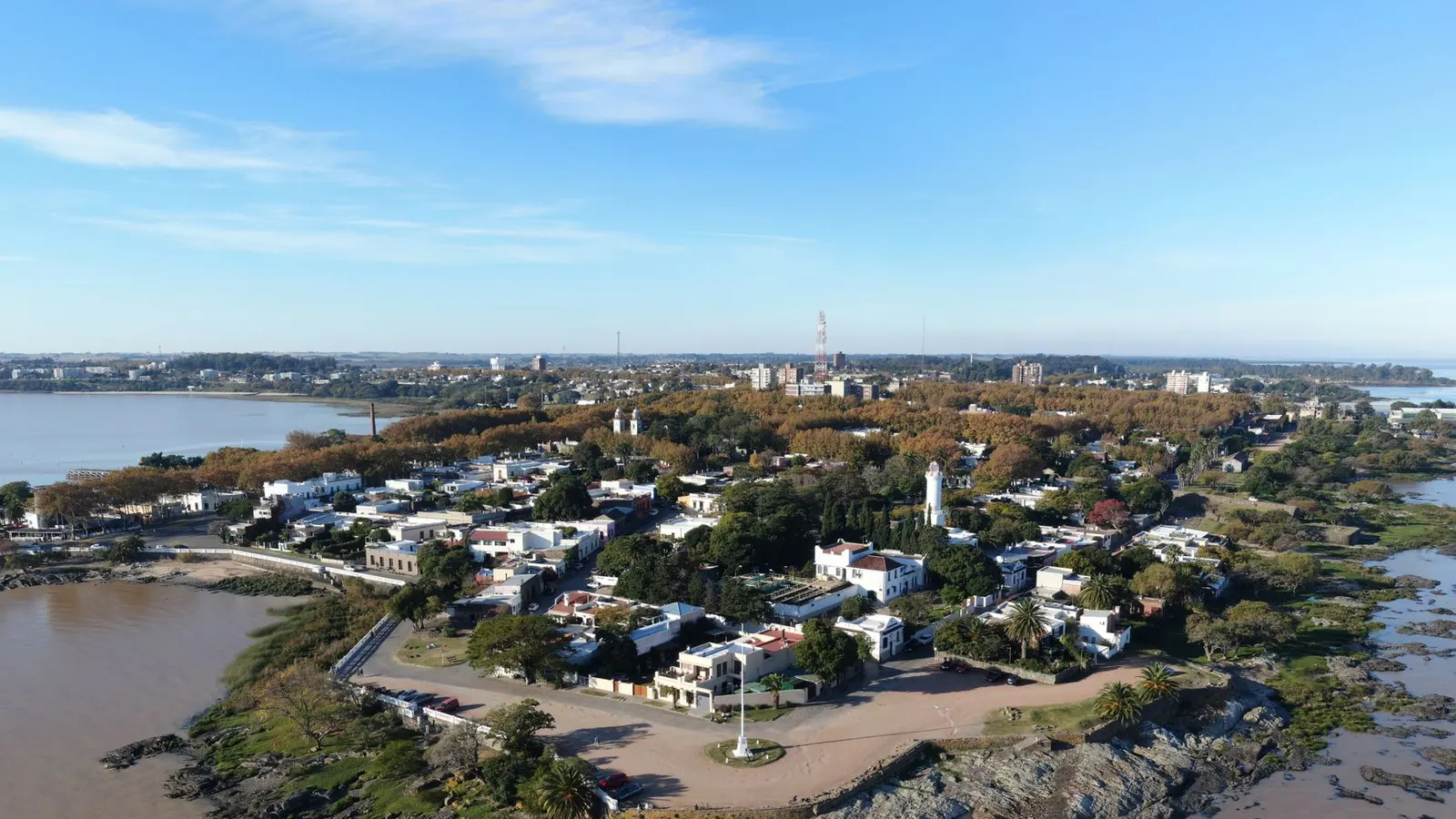
 Ezequiel Barroso · Pexels License
Country Guide № 186 / 194 · South America
Uruguay
South America at walking pace - Atlantic beach towns, tannat vineyards and the continent’s easiest country.
“South America at walking pace - Atlantic beach towns, tannat vineyards and the continent’s easiest country.”
Uruguay is the country South America deploys to disprove its own clichés: stable, mid-sized, unhurried, with the region’s strongest institutions and a coastline that runs from polished José Ignacio beach clubs to a car-free hippie outpost among sand dunes. Nothing here demands superlatives - it accumulates quietly, over parrilla smoke and thermoses of mate.
It is also, fairly, the continent’s most expensive country - prices sit closer to southern Europe than to Bolivia. The compensation is ease: distances are short, buses are excellent, crime is low, and in a single week you can link Montevideo’s faded-grand centro, Colonia’s cobbles, a Carmelo winery and the empty beaches east of Punta del Este without once checking over your shoulder.
Chapter 01
Highlights
Colonia del Sacramento
Portuguese-Spanish cobbles, sycamore-shaded plazas and a lighthouse over the Río de la Plata - the UNESCO old town is tiny, so stay the night and have it to yourself after the Buenos Aires day-trippers leave.
Cabo Polonio
No roads, no mains electricity - you arrive by 4x4 truck over the dunes to a scatter of shacks, a sea-lion colony under the lighthouse and the best star field on the coast.
José Ignacio & the eastern beaches
The quiet-money end of the Punta del Este coast: barefoot-chic beach restaurants, sunset rituals at the lighthouse, and surf towns - La Pedrera, Punta del Diablo - strung east toward Brazil.
Montevideo’s rambla and Mercado del Puerto
A 22-kilometre waterfront promenade that the whole city uses daily, and a wrought-iron market hall where parrilleros grill over wood embers - go for a long, smoky lunch.
Chapter 02
Entry requirements for Uruguay
Checking your passport…
up to 90 days · free entry
90 days on arrival
Before you fly
The detail
- Maximum stay
- up to 90 days
- Fee
- free entry
- Passport validity
- Most destinations want validity beyond your stay, and some want six months. Check yours against the return date.
- Onward travel
- Airlines may ask for a return or onward ticket at check-in.
- Health
- No vaccinations required or specifically recommended beyond routine ones; there is no malaria or yellow fever. Tap water is safe nationwide - a rarity on the continent. Public and private healthcare in Montevideo is good; pharmacies are everywhere. The summer sun at these latitudes is stronger than it feels in the sea breeze.
- Money
- The Uruguayan peso (UYU) is stable; cards - including contactless - work almost everywhere, and Uruguay refunds part of VAT on restaurant and hotel payments with foreign cards, an unusual and real discount. ATMs (Banred/RedBROU) charge modest fees. Keep some cash for beach shacks and Cabo Polonio, where terminals die with the solar power.
United States passports enter Uruguay visa-free for 90 days, with one 90-day extension available at the Dirección Nacional de Migración in Montevideo for a small fee. There is no pre-arrival form. The passport should be valid for the stay, and six months is the margin airlines apply whatever the official rule says; onward tickets are rarely demanded at the border but ferry and airline desks do ask. Arriving by boat from Buenos Aires - Buquebus or Colonia Express into Colonia or Montevideo - is a full international entry with Argentine and Uruguayan officers usually sitting side by side in the same hall, so bring the passport rather than any other document and expect to be stamped in and out properly. One thing worth knowing before you pay for anything: Uruguay refunds the 22 per cent IVA on hotel accommodation to non-resident visitors who settle the bill with a foreign card, and applies a further reduction to restaurant bills paid the same way. Say at check-in that you are a non-resident tourist; the discount is applied at the till and not claimed back afterwards, so it is lost if nobody mentions it.
Check another destination with this passport →
Entry details: Editorial synthesis - Dirección Nacional de Migración Uruguay, Ministerio de Turismo IVA-refund scheme, foreign-ministry entry advice (2025–2026) · compiled 18 Sept 2026
Who needs a visa for Uruguay
12 common passports| Passport | Requirement | Stay | Process |
|---|---|---|---|
| United States | Visa-free | up to 90 days | No process · €0 / $0 |
| United Kingdom | Visa-free | up to 90 days | No process · €0 / $0 |
| Germany | Visa-free | up to 90 days | No process · €0 / $0 |
| India | Visa required | - | No Other passports record yet |
| China | Visa required | - | No Other passports record yet |
| Brazil | Visa-free | up to 90 days | No Other passports record yet |
| Nigeria | Visa required | - | No Other passports record yet |
| Indonesia | Visa required | - | No Other passports record yet |
| Philippines | Visa required | - | No Other passports record yet |
| Vietnam | Visa required | - | No Other passports record yet |
| Egypt | Visa required | - | No Other passports record yet |
| Nepal | Visa required | - | No Other passports record yet |
Holding a passport that is not listed? The picker above answers for any of them. See where your passport takes you. Source: Passport Index, updated 14 Aug 2026.
Chapter 03
When to go
BestNov–Mar.
Peak beach season - the coast is glorious, packed and at maximum price.
The band above each month is our editorial verdict - it weighs crowds, prices and access as well as weather. The line is average daily temperature, the bars are monthly rainfall. Select a month for the figures. Climate figures: ERA5 reanalysis via Open-Meteo, 2005–2024 normals.
Chapter 04
What it costs
A day in Uruguay
Comfortable · sample day
≈ $108
Line items are real prices we track. The daily budget is an editorial estimate for this level, not their sum.
Where this sits among 244 countries we have costed
The coast is a different country in January: accommodation doubles or worse from Christmas to Carnival, beach restaurants add high-season menus, and Cabo Polonio’s handful of beds sell out. Montevideo and the interior barely move. March and November offer summer weather at shoulder prices; many coastal businesses simply close May–September.
Updated Aug 2026 · Editorial synthesis - Budget Your Trip, Uruguayan price reporting, coastal accommodation tariffs (2025–2026) · confidence medium
Excludes international flights - they depend on where you fly from.
Chapter 05
Regions to know
5Montevideo
Half the country lives here - faded Art Deco, the endless rambla, Sunday’s Tristán Narvaja market and parrilla smoke in the Mercado del Puerto.
Colonia & the west
The cobbled UNESCO old town an easy ferry from Buenos Aires, plus Carmelo’s small tannat wineries among the vines.
Punta del Este & José Ignacio
South America’s St-Tropez shading into barefoot quiet money - beach clubs, sculpture at Casapueblo, sunset at the lighthouse.
Rocha coast
The wild east: Cabo Polonio’s road-free dunes, surfy La Pedrera and Punta del Diablo’s fishing-shack bohemia, running to the Brazilian border.
The interior
Gaucho ranchland - estancia stays, hot springs near Salto, and more cattle than people by a factor of three.
Chapter 06
Practical guide
Getting there
Montevideo’s Carrasco airport connects through Madrid (Iberia, Air Europa), São Paulo and Buenos Aires; from Central Europe count on one or two stops and 16–18 hours. The scenic arrival is the Buquebus ferry from Buenos Aires - 2¼ hours across the Río de la Plata to Colonia or direct to Montevideo.
Getting around
Intercity buses are the national transit system - frequent, comfortable and honest (COT, Turil; Tres Cruces terminal in Montevideo is the hub). Montevideo–Punta del Este is 2 hours, Colonia 2¾. A rental car earns its keep east of Punta del Este, where beach villages string out along Ruta 10. In town, taxis and Uber are cheap enough.
Money & costs
The Uruguayan peso (UYU) is stable; cards - including contactless - work almost everywhere, and Uruguay refunds part of VAT on restaurant and hotel payments with foreign cards, an unusual and real discount. ATMs (Banred/RedBROU) charge modest fees. Keep some cash for beach shacks and Cabo Polonio, where terminals die with the solar power.
Safety
Uruguay is as safe as the continent gets. Montevideo asks for standard city sense - mind phones in Ciudad Vieja, take taxis late - and thefts from parked cars at beach trailheads are the classic tourist loss: leave nothing visible. The east-coast surf has strong rips; swim at flagged beaches in season.
Health
No vaccinations required or specifically recommended beyond routine ones; there is no malaria or yellow fever. Tap water is safe nationwide - a rarity on the continent. Public and private healthcare in Montevideo is good; pharmacies are everywhere. The summer sun at these latitudes is stronger than it feels in the sea breeze.
SIM & internet
Antel (state) has the best coverage, with Claro and Movistar close behind; tourist SIMs and eSIMs with 10–20 GB run €10–15. 4G/5G covers the entire coast and countryside - Cabo Polonio, pointedly off-grid for power, still has signal on the beach. Free wifi is standard in cafés and buses.
Chapter 07
Driving
Roads are the continent’s best-kept secret: light traffic, decent surfaces, straightforward rules. Watch for capybaras and cattle on coastal Ruta 10 at dusk.
Rules change - verify with an official source before you rent.
ExplWorld VerifiedNo verified partners here yet - all 6 country seats are open.
Become ExplWorld Verified →Chapter 08
Itineraries through this country
Chapter 09
From the Journal
Chapter 10
Before you go
UruguayChapter 11
Frequently asked questions
Is Uruguay safe?
It is among the safest countries in Latin America, with the usual big-city caveat: parts of Montevideo (around the port and Ciudad Vieja after dark) see bag-snatching and occasional robberies, so taxi at night and keep phones tucked away. The beach towns are relaxed to the point of somnolence outside January.
When is the best time to visit?
December to March is beach season - January is the peak, when Argentine and Brazilian holidaymakers multiply coastal prices and crowds. November and March are the sweet spots: warm, open, cheaper. Winter (June–August) is mild but grey and many coastal businesses close; Montevideo and wine country stay worthwhile year-round.
How much does a day in Uruguay cost?
Budget around €100 per person mid-range - Uruguay is the continent’s priciest country. A chivito and a beer run €12–13, doubles in beach towns €70–100 in season. Backpackers can hold €55 with dorms and supermarket cooking; in January on the coast, add 30–50 % to everything.