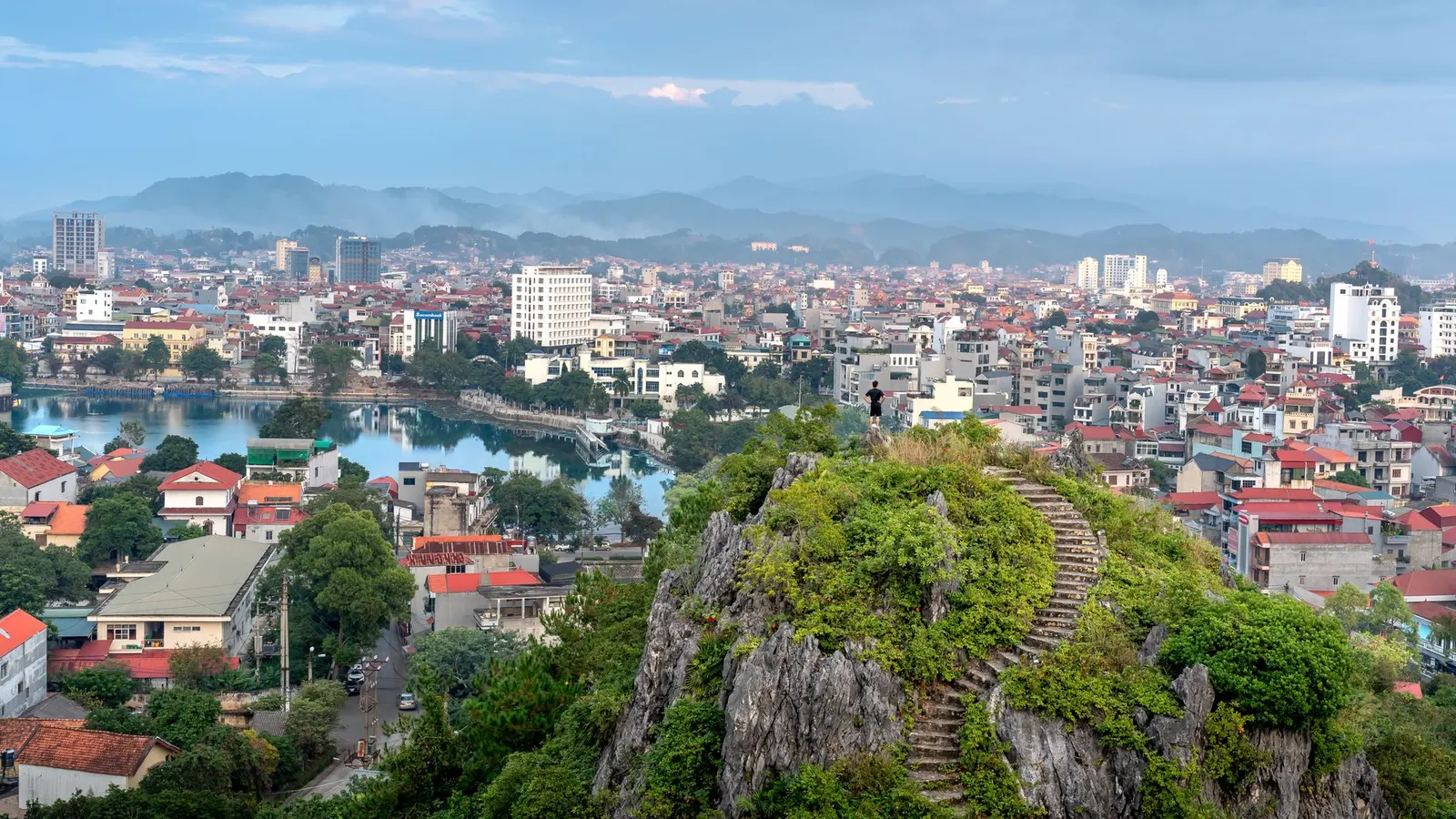
 Quang Nguyen Vinh · Pexels License
Country Guide № 191 / 194 · Asia
Vietnam
1,650 km of coastline, two river deltas and the best coffee culture in Asia.
“1,650 km of coastline, two river deltas and the best coffee culture in Asia.”
Vietnam runs 1,650 kilometres from the Chinese border to the Mekong Delta, and the length is the point. Hanoi is northern, cool in winter and wound tight around its old quarter; Ho Chi Minh City is tropical, loud and forward-facing; between them sit the imperial capital of Huế, the tailors of Hội An and a coastline of empty sand. Doing it end to end takes three weeks and is one of the great overland trips in Asia.
It is also changing fast. The motorbike-and-hammock version still exists in the far north and the delta, but the coast now has resorts, the trains have decent sleepers and Đà Nẵng has a skyline. Come for the food above all - a country where a €2 bowl of phở at a plastic stool outclasses most restaurant meals in Europe.
Chapter 01
Highlights
The Hà Giang loop
Three or four days of limestone switchbacks along the Chinese border - the most spectacular road in Vietnam. Ride it with an easy-rider driver if you are not a confident motorcyclist; the drops are real.
Hội An old town
A preserved trading port of lantern-lit merchant houses and a hundred tailors. Touristed to the edge, still beautiful at six in the morning and worth two nights for the food alone.
Phong Nha caves
The largest cave systems on earth in a limestone national park - Paradise Cave for the day trip, Tú Làn or Hang Én for a multi-day expedition with a permit and a porter team.
The Mekong Delta by boat
Floating markets at Cái Răng before dawn, coconut-candy workshops and homestays on the channels. Base in Cần Thơ, not on a day trip from Saigon.
Chapter 02
Entry requirements for Vietnam
Checking your passport…
up to 90 days · €23 / $25 · e-visa
90 days on arrival
Official portal only
Paid look-alike sites charge for a process that is free or cheap on the government portal. Use the link below and nothing else.
evisa.gov.vn →Before you fly
The detail
- Maximum stay
- up to 90 days
- Process
- e-visa
- Fee
- €23 / $25
- Processing time
- Processing takes 3–5 days - apply with room to spare.
- Passport validity
- Most destinations want validity beyond your stay, and some want six months. Check yours against the return date.
- Onward travel
- Airlines may ask for a return or onward ticket at check-in.
- Arrival form
- E-visa approval letter or visa-free eligibility must be shown at check-in; print or screenshot the approval - airline staff frequently ask for it before boarding.
- Health
- No vaccinations required. Hepatitis A, typhoid and tetanus are standard; Japanese encephalitis and rabies for rural or long stays. Dengue is present nationwide and peaks in the wet season. Malaria risk is confined to remote highland and border areas. Do not drink the tap water. Medical care is adequate in Hanoi and Ho Chi Minh City private hospitals and thin elsewhere - insurance with evacuation cover is the sensible minimum, especially for the northern loops.
- Money
- The đồng runs to large numbers - a €35 hotel is 950,000 đồng, so count the zeros. Cards are accepted in hotels, malls and mid-range restaurants; street food, markets and rural buses are cash. ATMs are everywhere; TPBank and some others charge no fee, most charge €1–2. Bargaining is expected in markets, not in shops or restaurants. Tipping is not customary but is increasingly welcomed in tourist areas.
United States passports are not on Vietnam's unilateral exemption list, so the route is the government e-visa: up to 90 days, single or multiple entry, US$25 and US$50 respectively, normally decided in about three working days. Apply only at evisa.gov.vn - the commercial mirrors charge several times the fee for the identical document and some of them simply take the money. Print the approval rather than trusting a phone: airlines check it at the gate and a Vietnamese check-in desk will not board you on a screenshot it cannot read. The entry date you declare on the form is binding, so you cannot arrive a day early, and the passport needs six months of validity and two blank pages. Overstaying is fined at departure, per day, and it is collected before you are allowed airside.
Check another destination with this passport →
Entry details: Editorial synthesis - Vietnam Immigration Department e-visa portal, Ministry of Foreign Affairs exemption list (2025–2026) · compiled 15 Sept 2026
Who needs a visa for Vietnam
11 common passports| Passport | Requirement | Stay | Process |
|---|---|---|---|
| United States | e-Visa | - | e-Visa · €23 / $25 · 3–5 d |
| United Kingdom | Visa-free | up to 45 days | No process · €0 / $0 |
| Germany | Visa-free | up to 45 days | e-Visa · €24 / $26 · 3–5 d |
| India | e-Visa | - | e-Visa · €23 / $25 · 3–5 d |
| China | e-Visa | - | e-Visa · €23 / $25 · 3–5 d |
| Brazil | e-Visa | - | e-Visa · €23 / $25 · 3–5 d |
| Nigeria | e-Visa | - | e-Visa · €23 / $25 · 3–5 d |
| Indonesia | Visa-free | up to 30 days | e-Visa · €23 / $25 · 3–5 d |
| Philippines | Visa-free | up to 21 days | e-Visa · €23 / $25 · 3–5 d |
| Egypt | e-Visa | - | e-Visa · €23 / $25 · 3–5 d |
| Nepal | e-Visa | - | e-Visa · €23 / $25 · 3–5 d |
Holding a passport that is not listed? The picker above answers for any of them. See where your passport takes you. Source: Passport Index, updated 14 Aug 2026.
Chapter 03
When to go
BestMar–Apr, Oct–Nov.
The north warms and clears - one of the two best months country-wide.
The band above each month is our editorial verdict - it weighs crowds, prices and access as well as weather. The line is average daily temperature, the bars are monthly rainfall. Select a month for the figures. Climate figures: ERA5 reanalysis via Open-Meteo, 2005–2024 normals.
Chapter 04
What it costs
A day in Vietnam
Comfortable · sample day
≈ $43
Line items are real prices we track. The daily budget is an editorial estimate for this level, not their sum.
Where this sits among 244 countries we have costed
Coastal and island accommodation rises through the June–August domestic holiday season and again over Christmas; Hanoi and Saigon are flat. The one to plan around is Tết (late January or February), when prices spike, transport sells out weeks ahead and much of the country closes for several days.
Updated Aug 2026 · Editorial synthesis - Budget Your Trip, published Vietnam Railways fares, operator rate sampling (2025–2026) · confidence high
Excludes international flights - they depend on where you fly from.
Chapter 05
Regions to know
5The far north
Hà Giang's limestone loop, Sa Pa's rice terraces and the markets of Bắc Hà - cold in winter, spectacular in autumn.
Hanoi & the Red River Delta
The old quarter, the country's best street food and Hạ Long or the quieter Lan Hạ and Bái Tử Long bays within three hours.
The central coast
Huế's citadel, the Hải Vân Pass, Đà Nẵng's beaches and Hội An's lantern-lit old town - plus the Phong Nha caves inland.
The central highlands
Đà Lạt's cool pine air and coffee farms, plus the waterfalls and minority villages around Buôn Ma Thuột.
Saigon & the Mekong Delta
Ho Chi Minh City's energy and the water world south of it - floating markets, orchards and homestays on the channels.
Chapter 06
Practical guide
Getting there
Hanoi (HAN) and Ho Chi Minh City (SGN) both take direct flights from Europe - Frankfurt, Paris, London and Istanbul - in 11–12 hours, and Đà Nẵng (DAD) is well connected regionally. An open-jaw ticket into one and out of the other saves two days of backtracking and rarely costs more. Overland from Cambodia (Mộc Bài) and Laos is routine; the Chinese border crossings need a Chinese visa arranged in advance.
Entry formalities
E-visa approval letter or visa-free eligibility must be shown at check-in; print or screenshot the approval - airline staff frequently ask for it before boarding.
Getting around
Domestic flights (Vietnam Airlines, VietJet, Bamboo) cover the length of the country for €30–60 and are how most people skip the dull middle. The reunification railway is slow but scenic - the Huế–Đà Nẵng leg over the Hải Vân Pass is worth doing in daylight, and soft-sleeper cabins handle the overnight legs. Sleeper buses are cheap and uncomfortable. In cities use Grab (cars and bikes); it removes every fare argument.
Money & costs
The đồng runs to large numbers - a €35 hotel is 950,000 đồng, so count the zeros. Cards are accepted in hotels, malls and mid-range restaurants; street food, markets and rural buses are cash. ATMs are everywhere; TPBank and some others charge no fee, most charge €1–2. Bargaining is expected in markets, not in shops or restaurants. Tipping is not customary but is increasingly welcomed in tourist areas.
Safety
Vietnam is safe from violent crime and unsafe on the roads - that is the honest summary. Bag-snatching from moving motorbikes is common in Ho Chi Minh City: keep your phone away from the kerb. Unexploded ordnance remains a real hazard in the former DMZ and parts of the centre - stay on marked paths and never touch metal debris. Standard taxi and money-change scams operate around tourist hubs; Grab avoids most of them.
Health
No vaccinations required. Hepatitis A, typhoid and tetanus are standard; Japanese encephalitis and rabies for rural or long stays. Dengue is present nationwide and peaks in the wet season. Malaria risk is confined to remote highland and border areas. Do not drink the tap water. Medical care is adequate in Hanoi and Ho Chi Minh City private hospitals and thin elsewhere - insurance with evacuation cover is the sensible minimum, especially for the northern loops.
SIM & internet
Viettel, Vinaphone and Mobifone tourist SIMs cost €5–10 for a month of data and are sold at every airport; eSIM is straightforward. 4G coverage is genuinely excellent, including on mountain roads. Wifi is everywhere, free and usually fast. Some sites are blocked intermittently; a VPN is worth having if you rely on a specific service.
Chapter 07
Driving
Renting a car with a driver costs little more than renting one alone and removes the licence problem entirely. City motorbike traffic moves as a flow - pedestrians cross at a slow constant pace and let it part around them.
Rules change - verify with an official source before you rent.
ExplWorld VerifiedNo verified partners here yet - all 6 country seats are open.
Become ExplWorld Verified →Chapter 08
Itineraries through this country
Chapter 09
From the Journal
Chapter 10
Before you go
VietnamChapter 11
Frequently asked questions
Do I need a visa for Vietnam?
Most nationalities do, and the standard route is the official e-visa: 90 days, single or multiple entry, US$25–50, applied for at evisa.gov.vn. Around a dozen European nationalities also get a short visa-free period (45 days as of 2025) - check the current list, because it is reviewed periodically. Apply only on the government site; the copycat sites charge four times the price.
Is the north or the south better?
They are different countries in climate. The north has a real winter (10–15 °C in Hanoi in January) and its best light in autumn; the south is tropical year-round with a wet season from May to October. The centre - Huế, Đà Nẵng, Hội An - takes its rain in October and November, when the rest of the country is at its best. There is no single perfect month for all three.
How dangerous are the roads?
Vietnam has one of the highest road-fatality rates in Southeast Asia and most travel-insurance claims here involve a motorbike. Riding is legal only with the right licence and an IDP that Vietnam recognises; without it your insurance will decline the claim. If you want the Hà Giang loop and are not an experienced rider, hire an easy-rider - it costs about €50 a day and is the single best money you will spend.