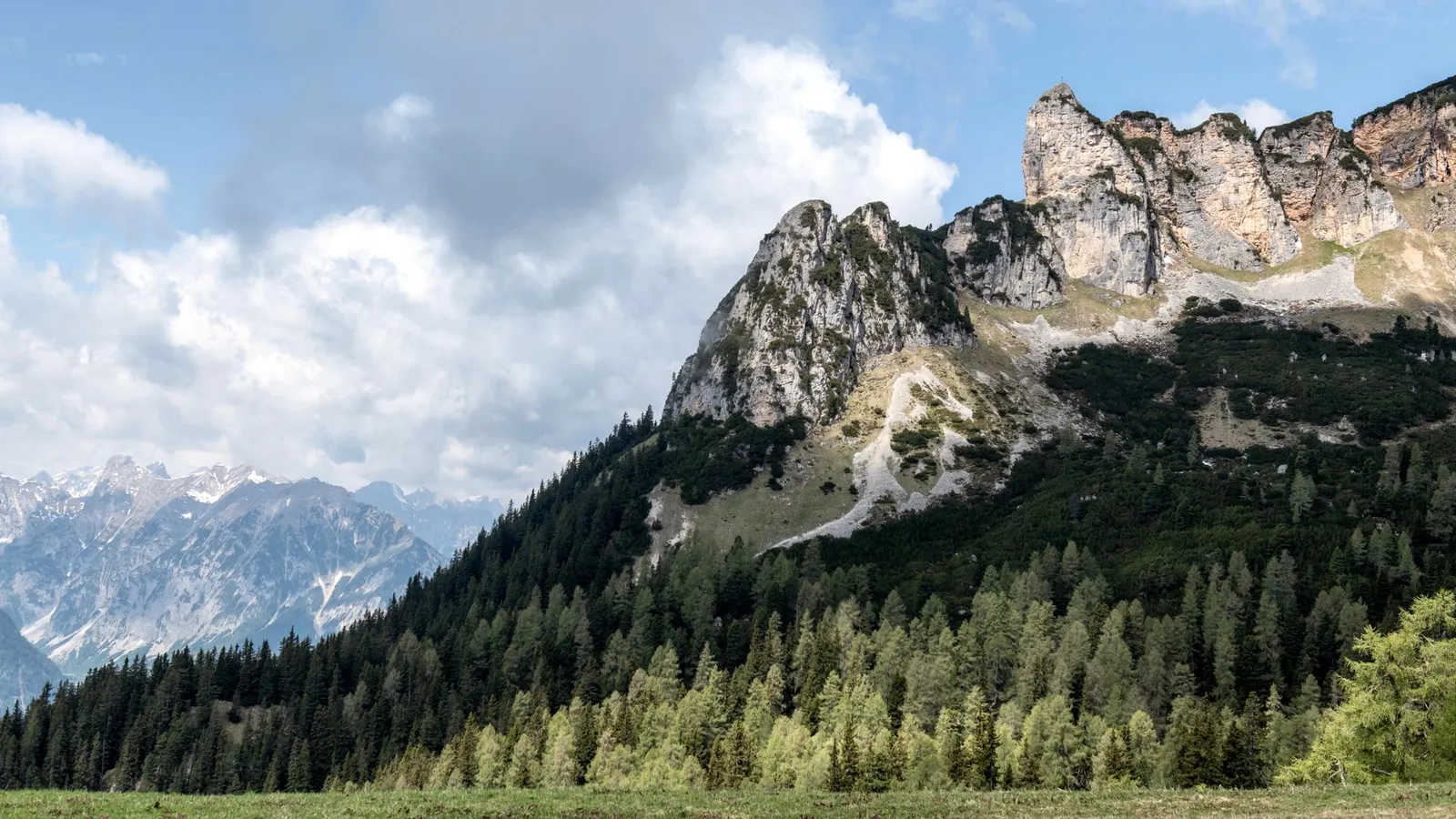
 Wolfgang Weiser · Pexels License
Itinerary · Europe · 13 days · Easy
The Danube to the Rhine
Vienna→Karl-Marx-Hof, Vienna→Krems an der Donau→Melk→Semmering→Breitenstein+7 stops
Across the country by train, boat and one day on a bicycle - Vienna, the Wachau, the first mountain railway ever built, Graz, Salzburg, the salt country and Tyrol, ending where the water stops running to the Black Sea and starts running to the North Sea.
Vienna
Arrive and walk. The Ring is not an old street - it is what was built after 1857 on the demolished city walls, which is why every ministry, museum and theatre on it dates from the same forty years. Standing tickets at the Staatsoper go on sale eighty minutes before the curtain and cost a fraction of a seat.
Vienna, the housing
U4 to Heiligenstadt for Karl-Marx-Hof: 1,100 metres long, built between 1927 and 1930, and shelled by the federal army in February 1934 because the workers' militia was inside it. The old laundry block houses a small museum on Red Vienna. Roughly three in five Viennese still live in council or subsidised housing, and this is where that started.
North-west to Krems
Out of Franz-Josefs-Bahnhof along the Danube. If it is a Friday, break at Tulln: the finished nuclear power station at Zwentendorf is ten kilometres west, it runs free guided tours, and it is the subject of the feature that goes with this route. Krems itself is a working town at the bottom end of the Wachau.
Up the Wachau to Melk
Thirty-five kilometres on the Donauradweg past Dürnstein, where Richard I was held for ransom over the winter of 1192. The growers here run their own classification - Steinfeder, Federspiel, Smaragd - graded by ripeness and alcohol and tighter than anything Austrian wine law requires. Melk abbey was rebuilt between 1702 and 1736 and sits above the town like a decision.
South to the Semmering
A transfer day back east and then up. The Semmering line was built between 1848 and 1854 by some twenty thousand workers under Carl von Ghega, and it was the first railway anywhere to be taken over a high mountain pass. It went on the UNESCO list in 1998, the first railway to do so.
The Bahnwanderweg
Walk the line from below on the footpath left from its construction - about four hours down to Payerbach, under the Kalte Rinne viaduct and past the viewpoint that put it on the twenty-schilling note. A 27-kilometre base tunnel is being finished underneath all of it, due at the end of the decade, and will take the through traffic off the old track.
Graz
Two hours south through Mürzzuschlag and Bruck an der Mur. The Landeszeughaus holds something like 32,000 weapons and pieces of armour, kept because Styria was the province facing the Ottomans and was allowed to keep its arsenal in 1749 when Vienna centralised everyone else's. The Kunsthaus, 2003, is the blue thing beside the river.
West to Salzburg
Four hours through Selzthal and Bischofshofen, up the Enns valley and over into the Salzach. It is the best scenery on the route and nobody markets it, because it is a domestic line between two cities rather than a named tourist train.
Salzburg and Hallein
The old town in the morning, before the coaches, and Hohensalzburg above it. Then S-Bahn twenty-five minutes to Hallein and up to the Dürrnberg, where the salt that paid for all of that has been mined since the Iron Age. The archbishops were not princes because of the architecture; the architecture happened because of the salt.
Into the Salzkammergut
East to Attnang-Puchheim and down the Salzkammergut line. Hallstatt station is on the wrong side of the lake with no road to it, and a boat meets every train - which is the most pleasant arrival in the country. Stay the night: the day-trip window runs roughly ten until four and the village belongs to about 750 people either side of it.
Dachstein
Cable car from Obertraun up to Krippenstein for the ice cave and the walkway out over the drop. Or spend the day in the salt mine above Hallstatt instead, where a wooden staircase dated by tree rings to 1344 BC stands underground - found in the Bronze Age workings in 2002, lifted, conserved, and put back inside the mountain because the salt air is what preserved it. It is the oldest wooden staircase known in Europe.
To Innsbruck
The long leg west. Train to Bad Ischl, then the 150 bus over the Wolfgangsee to Salzburg, which is quicker than going back round by rail, then the Railjet up the Inn valley. Arrive with an evening to spare.
Over the Arlberg
Up the Nordkette first if the weather holds - funicular from the centre, two cable cars, and Hafelekar at 2,256 metres about twenty minutes after leaving the old town. Then the afternoon train through the Arlberg tunnel, open since 1884, which crosses the divide inside the mountain at about 1,310 metres - the road goes over the top of it at 1,793 - and drops to Lake Constance. Bregenz stages one opera on the lake for two consecutive summers before changing it.
Good to know
ÖBB Sparschiene fares go on sale about six months out, are tied to one named train and are not refundable; the walk-up fare is roughly double, so the long legs - Graz to Salzburg, the Arlberg - are the ones worth booking early. ÖBB does its heavy track work in summer and replaces whole sections with buses: the Arlberg line was shut for months in 2025, so check the individual route before fixing dates. Shops close on Sundays nationwide, main stations excepted. Mountain railways close between seasons, roughly late April into May and again from late October, and a shut cable car in a valley with no road is a lost day. If you drive any of this instead, the motorway vignette does not cover the Arlberg road tunnel, the Brenner or the Grossglockner High Alpine Road - each is tolled separately, and the Grossglockner is closed from about early November to early May.
Shorter or longer?
Four days between Salzburg and Innsbruck for Zell am See, the Krimml falls and the Grossglockner road. The road is a summer object - it opens around early May and shuts in November - so this only works in season.
Vienna, the Wachau, Salzburg and Hallstatt. Cuts Styria and Tyrol, removes both four-hour transfers, and keeps the two things most people came for.
Practical guide
Visa check for this route
Budget
Mid-range · per person · sharing a double room. Excludes international flights - they depend on where you fly from.
Editorial estimates · checked August 2026
Country guides
Trip essentials
The connectivity placement is our own eSIM store. No affiliate link on this list. How we choose these →