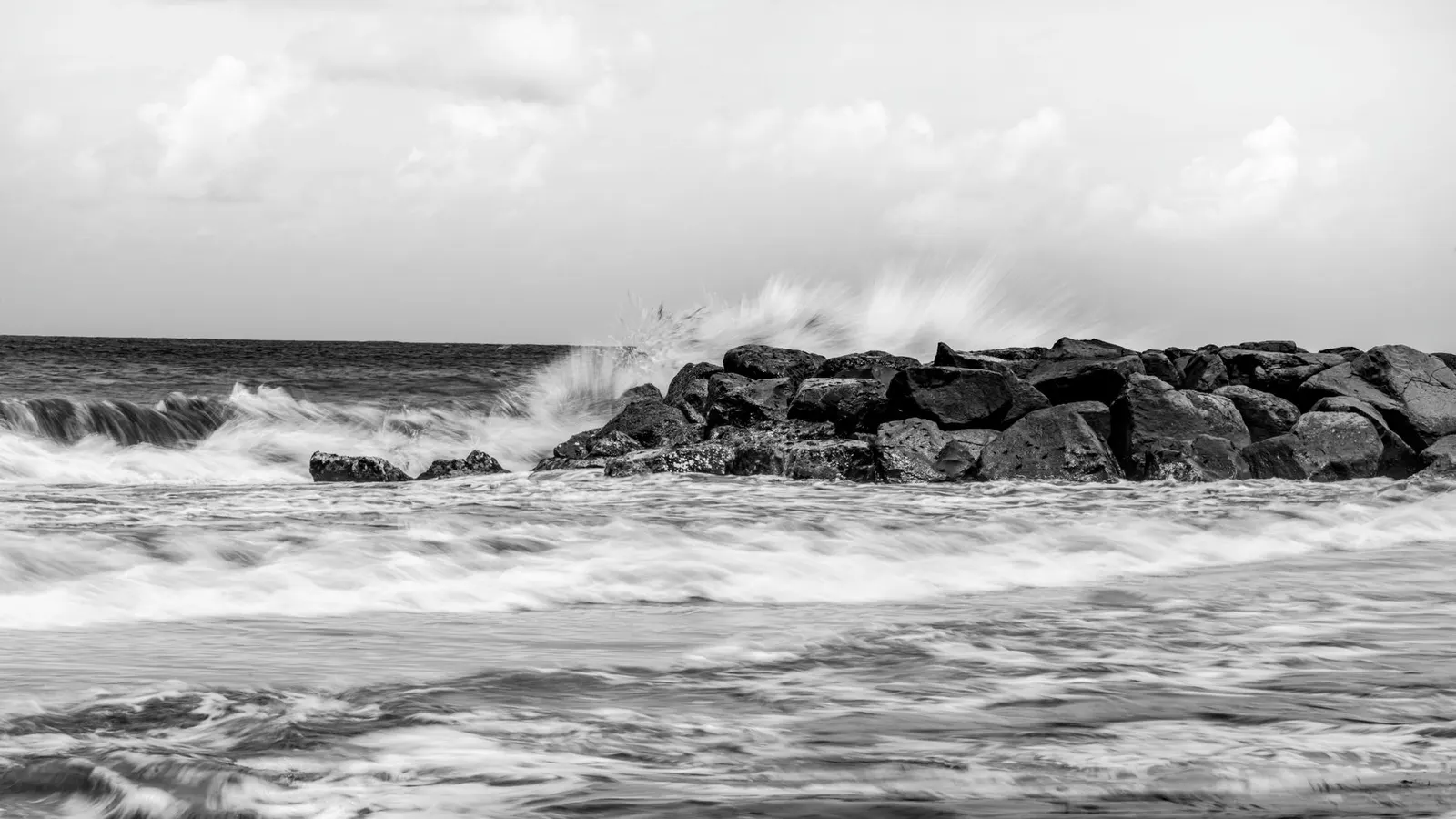
 Reynaldo #brigworkz Brigantty · Pexels License
Itinerary · Caribbean · 7 days · Easy
The Coral Cap and the Scotland District
Bridgetown→Garrison Savannah→Ragged Point→Bathsheba→Turner's Hall Woods→St Nicholas Abbey+1 stops
Seven days on an island 34 kilometres long, organised around its geology rather than its beaches - the limestone cap that covers most of Barbados and has no rivers on it, the one north-eastern corner where the cap has eroded through and the ground slips, and the sugar and slavery infrastructure that both are still covered in. Bridgetown and the Garrison, the Atlantic coast, the last fragment of original forest, and the north.
Bridgetown
Start at the Careenage and walk. Historic Bridgetown and its Garrison went onto the UNESCO list in 2011 for being an unusually complete British colonial port and military complex, and the serpentine street plan is the argument - it is medieval English rather than the grid the Spanish were laying out elsewhere. The Parliament Buildings hold the National Heroes Gallery, and the square outside them is where Barbados removed the British monarch as head of state and became a republic on 30 November 2021, fifty-five years to the day after independence; the Nidhe Israel synagogue was founded in the 1650s by Sephardic Jews who came from Recife when the Dutch lost Brazil, was flattened by the 1831 hurricane, rebuilt in 1833, and has a mikveh that was dug out of the ground beside it in 2008. Then the fisheries complex on the far side of the bridge, which is where the flying fish are landed and where Hurricane Beryl wrecked most of the fleet on 1 July 2024.
The Garrison, and Carlisle Bay
The Barbados Museum occupies the old British military prison on the Savannah and is the best single explanation of the island you will get in two hours. George Washington House is a few minutes away: he came here in 1751 with his brother, caught smallpox, and never left North America again - the only foreign journey of his life. In the afternoon take a boat out into Carlisle Bay, where six wrecks sit in shallow water inside a marine park and turtles come to the boats because the crews feed them, which is worth knowing before you decide it is a wild encounter.
Newton, Foursquare and the south-east
Inland to the Newton burial ground in Christ Church, an unmarked field on a former plantation where Jerome Handler and Frederick Lange excavated just over a hundred burials in 1972 and 1973, from a cemetery estimated to hold around 570 people and used for roughly a century and a half from the 1660s. It is the earliest and largest enslaved cemetery excavated in the Caribbean, and none of that is visible on the ground: there is a memorial and nothing else, and you will probably be alone. Then Foursquare in St Philip, a working distillery on another old estate that lets you walk round it for free on weekdays - it is shut at weekends, so this day wants to be Monday to Friday - and out to the windward corner: Crane, Bottom Bay, and the lighthouse at Ragged Point on the easternmost cliff, where the next land is Africa.
Codrington and down to Bathsheba
North along the cliff. Codrington College sits at the end of an avenue of cabbage palms above the sea and opened in 1745 on the estates Christopher Codrington left in his will in 1710 to the Society for the Propagation of the Gospel - a missionary body that then ran them with enslaved labour, branding people on the chest with the word Society, and apologised for it in 2006. St John's parish church is up the hill on the lip of Hackleton's Cliff, about 250 metres up, with the whole eroded bowl of St Joseph and St Andrew below it and the Atlantic behind that - the cliff is the buried edge of the coral cap, and the drop is onto land, not into water. Then down off the cliff into Bathsheba, where the coral boulders standing offshore were undercut by a sea level that is no longer there.
The Scotland District
The day the geology makes sense. Everywhere else on Barbados is capped in coral limestone; here the cap has eroded through to the older clays and sands underneath, and the result is hills, gullies, landslips and the only clay on the island - which is why Chalky Mount has had potters on it for generations. Andromeda Botanic Gardens above Bathsheba was made by Iris Bannochie from 1954 and left to the National Trust. Walkers Reserve is a worked-out sand quarry being replanted as a working experiment in soil regeneration. Finish at Turner's Hall Woods, about nineteen hectares of mesic forest, the last surviving remnant of what covered the island before the English arrived in 1627 and cleared it for sugar inside two generations.
The north
Morgan Lewis windmill first, on the ridge above the Scotland District: built around 1727, restored with Dutch millwrights to working order, and one of only two intact sugar windmills left in the Caribbean. It grinds cane on advertised demonstration days and stands still the rest of the time, and the National Trust's opening hours here are not reliable - ring ahead rather than build the morning around it. Then Cherry Tree Hill and the mahogany avenue down to St Nicholas Abbey, built about 1658 and one of three Jacobean houses still standing anywhere in the Americas, now distilling rum again with a steam mill from 1890 doing the crushing. The Wildlife Reserve nearby is a mahogany wood with green monkeys in it - West African animals brought over in the seventeenth century and now a farming problem. End at the Animal Flower Cave on North Point, a sea cave you climb down into, which closes whenever the swell says so.
The west coast and the cave
Speightstown traded with Bristol for long enough to be called Little Bristol, and the Arlington House museum on the main street is a good half hour when it is open, which it has not consistently been - check before you plan the morning round it. South to Holetown, where the English landed in 1625 and settled in 1627, and into the Folkestone marine reserve to snorkel over the inshore reef. Inland to Harrison's Cave, a live limestone cave system you ride an electric tram through - book it, because the slots sell out - or Welchman Hall Gully next door, which is the roof of a cave that fell in and is now a walkable gorge full of monkeys. Back into Bridgetown along the coast.
Good to know
British, EU, US, Canadian and Australian passport holders do not need a visa; the length of stay is decided at the desk and is generous, commonly up to six months, and you are expected to file the online immigration and customs form in the 72 hours before you fly rather than on arrival. Departure tax is inside the airfare. The currency is the Barbados dollar, pegged at BDS$2 to US$1 since 1975 and not floating - US dollars are accepted almost everywhere and your change will come back in Barbados dollars at that rate, so there is no reason to change money and no reason to accept a worse rate from a shop. Cards work in hotels, supermarkets and restaurants; rum shops, bus fares and the fish fry are cash. The tap water is drinkable and unusually good, filtered through the coral cap, which sits oddly beside the fact that Barbados is one of the most water-scarce countries in the world measured per head - supply interruptions in the north and east are routine and your guesthouse will have a tank for exactly that reason. Driving is on the left. You need a visitor's driving permit, which the hire company issues against your own licence on the spot; the roads are narrow, walled, signposted erratically and full of blind bends, and the honest advice is that a 40-kilometre journey can take an hour. If you would rather not drive, the network genuinely works, and it is three fleets rather than one: blue government Transport Board buses, privately run yellow minibuses, and the white ZR vans with a maroon stripe, also private and the fastest and loudest of the three. All of them charge a flat BDS$3.50 regardless of distance; the blue ones want the exact fare and do not give change, the two private fleets do. Almost every route runs through Bridgetown, so a cross-island trip means going in and out again, and the last buses on the country routes go early in the evening. Hurricane season is 1 June to 30 November, and Barbados being the easternmost island has historically meant a lower strike rate rather than immunity - Beryl passed just to the south on 1 July 2024 as a category four, the earliest storm of that strength recorded in the Atlantic, and destroyed most of the Bridgetown fishing fleet. Crop Over runs from June to Grand Kadooment on the first Monday in August; accommodation prices in that window behave accordingly and the island is worth seeing then if you can take the crowds. Every beach in Barbados is public by law, all the way along, and hotels cannot own the sand in front of them - access paths exist even where they are not signposted. The Atlantic side is not for swimming: Bathsheba and the whole east coast have rip currents that kill people, and the rock pools at low tide are the only sensible water there. On safety, be precise rather than reassured or alarmed. Barbados has a homicide rate that is high for a country with this income and this tourism industry, and it rose sharply from about 2019; it is overwhelmingly gun violence between men who know each other, concentrated in a handful of Bridgetown neighbourhoods - Nelson Street, Bush Hall, Black Rock - that this route does not go near and that you have no reason to walk through at night. What actually happens to visitors is opportunistic theft. Bridgetown by day is fine and the south coast strip is busy into the evening, but the city centre empties out after office hours and the beaches are unlit - walking an empty beach at night is the specific thing visitors get robbed doing, and taxis are cheap enough that there is no argument. Accommodation attracts a per-night room levy and a product development levy on top of VAT, and restaurants usually add ten per cent service, so a quoted rate is not the rate.
Shorter or longer?
Barbados sits about 170 kilometres east of the rest of the Lesser Antilles and no scheduled passenger ferry connects it to anywhere - the only way onward is a flight, and the regional carriers are the only ones flying those pairs. St Vincent is under an hour, Grenada a little more, and either adds four or five days on islands that are volcanic, mountainous and wet, which makes the flatness and dryness of Barbados legible in a way a week here does not.
Stay on the south coast throughout and drive out and back: Bridgetown and the Garrison, the south-east corner, one long day across to Bathsheba and the Scotland District, and one to the north. Loses Speightstown, the west coast and the second night on the Atlantic side, which is the one most worth keeping if you can find a fifth day.
Practical guide
Visa check for this route
Budget
Mid-range · per person · sharing a double room. Excludes international flights - they depend on where you fly from.
Editorial estimates · checked August 2026
Country guides
Trip essentials
The connectivity placement is our own eSIM store. No affiliate link on this list. How we choose these →