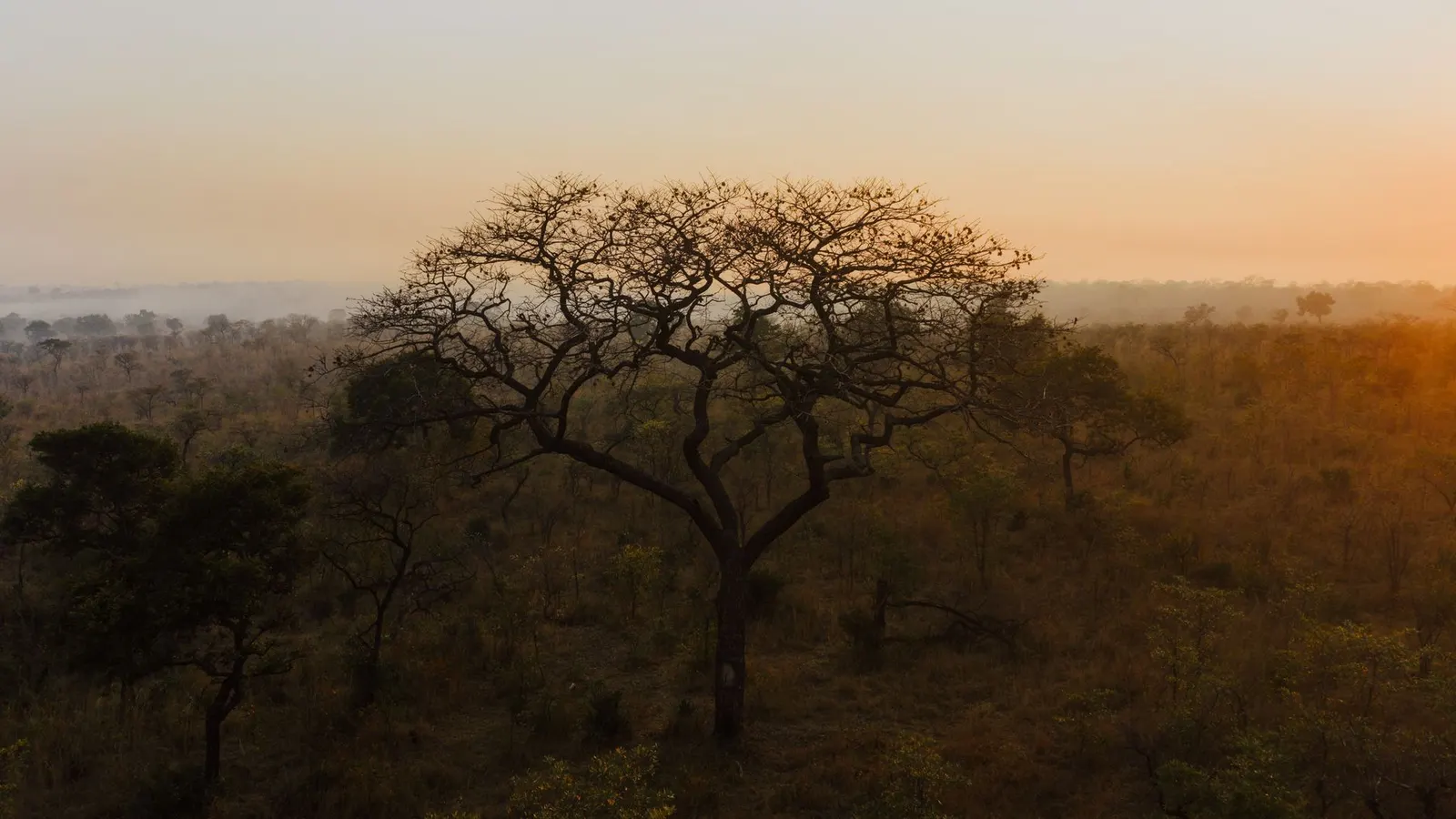
 K · Pexels License
Itinerary · Africa · 10 days · Expedition
The Sangha and the Clearing
Bayanga→Dzanga Bai→Bai Hokou→Mongambe→Yandoumbé→Lidjombo+4 stops
Advisory - travel not recommended · checked 26 Sept 2026
Central African Republic
The US and Australia advise against ALL travel to the Central African Republic, and the UK against all travel outside Bangui and all but essential travel to the capital itself. Armed groups control substantial territory, banditry affects intercity roads and violence recurs in Bangui. The Dzanga-Sangha reserve in the southwest has stayed comparatively stable and is reached by charter or via Cameroon, but the country around it has not. Standard scores are suspended while this alert is active.
Official advisory →Every advisory in force →Read the advisory first: foreign ministries advise against ALL travel to the Central African Republic, including this corner of it, and this route is published for the day that changes rather than as an invitation for today. It stays entirely inside the Dzanga-Sangha reserve in the far south-west - the elephant clearing at Dzanga Bai, habituated gorillas at Bai Hokou, the Sangha river and the Ndoki block - and never spends a night in Bangui or uses the intercity roads the advisory is actually about, because the only honest way in is a charter over them or a crossing from Cameroon.
Bayanga
The reserve headquarters, the airstrip and a few thousand people on the east bank of the Sangha. Bayanga exists because of timber: a concession opened here in the 1970s and the sawmill has closed, reopened and changed hands several times since, which is why the town has a grid of company housing and a workforce with nothing much to do between one owner and the next. Spend the afternoon on the paperwork rather than resenting it - entry permits, the tracking permits for later in the week, the trackers assigned to you, and the briefing on what you may and may not photograph. Walk down to the river in the last hour of light.
Dzanga Bai
A track east through the forest, then forty-five minutes on foot across swamp and over a log bridge, and the trees stop. The bai is a mineral-rich clearing a few hundred metres across where forest elephants dig in the mud for salts, and a wooden platform at the edge looks down on it. There may be fifteen animals below you or there may be over a hundred, in family groups that arrive and leave all afternoon, and the trackers will name the ones they know. Sit still and stay for hours; this is not a thing to look at for twenty minutes. Bongo, sitatunga, forest buffalo and giant forest hog use the same clearing.
Bai Hokou - gorillas
The Primate Habituation Programme started here in 1997, and habituating a western lowland gorilla group is measured in years of daily contact rather than weeks. Trackers leave before dawn to find where the group nested; you follow when they radio a position, which may be one hour of walking or five, through thorny understorey with no path. The rules are enforced and not negotiable: one hour with the group, a maximum of three visitors, a surgical or N95 mask on your face the whole time, seven metres of distance, minimum age fifteen, and you are turned back if you have a cold. Gorillas share enough of our respiratory pathogens for that last one to have killed animals elsewhere.
Mongambe
The northern camp and the second habituated group, reached on a rougher track. The other reason to come up here is the agile mangabeys, a forest monkey habituated by the same programme and far harder to hold in view than the gorillas - they move fast and high, and following a troop on foot for two hours is the closest this route gets to genuine physical work. Ask the trackers to show you what they are actually reading on the ground. Almost none of it is a footprint.
Yandoumbé and the net hunt
A BaAka settlement immediately south of Bayanga, and a day on foot from it. The net hunt is the old collective method - long fibre nets strung in an arc through the understorey, the group driving game into them, women and children as beaters - and it is arranged through the community rather than the lodge, with the fee going to the households who take you. Take it on its own terms: it is a working hunt with a poor success rate, not a demonstration. The polyphonic singing of the Aka, proclaimed by UNESCO in 2003 and on its Representative List of intangible heritage since 2008, is not a performance either, and whether you hear it depends on the evening. Ask before you photograph anyone.
Down the Sangha to Lidjombo
Motorised pirogue downstream with the current. The Sangha is wide, brown and fast here, with sandbanks in the dry months and villages set back from the bank on both sides; Cameroon is the far shore for most of the way. Lidjombo is the border post at the southern end of the reserve, close to where the Central African Republic, Cameroon and the Republic of the Congo meet. It is a customs and immigration post before it is anything else, so have your passport out, expect the visit to be logged in a ledger, and do not photograph the post itself.
Into the Ndoki block
Dzanga-Ndoki National Park comes in two separate sectors and this is the other one - around seven hundred square kilometres of lowland forest east of the river with no road, no camp, no habituated animals and effectively no visitors. What you get instead is closed-canopy forest with elephant paths through it, and the knowledge that the Congolese side of the same block is Nouabalé-Ndoki. Half a day of walking in from the river, and a fly camp at the end of it. This day only happens if the reserve is running it that season; confirm at the office in Bayanga on day one, and if the answer is no, put the two days back at the bai.
Out, and back upriver
Walk out in the morning to the river, then upstream to Bayanga against a current that roughly doubles the journey time you had coming down. It is a long slow afternoon in a wooden hull and the best of the trip for birds - palm-nut vultures, four or five kingfisher species, hornbills crossing high. Fishing camps on the sandbanks in the low-water months. Back at Bayanga by evening.
The bai again, at dawn
Go back. The clearing at first light is a different place from the clearing at three in the afternoon, and by now you will recognise individual animals yourself, which is the entire point of having stayed a week rather than a night. Afterwards, an hour at the reserve office is worth more than it sounds: ask how the anti-poaching payroll is funded, how the share of revenue that goes to the surrounding communes is calculated, and what happened here in 2013. You will get a straight answer to all three.
Out
The charter back to Bangui takes about two hours and lands at M'Poko, where the sensible plan is a connection out of the country the same day rather than a night in the capital - that is the part of the advisory with the sharpest end on it. If you came in through Cameroon, reverse it: pirogue across the Sangha to Libongo, then the logging road north-west to Yokadouma and on to Yaoundé or Douala, which is two days rather than one and should be built into the ticket you booked.
Good to know
Start here and do not skip it. Foreign ministries advise against all travel to the Central African Republic, and that advice covers the whole country, this corner included. Armed groups hold territory, banditry is a normal condition of the intercity roads, and violence recurs in Bangui. Dzanga-Sangha has stayed comparatively stable through years in which the rest of the country did not, and it has kept operating - but "comparatively stable" is a relative statement inside a country under a blanket warning, not an exemption from it. Travelling here means travelling against your government's advice, and a standard travel insurance policy is void the moment you do. Check your own ministry the week you would go, not the month you book. This page does not replace that, and we publish the route because the reserve deserves the coverage and because advisories change, not because we think you should go now.
The route above is drawn the way it is for one reason: it never uses a Central African road outside the reserve. There are two ways in and both avoid the interior. The first is a charter from Bangui M'Poko to the Bayanga airstrip, roughly two hours in a light aircraft, arranged through the reserve or a Bangui operator and priced as an aircraft rather than a seat - it is the largest single line in the budget unless you fill it with six people. The second is from Cameroon: fly to Douala or Yaoundé, drive to Yokadouma, then the logging road south-east to Libongo, and cross the Sangha by pirogue. That is two hard days of road but it puts you at the reserve gate without entering the Central African Republic anywhere else. What you must not do is drive Bangui–Berbérati–Nola–Bayanga. That road, and the ones like it, are what the advisory is about.
You cannot arrive independently and you cannot improvise. Permits, trackers, vehicles, the boat and every bed are arranged in advance through the Dzanga-Sangha protected-areas office or the lodge; nobody at Bayanga is set up to absorb a walk-in. That is also how you get the letter of invitation, which is what makes the visa possible. A visa must be issued before you travel - there are few Central African embassies, an e-visa system has appeared and stopped working more than once, and the reliable path is an embassy application with the reserve's invitation letter attached. Allow several weeks. If you come via Cameroon you need a Cameroonian visa as well, and a multiple-entry one if you plan to leave and come back.
A yellow fever certificate is mandatory for entry and it is checked. Malaria here is year-round, high-transmission, chloroquine-resistant falciparum, and prophylaxis is not a judgement call. There is no surgical care within hours: the nearest hospital you would want is in Cameroon, and the realistic response to anything serious is an evacuation flight. Buy medical evacuation cover that explicitly names travel to a country under an advise-against-all-travel notice, read the exclusions rather than the summary, and carry the policy number on paper.
Money is cash and the cash is euros. The currency is the Central African CFA franc, pegged to the euro at 655.957, so euros change cleanly and dollars do not - this is the opposite of the advice for most of the region. There is no ATM in Bayanga, no card is accepted anywhere, and the nearest bank is a long way off. Bring the whole trip in clean notes and split them.
Photography is where visitors get into trouble. Photographing the airport, bridges, military and police personnel, checkpoints and government buildings is prohibited and people have been detained for it; in Bangui the safe rule is to keep the camera in the bag entirely. Inside the reserve, photography of wildlife is fine and photography of people is not automatic - ask, and accept no. The gorilla rules above are non-negotiable and the trackers will end a visit that breaks them.
Season: the heaviest rains run roughly August to November with a second wetter spell around April to June, and the drier window from about December to February is when the forest tracks and the Yokadouma road behave. The bai is used year round. Nothing here has reliable mobile coverage - carry a satellite messenger and tell someone at home what the plan is, day by day.
Shorter or longer?
Add five or six days in the Republic of the Congo, which is the same forest block and not under the same blanket warning: cross to Bomassa, then Mbeli Bai for gorillas at a clearing and the Goualougo triangle for chimpanzees that had no reason to fear people before researchers arrived. It needs a Congolese visa, its own permits and its own booking chain, and the permits are expensive enough to be their own budget line.
Bayanga, two full days at Dzanga Bai, one gorilla tracking day at Bai Hokou, a day with the BaAka at Yandoumbé, and out. Cuts the river, Lidjombo and the Ndoki block - which is most of the logistics and about a third of the cost - and keeps the two things nobody comes here for anything else.
Practical guide
Visa check for this route
Budget
Mid-range · per person · sharing a double room. Excludes international flights - they depend on where you fly from.
Editorial estimates · checked August 2026
Country guides
Trip essentials
The connectivity placement is our own eSIM store. No affiliate link on this list. How we choose these →