 Duc Tinh Ngo · Pexels License
Itinerary · Middle East · 14 days · Moderate
The Length of the Country
Tel Aviv→Jaffa→Caesarea Maritima→Haifa→Akko→Nazareth+8 stops
Israel is about 470 kilometres from the Lebanese border to the Red Sea and you can drive it in a long day, which is exactly why nobody should. Fourteen days from the Mediterranean coast down through the Galilee, Jerusalem and the Dead Sea to the erosion craters of the Negev and the reef at Eilat - trains and buses in the north, a hire car for the desert.
Tel Aviv, the White City
Roughly four thousand buildings in the International Style went up here in the 1930s, most of them by architects who had trained in Germany and left it, and UNESCO listed the ensemble in 2003. Walk Rothschild, Bialik and the Lev Ha’ir streets and look at the balconies rather than the plaques: the whole argument is about shade.
Jaffa and the south of the city
South along the promenade to the old port, in use in one form or another for several thousand years, with an Ottoman clock tower of 1903 at the gate and a flea market behind it. Neve Tzedek, built in 1887, was the first neighbourhood laid out beyond the walls and is what Tel Aviv looked like before the Bauhaus arrived.
Caesarea, then north to Haifa
Herod built a deep-water harbour here on an open coast with no bay, between roughly 22 and 10 BC, by pouring hydraulic concrete into forms under water - using volcanic ash shipped from the Bay of Naples, the earliest large use of the technique outside Italy. It subsided and you now snorkel over it. In the theatre in 1961 a reused block turned up carrying the name of Pontius Pilate - still the only monumental inscription of him found anywhere, and the reason he is documented in stone at all.
Haifa
Nineteen terraces climb a kilometre of Mount Carmel around the Shrine of the Báb, finished in 2001 and listed by UNESCO in 2008; the upper and lower gardens open to walk-in visitors at set hours and the middle section only on a free guided tour. Below them the German Colony was laid out by Württemberg Templers from 1868. The Carmelit, a six-station funicular in a tunnel, was the only underground railway in the country until the Tel Aviv light rail opened its tunnel section in 2023, and is still the only funicular.
Akko
The Ottoman town sits on top of the Crusader capital, which was filled in with rubble and forgotten; excavation from the 1950s opened the Hospitaller compound, the knights’ halls and a Templar tunnel running to the sea. Al-Jazzar built his mosque in 1781 and rebuilt the walls, and in 1799 those walls held against Napoleon for two months. UNESCO listed the town in 2001.
Nazareth
The Basilica of the Annunciation was finished in 1969 and built over the footprints of two earlier churches and a first-century cave dwelling, all of which are visible in the lower level. The old market above it is a working souk rather than a display, and the Greek Orthodox church of St Gabriel covers the spring the town actually drank from.
The Sea of Galilee
The lake sits about 210 metres below sea level, which makes it the lowest freshwater body on earth. Tiberias was founded by Herod Antipas around AD 20 on the west shore; Capernaum, Tabgha and the Mount of Beatitudes run along the north in a few kilometres. Two kilometres past Tabgha, the Sapir site is where the National Water Carrier starts: the intake pipes run out along the lake bed and the pumps lift what they draw about 250 metres in a single stage.
Beit She’an
Roman Scythopolis is the most completely excavated Roman city in the country - colonnaded streets, bathhouse, theatre, latrines with the seats still in place. On 18 January 749 an earthquake brought it down in one go, and the columns lie along the pavement in the direction they fell, which no reconstruction anywhere manages to convey.
South to Jerusalem
A transfer day and a change of climate. In the Old City start with the ramparts walk to get the shape of the four quarters, then the Western Wall and the Church of the Holy Sepulchre, which six denominations share under an arrangement so brittle that a ladder has stayed on a window ledge since the eighteenth century because nobody may move it.
Jerusalem, the museums
Yad Vashem’s history museum, a Moshe Safdie prism cut through the ridge and opened in 2005, takes a morning and admission is free. In the afternoon the Israel Museum: the Shrine of the Book holds the Dead Sea Scrolls and the outdoor model reconstructs the city at 1:50 as it stood in AD 66. Mahane Yehuda market afterwards, when it turns into bars.
Masada and the Dead Sea
Pick up the hire car. Masada is a Herodian palace-fortress on a plateau the Tenth Legion besieged in AD 73 or 74; their ramp is still on the western side and their camps are still legible on the ground below. The Snake Path from the east takes about an hour and shuts once the heat rises, so climb at first light or take the cable car. Ein Gedi’s canyon and the shore below it fill the afternoon.
Sde Boker and Avdat
Ben-Gurion resigned the premiership in 1953 and moved to a hut at Sde Boker to make the point that the Negev was the country’s unfinished business; the hut is preserved and his grave is on the cliff above Nahal Zin, with one of the better views in the country. Ein Avdat is a canyon with pools and poplars in it, and Avdat above is a Nabataean caravan city, part of the Incense Route listing of 2005.
Makhtesh Ramon
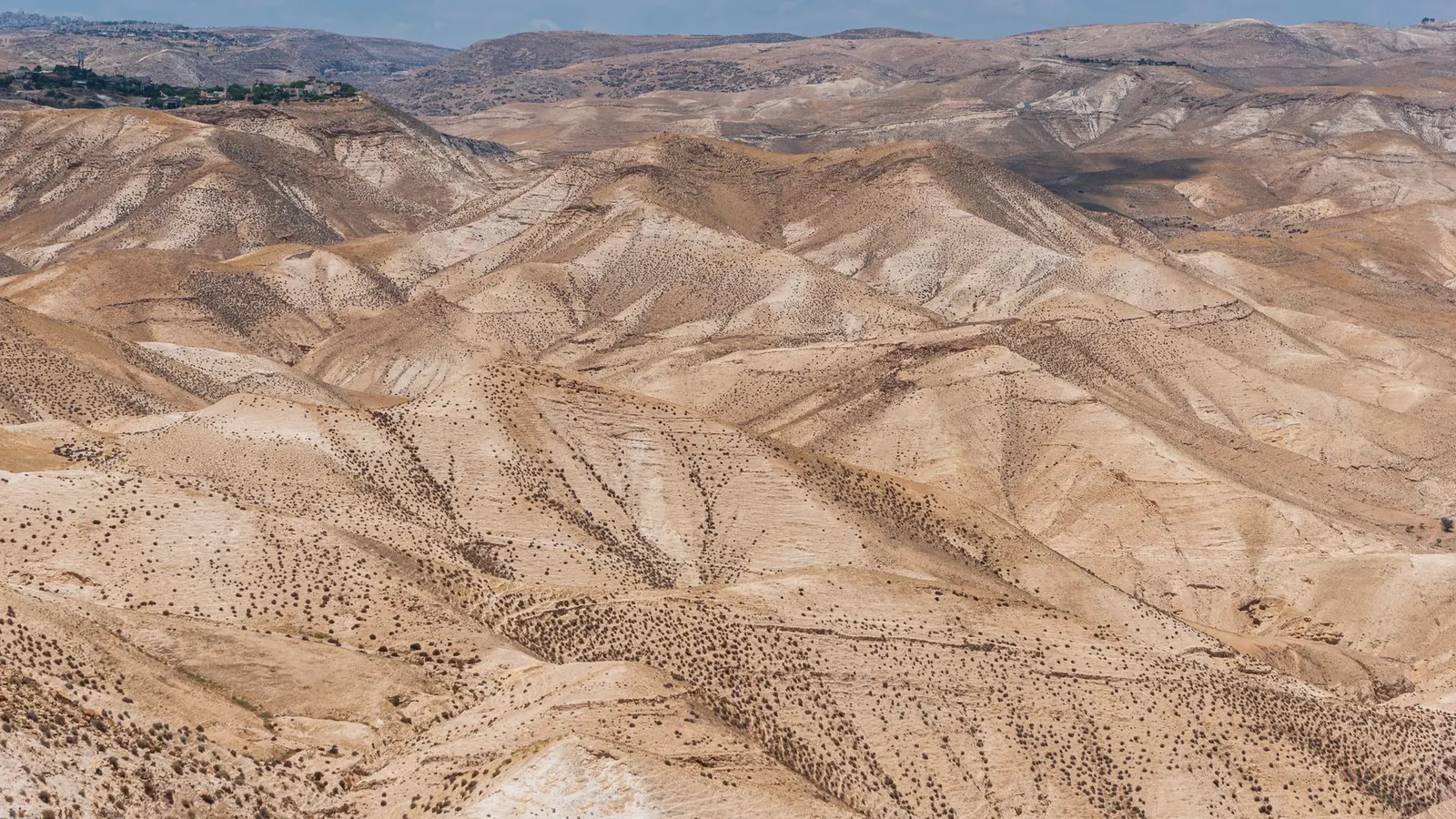
Not a crater. A makhtesh forms where a hard cap erodes through and a wadi drains the soft rock beneath it, and the landform is essentially confined to this desert and Sinai; this one runs about forty kilometres, up to ten wide and five hundred metres deep at the rim. Walk down the Ardon or the Carpentry, and stay out after dark - this is the darkest sky Israel has, and the town has organised itself around that fact.
Timna and Eilat
Copper was mined in the Timna valley from deep prehistory and industrially by Egyptian expeditions in the fourteenth to twelfth centuries BC, who left a temple to Hathor at the foot of the cliff and rock carvings of their chariots. Then twenty-five kilometres more to the Red Sea, where the coral reserve at the southern end of Eilat is a short and very crowded strip of genuinely good reef.
Good to know
Visa-exempt nationals - EU, UK, US, Canada, Australia and many others - have needed an ETA-IL electronic authorisation since it became mandatory at the start of 2025; apply online before you fly, because airlines check it at the gate. Israel does not stamp passports at Ben Gurion, issuing a paper or digital entry card instead; keep it for the whole stay and for departure, and be aware that evidence of an Israeli visit still bars entry to Lebanon, Syria, Iran and several other countries, and that an Egyptian or Jordanian land-border stamp can give it away indirectly. The transport quirk that catches everyone is Shabbat: Israel Railways stops completely from Friday afternoon until Saturday night, most intercity buses with it, and the same applies on the major Jewish holidays - plan Fridays as short days and Saturdays as walking days, or use the shared sherut minibuses, which do run. Nature and Parks Authority sites charge separately and the multi-site Matmon pass pays for itself if you visit four or more; several of them, Masada included, close trails when the temperature climbs. Between roughly May and September the Negev, the Arava and the Dead Sea run past 40 °C and the Snake Path and canyon routes are shut by mid-morning, while in winter the opposite risk applies: rain falling fifty kilometres away sends flash floods down dry wadis, and the Parks Authority closes canyons on those days - check the day’s closures rather than assuming. Border areas and firing zones in the Negev and the Arava are marked and are not advisory; stay on marked trails. Read the hire agreement before the Dead Sea leg specifically: the fast road from Jerusalem down to Route 90 runs east of the Green Line for most of its length, and Israeli rental contracts differ on whether their insurance follows the car there - some cover it, some void on it, and the difference is in the small print rather than at the desk. Ask, in writing, and note that picking up in Jerusalem and dropping in Eilat carries a one-way fee that is not always quoted up front. Finally, the security situation and airline schedules have changed repeatedly and at short notice since 2023, so confirm flights, crossings and your government’s advice close to departure rather than at booking.
Shorter or longer?
The Israel National Trail runs about a thousand kilometres from the Lebanese border to Eilat, and its Negev sections are the best of it. Add four or five days to walk from Mitzpe Ramon south, sleeping at trail-angel houses and night camps and arranging water drops in advance - this is desert, and the water caches are the whole logistics problem.
Tel Aviv and Jaffa, Caesarea, Jerusalem, the Dead Sea, Mitzpe Ramon and Eilat. Keeps the coast, the city and the desert, cuts the north entirely and removes the long north-to-south transfer day.
Practical guide
Visa check for this route
Budget
Mid-range · per person · sharing a double room. Excludes international flights - they depend on where you fly from.
Editorial estimates · checked August 2026
Country guides
Trip essentials
The connectivity placement is our own eSIM store. No affiliate link on this list. How we choose these →