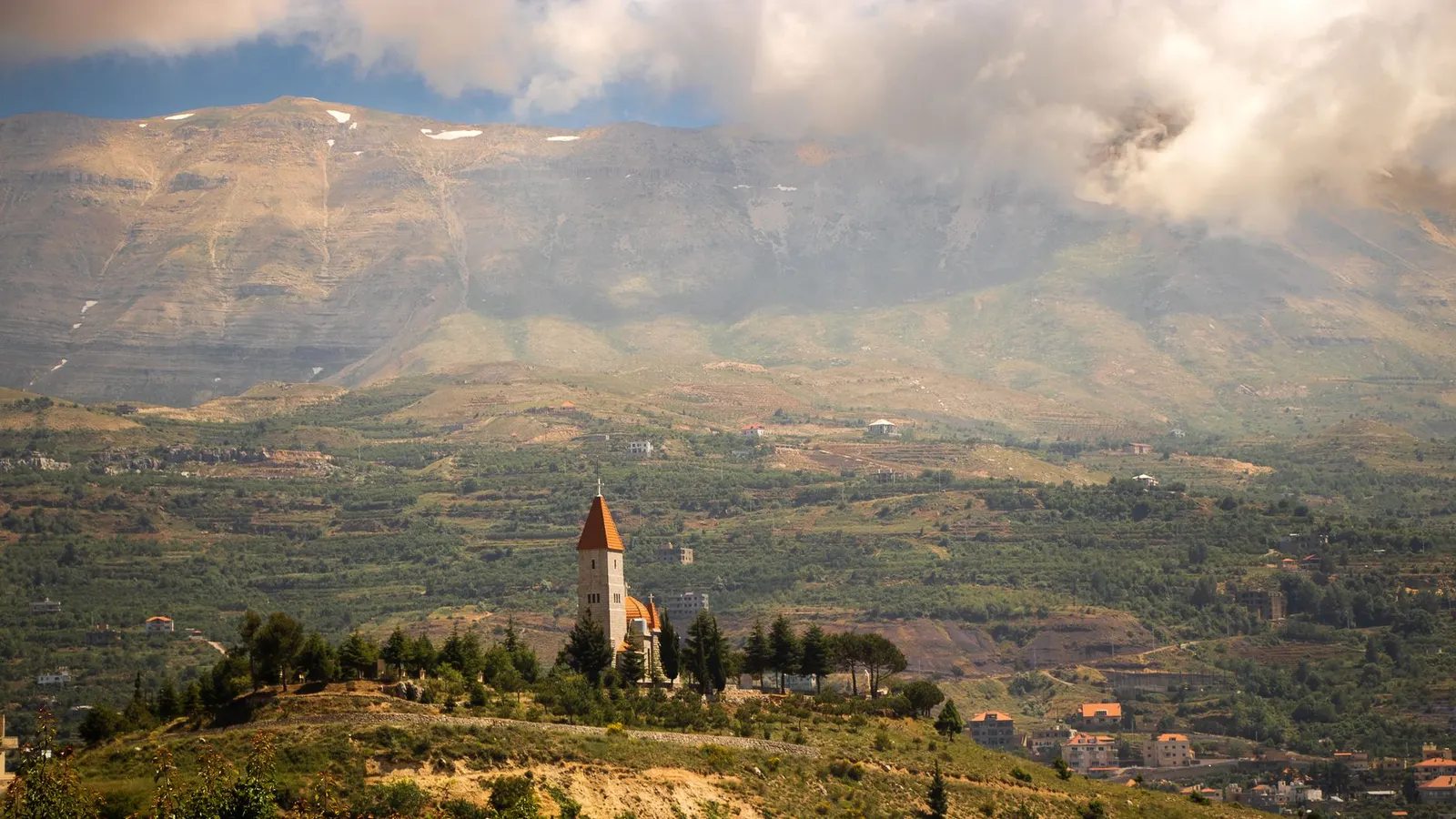
 Fady · Pexels License
Itinerary · Middle East · 11 days · Challenging
The Coast and the Cedar Valley
Beirut→Mar Mikhael, Beirut→Jeita Grotto→Byblos→Batroun→Baatara Gorge, Tannourine+5 stops
Advisory - travel not recommended · checked 26 Sept 2026
Lebanon
Foreign ministries advise against travel to southern Lebanon, the Beqaa valley and the Syrian border areas, and several advise against all travel to the country given the risk of rapid escalation. Beirut and the coast are visited, but the security picture can change within hours.
Official advisory →Every advisory in force →Read the advisory first: foreign ministries advise against travel to southern Lebanon, the Beqaa valley and the areas along the Syrian border, and several advise against all travel to the country because the picture can change within hours. This route is published for the day that changes rather than as an invitation for today. It works only the parts that are genuinely visited - Beirut, the coast north to Tripoli, and the Qadisha valley and Chouf mountains behind it - and it goes nowhere near Baalbek, Tyre or the border. Tripoli, one day of the eleven, carries a heavier advisory than the rest and is written so it can be dropped.
Beirut
Land, change money, and spend the first day slowly. The National Museum is the right opening move: it sat on the Green Line through the civil war, and its director Maurice Chehab had the large mosaics and sarcophagi sealed inside poured concrete rather than moved, which is why they are still here. It reopened in 1999. Among them is the Ahiram sarcophagus, carrying one of the earliest substantial inscriptions in the Phoenician alphabet, and the reason a good deal of the rest of the world writes the way it does.
The port and the eastern quarters
On 4 August 2020 a hangar at the port that had held roughly 2,750 tonnes of ammonium nitrate since 2013 detonated and destroyed a large part of the city around it; more than two hundred people were killed. How much of that stock was still in the building is disputed - investigators have put the quantity that actually exploded well below the tonnage originally impounded - and no court has established it, because the domestic investigation has been stalled by legal challenge for years. The damaged grain silos partly collapsed again two years later. Gemmayzeh and Mar Mikhael took the blast wave and have been rebuilt street by street with almost no state money. The Sursock Museum, a 1912 villa gutted that afternoon, reopened in May 2023. Beit Beirut, the shell-pocked Barakat building on the old crossing point, is the other half of the same argument about what a city keeps.
Nahr al-Kalb, Jeita and north to Byblos
Twenty minutes up the coast the Dog River cuts to the sea through a headland that every army moving along this shore has had to squeeze past, and a remarkable number of them stopped to say so. The cliff carries commemorative inscriptions and stelae running from Ramesses II, through Assyrian and Babylonian kings, to Roman, Arabic, French and British texts of the 1920s and 1940s - the same act of vanity repeated across roughly three thousand years in one place. Then Jeita, two galleries of limestone cavern, the upper walked and the lower taken by boat; it was shut through the war years and reopened in 1995, and cameras are still not allowed inside.
Byblos
A tell with something on it more or less continuously since the Neolithic, and the town that shipped Egyptian papyrus to the Aegean well enough for the Greeks to name the material after it - biblion, and eventually Bible. The Crusader castle of about 1103 was built out of whatever Roman masonry was lying about, which is visible in every wall. Pierre Montet dug the royal necropolis here in 1923 and took the Ahiram sarcophagus out of it. The harbour is small, the souk is restored and busy, and the site itself is best in the last hour of light.
Batroun and Mseilha
Half an hour north to a town built behind a Phoenician sea wall, a curved rampart of fused sandstone still taking the swell on the seaward side of the old quarter. Batroun sells lemonade with the seriousness other places reserve for wine, and it has the easiest evening on the route. Just inland, Mseilha fort stands on a thin limestone outcrop in the Nahr el-Jaouz valley - rebuilt by Emir Fakhr al-Din II in the seventeenth century on a much older position, and shaped entirely by the rock it is standing on.
Baatara gorge and Tannourine
Inland and up. The Baatara sinkhole near Tannourine drops water some 255 m (835 ft) past three natural limestone bridges stacked one above the other, into a shaft in Jurassic rock. It runs on snowmelt, which means roughly March to June: come in September and you get the bridges and a dry hole, which is worth knowing before you drive two hours for it. The Tannourine cedar reserve above holds one of the larger surviving stands, and it is quieter than the famous grove you will see tomorrow.
Bsharri and the Cedars of God
The road climbs from Bsharri to about 2,000 m (6,600 ft) and the temperature goes with it - bring a layer even in summer. Horsh Arz el-Rab is a few hundred trees on a slope above the village, some of them credibly over a thousand years old, and it was inscribed by UNESCO in 1998 together with the valley below. It is a small grove and it is not scenery: it is the surviving fragment of a forest that supplied timber to Egypt and Mesopotamia, and the fence around it is the point. Khalil Gibran was born in Bsharri in 1883, died in New York in 1931, and is buried in the former monastery that now holds his museum.
Down into the Qadisha
A walking day, with a local guide, on the paths that made this valley what it is. Qadisha means holy, and the gorge held communities that wanted to be difficult to reach: hermitages cut into the cliff, and Deir Qannoubine, which was the seat of the Maronite patriarchs from the fifteenth century to the nineteenth. The descent from Bsharri to the monastery and back is three to four hours of steep ground with no shortcut out, so start early and take more water than seems reasonable.
Ehden, and a day in Tripoli
Horsh Ehden in the morning - a reserve of cedar, fir and wild apple that is the most biodiverse patch of forest in the country. Then down to the second city for the afternoon. Tripoli's old city is Mamluk: hammams, khans, madrasas and the Great Mosque packed into a few hundred metres, and the densest survival of that architecture anywhere outside Cairo. Above it the citadel of Raymond de Saint-Gilles was begun in 1103 and rebuilt by everyone since. On the southern edge, Oscar Niemeyer's Rachid Karami International Fair - designed in 1962, still unfinished when the war stopped the work in 1975 - was added to the World Heritage List in 2023 and put onto the danger list in the same decision. Tripoli is the one stop on this route with an advisory of its own: several ministries treat the city more restrictively than the coast, the flashpoint quarters of Bab al-Tabbaneh and Jabal Mohsen have a long record of armed clashes, and the Palestinian camps at Beddawi on the edge of town and Nahr el-Bared just north of it are places the advisories tell you not to enter at all. Go with a driver who knows which streets he is in, keep to the old city, the citadel and the fairground, and be back on the coast before dark. If the week is tense this is the day to drop - the rest of the route stands without it.
South to the Chouf
The long transfer of the route: down the coast past Beirut and then up into the Chouf, the mountain heartland of the Druze. Deir el-Qamar was the seat of the emirs of Mount Lebanon from the sixteenth century and is essentially an intact seventeenth-century town square. Beiteddine, a few kilometres on, was built by Emir Bashir Shihab II over some thirty years from 1788, on a scale that tells you exactly how much autonomy a mountain emir had under Ottoman rule; it is the president's summer residence and the courtyards open to visitors when he is not in them.
The Barouk cedars, then Beirut
The Shouf Biosphere Reserve holds the largest of the cedar stands - a substantial share of everything left of the species in Lebanon - and unlike the grove at Bsharri it is big enough to walk into for a couple of hours. The Lebanon Mountain Trail runs through it, and the ridge tops out above 1,900 m (6,200 ft) with the Beqaa on the far side, which is as close as this route goes. Then an hour and a half back down to Beirut. Build a buffer day before your flight: Beirut schedules are the first thing to move when the news does.
Good to know
Start with the advisory, because it decides more here than any other line in this file. Foreign ministries advise against travel to southern Lebanon, to the Beqaa valley - which puts Baalbek and Anjar, the two sites most people associate with the country, out of scope - and to the strip along the Syrian border. Several advise against all travel to Lebanon outright on the grounds that escalation can happen inside a day. This route avoids the named regions entirely rather than passing through them with a caveat, and it still runs against the advice of some ministries. Check your own the week you travel, not the month you book.
Insurance is the practical consequence and it is expensive. An ordinary policy is void in a country your government advises against travelling to, and it will not tell you that at the point of claim - it will tell you afterwards. Specialist cover exists from a small number of underwriters and runs into the low hundreds of euros for a fortnight. Read the war and terrorism exclusion specifically: a policy that covers the destination but excludes acts of war has excluded the actual risk, and medical evacuation is the clause that matters most, because commercial flights stop before anything else does.
Entry is by air, in practice. Beirut Rafic Hariri is the only realistic way in: the border with Israel is closed and has been for decades, and every crossing from Syria sits inside an advisory area. Most European, British, North American and Australian passports get a free single-entry visa for one month on arrival. Any Israeli stamp, visa or other evidence of a visit to Israel means refusal at the desk - this is enforced, and an indirect trace such as a matching Jordanian or Egyptian land-border stamp is enough to prompt the question. Middle East Airlines is frequently the last carrier still serving Beirut when others suspend; keep a departure buffer and enough money to rebook.
Money works in a way that has no real parallel. Since the collapse the country runs on United States dollars in cash: hotels, restaurants, drivers and most shops price in dollars, and you pay in physical notes. Foreign cards work erratically at best and are not a plan; ATMs are not a plan either. Bring more clean, undamaged, small-denomination dollars than you expect to spend, split between two places. The lira survives as small change at an official rate of 89,500 to the dollar, fixed there since 31 January 2024, which makes the largest banknote in circulation - 100,000 lira - worth a little over a dollar.
Power is the other thing nobody warns you about. The state grid supplies a few hours a day at best and private generator subscriptions cover the rest, so ask your accommodation directly whether it has generator backup and for how many hours, rather than assuming. Water pressure follows the same logic.
On the ground: use a driver you have arranged rather than improvising, do not travel between towns after dark, and stay out of the southern suburbs of Beirut - with the one exception you cannot design around, the airport road, which runs past them; do that leg in daylight where the schedule allows. Do not enter a Palestinian refugee camp anywhere in the country - the advisories are unanimous on that - and treat Tripoli as the one stop on this route that several ministries flag separately from the coast. Do not photograph checkpoints, military positions or personnel anywhere in the country. There is no national curfew, but local movement restrictions appear at no notice and are not negotiable. Register with your embassy on arrival, keep the route to the airport in your head, and know where your passport is at all times.
Shorter or longer?
The Lebanon Mountain Trail runs roughly 470 km (290 mi) along the range, but its southern sections end in advisory territory, so walk the north: the stages linking Qadisha, Tannourine and Ehden, sleeping in village guesthouses arranged through the trail association. Add six to eight days. It needs a guide, a booked chain of nights and a weather margin - the high sections hold snow into May.
Beirut, Byblos, Batroun and a single night at Bsharri for the cedars and the rim of the Qadisha. Cuts the walking day, Tripoli and the Chouf, keeps every night within about ninety minutes of the airport road, and is the version to take if you want the shortest possible exposure.
Practical guide
Visa check for this route
Budget
Mid-range · per person · sharing a double room. Excludes international flights - they depend on where you fly from.
Editorial estimates · checked August 2026
Country guides
Trip essentials
The connectivity placement is our own eSIM store. No affiliate link on this list. How we choose these →