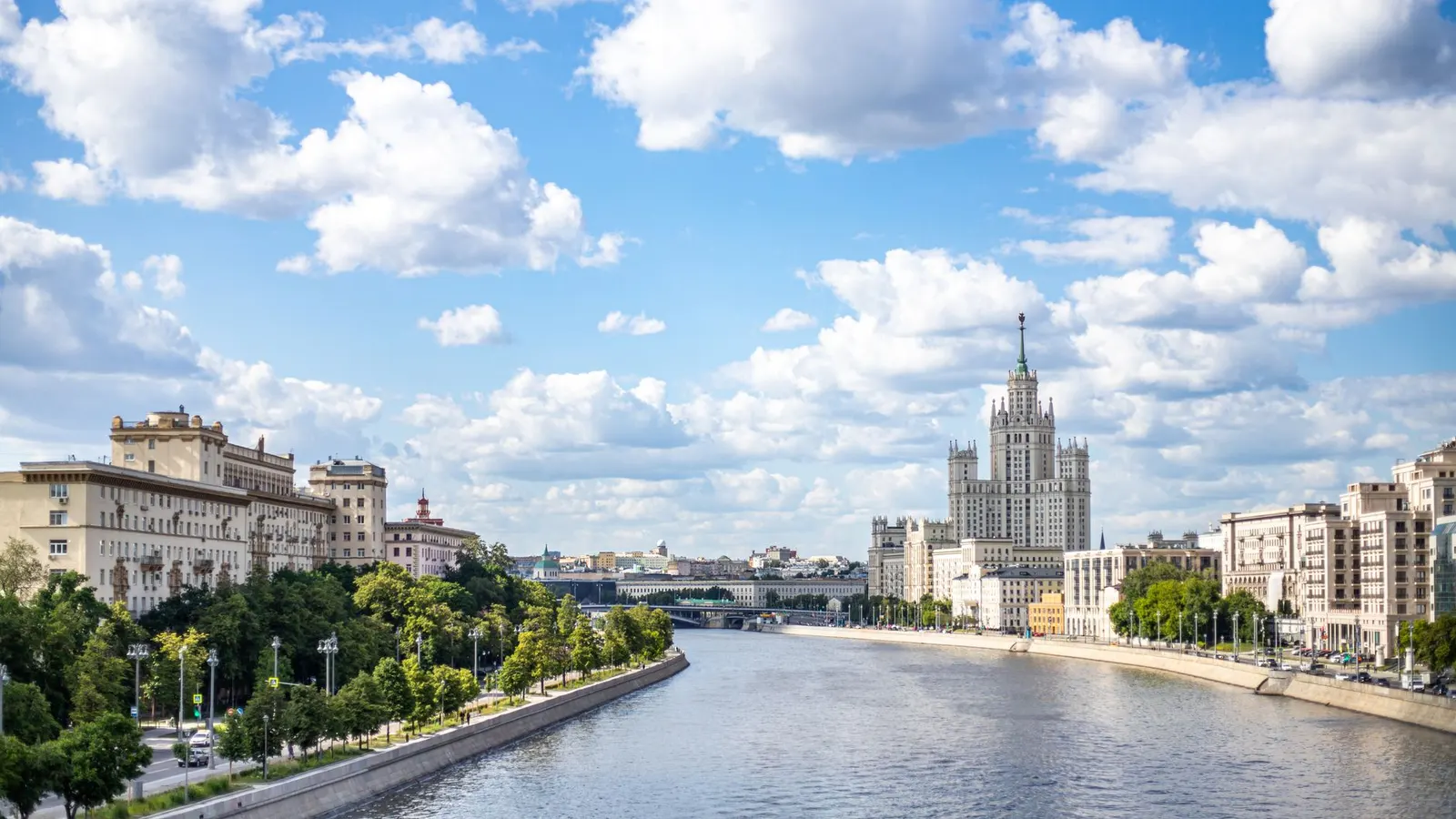
 Виктор Соломоник · Pexels License
Itinerary · Europe · 14 days · Challenging
The North End of Baikal
Moscow→Novodevichy Convent, Moscow→Kazan Kremlin→Sviyazhsk→Yekaterinburg→Novosibirsk+8 stops
Advisory - travel not recommended · checked 26 Sept 2026
Russia
Foreign ministries advise against all or all-but-essential travel to Russia. Consular assistance is severely limited for many nationalities, dual nationals face conscription and exit risks, airspace closures make routing difficult, and arbitrary detention of foreign nationals has occurred. Standard scores are suspended while this alert is active.
Official advisory →Every advisory in force →Read the advisory first: foreign ministries advise against all or all-but-essential travel to Russia, consular assistance is severely limited for most Western passports, arbitrary detention of foreign nationals has occurred, and this route is published for the day that changes rather than as an invitation for today. It is fourteen days on the railway from Moscow to the northern tip of Lake Baikal, and it stays out of every region the advisories name separately - the oblasts on the Ukrainian border, Belgorod, Kursk and Bryansk among them, and the whole of the North Caucasus. Distance is not the reassurance it sounds like at the start, though: Moscow is under 600 km (370 mi) from Belgorod and about 350 km (215 mi) from Bryansk, and its airports have been closed at no notice by drone activity. Only from Kazan eastwards is the route genuinely far from any of it.
Moscow
Nothing about arriving is direct any more. European, British and North American airlines have not flown here since 2022 and Russian carriers are barred from most Western airspace, so you come in through Istanbul, Dubai, Belgrade, Yerevan or Astana, and it costs a day rather than a morning. Use what is left of it underground, because the metro is both the first thing to look at and the thing you will use every day: Mayakovskaya of 1938 with its steel arches and ceiling mosaics, Novoslobodskaya of 1952 with its backlit glass panels. The marble has a practical explanation - the deep stations were built to double as shelters, and in 1941 they were used as exactly that.
The Big Circle and Novodevichy
The Bolshaya Koltsevaya line closed its full ring in March 2023 with thirty-one stations and is the longest circular metro line in the world - worth an hour of riding it simply because the newest stations are architecturally ambitious in a way almost no other network has attempted this century. Then Novodevichy convent, founded in 1524 and listed by UNESCO in 2004, and the cemetery next to it, where Chekhov, Bulgakov, Shostakovich, Khrushchev and Yeltsin are buried within a few minutes of each other. Be at Kazansky station in good time: names on Russian Railways tickets are checked against the passport at the carriage door.
Kazan
The capital of Tatarstan and a genuinely two-religion city rather than a city with a mosque in it. Ivan IV took Kazan in 1552 and the Kremlin above the Kazanka is what was built on top of the khanate: the Annunciation Cathedral of the 1560s and the Kul Sharif mosque stand a couple of hundred metres apart inside the same white wall, the second of them rebuilt and opened in 2005 for the city's millennium on the site of the mosque destroyed in the siege. The Söyembikä tower leans close to two metres out of true and nobody agrees on when it was built. UNESCO listed the ensemble in 2000. Bauman street below it is where Kazan actually spends its evenings.
Sviyazhsk, then east
An hour west by road. Sviyazhsk was cut and assembled upriver at Uglich over the winter of 1550, floated down the Volga in numbered pieces and put up here in about four weeks as the forward base for the siege of Kazan - a prefabricated fortress town, three hundred years before the phrase existed. It became an island when the Kuybyshev reservoir filled in 1957. UNESCO listed the Assumption cathedral and monastery in 2017 for the sixteenth-century frescoes inside, which include a Saint Christopher with the head of a horse rather than the dog's head of the more usual Eastern iconography - the Synod banned animal-headed depictions of him in 1722 and very few survived it. Back to Kazan for the evening train into the Urals.
Yekaterinburg
Founded in 1723 as an ironworks and named after an empress, and still an industrial city that makes things. The Church on the Blood, finished in 2003, stands where the Ipatiev house stood until it was pulled down in 1977 on a Politburo instruction carried out by the regional party secretary, Boris Yeltsin. But the reason to give the city a day is the constructivism, which is the best surviving concentration of it anywhere: the Chekists' Town, built between 1929 and 1936 as a housing commune for the secret police, with communal kitchens, no private ones, and the curved Iset hotel as its front block. People still live in it. The Europe–Asia obelisk sits about seventeen kilometres out on the Moscow highway if you want the photograph.
Across the West Siberian Plain
A whole day on the rails and the most useful one in the route, because nothing else conveys the scale. The plain east of the Urals is one of the largest areas of flat land on earth and the train crosses it at around sixty or seventy kilometres an hour for a day and a half: Tyumen, the Ishim, the Irtysh at Omsk, the Barabinsk steppe, then the bridge over the Ob at Novosibirsk, which is a city of more than a million and a half people and exists because the railway crossed the river there in 1893. Learn the carriage: the samovar at the end is boiling and free, the provodnitsa runs everything, and the timetable is now printed in local time - Russian Railways switched from network-wide Moscow time in 2018, which removed the single most reliable way for a foreigner to miss a train.
Krasnoyarsk and the Stolby
Off the train in the morning on the Yenisei, which is the largest river in Russia by discharge and does not freeze below the dam upstream, so the city sits in fog for much of the winter. The Stolby are syenite pillars in the taiga on the right bank, protected as a reserve in 1925 after local climbers petitioned for it and made a national park in 2019. The stolbisty - a climbing subculture that has been going here since the 1850s - go up them free, in canvas shoes, and have their own vocabulary for the holds. It is an afternoon of walking, and then the overnight train east.
Irkutsk
Arrive in the afternoon. The Decembrists were sent here after the failed rising of 1825, and the houses of Sergei Volkonsky and Sergei Trubetskoy are both museums - Maria Volkonskaya followed her husband into exile and gave up her title and her right ever to return in order to do it, which the house makes plainer than any book. The other Irkutsk is wooden: two-storey log houses with carved window surrounds, a great many of them sinking into the ground at an angle, some of them lifted and restored into the 130th Quarter, which is a commercial reconstruction and is honest about being one.
Listvyanka and the Circum-Baikal
Seventy kilometres down the Angara - the only river that flows out of Baikal, against something over three hundred flowing in. The Baikal Museum keeps live nerpa, the only seal in the world that lives exclusively in fresh water and whose ancestors reached a lake a very long way from any sea. The lake is 1,642 m deep, holds roughly a fifth of the planet's unfrozen fresh water and is about twenty-five million years old, which makes it the oldest on earth and is why so much of what lives in it lives nowhere else. Across the water at Port Baikal, the Circum-Baikal Railway is the original Trans-Siberian alignment of 1899–1905, about forty tunnels in eighty-odd kilometres, orphaned from the network when the Irkutsk dam flooded the Angara section in 1956 and now a slow tourist line along the shore.
Onto Olkhon
About five hours north-east by minibus to the crossing at Sakhyurta and then the ferry over the Olkhon Gate to the largest island in the lake, seventy kilometres long and with steppe on one side and larch forest on the other. Khuzhir is the only real village. Shamanka, the rock at Cape Burkhan below it, is one of the principal sacred sites of Buryat shamanism and the rules around it are not folklore for visitors: the coloured cloths on the serge posts are offerings, the approach is restricted, and you ask before you walk down. Sunset here is the picture everybody comes for and it is still worth standing through.
Cape Khoboy
North up the island in a shared UAZ bukhanka, the loaf-shaped van that is effectively the only vehicle the tracks here permit, about forty kilometres of steppe and sand to the cliff at the top. The strait side of the island is shallow and in August warm enough to swim in; the open side drops straight away towards the deepest water in the lake. The drivers cook fish soup on the shore at midday because that is what the day has always included. Back to Khuzhir in the evening.
Up the lake to Severobaikalsk
The Kometa hydrofoil runs the length of Baikal in summer, and this is the leg that makes the route work: six or seven hours north from Olkhon with the Baikalsky range coming up on the port side and no road anywhere along it. Severobaikalsk at the other end is not an old town. It was laid out from 1974 by construction brigades sent from Leningrad to build the western end of the Baikal–Amur Mainline, and it looks precisely like what it is - panel blocks on a grid, wide streets built for equipment rather than cars, and a station with a swept concrete roof that the Leningrad architects clearly enjoyed themselves over.
Nizhneangarsk, Goudzhekit and the BAM
Nizhneangarsk, thirty kilometres north on a long spit at the top of the lake, is the older settlement - fishing, an airstrip laid down the spit because there is nowhere else flat, and a working harbour rather than a restored one. Goudzhekit, twenty-five kilometres the other way and already on the railway, is a hot spring with a concrete pool and the Baikalsky range standing over it. Then the line itself: west of the town it climbs to the Baikal tunnel through the ridge, whose second bore opened in 2021 to double what can be moved through it. Board in the afternoon, westbound.
The BAM west to Tayshet, and out
About twenty-eight hours on one train, and the first two thirds of it are the Baikal–Amur Mainline: Ulkan, then Kirenga at Magistralny, then Zvezdny, then Lena station for Ust-Kut where the railway meets the river that used to be the only way north, then Bratsk, where the line crosses the Angara on the dam. Most of the settlements along here were put up at once in the 1970s by a brigade from a different Soviet city or republic, and you can still read which from the station buildings - Bratsk is the exception, and predates the railway by three centuries. At Tayshet the BAM ends against the Trans-Siberian at kilometre zero and the journey becomes an ordinary railway again. Krasnoyarsk in the evening. Getting out from there is a domestic flight to Moscow - the overnight departures work in your favour across four time zones - and then the same Istanbul, Dubai or Yerevan connection you came in on. Krasnoyarsk's own international services are thin and seasonal; do not build the exit around one.
Good to know
Start with the advisory, because it governs everything under it. Foreign ministries advise against all or all-but-essential travel to Russia. Consular assistance is severely limited for many nationalities and in some cases has been suspended entirely; arbitrary detention of foreign nationals has occurred and has been used politically; airspace closures make every routing long; and dual nationals face conscription and exit risks that do not apply to anyone else. Several ministries additionally name the oblasts bordering Ukraine - Belgorod, Kursk, Bryansk, Voronezh and Rostov - and the North Caucasus republics as areas to avoid outright. This route enters none of them, which is a deliberate choice and does not make the rest of the country a normal destination. Nor does it put the whole route at a safe remove: Moscow, where it begins, is under 600 km (370 mi) from Belgorod and about 350 km (215 mi) from Bryansk, and Moscow airports have been shut at no notice, repeatedly, during drone alerts. The North Caucasus is more than 1,300 km (800 mi) from every point on this itinerary; the border oblasts are nothing like that far. Check your own ministry the week you travel; this page does not replace it.
Insurance is the line that decides whether the trip is realistic at all. No mainstream policy covers travel undertaken against an against-all-travel advisory, and that voids the medical cover, not just the cancellation cover. Where your own ministry says all-but-essential rather than all travel, a few insurers will still write a policy with a Russia endorsement and a raised premium; where it says all travel, they will not, and the only route is a specialist broker writing per trip against a named itinerary - reckon on somewhere around thirty euros a day, more for a medical evacuation limit worth having, and read what is excluded before you pay. Note the practical problem underneath the paperwork: medical evacuation from Siberia is complicated by the airspace situation, and the nearest hospital to Severobaikalsk that can do complex work is a very long way away.
Visas. Russia introduced a unified e-visa in August 2023 covering something over fifty nationalities, most EU member states among them: it is applied for online, costs about fifty euros, is decided within roughly four calendar days and allows a maximum stay of sixteen days. It cannot be applied for earlier than forty days before travel, so the window for sorting it out is narrow at both ends. This route is fourteen, so it fits - with no slack at all, which matters when a hydrofoil is cancelled. United States, United Kingdom, Canadian and Australian passports are not on the e-visa list and need a full consular visa; Russian consulates in several of those countries have been reduced to a skeleton or closed, which in practice means applying in a third country. The e-visa is valid only for entry through a listed set of checkpoints, so check that yours is on it. At the border you are issued a migration card - keep both halves, because the exit half is asked for on departure - and stays over seven working days require registration, which hotels file for you. Nights spent on trains produce no registration and are accepted as such; a run of unregistered private nights is not.
Dual nationality is the sharpest legal risk in this entire page. Russia does not recognise another citizenship for a person it considers Russian, so someone born here, or born to Russian parents, may be treated solely as a Russian citizen on arrival and on departure regardless of which passport was used to enter - including for military registration and for exit restrictions. If that could describe you, take specific legal advice before booking, not at the barrier.
Money is the logistical headache that has no elegant answer. Visa and Mastercard stopped processing Russian transactions in 2022, so foreign-issued cards do not work at ATMs, in shops, on the Russian Railways site or anywhere else. You bring the entire trip in cash - euros or dollars, clean notes, changed at banks - and you split it between bags and people. Amounts above ten thousand dollars equivalent must be declared through the red channel on the way in, and there are limits on taking cash out. Mir cards work domestically but need a Russian bank account, which is not available to a visitor on an e-visa.
That cash problem is why rail tickets need an agent. Russian Railways sells online only against a Russian payment method, so foreigners either buy at station ticket offices in person, with a passport, for cash - which works, and which is impossible to do for a leg two thousand kilometres ahead of you - or use a booking agency that charges a commission per ticket. Fix the long legs before you fly, particularly the Severobaikalsk train and the summer hydrofoil, which is the whole route's single point of failure: the Kometa sails only from roughly late June to early September, two or three times a week, and it is cancelled for weather. If it is not running, the fallback is the train from Irkutsk west to Tayshet and then the BAM east to Severobaikalsk, which costs a day and a night and reverses the last third of the route.
Do not photograph railway infrastructure, bridges, tunnels, portals, signal boxes, airports, military vehicles or personnel. On a route made almost entirely of railway this is a real constraint rather than a formality, and it is enforced. Laws on discrediting the armed forces are drawn broadly and have been applied to social-media posts, including posts made before arrival; the Supreme Court designated what it called the international LGBT movement as extremist in November 2023, and that designation carries criminal consequences. Assume communications are monitored, that many Western platforms are blocked, and that VPN services are themselves restricted - install and test one before you arrive if you need it. Border officers have inspected foreign travellers' phones and laptops at entry, including message history and photographs, so arrive with a device you are willing to have read. Mobile internet is now cut regionally and without warning during drone alerts, so carry offline maps, downloaded tickets and a power bank.
Season decides this route rather than preference. The hydrofoil is summer-only, the Olkhon ferry runs in open water and the ice road runs when the ice is thick enough, with a hovercraft or nothing in the weeks between those two states in late autumn and spring, and Baikal in July and August is warm, busy with Russian domestic tourism and needs beds booked well ahead. Tick-borne encephalitis is a genuine risk in Siberian forest and the vaccination course takes weeks, so start it early. Tap water is not reliably drinkable and is worth filtering or buying. Finally, build slack: temporary airport closures after drone activity now happen at short notice, Moscow included, and a missed connection in a country where you cannot pay for a replacement with a card is a considerably larger problem than it sounds.
Shorter or longer?
Instead of turning west at Severobaikalsk, keep going east - Novaya Chara under the Kodar range, Tynda where the line crosses the Amur–Yakutsk railway, Novy Urgal, and Komsomolsk-on-Amur, then the last stretch to Sovetskaya Gavan on the Tatar Strait. Adds six or seven days and puts you on the least-travelled major railway in the world. It also puts you in the Russian Far East, where distances between hospitals are measured in days and where an insurance policy is even less likely to respond. Sakhalin is a flight further and is a different trip again.
Two days in Moscow, a five-and-a-half-hour domestic flight to Irkutsk, then Irkutsk, Listvyanka and three nights on Olkhon. Cuts Kazan, Yekaterinburg, the long rail crossing and the BAM entirely, and removes the hydrofoil - which is to say it removes the leg most likely to fail. It also removes the point of going by train, so it is the version for someone with a fixed reason to be in the country and a week to spend.
Practical guide
Visa check for this route
Budget
Mid-range · per person · sharing a double room. Excludes international flights - they depend on where you fly from.
Editorial estimates · checked August 2026
Country guides
Trip essentials
The connectivity placement is our own eSIM store. No affiliate link on this list. How we choose these →