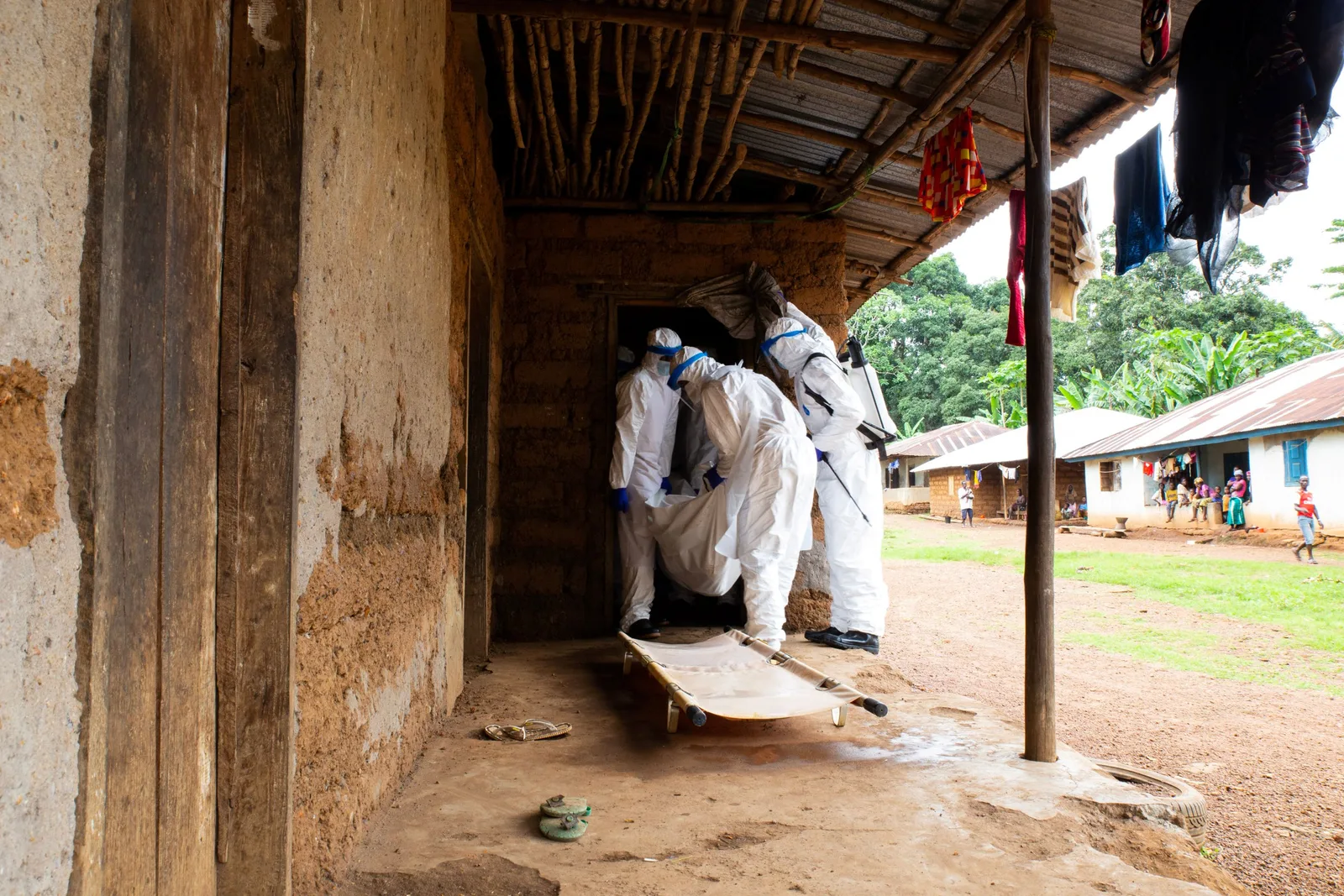
 Belen B Massieu / stock.adobe.com
Report · Borders & Mobility · Democratic Republic of the Congo
Ebola Without a Vaccine
The Democratic Republic of the Congo is fighting the largest Ebola outbreak in its history with a virus for which no vaccine and no treatment is licensed. Six thousand confirmed cases in fifteen weeks, an armed conflict at the epicenter, and a world that had prepared for a different strain.
This text is a verified snapshot as of August 31, 2026. It will not be continuously updated - the counts will keep changing daily. Every number in the text carries its institution and cutoff date.
Practical information for travelers - entry bans, screening, and what the virus does and does not do - is in the service appendix at the end of the text.
On May 5, 2026, the World Health Organization was alerted to a cluster of deaths from an unidentified illness in Mongbwalu, a gold-mining town in the Ituri province of the Democratic Republic of the Congo. Health workers were among the dead. Ten days later, laboratory analysis confirmed Bundibugyo virus - one of the species that cause Ebola disease - in eight samples, and the Congolese Ministry of Public Health declared the country's seventeenth Ebola outbreak. Two days after that, on May 17, WHO declared a Public Health Emergency of International Concern.
By the time the Congolese National Institute of Public Health (INSP) published its bulletin on August 31, the outbreak had reached 6,041 confirmed cases and 2,911 deaths among them, with 1,366 people recorded as recovered (data through August 29). In fifteen weeks it had overtaken the 2018–2020 epidemic in North Kivu and Ituri, which WHO closed at 3,470 cases and 2,287 deaths after nearly two years, and had become the second-largest Ebola outbreak ever recorded - behind only West Africa in 2014–2016. According to the U.S. Centers for Disease Control and Prevention, it passed 1,000 confirmed cases within 40 days of the response being activated; the 2018 outbreak took roughly 235 days to reach the same mark.
Speed is only half of what makes this outbreak different. Over the past decade the world built an Ebola toolkit - a licensed vaccine, two licensed antibody treatments, ring-vaccination protocols - and built it for Zaire ebolavirus, the species behind nearly every large outbreak in history. Bundibugyo virus had caused only two outbreaks before this one, in Uganda in 2007 and in the DRC in 2012. No vaccine is licensed against it. No treatment is licensed against it. The only tool that has ever ended a Bundibugyo outbreak is the oldest one: finding the sick, isolating them, tracing everyone they touched, and burying the dead safely.
That toolkit is being deployed in one of the most difficult places on earth to deploy it. Ituri and North Kivu have been at war for decades. Goma and Bukavu, two of the largest cities in the affected zone, are held by the M23 rebel movement and its political alliance. Other armed groups - the ADF, CODECO - operate across the countryside. WHO estimates that more than a million people in the region are displaced. Health workers have been infected by the dozens, and treatment centers depend on security corridors negotiated with people who have no obligation to honor them.
This text does not attempt to predict where the outbreak ends. It attempts something narrower: to establish what the numbers say, which institution stands behind each of them, and where the numbers cannot see.
The State of the Data
The Congolese figures used in this text come from the INSP bulletin published August 31, 2026 (data through August 29) and from the Ministry of Communication's situation update of August 28. WHO figures come from the Weekly External Situation Report no. 15 (data as of August 23) and Disease Outbreak News nos. 605, 614 and 615. The Congolese ministry itself notes that its confirmed-case and death data are under continuous review and harmonization with WHO, which is why the two series never match on the same day. Ugandan figures are the Ugandan Ministry of Health's final count as relayed by WHO and ECDC. All figures are provisional.
Series | Institution and cutoff | Figures |
|---|---|---|
DRC, cumulative | INSP, bulletin of Aug 31 (data to Aug 29) | 6,041 confirmed cases; 2,911 deaths among confirmed (crude CFR 48.2%); 1,366 recovered; 619 in isolation or hospital; 82.4% of contacts under follow-up; 6 provinces |
DRC, cumulative | WHO AFRO Sitrep 15 (data to Aug 23) | 5,584 confirmed cases; 2,680 deaths |
DRC, health workers | WHO commentary, data as of Aug 20 | 158 infected; 45 dead |
Uganda | Uganda MoH / WHO, outbreak declared over Aug 26 | 20 confirmed cases (15 imported from DRC); 2 deaths; last case June 21 |
Exported cases | ECDC, as of Aug 31 | 3: two U.S. citizens evacuated to Germany (May, July), one case in France (June 24, discharged July 4) |
Technical and epidemiological data come from WHO, the DRC Ministry of Public Health and its INSP, the U.S. CDC, ECDC and Africa CDC. Where the Congolese and WHO series differ, the text gives both with their cutoffs and does not average them.
How to Read Numbers After a Disaster
Five rules that govern this text - and every future disaster ExplWorld covers.
- No number without an institution, a date, and a cutoff time. The most recent number on social media is not necessarily the most accurate.
- Different registers are not automatically a contradiction. An operational count, a forensic register, and regional reports have different methodologies, channels, and cutoffs.
- A number that goes down does not necessarily mean a cover-up. Corrections after removing duplicates and locating the missing tend to be a sign of a working system, not of manipulation.
- A model is not a survey. Estimates of exposure, landslides, or economic losses are generated automatically from models; field verification comes later and may differ.
- Official is not the same as independently verified. Government figures relayed by news agencies should be published with attribution, not as definitive fact.
Four additional notes for an outbreak
- Confirmed, probable, and suspected are three different registers. A confirmed case has a positive laboratory test. A suspected case fits the clinical definition and awaits one. Counting only confirmed cases understates the epidemic; adding suspected cases overstates it. Headlines rarely say which they are using.
- A crude case fatality ratio moves for reasons that have nothing to do with the virus. Deaths lag diagnoses, so the ratio is low early and climbs later; people who die at home untested are in neither the numerator nor the denominator.
- "Hospitalized," "isolated," and "under treatment" are not the same category. The Congolese daily updates reported 843 people in isolation on August 26, 896 on August 28, and 619 on August 29. That is a change of definition or of reporting, not a discharge of 277 people in a day.
- "No new cases" is not "over." An Ebola outbreak is declared over 42 days - twice the maximum incubation period - after the last confirmed patient tests negative or is buried safely. Uganda reached that mark; the DRC has not come close.
PART I - WHAT HAPPENED
1. Mongbwalu: A Gold Town and an Alert That Came Late
The alert WHO received on May 5 described a high-mortality outbreak of unknown illness in the Mongbwalu health zone, including deaths among health workers. Mongbwalu is a mining town north of Bunia, the provincial capital of Ituri, in a landscape of artisanal gold pits, displacement camps, and armed groups. Laboratory confirmation of Bundibugyo virus disease in eight samples came on May 15, and the Ministry of Public Health, Hygiene and Social Welfare declared the outbreak the same day. As of that date, WHO recorded 246 suspected cases and 80 deaths across the health zones of Rwampara, Mongbwalu, and Bunia, with four of the deaths already among laboratory-confirmed cases.
Ten days between alert and confirmation is not slow by the standards of remote eastern Congo. The problem is what came before the alert. The Africa Center for Strategic Studies, summarizing the epidemiological investigation in July, wrote that the virus is estimated to have circulated in the community for weeks, possibly months, before it was detected. Unspecific early symptoms - fever, weakness, vomiting, diarrhea - look like malaria or typhoid, both endemic in the region, and the reliable test for Bundibugyo virus is available only in hospital settings. In a place where many people never reach a hospital, an outbreak can grow for a long time inside the statistics of other diseases.
WHO declared the PHEIC on May 17 with a stated reason that is worth preserving exactly: the organization said it could not, at that point, determine the geographic spread of the epidemic or the true number of infections, because unusual clusters of suspected cases were appearing across several parts of eastern DRC at once. Two confirmed cases in Kampala, Uganda, confirmed the international dimension. A case initially reported in Kinshasa tested negative on further analysis - the first of several instances in this outbreak where a number was corrected downward and the correction was, in fact, good news.
2. The Virus the World Did Not Prepare For
Ebola disease is caused by several distinct viruses of the genus Orthoebolavirus. Zaire ebolavirus has been behind almost every large outbreak since 1976, including West Africa in 2014–2016 and North Kivu in 2018–2020. Sudan virus caused Uganda's 2022 outbreak. Bundibugyo virus, first identified in western Uganda in 2007, had caused exactly two outbreaks before 2026 - the 2007 one and a 2012 outbreak around Isiro in the DRC. WHO puts the case fatality ratio of those two outbreaks between 30 and 50 percent.
The consequence of that history is a countermeasure gap. Merck's Ervebo, the only Ebola vaccine now licensed anywhere, is licensed for Zaire ebolavirus only. The two-dose Zabdeno/Mvabea regimen, also built for Zaire, had its European marketing authorization withdrawn in May 2026 - the same month this outbreak was declared. The two licensed antibody treatments for Ebola, developed and tested during the North Kivu epidemic, target Zaire ebolavirus. WHO's temporary recommendations of August 24 state the situation without softening: although clinical trials are ongoing, there are currently no approved therapeutics or vaccines against Bundibugyo virus.
Nahid Bhadelia, writing in Nature Reviews Microbiology in June, put the research gap in one sentence: because there had been only two previous outbreaks, work on Bundibugyo countermeasures lagged behind that for Zaire and Sudan ebolaviruses. Krutika Kuppalli and Placide Mbala, in STAT in August, drew the policy conclusion - that preparedness cannot mean optimizing every investment for the last epidemic. Both arguments are attributed here as their authors' positions; this text does not adjudicate the preparedness debate. What it can say is that on the day the outbreak was declared, no vaccine, no licensed treatment, and no field-ready rapid test existed for the virus in question.
3. From One Health Zone to Six Provinces
The geographic expansion of this outbreak can be dated almost day by day from WHO, CDC, and Congolese reporting, and the dates are the argument.
On May 16, one day after the declaration, the three Ituri health zones of Bunia, Mongbwalu, and Rwampara had confirmed or suspected cases. On May 17, a case was confirmed in Goma, the North Kivu capital held by M23, in a woman who had traveled from Ituri. On May 18, cases were reported in Butembo, North Kivu, and in the Nyakunde health zone of Ituri. On May 21, a death was recorded in Bukavu, South Kivu - also under rebel control. On May 29, Beni. On June 29, the first case in Haut-Uélé province. On June 30, Kisangani, the capital of Tshopo province and the largest river port between Kinshasa and the east, following a death in Bunia three days earlier. On August 13, Buta in Bas-Uélé - the sixth province.
The number of affected health zones traced the same curve: 49 zones as of July 30 (WHO DON 614), 56 as of August 21 (WHO commentary), 60 of 151 as of August 26 (ECDC, citing the Congolese update). The Congolese update of August 28 recorded no new health zone affected in the previous 24 hours - a data point the ministry described as a possible early sign of geographic stabilization, and which this text records as exactly that: one day.
Ituri remains the center of gravity. The Africa Center estimated in July that the province accounted for around 90 percent of confirmed cases; the INSP bulletin of August 31 lists 28 of Ituri's 36 health zones as affected, from Aru and Mahagi on the Ugandan border to Mambasa on the road toward Kisangani. South Kivu, by contrast, has reported no confirmed case since May 29 (CDC, August 28).
Then there is the river. Kisangani sits on the Congo River, and the Congo River leads to Kinshasa, a city of some seventeen million people. WHO's August 24 recommendations include, for the first time in this outbreak, a specific instruction to establish Ebola surveillance on vessels navigating the inland waterways that connect transmission areas with major cities, the capital explicitly named. Medical teams inspecting boats on the river told franceinfo at the end of August what the instruction means in practice: a single case in Kinshasa would be a catastrophe.
4. The Fastest Ebola on Record
Two comparisons anchor the claim that this is the fastest-growing Ebola outbreak on record. The first is CDC's: 1,000 confirmed cases within 40 days of response activation, against roughly 235 days in 2018. The second is WHO's weekly series: during epidemiological week 30, ending in late July, the outbreak recorded 567 confirmed cases and 296 deaths - the highest weekly totals to that point (WHO DON 614, data as of July 30).
The cumulative trajectory, each point with its institution and cutoff:
Cutoff | Confirmed cases | Deaths among confirmed | Source |
|---|---|---|---|
May 29 | 134 (both countries; 9 in Uganda) | 18 | WHO DON 605 |
July 30 | 3,605 | 1,587 (CFR 44%) | WHO DON 614 |
Aug 12 | 4,665 | 2,184 (CFR 46.8%) | WHO DON 615 |
Aug 21 | 5,290 | 2,516 | WHO commentary (Tedros, Janabi, Kaseya) |
Aug 23 | 5,584 | 2,680 | WHO AFRO Sitrep 15 |
Aug 26 | 5,794 | 2,786 | DRC update of Aug 27, via ECDC |
Aug 28 | 5,945 | 2,862 | DRC Ministry of Communication |
Aug 29 | 6,041 | 2,911 (CFR 48.2%) | INSP bulletin of Aug 31 |
Two things in this table deserve attention. First, the Congolese daily series and the WHO weekly series are never the same number on the same date; the gap is a cutoff-and-harmonization gap, not a dispute. Second, the daily increments at the end of August - 81 new confirmed cases between the August 25 and August 26 cutoffs, according to ECDC - are well below the late-July weekly peak. Whether that is the beginning of a plateau or a reporting artifact in a war zone is a question this text does not answer, because on August 31 nobody could.
PART II - THE NUMBERS
5. Confirmed, Probable, Suspected: Three Registers, One Epidemic
On May 29, two weeks into the declared outbreak, WHO's Disease Outbreak News gave two sets of figures side by side: 906 suspected cases with 223 deaths among them, and 134 confirmed cases with 18 deaths. The crude case fatality ratio among confirmed cases that day was 14 percent. Three months later it was 48 percent. Neither number was wrong. They were measuring different things at different moments.
The three registers do different work. The suspected-case register is the surveillance net: everyone who fits the clinical definition, reported by health facilities and community alert systems. It is deliberately broad, and most of the people in it will test negative for Ebola - many for malaria, some for typhoid, some for nothing identifiable. The confirmed-case register is the laboratory's: a positive PCR result. The probable-case register, in WHO's definitions, holds people who died with a compatible illness and an epidemiological link to a confirmed case but were never tested - most often because they died at home and were buried before a sample could be taken.
The headline numbers in this text, and in nearly all reporting on this outbreak, are confirmed cases. That choice is deliberate and it has a cost. In a region where the reliable test is available only in hospitals, a confirmed-case count is a count of people who reached a facility equipped to test them. The suspected and probable registers are where the outbreak's missing people live.
6. The Case Fatality Ratio That Keeps Rising
The crude case fatality ratio - deaths among confirmed cases divided by confirmed cases - rose from 14 percent on May 29 to 44 percent on July 30, 46.8 percent on August 12, and 48.2 percent on August 29 (WHO and INSP, respective cutoffs). A rising ratio invites the conclusion that the disease is getting deadlier or care is getting worse. Neither follows automatically.
Early in any outbreak the ratio is depressed by lag: a person is confirmed today and enters the denominator immediately, but if they die it will be days later. As the epidemic ages, deaths catch up with diagnoses. The ratio also depends on who gets tested. If testing concentrates on the sickest patients in treatment centers, confirmed cases skew severe and the ratio rises; if community testing broadens the net to milder cases, it falls. And it excludes, by construction, everyone who died untested.
What can be said with attribution is narrower. WHO's historical range for Bundibugyo virus disease is 30 to 50 percent, and the current crude ratio sits at the top of that range. WHO's temporary recommendations describe early supportive care - fluids, electrolytes, treatment of co-infections - as lifesaving even without a specific drug, which makes access to treatment centers the single variable most likely to move the ratio. The INSP's count of 1,366 people recovered as of August 29 is the other side of the same arithmetic.
7. Health Workers: 158 Infected, 45 Dead
As of July 9, at least 112 health workers had been confirmed infected in the DRC, including 35 deaths (WHO, via outbreak trackers). As of August 20, the figures were 158 infected and 45 dead (WHO commentary of August 25). Health-worker deaths were part of the very first alert on May 5.
The International Council of Nurses warned in May that nurses in the DRC feared for their safety amid shortages of protective equipment and test kits. WHO's August 24 recommendations for the DRC devote a full section to the problem - regular training and supervision in protective equipment, uninterrupted supplies with stock-out monitoring, a channel for exposed workers to be assessed and, where possible, given post-exposure prophylaxis under compassionate use or a trial - and add an item that is easy to read past: timely payment of salaries and, as appropriate, hazard pay. In eastern Congo, health workers who are not paid do not stop working; they take second jobs, and a second job in a busy health center with no protective equipment is how a chain of transmission starts.
The medical charity ALIMA deployed its transparent CUBE isolation units in Bunia in May - enclosed structures that allow clinicians to treat patients through built-in gloves without full protective suits. MSF reported more than 1,400 staff across Ituri, North Kivu, South Kivu, Haut-Uélé, and Tshopo as of August 21, and an Ebola treatment center in Goma.
8. What the Numbers Cannot See
Four blind spots recur in every institutional document on this outbreak.
Community deaths. WHO's temporary recommendations instruct the DRC to investigate every death occurring outside isolation and treatment centers, both to link it to chains of transmission and to understand why communities resist safe burials. The instruction exists because those deaths are not being captured. A probable case buried by family in a village with no road is a case the confirmed-case register will never contain.
Access. WHO's own risk assessment describes the outbreak as occurring in a remote, densely populated area under humanitarian crisis, with insecurity and high population movement. Health zones exist on the map that response teams cannot reach, and a zone that reports zero cases because no one can enter it is not a zone with zero cases.
Harmonization. ECDC's summary of the Congolese August 27 update notes that the DRC's confirmed-case and death data are under continuous review and harmonization. Deaths are reclassified; duplicate entries are merged; cases are reassigned between health zones. This is why the INSP series, the ministry's communication series, and the WHO series differ from one another - and why this text gives each with its own cutoff rather than picking the largest.
Categories that shift. The Congolese daily updates reported 843 patients in isolation on August 26 (per ECDC), 896 hospitalized or isolated on August 28 (Ministry of Communication), and 619 in isolation or hospital on August 29 (INSP). The drop of 277 in a day is almost certainly a change in what is being counted, not in who is sick. It is flagged here rather than explained, because none of the three sources explains it.
PART III - THE RESPONSE
9. A Response Without a Vaccine - and the Argument Over the Wrong One
The single most consequential scientific debate of this outbreak concerns a vaccine that was never designed for it.
On May 28, WHO's expert advisory groups concluded that evidence on whether Ervebo protects against Bundibugyo virus was limited and inconclusive, and WHO recommended that the vaccine not be used outside carefully designed research settings. The reasoning was not caution for its own sake: deploying a vaccine of unknown efficacy outside a trial would consume doses and goodwill while producing no evidence either way.
By July 31 the position had moved. WHO's Technical Advisory Group on candidate vaccine prioritization - with one dissenting member - recommended that Ervebo be included in a Phase 3 trial against Bundibugyo virus. The evidence that moved the group was animal data: across several studies reviewed by the experts, three of four non-human primates vaccinated with Ervebo survived Bundibugyo challenge against one of four unvaccinated controls, and an unpublished ferret study showed complete protection with a research-grade version of the vaccine (Al Jazeera, August 7, reporting the WHO panel's findings). On August 12, Tedros Adhanom Ghebreyesus told a press briefing that WHO did not know whether the vaccine was efficacious against Bundibugyo disease in humans and that a Phase 3 trial was the best way to find out (STAT, August 12).
The Congolese side moved faster. A high-level meeting chaired by President Félix Tshisekedi on August 5 endorsed six interventions, among them what Africa CDC's August 17 statement calls protocol-governed expanded use of Ervebo; Africa CDC's independent Emergency Consultative Group endorsed the approach on August 13, and the DRC submitted a request to the International Coordinating Group on vaccine provision. On August 27, Health Minister Roger Kamba administered the first doses of a vaccination campaign for frontline workers in Kisangani, using Ervebo, with the campaign directed primarily at Tshopo, Bas-Uélé and Haut-Uélé - the provinces on the outbreak's western edge, toward the river (ECDC, August 31).
Whether that campaign is a Phase 3 trial, a protocol-governed emergency deployment, or both is a distinction the public documents available on August 31 do not fully resolve, and this text does not resolve it for them. What is clear is the sequence: the world's only Ebola vaccine is now being given to health workers against a virus it was not licensed for, on the strength of animal data and a decision by the affected country that waiting was the greater risk.
Bundibugyo-specific candidates exist but are months from the field. Oxford University and the Serum Institute of India began a Phase 1 trial of ChAdOx1 BDBV in 50 healthy volunteers in the United Kingdom on July 24, having built the candidate in about eight weeks on the platform used for the Oxford–AstraZeneca COVID-19 vaccine. Moderna began a Phase 1 trial of its mRNA-1469 candidate at three sites in Canada in August, with roughly 80 participants planned. A third candidate, from the nonprofit IAVI, uses the same viral-vector platform as Ervebo. CEPI, which funds all three programs, said on August 20 that even on the most compressed timelines these vaccines would not be available for the earliest phase of the outbreak, and announced US$4.17 million for four studies testing whether Zaire-licensed vaccines generate immune responses to Bundibugyo virus.
10. Treatments Under Trial
The therapeutic picture follows the same pattern: nothing licensed, several candidates under evaluation.
In May, WHO's technical advisory group prioritized three candidates for trial in confirmed cases: MBP134, a two-antibody cocktail designed to neutralize multiple Ebola species; maftivimab, a monoclonal antibody with activity across species; and remdesivir, the antiviral originally developed for Ebola and later used against COVID-19. Combination of an antibody with remdesivir was also recommended for evaluation. The WHO-led PARTNERS trial, an adaptive platform designed with the ISARIC network, is evaluating remdesivir and MBP134 alone and in combination in confirmed cases; a separate study, EBO-PEP BUNDI, sponsored by France's ANRS, is testing the oral antiviral obeldesivir as post-exposure prophylaxis in high-risk contacts, with molnupiravir under consideration. Within the prophylaxis study, remdesivir is available on a compassionate basis for pregnant and lactating women and children under twelve, who cannot receive obeldesivir (STAT, August 10).
The Congolese ministry's August 31 statement lists trials of new vaccines and treatments adapted to the Bundibugyo strain among the pillars of its response. No efficacy result from any of these trials had been published as of the cutoff of this text.
11. War at the Epicenter
WHO's joint commentary of August 25 - signed by the heads of WHO, its African regional office, and Africa CDC - attributes the outbreak's spread in one clause to insecurity from decades of armed conflict that have undermined law, order and social services and displaced more than a million people. That sentence carries a great deal of weight, and the institutional documents around it show what it means operationally.
Goma, where a case was confirmed on May 17, and Bukavu, where a death was recorded on May 21, are under the control of the M23 movement and its alliance, not the Congolese government. WHO's temporary recommendations to the DRC include an item that would be unusual in any other outbreak: to negotiate and establish security corridors, including across borders, so that responders can reach affected communities and communities can reach care. The Director-General called publicly for a ceasefire from all warring parties to allow safe medical access (BBC, reported in May). The recommendations also ask the DRC to create immigration procedures for the rapid rotation of international responders and customs procedures to expedite supplies - the administrative machinery of a response that has to be rebuilt every time a road closes.
Capacity has grown despite this. By July, according to the Africa Center's summary, there were 500 treatment beds available for Ebola patients and laboratory capacity for more than 2,000 tests a day. MSF announced a 65-bed treatment center on June 1 and, by late August, reported more than 1,400 staff on the ground. The response is also, by design, being pushed toward communities: Africa CDC's August 17 statement leads with a village-centered, digitally supported response led by trusted community health workers, and WHO's recommendations repeatedly return to trusted local actors - leaders, religious figures, traditional healers, survivors - as the channel through which safe burials and early referral become acceptable.
12. Money: US$910 Million Pledged, US$518 Million Needed, and the Gap Between Them
On June 17, an emergency meeting of African heads of state convened by the African Union chairperson, Burundi's President Évariste Ndayishimiye, mobilized US$910 million in pledges for the response in the DRC and Uganda, including US$80 million committed by African member states (Africa CDC, June 18). Leaders endorsed disbursing the full US$518 million required by the Joint Continental Preparedness and Response Plan within four weeks. Earlier bilateral commitments included up to £20 million from the United Kingdom (May 21), US$112 million from the United States State Department for protective equipment, screening, contact tracing and diagnostics (late May), and €15 million from the European Union. CEPI committed more than US$60 million to Bundibugyo vaccine development.
As in every disaster this series has covered, the number that matters is not the one announced. A pledge is not an allocation; an allocation is not a disbursement; a disbursement is not a paid salary or a delivered box of protective equipment in Mongbwalu. Africa CDC's own language on June 18 - that every pledge must translate into financing, supplies, people and support on the ground - is an admission that the translation had not yet happened. Its statement of August 17, three months in, describes the moment as one for decisive action and warns against fragmented approaches, competing strategies and prolonged institutional processes. That is the vocabulary institutions use when money is late.
13. Uganda: How an Outbreak Ends
Uganda's experience is the control case for everything above.
Uganda declared its outbreak on May 15, the same day as the DRC, after two confirmed cases in Kampala. On May 27 it closed its border with the DRC for at least four weeks, suspended flights and cross-border passenger transport including the Semliki River ferry, and required 21 days of isolation for anyone entering from the DRC. A treatment center that had been on standby at Mulago hospital was activated within hours, staffed by a 146-person emergency medical team. An estimated 6,000 contacts were isolated for the full 21-day incubation period.
The result: 20 confirmed cases, 15 of them in people who had traveled from the DRC, and two deaths. The last confirmed case was reported on June 21. The last patient was discharged on July 16. On July 28, Uganda's Ministry of Health declared the outbreak over, and on August 26 WHO confirmed the declaration after 42 days without a new confirmed case.
The contrast with the DRC is not a contrast in competence. It is a contrast in conditions: a capital city with a referral hospital and a standing emergency team, a government in control of its territory, and an outbreak caught at a handful of imported cases rather than after months of silent spread. Uganda shows what the core public health toolkit does when it can be fully applied. Eastern Congo shows what happens when it cannot.
PART IV - THE WORLD'S REACTION
14. The Bans WHO Advised Against
The International Health Regulations exist in part to prevent what happened next. WHO's Disease Outbreak News of mid-August states the organization's position plainly: based on the available information, WHO advises against any restriction of travel to, or trade with, the affected countries. The temporary recommendations of August 24 repeat it twice - for neighboring states and for all others - in identical language: neither the suspension of flights from countries with community transmission, nor denial of entry to travelers arriving from them, is recommended.
A substantial number of governments did both.
Within a week of the PHEIC, the United States barred non-citizens who had been in the DRC, Uganda or South Sudan in the previous 21 days, then extended the bar to permanent residents; U.S. citizens returning from those countries were required to enter through three designated airports with enhanced screening - Washington Dulles, Atlanta and Houston - with staggered start dates of May 21, 22 and 26 (Al Jazeera, May 28). Carrier notices refer to further CDC and TSA requirements taking effect July 31. Canada, effective July 20, prohibited entry to foreign nationals who had been in the DRC within 21 days, required quarantine of returning citizens and residents, and suspended the issuance of immigration documents to residents of the DRC, Uganda and South Sudan until September 28 (Fragomen, late August). Taiwan suspended entry and visa issuance for residents of the DRC and Uganda for 90 days from June 2. Jordan imposed a 30-day entry ban from May 20; Bahrain barred travelers who had been in the three countries within 30 days. Rwanda set mandatory quarantine for arrivals from the DRC from May 23. Thailand and Vietnam imposed 21-day quarantine or isolation from May 26. South Korea designated the DRC, Uganda, South Sudan, Rwanda and Ethiopia as strict-quarantine areas and announced checks of returning travelers' mobile roaming records. Trinidad and Tobago instituted arrival screening and 21-day monitoring.
The DRC itself suspended all flights to and from Bunia in late May. In Spain, the mayor of La Línea de la Concepción cancelled a World Cup warm-up match between the DRC and Chile scheduled for June 9.
Two things should be held together here. The first is that Ebola is not an airborne disease: WHO's fact sheet describes transmission through direct contact with the blood or body fluids of a person who is sick or has died, with an incubation period of two to twenty-one days and no transmission before symptoms appear. On that basis, the risk to a traveler on an aircraft, or to a country receiving screened arrivals, is very low - the assessment WHO, CDC and ECDC all reached independently. The second is that the IHR has no enforcement mechanism, and the measures above were adopted by sovereign governments weighing domestic politics against a low probability. The cost of those measures falls on the affected countries: on responders whose rotations are blocked, on trade, and on a public-health principle - report early, and the world will not punish you for it - that every unrecommended ban erodes a little further.
15. Exported Cases and the Evacuation Chain
Three cases were exported from the outbreak zone as of August 31, all in people who had been working in it (ECDC). A U.S. physician who had been caring for Ebola patients in the DRC tested positive on May 17 and was evacuated to Germany; high-risk contacts from the same exposure were transferred to Germany and Czechia for monitoring. France reported an imported case on June 24, discharged on July 4. A second U.S. citizen, working for a humanitarian organization, tested positive on July 10 and was evacuated to Germany on July 13.
Every one of these cases was identified, isolated and evacuated through an existing chain - the mechanism WHO's recommendations ask all states to prepare for the repatriation of exposed nationals. None produced onward transmission. The evacuation chain is the least visible and most functional part of the international response, and it worked three times out of three.
PART V - WHAT COMES NEXT
16. The 42-Day Rule, and Why "No New Zone" Is Not "Over"
An Ebola outbreak is declared over 42 days after the last confirmed patient has either tested negative twice or been safely buried - double the maximum incubation period. Uganda met that standard on August 26. The DRC's most recent confirmed cases date from the day before this text's cutoff.
The Congolese ministry's August 28 update recorded no new health zone affected in the preceding 24 hours and framed it as a possible beginning of geographic stabilization. Contact follow-up stood at 84.4 percent on August 28 and 82.4 percent on August 29 - a figure the INSP calls the most encouraging indicator in its bulletin, and which the Journal de Kinshasa characterized as a sign that surveillance is holding. Both readings are legitimate. Both are also exactly the kind of number the reading rules at the top of this text exist for: one day without a new zone is one day; a follow-up rate of 82 percent means roughly one contact in six is not being monitored, in a region where an unmonitored contact can board a boat to Kisangani.
What the end would require, in WHO's own recommendations, is unglamorous: a consolidated national line list; every contact monitored daily for 21 days; every alert investigated within 24 hours; every community death investigated; safe burials accepted rather than resisted; and a functioning supply chain that keeps health workers in protective equipment and in salary. None of these depends on a vaccine. All of them depend on access, and access in eastern Congo depends on people with guns.
17. What We Know - and What We Still Don't
We know the virus, the date of confirmation, the provinces affected and the confirmed-case trajectory, each with an institutional source. We know that no licensed vaccine or treatment exists for Bundibugyo virus, that Ervebo is being given to health workers on the strength of animal data, and that specific candidates are in Phase 1 trials months from deployment. We know that Uganda's outbreak is over and that three exported cases were contained.
We do not know the true size of the epidemic. The suspected and probable registers, the community deaths, and the health zones no team can enter are all outside the confirmed-case count that every headline uses. We do not know when or where the virus crossed from an animal reservoir into people, or how long it circulated before May 5. We do not know whether Ervebo works against Bundibugyo virus in humans; the trial that would answer that question is only beginning. We do not know whether the end-of-August slowdown in daily increments is real. And we do not know what the long-term health of 1,366 survivors - and the thousands more who will follow them - will look like, because Bundibugyo survivorship has been studied in a few dozen people in history.
One more unknown belongs on this list, because it is the one the temporary recommendations were rewritten to address: whether the surveillance now being set up on river vessels will be enough to keep the virus out of Kinshasa.
18. The Wrong Ebola
For a decade, the story of Ebola preparedness was a success story. A vaccine with proven efficacy. Two antibody treatments that cut mortality in a randomized trial. Ring vaccination that helped end an epidemic in an active war zone in 2020. The 2025 Kasai outbreak, declared over within months. The lesson many institutions drew was that the tools existed and the remaining problem was delivery.
The 2026 outbreak did not disprove that lesson so much as expose its fine print. The tools existed for one virus. The world now has six thousand confirmed cases of a different one, a vaccine in the field that was never tested against it, and candidate countermeasures whose Phase 1 trials began in the fourth month of the epidemic.
The people ending this outbreak - if it is ended - will be community health workers walking to villages without roads, burial teams in protective suits negotiating with grieving families, laboratory technicians in Bunia running PCR on generators, and contact tracers keeping lists of names in health zones held by armed men. That is the same toolkit that ended Ebola outbreaks in 1976, before anyone knew the virus's name.
Everything the world built since then still matters. It just was not built for this.
SERVICE APPENDIX - FOR TRAVELERS
19. Traveling To, From, and Around the Outbreak Right Now
This appendix goes stale faster than the rest of the text: entry rules and screening requirements changed weekly between May and August 2026 and will keep changing. The measures below are dated to the source that reported them. Before traveling, verify the current rule with the destination country's health or immigration authority and with your carrier.
Where the risk is. As of August 14, WHO assessed the risk as very high in the DRC, high in the nine countries bordering it (Angola, Burundi, the Central African Republic, the Republic of Congo, Rwanda, South Sudan, Tanzania, Uganda, and Zambia), and low everywhere else. Inside the DRC, community transmission is concentrated in Ituri, with cases in North Kivu, Haut-Uélé, Tshopo and Bas-Uélé; South Kivu has had no confirmed case since May 29 (CDC, August 28). The U.S. CDC's travel notice, as of August 28, is Level 4 - avoid all travel - for Ituri and North Kivu provinces specifically. WHO's guidance for all countries asks governments to discourage travel to areas with community transmission; it does not ask them to close borders.
Leaving the DRC. Under WHO's recommendations, the DRC is to run exit screening at every airport, port and land crossing: a questionnaire on possible exposure, a temperature check, and a fuller assessment for anyone with fever. Suspected, probable and confirmed cases and their contacts are barred from international travel except for medical evacuation. Domestically, the recommendations call for 24-hour health checkpoints on roads between transmission areas and high-risk areas, one-passenger limits on motorbike taxis, and surveillance on river vessels. Flights to and from Bunia were suspended by the Congolese transport ministry in late May; the current status of Bunia airport should be checked directly, as this text found no later official notice.
Entering other countries after the DRC. The measures below are those reported by the sources named, on the dates given. Several were announced for fixed windows and may have lapsed or been extended.
- United States: entry barred for non-citizens, including permanent residents, who were in the DRC, Uganda or South Sudan within the previous 21 days; citizens must arrive via Washington Dulles, Atlanta or Houston for enhanced screening (Al Jazeera, May 28; further CDC/TSA requirements from July 31 per carrier notices). CDC provides guidance for returning travelers, including what to do if symptoms develop within 21 days.
- Canada: foreign nationals who were in the DRC within 21 days barred from entry from July 20; citizens and residents quarantined; travelers from Uganda or South Sudan subject to mandatory quarantine and assessment; immigration documents for residents of the three countries suspended until September 28 (Fragomen, late August).
- Taiwan: entry and visa issuance suspended for residents of the DRC and Uganda for 90 days from June 2 (carrier notice, EVA Air).
- Jordan: 30-day entry ban from May 20 for arrivals from the DRC and Uganda (Fragomen). Bahrain: entry barred for anyone who was in the DRC, Uganda or South Sudan within 30 days (Fragomen).
- Rwanda: mandatory quarantine for arrivals from the DRC from May 23 (Anadolu). Thailand and Vietnam: 21-day quarantine or isolation for arrivals from the DRC and Uganda from May 26. South Korea: strict-quarantine designation for the DRC, Uganda, South Sudan, Rwanda and Ethiopia, with checks of roaming records. Trinidad and Tobago: arrival screening and 21-day monitoring.
- Uganda: flights to and from the DRC, cross-border buses and the Semliki River ferry were suspended in late May, with entry from the DRC restricted to designated crossings for essential travel (Fragomen). Uganda's own outbreak was declared over on August 26, but other countries' rules referencing Uganda had not all been lifted by the cutoff of this text.
What the virus does and does not do. Ebola disease spreads through direct contact with the blood or body fluids of someone who is sick or has died of it, or with contaminated objects. It is not airborne. A person is not contagious before symptoms appear. The incubation period is two to twenty-one days. Early symptoms - fever, fatigue, muscle pain, headache, sore throat, then vomiting and diarrhea - are indistinguishable from malaria and other common infections, which is why any fever within 21 days of leaving an affected area should be reported to a health provider before visiting a clinic in person, so the facility can prepare. (WHO fact sheet; CDC guidance for returning travelers.)
Practical points. No vaccine is licensed for the virus causing this outbreak, so there is no pre-travel vaccination to obtain; Ervebo is being used in the DRC under protocol for frontline workers, not for travelers. Check whether your travel-medical insurance covers evacuation from a PHEIC-affected country and from provinces under a Level 4 advisory - many policies exclude both. Humanitarian and medical personnel deploying to the response should follow their organization's exposure and repatriation protocols, which WHO asks all governments to support.
The responsibility question. Eastern Congo is not a destination where a visitor's presence is neutral. Treatment beds, laboratory capacity, security escorts and fuel are finite, and every one of them is allocated to the response. The relevant question for a non-essential traveler is not whether entry is possible but whether the trip draws on resources the outbreak needs.
About this reporting
This long read is a desk-research synthesis. It was produced exclusively from public primary and intermediary sources - WHO Disease Outbreak News, situation reports and temporary recommendations; Congolese ministry and INSP bulletins; CDC, ECDC and Africa CDC publications; peer-reviewed commentary; and wire-agency and specialist-press reporting, listed below. The editorial team conducted no interviews, did not approach institutions or individuals directly, and the text was not reported from the field.
Right of reply was not exercised: the text accuses no one. The positions of WHO, the Congolese government and Africa CDC on vaccine deployment, and of governments that imposed travel measures against WHO advice, are represented through their own published statements.
The text was not produced in cooperation with any ExplWorld partner, is not tied to the partner program, and its preparation was not supported by any external party.
Research and cross-verification of sources were carried out with the support of an AI assistant. Every claim was checked against the cited source, and editorial responsibility for the final text rests with the newsroom.
Epidemiological figures were compared across the DRC Ministry of Public Health and its National Institute of Public Health (INSP), WHO (headquarters and the African Regional Office), the U.S. CDC, ECDC and Africa CDC. Where the Congolese daily series and the WHO weekly series differ, the text gives both with their cutoffs and does not average or reconcile them. Crude case fatality ratios are quoted as published by the issuing institution and are explicitly described as crude. Historical comparisons (2018–2020 and 2014–2016) use WHO's final tallies.
Statements about vaccines and therapeutics are limited to what the issuing institution has published: WHO's advisory-group conclusions, CEPI's funding announcements, trial sponsors' own descriptions of trial design. No efficacy claim is made for any product against Bundibugyo virus, because none has been published. Travel measures are attributed to the source that reported them and dated; the text does not assert that any measure remains in force on the day of publication.
The text uses no invented testimony, no reconstructed conversations, and no anonymous quotations that could not be traced and verified.
Sources
- WHO - Disease Outbreak News 605 (data to May 29)
- WHO - Disease Outbreak News 614 (data to July 30)
- WHO - Disease Outbreak News 615 (data to August 12)
- WHO - temporary recommendations, second IHR Emergency Committee meeting (August 24)
- WHO - second IHR Emergency Committee meeting report (August 28)
- WHO - commentary by Tedros, Janabi and Kaseya (August 25)
- WHO - expert advice on candidate treatments and vaccines (May 28)
- WHO - outbreak page, Ebola outbreak DRC 2026
- WHO AFRO - Weekly External Situation Report 15 (data to August 23)
- WHO AFRO - Weekly External Situation Report 14 (data to August 16)
- ECDC - outbreak page (August 31)
- US CDC - situation summary (August 28)
- DRC INSP - epidemiological bulletin of August 31, via Journal de Kinshasa
- DRC Ministry of Communication - situation update of August 28, via allAfrica
- DRC Ministry of Public Health - surveillance dashboard "Ebola Bundibugyo 2026"
- franceinfo - Congolese figures and river surveillance (August 31)
- Africa CDC - AU High-Level Meeting, US$910 million pledged (June 18)
- Africa CDC - Durban statement (August 17)
- CEPI - cross-protection studies announcement (August 20)
- ReliefWeb - disaster page EP-2026-000071-COD
- MSF - response update (August 21)
- Africa Center for Strategic Studies - spotlight (July 7)
- Nature Reviews Microbiology - Bhadelia, commentary (June 2026)
- STAT - Kuppalli and Mbala, opinion (August 10)
- STAT - Branswell, report on the vaccine trial (August 12)
- Al Jazeera - WHO vaccine panel findings (August 7)
- Al Jazeera - travel restrictions overview (May 28)
- IPPS - day-15 status of diagnostics, therapeutics and vaccines (June 1)
- Medical News Today - Phase 1 trial of ChAdOx1 BDBV (July 2026)
- Clinical Trials Arena - WHO call for a Phase 3 Ervebo trial (August 2026)
- Fragomen - worldwide entry-restriction summary (late August 2026)
- EVA Air - carrier notice on Ebola-related travel measures
- UN News - treatment-center opening (August 2026)
- NICD (South Africa) - Bundibugyo virus disease updates
- WHO - Ebola disease fact sheet
- BBC - WHO Director-General’s ceasefire call, as reported (May 2026)
- Anadolu - Rwanda quarantine for arrivals from the DRC (May 23)
- International Council of Nurses - statement on nurse safety (May 2026)
- ALIMA - CUBE isolation units deployed in Bunia (May 2026)