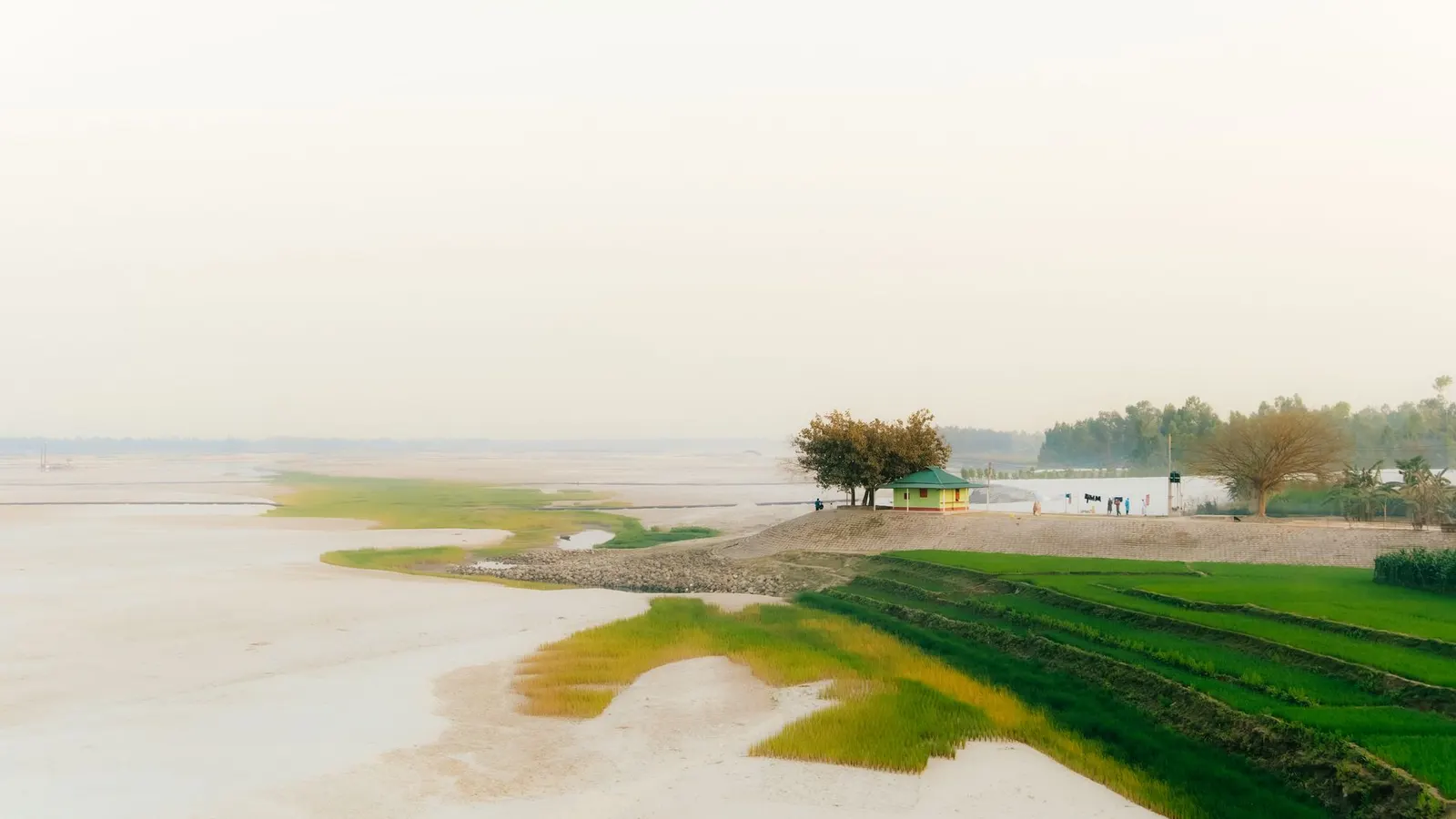
 Kabiur Rahman Riyad · Pexels License
Country Guide № 014 / 194 · Asia
Bangladesh
The world's largest delta, the largest mangrove forest, and almost no tourists.
“The world's largest delta, the largest mangrove forest, and almost no tourists.”
Bangladesh receives a fraction of the tourists its neighbours do, which is not a reflection of what is here. The country sits on the combined delta of the Ganges, Brahmaputra and Meghna - a landscape of rivers so dominant that boats are still the national transport. The Sundarbans hold the largest mangrove forest on earth and the largest remaining tiger population in the subcontinent. Srimangal is tea country. Paharpur is an eighth-century Buddhist monastery the size of a town.
It is also hard travel. There is little tourism infrastructure, English is limited outside Dhaka, the traffic in the capital is among the world's worst, and permits are needed for parts of the Chittagong Hill Tracts. What compensates is the reception: in a country where foreign visitors are genuinely rare, curiosity and hospitality are constant, and almost nobody is trying to sell you anything.
Chapter 01
Highlights
The Sundarbans
Ten thousand square kilometres of mangrove shared with India, home to the largest Bengal tiger population left in the subcontinent. Visited on multi-day boat trips from Khulna or Mongla with a permit and armed forest guards.
The Rocket paddle steamer
Colonial-era paddle steamers running the Dhaka–Khulna river route, in service for nearly a century. Schedules have been reduced repeatedly - check whether the service is running before planning around it.
Srimangal tea country
Rolling estates, seven-layer tea served in a glass, lemon groves and the Lawachara rainforest with hoolock gibbons. The most relaxed corner of the country.
Paharpur and Bagerhat
A vast eighth-century Buddhist monastery in the north and a fifteenth-century mosque city in the south - two UNESCO sites that almost no foreign visitor reaches.
Chapter 02
Entry requirements for Bangladesh
Checking your passport…
up to 30 days · €148 / $160 · embassy application
30 days on arrival
Before you fly
The detail
- Maximum stay
- up to 30 days
- Process
- embassy application
- Fee
- €148 / $160
- Processing time
- Processing takes 5–15 days - apply with room to spare.
- Passport validity
- Most destinations want validity beyond your stay, and some want six months. Check yours against the return date.
- Onward travel
- Airlines may ask for a return or onward ticket at check-in.
- Health
- Hepatitis A, typhoid and tetanus are standard; rabies and Japanese encephalitis for rural or long stays. Dengue outbreaks have been severe in recent years, especially in Dhaka during and after the monsoon. Malaria risk exists in the Chittagong Hill Tracts. Do not drink tap water - arsenic contamination of groundwater is also a documented long-term issue in some areas. Medical facilities are limited outside the capital and evacuation cover is essential.
- Money
- Cash economy. ATMs in Dhaka, Chittagong and larger towns accept foreign cards, with fees and low caps; rural areas have none. Cards work at upmarket hotels and restaurants in the capital and almost nowhere else. Carry taka in small denominations. Bargaining is expected in markets. Tipping is modest but appreciated.
Arrange the visa before you fly, at a Bangladeshi mission or its visa application centre, allowing anything from five working days to a fortnight. Bangladesh sets its fees on a reciprocal basis, so a United States passport pays the most and gets the most: the published tourist fee for American citizens is US$160 at the time of writing, and it buys a five-year multiple-entry visa rather than the single-entry month most nationalities receive. Five years is the validity of the visa, not the length of a visit: how long each stay may run is written into the document, so read what you were issued rather than assuming the figure above. A visa on arrival does exist on paper - around US$51 for 30 days at the time of writing, at the Dhaka, Chattogram (Chittagong) and Sylhet international airports - but it is granted at the officer’s discretion, it is not an entitlement, it is not issued at any land border, and travellers are refused it often enough that no leisure trip should depend on it. The port of entry is written into the visa, which is the trap for anyone combining this with India: a visa issued for air arrival will not admit you at Benapole or any other road crossing, so tell the mission your route when you apply. Give the passport six months and blank pages. Separate permits are needed for parts of the Chittagong Hill Tracts and are arranged inside the country, and the current travel advisory is worth reading, since the political situation has been unsettled since 2024.
Check another destination with this passport →
Entry details: Editorial synthesis - Bangladesh Department of Immigration and Passports, Bangladeshi mission visa tariffs and visa-on-arrival policy (2025–2026) · compiled 17 Sept 2026
Who needs a visa for Bangladesh
12 common passports| Passport | Requirement | Stay | Process |
|---|---|---|---|
| United States | Visa on arrival | - | Embassy visit · €148 / $160 · 5–15 d |
| United Kingdom | Visa on arrival | - | Embassy visit · €50 / $54 · 5–15 d |
| Germany | Visa on arrival | - | Embassy visit · €50 / $54 · 5–15 d |
| India | Visa required | - | No Other passports record yet |
| China | Visa on arrival | - | No Other passports record yet |
| Brazil | Visa required | - | No Other passports record yet |
| Nigeria | Visa required | - | No Other passports record yet |
| Indonesia | Visa on arrival | - | No Other passports record yet |
| Philippines | Visa required | - | No Other passports record yet |
| Vietnam | Visa required | - | No Other passports record yet |
| Egypt | Visa required | - | No Other passports record yet |
| Nepal | Visa on arrival | - | No Other passports record yet |
Holding a passport that is not listed? The picker above answers for any of them. See where your passport takes you. Source: Passport Index, updated 14 Aug 2026.
Chapter 03
When to go
BestNov–Feb. AvoidApr–Sep.
Cool and dry - the best month, with mist on the rivers at dawn.
The band above each month is our editorial verdict - it weighs crowds, prices and access as well as weather. The line is average daily temperature, the bars are monthly rainfall. Select a month for the figures. Climate figures: ERA5 reanalysis via Open-Meteo, 2005–2024 normals.
Chapter 04
What it costs
A day in Bangladesh
Comfortable · sample day
≈ $38
Line items are real prices we track. The daily budget is an editorial estimate for this level, not their sum.
Where this sits among 244 countries we have costed
Very little international-visitor seasonality - what moves prices is domestic travel around Eid, when trains, buses and launches sell out completely and the whole country is on the move. Cox's Bazar hotels spike in the winter domestic holiday season. Sundarbans trips run mainly in the dry months and are priced per departure rather than seasonally.
Updated Aug 2026 · Editorial synthesis - Bangladesh Railway fares, tour operator quotations, Budget Your Trip (2025–2026) · confidence medium
Excludes international flights - they depend on where you fly from.
Chapter 05
Regions to know
5Dhaka & the centre
The capital - Old Dhaka's river ghats and Mughal architecture, and the pink Ahsan Manzil palace.
The Sundarbans & the southwest
The mangrove forest and its tigers, plus the mosque city of Bagerhat and the river port of Khulna.
Sylhet & the northeast
Tea estates at Srimangal, the Lawachara rainforest, and the freshwater swamp forest of Ratargul.
Chittagong & the coast
The port city, the ship-breaking yards, and Cox's Bazar's 120-kilometre beach with St Martin's Island offshore.
The north
Paharpur's vast Buddhist monastery, the terracotta temples of Puthia and the Mughal city of Sonargaon.
Chapter 06
Practical guide
Getting there
Dhaka (DAC) is served from the Gulf, Istanbul, Delhi, Kolkata, Bangkok, Kuala Lumpur and Singapore; there are almost no direct European flights, so expect one stop. Chittagong and Sylhet take some regional services. Land borders with India at Benapole (for Kolkata) and Akhaura are used regularly, and a Bangladeshi visa must be obtained in advance with the correct port of entry endorsed.
Getting around
Trains on the main corridors - Dhaka–Chittagong, Dhaka–Sylhet, Dhaka–Khulna - are the most comfortable option and should be booked ahead in AC chair or berth. River launches remain genuinely important and are an experience in themselves; choose larger, licensed vessels and avoid overloaded ones, as ferry disasters are a persistent problem. Buses reach everywhere. Domestic flights save a great deal of time on the long routes.
Money & costs
Cash economy. ATMs in Dhaka, Chittagong and larger towns accept foreign cards, with fees and low caps; rural areas have none. Cards work at upmarket hotels and restaurants in the capital and almost nowhere else. Carry taka in small denominations. Bargaining is expected in markets. Tipping is modest but appreciated.
Safety
Petty theft and traffic are the routine risks. Political demonstrations, strikes and periods of unrest can disrupt travel with little warning and occasionally turn violent - avoid crowds and monitor local news. The Chittagong Hill Tracts require permits for foreigners and have their own security considerations. Ferry and road accidents are the largest cause of traveller deaths in the country. Flooding during and after the monsoon affects large areas annually.
Health
Hepatitis A, typhoid and tetanus are standard; rabies and Japanese encephalitis for rural or long stays. Dengue outbreaks have been severe in recent years, especially in Dhaka during and after the monsoon. Malaria risk exists in the Chittagong Hill Tracts. Do not drink tap water - arsenic contamination of groundwater is also a documented long-term issue in some areas. Medical facilities are limited outside the capital and evacuation cover is essential.
SIM & internet
Grameenphone and Robi tourist SIMs are cheap and require passport registration. 4G covers the towns and main roads well; coverage in the Sundarbans and the hill tracts is patchy. Wifi is common in Dhaka hotels and unreliable elsewhere. Internet shutdowns have been used during periods of unrest, which is worth knowing if you depend on connectivity.
Chapter 07
Driving
Dhaka traffic is among the worst in the world - a five-kilometre crossing can take over an hour. Hire a car with a driver for intercity travel, and treat any quoted journey time as optimistic.
Rules change - verify with an official source before you rent.
ExplWorld VerifiedNo verified partners here yet - all 6 country seats are open.
Become ExplWorld Verified →Chapter 08
Itineraries through this country
Chapter 09
From the Journal
Chapter 10
Before you go
BangladeshChapter 11
Frequently asked questions
Is it safe to travel in Bangladesh?
For ordinary travel, generally yes, with real caveats. Petty crime is the main everyday risk; political demonstrations and hartals (strikes) can turn violent and shut down transport at short notice, and the country went through significant political upheaval in 2024. The Chittagong Hill Tracts require permits and carry specific advisories. Road safety is poor and ferry accidents are a recurring national tragedy. Check current advisories close to travel - this is a country where the situation genuinely changes.
How do I get around?
Trains are comfortable and cheap on the main lines and worth booking in advance in AC classes. Buses cover everywhere and vary from decent coaches to alarming. Launches and ferries remain a central part of the network on the rivers. Domestic flights link Dhaka with Chittagong, Sylhet, Cox's Bazar and Jessore for around €40. In Dhaka, ride-hailing apps beat negotiating with rickshaws and CNG auto-rickshaws.
What about Cox's Bazar?
It is billed as the world's longest unbroken beach - around 120 kilometres - and is overwhelmingly a domestic holiday destination rather than an international one. Expect crowds, high-rise development and conservative beach norms rather than a tropical resort. St Martin's Island offshore is the clearer water, with access restricted at times for environmental reasons.