 K · Pexels License
Country Guide № 030 / 194 · Asia
Cambodia
Angkor is the reason to come and the least interesting thing about staying.
“Angkor is the reason to come and the least interesting thing about staying.”
Everyone arrives for Angkor, and they should - four hundred square kilometres of Khmer temple city, the largest religious structure ever built, and a three-day pass that is still not enough. But the country around it repays a slower visit: the French shophouse riverfront in Kampot, the empty islands off Sihanoukville's ruin, and the Cardamom forest where community ecotourism actually works.
Cambodia also asks something of visitors that its neighbours do not. The Khmer Rouge years ended in 1979 and the generation that survived them is still here. Tuol Sleng and Choeung Ek are not sightseeing; they are the reason the country looks the way it does, and an hour in them changes how you read everything else.
Chapter 01
Highlights
Angkor beyond Angkor Wat
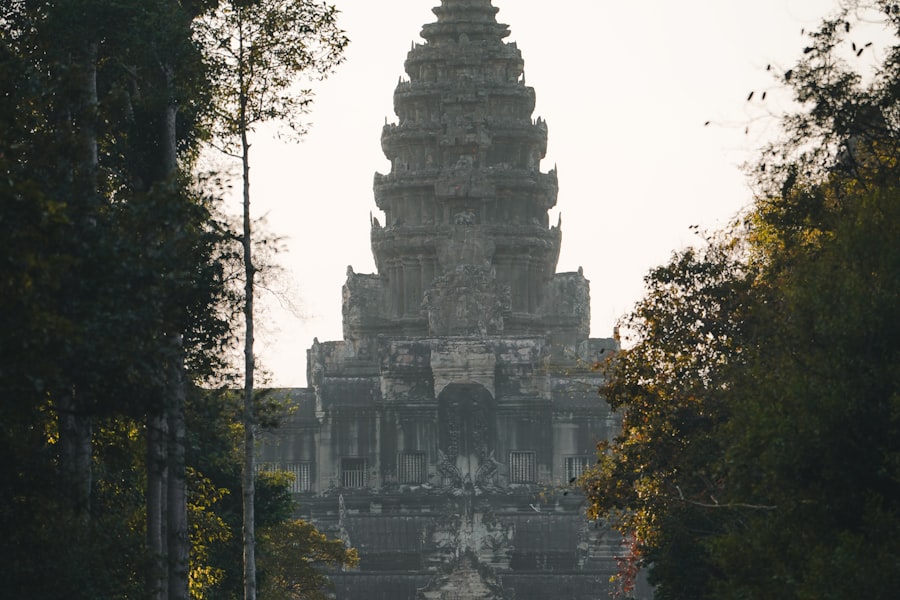
Ta Prohm's strangler figs and Bayon's faces are on every itinerary; Beng Mealea, Koh Ker and Preah Khan are not. Buy the three-day pass, start at 5 a.m., and rest through the midday heat.
Tonlé Sap floating villages
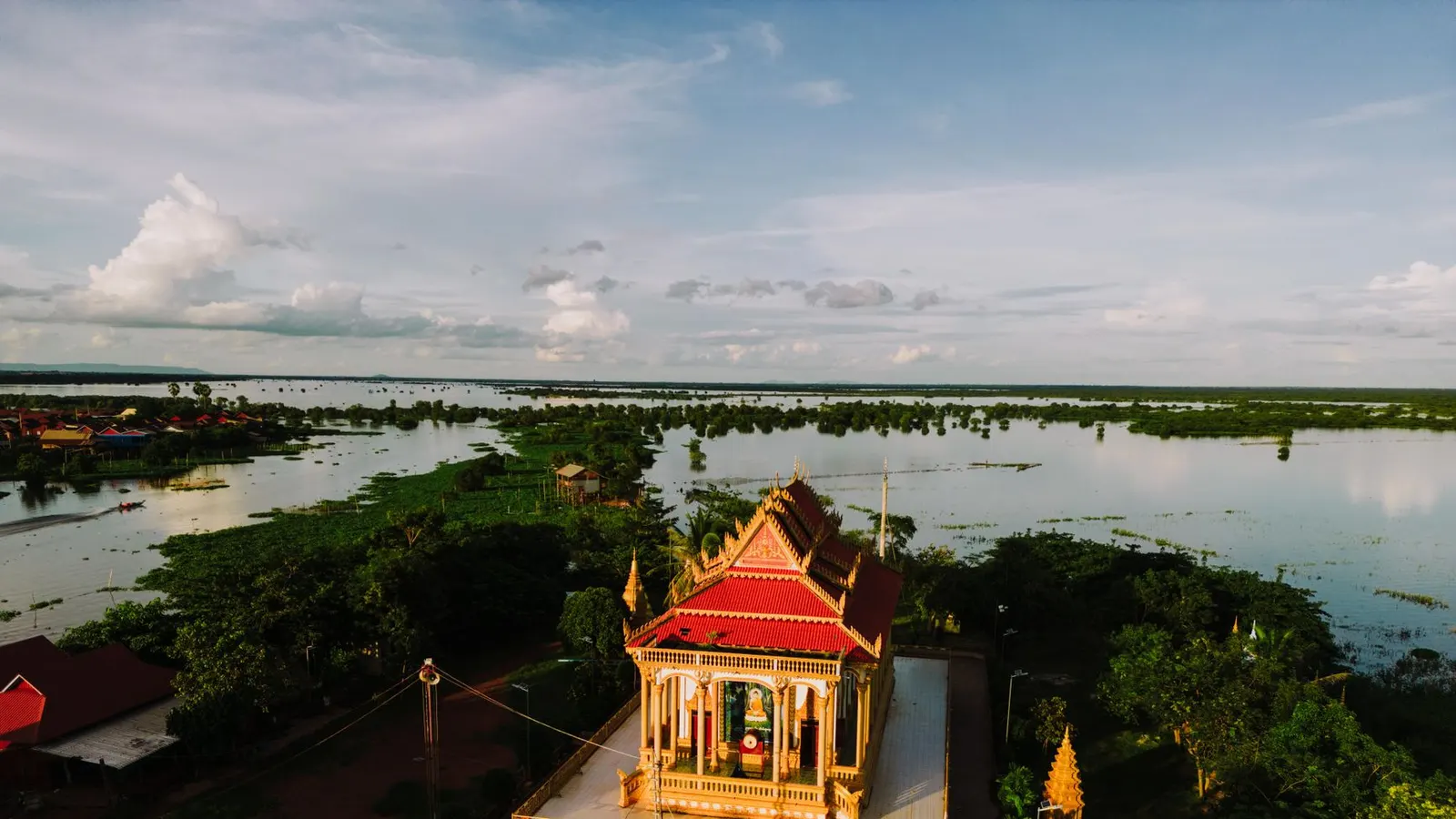
A lake that reverses its river and quadruples in area each monsoon, with stilt villages that rise and fall with it. Go to Kampong Khleang rather than the closer, more staged Chong Kneas.
Kampot and Kep
Riverside colonial shophouses, pepper plantations you can walk through, and crab shacks on the Kep seafront. The most relaxed few days in the country.
The Cardamom Mountains
Rainforest with elephants, gibbons and community-run lodges at Chi Phat and Cardamom Tented Camp - the model for how conservation money reaches villages here.
Chapter 02
Entry requirements for Cambodia
Checking your passport…
up to 30 days · €34 / $37 · e-visa
30 days on arrival
Official portal only
Paid look-alike sites charge for a process that is free or cheap on the government portal. Use the link below and nothing else.
www.evisa.gov.kh →Before you fly
The detail
- Maximum stay
- up to 30 days
- Process
- e-visa
- Fee
- €34 / $37
- Processing time
- Processing takes 3–3 days - apply with room to spare.
- Passport validity
- Most destinations want validity beyond your stay, and some want six months. Check yours against the return date.
- Onward travel
- Airlines may ask for a return or onward ticket at check-in.
- Arrival form
- Cambodia e-Arrival - file the combined arrival, customs and health declaration online within seven days of travel and carry the QR code.
- Health
- No vaccinations required; hepatitis A, typhoid and tetanus standard, rabies and Japanese encephalitis for rural or long stays. Dengue is present year-round and peaks in the wet season. Malaria risk is limited to forested border areas, mainly the Cardamoms and the northeast. Tap water is not drinkable. Serious medical care means Bangkok or Ho Chi Minh City - insurance with evacuation cover is not optional here.
- Money
- A genuinely dual-currency economy: dollars for most things, riel for change under a dollar. ATMs dispense both and charge €4–5 per withdrawal, so take out larger sums. Cards work in hotels and mid-range restaurants in the two main cities and almost nowhere else. Small, clean US notes are worth carrying from home.
A US passport needs a visa and the tidiest route is the tourist e-visa: US$30 plus a US$6 processing fee, issued in about three working days, valid three months from issue and good for 30 days single entry. Apply only at evisa.gov.kh - the lookalike domains charging US$70 to US$90 are the most persistent visa scam in South-East Asia and they rank above the real one. A visa on arrival is also issued at both international airports and the main land borders for US$30 in cash plus a passport photograph, but the land crossings from Thailand have a long history of officials asking for more than the posted price; pay at the official window, ask for the receipt, and expect the request anyway. The e-visa is not accepted at every land crossing, so check the portal's list of ports before planning an overland entry. A 30-day extension is possible once, in Phnom Penh, and in practice goes through an agent. Passport valid six months.
Check another destination with this passport →
Entry details: Editorial synthesis - Cambodian Ministry of Foreign Affairs e-visa portal, General Department of Immigration (2025–2026) · compiled 15 Sept 2026
Who needs a visa for Cambodia
12 common passports| Passport | Requirement | Stay | Process |
|---|---|---|---|
| United States | Visa on arrival | - | e-Visa · €34 / $37 · 3–3 d |
| United Kingdom | Visa on arrival | - | e-Visa · €34 / $37 · 3–3 d |
| Germany | Visa on arrival | - | e-Visa · €34 / $37 · 3–3 d |
| India | Visa on arrival | - | e-Visa · €34 / $37 · 3–3 d |
| China | Visa on arrival | - | e-Visa · €34 / $37 · 3–3 d |
| Brazil | Visa on arrival | - | e-Visa · €34 / $37 · 3–3 d |
| Nigeria | Visa on arrival | - | e-Visa · €34 / $37 · 3–3 d |
| Indonesia | Visa-free | up to 30 days | e-Visa · €34 / $37 · 3–3 d |
| Philippines | Visa-free | up to 30 days | e-Visa · €34 / $37 · 3–3 d |
| Vietnam | Visa-free | up to 30 days | e-Visa · €34 / $37 · 3–3 d |
| Egypt | Visa on arrival | - | e-Visa · €34 / $37 · 3–3 d |
| Nepal | Visa on arrival | - | e-Visa · €34 / $37 · 3–3 d |
Holding a passport that is not listed? The picker above answers for any of them. See where your passport takes you. Source: Passport Index, updated 14 Aug 2026.
Chapter 03
When to go
BestNov–Feb. AvoidApr–May.
Cool dry season - the best month, and the busiest at Angkor.
The band above each month is our editorial verdict - it weighs crowds, prices and access as well as weather. The line is average daily temperature, the bars are monthly rainfall. Select a month for the figures. Climate figures: ERA5 reanalysis via Open-Meteo, 2005–2024 normals.
Chapter 04
What it costs
A day in Cambodia
Comfortable · sample day
≈ $41
Line items are real prices we track. The daily budget is an editorial estimate for this level, not their sum.
Where this sits among 244 countries we have costed
Siem Reap accommodation rises 30–50 % from November to February and over the Christmas fortnight; the wet months are materially cheaper. Angkor pass prices, bus fares and food do not move at all. Island accommodation follows the same high-season curve as the mainland.
Updated Aug 2026 · Editorial synthesis - APSARA Authority pass tariff, Budget Your Trip, operator fare sampling (2025–2026) · confidence high
Excludes international flights - they depend on where you fly from.
Chapter 05
Regions to know
5Siem Reap & Angkor
The temple city plus the lake villages of Tonlé Sap - three days minimum, and the reason most trips exist.
Phnom Penh
The riverfront capital: the royal palace, the central market, and the Khmer Rouge sites that explain modern Cambodia.
The southern coast
Kampot's pepper farms and river, Kep's crab market, and the islands of Koh Rong Sanloem and Koh Ta Kiev.
The Cardamom Mountains
Southwest rainforest with community ecotourism at Chi Phat - trekking, river kayaking and genuine wildlife.
The northeast
Ratanakiri and Mondulkiri: crater lakes, waterfalls and ethical elephant sanctuaries where the animals are not ridden.
Chapter 06
Practical guide
Getting there
Siem Reap–Angkor (SAI, opened 2023 and 50 km from town) and Phnom Penh (PNH) take regional flights from Bangkok, Singapore, Kuala Lumpur, Hong Kong and Ho Chi Minh City; there are no direct flights from Europe, so expect one stop in the Gulf or Southeast Asia. Overland from Thailand at Poipet is notorious for visa touts - get your e-visa in advance and refuse anyone offering to "process" it. Bus and boat from Vietnam via Mộc Bài or the Mekong is straightforward.
Entry formalities
Cambodia e-Arrival - file the combined arrival, customs and health declaration online within seven days of travel and carry the QR code.
Getting around
Domestic flights link Phnom Penh and Siem Reap in 45 minutes for around €60. Buses are the default otherwise - Giant Ibis and Mekong Express are the reliable operators on the main routes. Night buses exist; the roads make them a poor trade. In towns, PassApp and Grab price tuk-tuks by meter and end the haggling. Renting a car with a driver runs €45–60 a day and is how most visitors reach the Cardamoms or the remote temples.
Money & costs
A genuinely dual-currency economy: dollars for most things, riel for change under a dollar. ATMs dispense both and charge €4–5 per withdrawal, so take out larger sums. Cards work in hotels and mid-range restaurants in the two main cities and almost nowhere else. Small, clean US notes are worth carrying from home.
Safety
Petty theft - bag-snatching from motorbikes in Phnom Penh especially - is the main risk; violent crime against visitors is uncommon. Landmines and unexploded ordnance persist in the northwest near the Thai border and in parts of the countryside: stay on marked paths, never enter fields off-trail. Traffic is chaotic and rural ambulance cover is minimal. Be alert to online-scam-compound reporting around Sihanoukville and Bavet; it does not target ordinary tourists but shapes local policing.
Health
No vaccinations required; hepatitis A, typhoid and tetanus standard, rabies and Japanese encephalitis for rural or long stays. Dengue is present year-round and peaks in the wet season. Malaria risk is limited to forested border areas, mainly the Cardamoms and the northeast. Tap water is not drinkable. Serious medical care means Bangkok or Ho Chi Minh City - insurance with evacuation cover is not optional here.
SIM & internet
Smart, Cellcard and Metfone sell tourist SIMs for €4–8 with generous data; eSIM works. 4G is fast and widespread, including at Angkor. Wifi is standard in accommodation. Telegram, oddly, is a common business messaging channel alongside WhatsApp.
Chapter 07
Driving
Self-driving is rarely worth it. A car with a driver costs little more, removes the licence and insurance problem, and comes with someone who knows which unsigned turn leads to Beng Mealea.
Rules change - verify with an official source before you rent.
ExplWorld VerifiedNo verified partners here yet - all 6 country seats are open.
Become ExplWorld Verified →Chapter 08
Itineraries through this country
Chapter 09
From the Journal
Chapter 10
Before you go
CambodiaChapter 11
Frequently asked questions
How many days do I need at Angkor?
Three, with a one-day pass as the absolute minimum and a seven-day pass if temples are your reason for the trip. Passes are sold only at the official ticket centre outside Siem Reap and are photographed onto the ticket - they are not transferable. Buy after 5 p.m. and the pass is valid for that evening's sunset plus your full days.
Do I use dollars or riel?
Both, simultaneously. US dollars are quoted for anything above a couple of euros and ATMs dispense them; riel functions as small change, at roughly 4,000 to the dollar. Bring clean, untorn notes - damaged dollars are refused - and expect change for a dollar to come back in riel.
Is Sihanoukville worth visiting?
Not for most travellers. The casino construction boom hollowed out the old beach town and left half-finished towers behind. The islands offshore - Koh Rong Sanloem in particular - remain excellent, and Kampot and Kep are the better mainland coast.