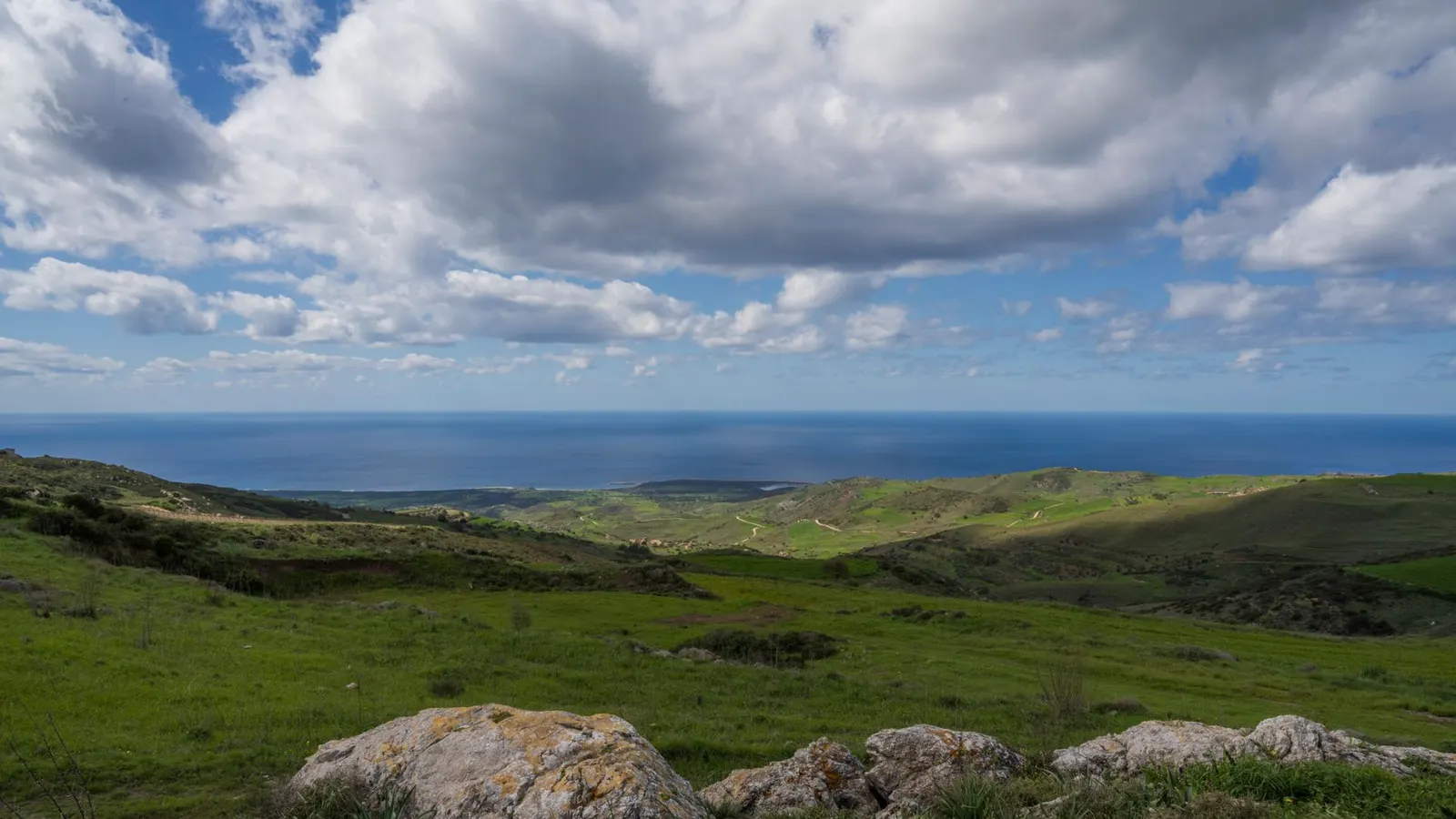
 Evelin Magnus · Pexels License
Country Guide № 043 / 194 · Europe
Cyprus
A divided island with mountains in the middle and 340 days of sun.
“A divided island with mountains in the middle and 340 days of sun.”
Cyprus has been divided since 1974, with a UN buffer zone running across the island and through Nicosia, the last divided capital in Europe. The Republic of Cyprus controls the south and is in the EU; the north is administered by a Turkish Cypriot authority recognised only by Türkiye. Crossings are open and straightforward for visitors, and the division is the first thing to understand about travelling here.
What the island holds is a genuinely varied small country: the Troodos mountains rising to nearly 2,000 metres with painted Byzantine churches and skiing in February, Roman mosaics at Paphos, Neolithic Choirokoitia, and a coastline that runs from developed resort to the empty Akamas peninsula. It gets around 340 sunny days a year, and the summer heat inland is severe.
Chapter 01
Highlights
The Troodos painted churches
Ten small Byzantine churches in the mountains, UNESCO-listed, with frescoes from the eleventh to sixteenth centuries under unremarkable barn-like roofs. Asinou and Panagia tou Araka are the ones to prioritise.
Nicosia across the Green Line
The last divided capital in Europe - the Venetian walls, the Ledra Street crossing, and a walk from the Cypriot to the Turkish Cypriot side in five minutes with a passport.
Paphos and the mosaics
Roman villa floors with mythological scenes preserved almost intact, the Tombs of the Kings cut into rock, and the whole archaeological park UNESCO-listed.
The Akamas peninsula
The undeveloped western tip - Lara Bay where loggerhead and green turtles nest, the Avakas gorge, and rough tracks that need a 4×4 or a long walk.
Chapter 02
Entry requirements for Cyprus
Checking your passport…
up to 90 days · free entry
90 days on arrival
Before you fly
The detail
- Maximum stay
- up to 90 days
- Fee
- free entry
- Passport validity
- Most destinations want validity beyond your stay, and some want six months. Check yours against the return date.
- Onward travel
- Airlines may ask for a return or onward ticket at check-in.
- Health
- No vaccinations required. Healthcare is good; EHIC/GHIC covers EU and UK visitors in the south, and cover in the north is a separate question that insurance should be checked for. Tap water in the south is safe. Heat illness is the main summer risk. Sea urchins on rocky shores make water shoes useful.
- Money
- Euro in the south; the north uses the Turkish lira, though euros are widely accepted there. Cards work almost everywhere in the south and less reliably in the north - carry cash if crossing. Tipping is around 10 %. English is very widely spoken, another British legacy.
A United States passport is admitted to the Republic of Cyprus without a visa for 90 days in any 180 - and the fact worth more than any other on this page is that these are CYPRIOT days. Cyprus is in the European Union but does not yet apply the Schengen rules, so its allowance runs on its own clock: time spent in France, Italy or Greece does not consume it, and time spent in Cyprus does not consume the Schengen ninety. If you have nearly used up a rolling Schengen window, this is one of the few EU countries you can still enter, which is exactly why long European trips are built around it. The corollary is the part people forget: a Cypriot permission admits you to Cyprus and nowhere else, and flying on to Athens is a Schengen entry judged on the Schengen allowance you arrived with. Because Cyprus sits outside the area, the biometric Entry/Exit System that replaced passport stamps at Schengen’s external borders in April 2026 does not govern the count here - your passport is stamped at Larnaca or Paphos, and those stamps are the record, so keep them legible. There is nothing to apply for and nothing to pay before you fly: the ETIAS authorisation had not started anywhere at the time of writing, and Cyprus has no scheme of its own. Do not read that as Cyprus sitting outside it, though - the authorisation was announced for a list of European countries that is wider than the Schengen area and includes Cyprus, so when it does start expect it to apply here whether or not Cyprus has joined the area by then; check the position when you book. Cyprus has a standing commitment to join Schengen and has said for years that it intends to, and the day it does its ninety days join the Schengen ninety. One practical warning specific to the island: the Republic treats arrival through the northern ports or Ercan airport as illegal entry, so fly into Larnaca or Paphos and cross at the open crossing points with your passport instead. Your passport should be valid at least three months beyond the day you plan to leave.
Check another destination with this passport →
Entry details: Editorial synthesis - Cyprus Ministry of Foreign Affairs entry guidance, EU accession status, Green Line crossing-point rules (2025–2026) · compiled 17 Sept 2026
Who needs a visa for Cyprus
12 common passports| Passport | Requirement | Stay | Process |
|---|---|---|---|
| United States | Visa-free | up to 90 days | No process · €0 / $0 |
| United Kingdom | Visa-free | up to 90 days | No process · €0 / $0 |
| Germany | Visa-free | - | No process · €0 / $0 |
| India | Visa required | - | No Other passports record yet |
| China | Visa required | - | No Other passports record yet |
| Brazil | Visa-free | up to 90 days | No Other passports record yet |
| Nigeria | Visa required | - | No Other passports record yet |
| Indonesia | Visa required | - | No Other passports record yet |
| Philippines | Visa required | - | No Other passports record yet |
| Vietnam | Visa required | - | No Other passports record yet |
| Egypt | Visa required | - | No Other passports record yet |
| Nepal | Visa required | - | No Other passports record yet |
Holding a passport that is not listed? The picker above answers for any of them. See where your passport takes you. Source: Passport Index, updated 14 Aug 2026.
Chapter 03
When to go
BestApr–May, Sep–Oct. AvoidJul–Aug.
The best month - warm, green and flowering, with Orthodox Easter.
The band above each month is our editorial verdict - it weighs crowds, prices and access as well as weather. The line is average daily temperature, the bars are monthly rainfall. Select a month for the figures. Climate figures: ERA5 reanalysis via Open-Meteo, 2005–2024 normals.
Chapter 04
What it costs
A day in Cyprus
Comfortable · sample day
≈ $97
Line items are real prices we track. The daily budget is an editorial estimate for this level, not their sum.
Where this sits among 244 countries we have costed
Coastal accommodation doubles in July and August and is genuinely cheap from November to March, when many resort hotels in Ayia Napa and Protaras close entirely. The Troodos has a small winter ski season. Car hire rises sharply in summer and should be booked ahead.
Updated Aug 2026 · Editorial synthesis - Cyprus Deputy Ministry of Tourism, site tariffs, rental and accommodation sampling (2025–2026) · confidence high
Excludes international flights - they depend on where you fly from.
Chapter 05
Regions to know
5Nicosia
The divided capital - Venetian walls, the Ledra Street crossing, the Cyprus Museum and the old town on both sides.
Paphos & the west
Roman mosaics, the Tombs of the Kings, Aphrodite's rock and the undeveloped Akamas peninsula.
Limassol & the south coast
The island's working city and food scene, Kourion's cliffside theatre and the Kolossi crusader castle.
The Troodos mountains
Painted Byzantine churches, Kykkos monastery, wine villages and Mount Olympus with winter skiing.
Larnaca, Ayia Napa & the east
The salt lake and its flamingos, Ayia Napa's beaches and nightlife, and the sea caves at Cape Greco.
Chapter 06
Practical guide
Getting there
Larnaca (LCA) and Paphos (PFO) are well served by low-cost and charter carriers from across Europe. Ferries are limited; there is no regular passenger service from Greece. Arriving via northern Cyprus ports or Ercan airport is treated as illegal entry by the Republic and can create problems.
Getting around
Public transport is limited and infrequent - buses connect the main towns but not much else. A car is close to essential, and rentals are cheap. Driving is on the left. The motorway network links Nicosia, Limassol, Larnaca and Paphos; mountain roads to the Troodos are winding and slow.
Money & costs
Euro in the south; the north uses the Turkish lira, though euros are widely accepted there. Cards work almost everywhere in the south and less reliably in the north - carry cash if crossing. Tipping is around 10 %. English is very widely spoken, another British legacy.
Safety
Very safe with low crime. The practical hazards are heat, sun and the roads. The buffer zone is not a place to wander - it is a military area with restricted access, and photography of military installations on either side is prohibited. Wildfires are a serious summer risk in the Troodos and the hills.
Health
No vaccinations required. Healthcare is good; EHIC/GHIC covers EU and UK visitors in the south, and cover in the north is a separate question that insurance should be checked for. Tap water in the south is safe. Heat illness is the main summer risk. Sea urchins on rocky shores make water shoes useful.
SIM & internet
EU roaming applies in the south; the north uses Turkish networks and roaming there is charged separately and can be expensive - watch for your phone switching networks near the line. Coverage is complete and free wifi widespread.
Chapter 07
Driving
Driving is on the left. Hire cars from the south are generally not insured in the north - buy the separate cover sold at the crossing points, which costs around €20 for a few days. Mountain roads to the Troodos are narrow and steep; the Akamas tracks need a 4×4.
Rules change - verify with an official source before you rent.
ExplWorld VerifiedNo verified partners here yet - all 6 country seats are open.
Become ExplWorld Verified →Chapter 08
Itineraries through this country
Chapter 09
From the Journal
Chapter 10
Before you go
CyprusChapter 11
Frequently asked questions
Can I cross to the north?
Yes. Crossing points including Ledra Street in Nicosia are open to visitors, and you show a passport at each side. Note that the Republic of Cyprus considers entry to the island through northern ports and airports to be illegal entry, so arrive in the south and cross from there. Hire cars from the south usually need extra insurance bought at the crossing to be covered in the north.
Which coast should I stay on?
Paphos for archaeology and the Akamas, Limassol for a working city with a good food scene, Larnaca for convenience and the salt lake flamingos, and Ayia Napa for beaches and nightlife. The Troodos mountains are worth two nights of their own and are cooler by ten degrees in summer.
How bad is summer?
Nicosia regularly passes 40 °C in July and August and is one of the hottest capitals in Europe. The coast is more bearable and the mountains substantially so. Spring and autumn are far better - April and May bring wildflowers, and September and October have the warmest sea of the year.