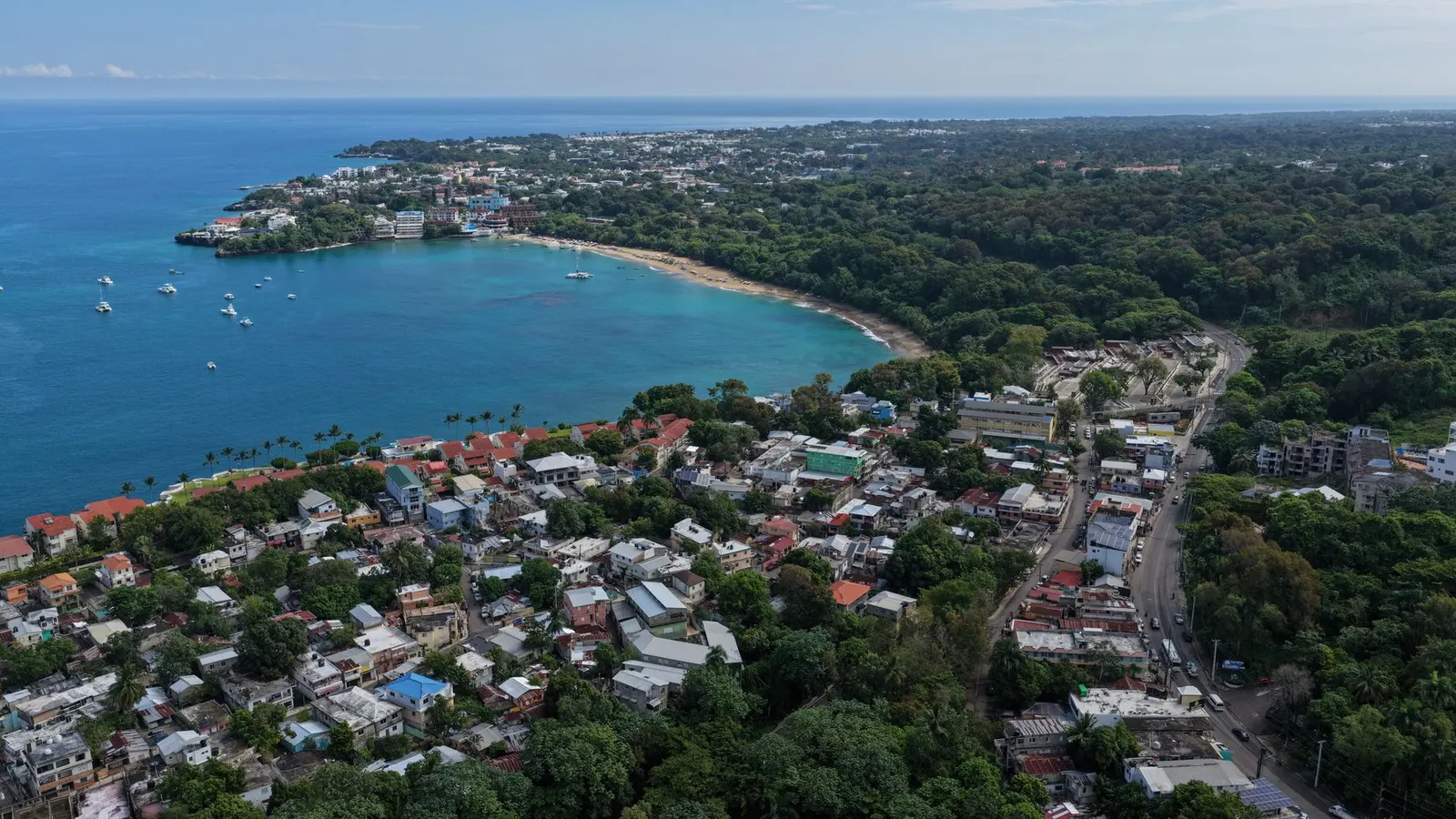
 FELIX CORONA · Pexels License
Country Guide № 049 / 194 · Caribbean
Dominican Republic
Merengue, mountains and the oldest city in the Americas - far more than an all-inclusive.
“Merengue, mountains and the oldest city in the Americas - far more than an all-inclusive.”
Most visitors see one province: the manicured all-inclusive coast of Punta Cana. It is very good at what it does - but it is the least Dominican corner of a big, loud, mountainous country. An hour’s flight west, Santo Domingo’s Zona Colonial holds the first cathedral, first university and first paved street of the Americas; north, the Cordillera Central stacks pine forests and white-water rivers up to Pico Duarte, at 3,087 metres the roof of the Caribbean.
The greatest show is seasonal: from mid-January to late March, thousands of humpback whales funnel into Samaná Bay to breed and breach - one of the world’s great marine spectacles, an ordinary bus ride from the beach. Add kite-surf culture in Cabarete, canyoning at Damajagua and merengue leaking out of every colmado, and the DR earns a proper itinerary, not just a sunlounger.
Chapter 01
Highlights
Zona Colonial, Santo Domingo
The first European city of the New World - the Alcázar de Colón, the Americas’ first cathedral and streets Drake once sacked, now full of galleries and rooftop bars.
Humpback whales of Samaná
Thousands of humpbacks breed in Samaná Bay from mid-January to late March - breaching, tail-slapping and singing within an hour’s boat ride of the peninsula’s palm coast.
The Cordillera Central
Jarabacoa’s waterfalls and white-water, Constanza’s cool valleys, and the two-day mule-supported trek up Pico Duarte - alpine mornings in the middle of the Caribbean.
Cabarete & the north coast
One of the world’s best kite-surfing bays backed by a genuinely fun beach town, with canyoning at the 27 waterfalls of Damajagua just down the road.
Chapter 02
Entry requirements for Dominican Republic
Checking your passport…
up to 30 days · free entry
30 days on arrival
Official portal only
Paid look-alike sites charge for a process that is free or cheap on the government portal. Use the link below and nothing else.
eticket.migracion.gob.do →Before you fly
The detail
- Maximum stay
- up to 30 days
- Fee
- free entry
- Passport validity
- Most destinations want validity beyond your stay, and some want six months. Check yours against the return date.
- Onward travel
- Airlines may ask for a return or onward ticket at check-in.
- Arrival form
- The DR requires the free electronic E-Ticket (eticket.migracion.gob.do) - a combined migration, customs and health form filled online before arrival and again before departure. One QR code per person per direction; screenshot it, as airlines check it at the counter. The official portal is free - ignore lookalike sites that charge.
- Health
- Drink bottled or filtered water - never tap. Dengue is endemic with wet-season spikes; use repellent morning and dusk. No mandatory vaccinations; hepatitis A and typhoid are the standard recommendations. Private clinics in Santo Domingo, Santiago and the resort zones are excellent and expect insurance details up front - carry proof of cover.
- Money
- The Dominican peso (DOP) floats around 60–65 to the euro. Cards are fine in cities, malls and resorts; cash rules in colmados, guaguas, beach shacks and the countryside. ATMs are everywhere but charge €4–7 per withdrawal - take larger amounts less often, and prefer machines inside banks. US dollars are widely accepted in tourist zones at mediocre rates.
What changed
No visa: a US passport is admitted for 30 days on arrival, and the US$10 tourist card that used to be sold at a booth by the baggage hall has been included in the price of the air ticket since April 2018. What is compulsory, and free, is the electronic entry form at eticket.migracion.gob.do - one QR code covering immigration, customs and health, filed before you fly and again before you leave, and the sites that charge for it are selling a government form that costs nothing. Thirty days is short for a winter escape and overstaying is common enough that the Dirección General de Migración runs a published sliding scale of fines paid at the airport on the way out; it is cheap for a week and unpleasant for a year. Extensions can be applied for at a Migración office in Santo Domingo if you would rather not pay at the gate. Give the passport validity for the whole of your stay, and expect the airline to want six months whatever the rule says.
Check another destination with this passport →
Entry details: Editorial synthesis - Dominican Dirección General de Migración, E-Ticket portal (2025–2026) · compiled 15 Sept 2026
Who needs a visa for Dominican Republic
12 common passports| Passport | Requirement | Stay | Process |
|---|---|---|---|
| United States | Visa-free | up to 30 days | No process · €0 / $0 |
| United Kingdom | Visa-free | up to 30 days | No process · €0 / $0 |
| Germany | Visa-free | up to 30 days | No process · €0 / $0 |
| India | Visa required | - | No Other passports record yet |
| China | Visa required | - | No Other passports record yet |
| Brazil | Visa-free | up to 30 days | No Other passports record yet |
| Nigeria | Visa required | - | No Other passports record yet |
| Indonesia | Visa required | - | No Other passports record yet |
| Philippines | Visa required | - | No Other passports record yet |
| Vietnam | Visa required | - | No Other passports record yet |
| Egypt | Visa required | - | No Other passports record yet |
| Nepal | Visa required | - | No Other passports record yet |
Holding a passport that is not listed? The picker above answers for any of them. See where your passport takes you. Source: Passport Index, updated 14 Aug 2026.
Chapter 03
When to go
BestDec–Apr. AvoidSeptember.
Dry, breezy high season; the first humpbacks arrive in Samaná mid-month.
The band above each month is our editorial verdict - it weighs crowds, prices and access as well as weather. The line is average daily temperature, the bars are monthly rainfall. Select a month for the figures. Climate figures: ERA5 reanalysis via Open-Meteo, 2005–2024 normals.
Chapter 04
What it costs
A day in Dominican Republic
Comfortable · sample day
≈ $92
Line items are real prices we track. The daily budget is an editorial estimate for this level, not their sum.
Where this sits among 244 countries we have costed
Independent-travel prices are remarkably stable; the seasonality lives in accommodation - December–April lifts coastal room rates 25–40 %, with Christmas–New Year and Easter the peaks, and whale season (Jan–Mar) squeezing Samaná specifically. September–October brings the deepest resort discounting of the year. Domestic holiday weekends (Semana Santa, August) fill mid-range hotels with Dominican travellers.
Updated Aug 2026 · Editorial synthesis - Budget Your Trip, Numbeo Santo Domingo, coach and attraction published fares (2025–2026) · confidence medium
Excludes international flights - they depend on where you fly from.
Chapter 05
Regions to know
5Santo Domingo & the south
The Zona Colonial’s five-century core, the Malecón, and the caves-and-beaches run east toward La Romana and Bayahibe’s Saona boat trips.
Punta Cana & the east
Thirty kilometres of resort-lined sand from Bávaro to Cap Cana - the all-inclusive capital of the hemisphere, with Higüey’s basilica inland for contrast.
Samaná Peninsula
Humpbacks (Jan–Mar), the El Limón waterfall, Las Terrenas’ French-Creole beach towns and Los Haitises’ mangrove karst across the bay.
The north coast
Puerto Plata’s Victorian gingerbread and cable car, kite-mecca Cabarete, canyoning at Damajagua - the DR’s adventure shore.
The Cordillera Central
Jarabacoa and Constanza’s cool highlands: white-water rafting, waterfalls, strawberry farms and the Pico Duarte trek to the Caribbean’s highest point.
Chapter 06
Practical guide
Getting there
Punta Cana (PUJ) is the long-haul workhorse, with directs from Madrid, Paris, Frankfurt and a wall of charters; Santo Domingo (SDQ) has Madrid and Miami links and is the better gateway for an independent itinerary. From Central Europe count on one stop via Madrid or Frankfurt, 13–15 hours door to door. Santiago (STI) serves the north coast.
Entry formalities
The DR requires the free electronic E-Ticket (eticket.migracion.gob.do) - a combined migration, customs and health form filled online before arrival and again before departure. One QR code per person per direction; screenshot it, as airlines check it at the counter. The official portal is free - ignore lookalike sites that charge.
Getting around
Caribe Tours and Metro coaches link the major cities cheaply, comfortably and on time - the independent traveller’s backbone. Guaguas (minibuses) fill the gaps chaotically. In cities use Uber or InDrive rather than street taxis; the Santo Domingo Metro is clean and useful. Self-driving works for the mountains and Samaná if you drive defensively and never at night.
Money & costs
The Dominican peso (DOP) floats around 60–65 to the euro. Cards are fine in cities, malls and resorts; cash rules in colmados, guaguas, beach shacks and the countryside. ATMs are everywhere but charge €4–7 per withdrawal - take larger amounts less often, and prefer machines inside banks. US dollars are widely accepted in tourist zones at mediocre rates.
Safety
The road is the risk to manage: aggressive overtaking, unlit motorbikes and drink-driving at night are endemic - take the day’s first coach rather than the last, and skip motoconcho taxis for anything beyond a short hop. Petty theft favours beaches and bus stations; keep phones off café tables. Resort areas and the Zona Colonial are comfortable day and night.
Health
Drink bottled or filtered water - never tap. Dengue is endemic with wet-season spikes; use repellent morning and dusk. No mandatory vaccinations; hepatitis A and typhoid are the standard recommendations. Private clinics in Santo Domingo, Santiago and the resort zones are excellent and expect insurance details up front - carry proof of cover.
SIM & internet
Claro has the widest coverage, Altice the best data deals; a tourist SIM with 15–25 GB runs €10–15 with a passport, and eSIMs work well. LTE covers the entire tourist geography including Samaná and the mountain towns; dead zones are limited to deep rural valleys. Resort and café wifi is ubiquitous.
Chapter 07
Driving
Posted limits vary by road - modern autopistas run up to 100–120 km/h where signed. Driving culture is aggressive: expect overtakes on both sides, motorbikes everywhere and zero night-time margin. Never drive intercity after dark.
Rules change - verify with an official source before you rent.
ExplWorld VerifiedNo verified partners here yet - all 6 country seats are open.
Become ExplWorld Verified →Chapter 08
Itineraries through this country
Chapter 09
From the Journal
Chapter 10
Before you go
Dominican RepublicChapter 11
Frequently asked questions
Is the Dominican Republic safe?
Tourist zones are patrolled by a dedicated tourist police force (CESTUR) and resort areas are very safe; Santo Domingo and Santiago call for normal big-city rules - app taxis at night, no visible phones on empty streets. The statistically biggest hazard is the road: traffic is among the most chaotic in the hemisphere, so choose coaches over motoconchos for distance.
When is the best time to visit?
December to April: dry on the coasts, warm, and with the Samaná humpbacks in the bay from mid-January to late March. August to October is the core of hurricane season and the wettest, stickiest stretch - the months to avoid if you can.
How much does a day in the Dominican Republic cost?
Around €85 / $100 per day mid-range travelling independently: €40–45 for your half of a double, €20 food (a plato del día runs €5), the rest coaches, entries and a tour amortised. Backpackers manage €45–55. All-inclusive Punta Cana works on package pricing - often cheaper per night, but a different trip entirely.