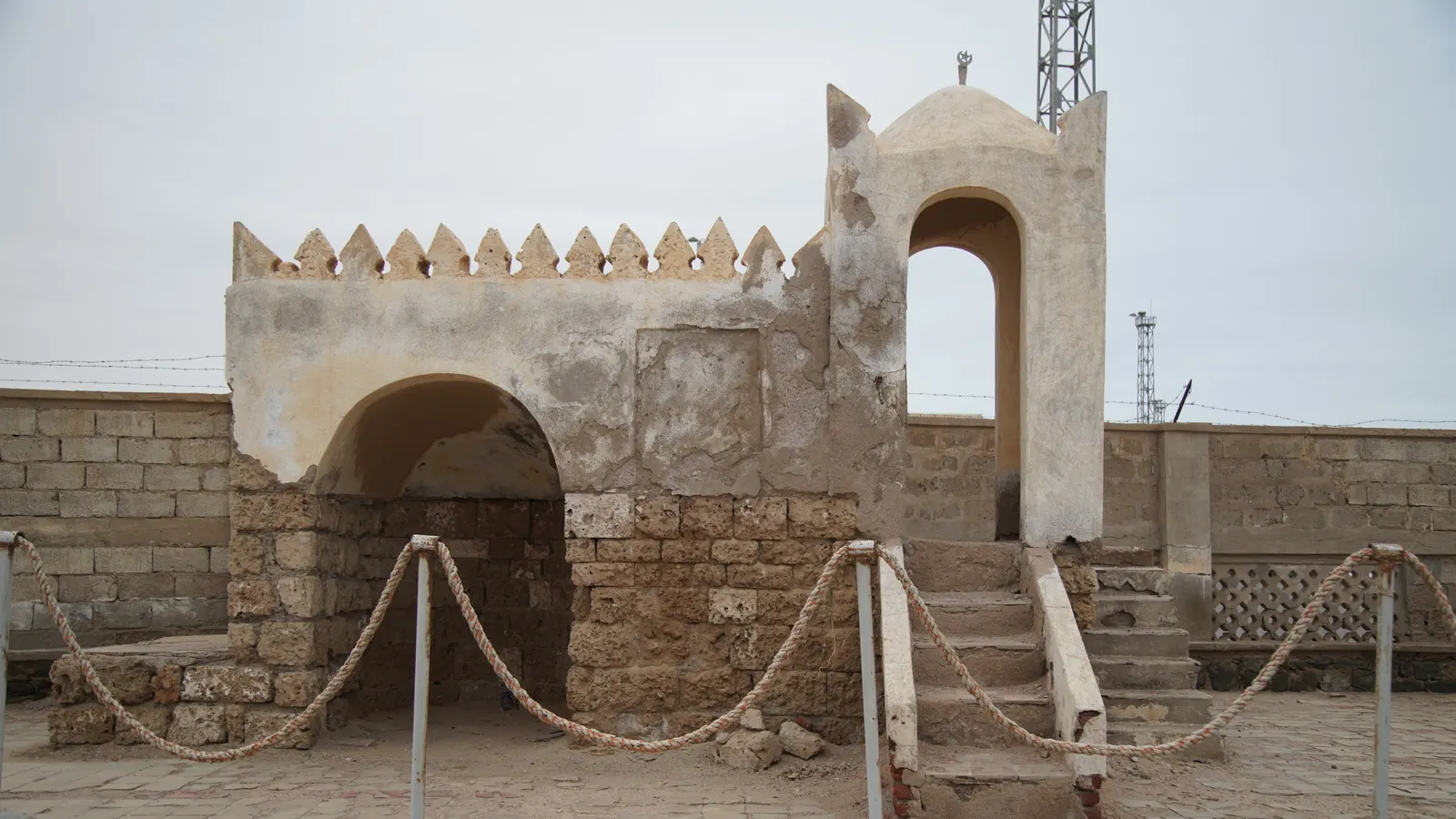
 Mheidegger · CC BY 4.0
Country Guide № 054 / 194 · Africa
Eritrea
Asmara's Italian modernism at 2,300 metres, and travel permits for everywhere else.
“Asmara's Italian modernism at 2,300 metres, and travel permits for everywhere else.”
Asmara is a genuinely extraordinary city: an Italian colonial capital built in the 1930s at 2,325 metres, laid out with cinemas, a Futurist service station shaped like an aeroplane, Art Deco apartment blocks and a Modernist market, all largely intact because nothing was built over them afterwards. UNESCO listed the whole city centre in 2017. Cafés serve macchiato on pavements under jacarandas and the whole thing feels suspended in 1938.
The rest of the country is difficult to reach. Eritrea has been ruled by the same president since independence in 1993, holds no elections, runs indefinite national service, and requires travel permits for movement outside Asmara that are granted or refused case by case. Visas are hard and often denied. What is there - the Dahlak archipelago's unfished reefs, Massawa's coral-block Ottoman port, the switchback railway down the escarpment - is remarkable and largely unseen.
Chapter 01
Highlights
Asmara
A UNESCO-listed modernist city - the Fiat Tagliero service station with its 30-metre cantilevered concrete wings, the Cinema Impero, the covered market and the Nda Mariam cathedral, all built between 1935 and 1941.
The Asmara–Massawa railway
A metre-gauge line dropping 2,300 metres down the escarpment through 30 tunnels, rebuilt by hand after the war using original Italian steam locomotives. It runs on charter rather than schedule.
Massawa
A Red Sea port of coral-block Ottoman and Egyptian architecture, heavily damaged in the independence war and only partly repaired - atmospheric and very hot.
The Dahlak archipelago
Over 200 islands in the Red Sea with reefs that have seen almost no diving pressure, reached by boat from Massawa with a permit.
Chapter 02
Entry requirements for Eritrea
Checking your passport…
up to 30 days · €65 / $70 · embassy application
30 days on arrival
Before you fly
The detail
- Maximum stay
- up to 30 days
- Process
- embassy application
- Fee
- €65 / $70
- Processing time
- Processing takes 14–60 days - apply with room to spare.
- Passport validity
- Most destinations want validity beyond your stay, and some want six months. Check yours against the return date.
- Onward travel
- Airlines may ask for a return or onward ticket at check-in.
- Health
- Malaria in the lowlands and along the coast; Asmara at 2,300 metres is free of it. Yellow fever certificate required from endemic countries. Medical facilities and medicine supply are limited; bring everything you need and carry evacuation insurance.
- Money
- Cash nakfa only. Foreign currency must be declared on arrival and is reconciled on departure. Cards and ATMs do not work for foreign visitors. Bring euros or dollars in cash, declared.
A United States passport needs an Eritrean visa arranged in advance at an Eritrean mission - there is one in Washington - and there is no electronic route and no issuance on arrival. The fee has been in the region of sixty-five euros, missions set their own and it has been quoted higher, so treat the figure as a budget rather than a schedule. Applications are granted against a hotel booking or, more usually, an invitation arranged through a licensed Eritrean travel agency, which is in practice how most independent visitors get in; refusals happen, are not uncommon, and are not explained. Journalism is the one occupation it is worth being deliberate about: journalists are generally not admitted, and how a profession is described on the form is consequential. Allow two months. Assume nothing until the passport is back in your hand, and do not buy a non-refundable flight before then. The thing that actually shapes a trip here is not the visa at all - it is what happens after it. Movement outside Asmara requires a separate internal travel permit, applied for in the capital, naming the route and the dates; it takes at least a working day, some regions are effectively never approved, and an itinerary has to be built around permit days rather than assuming the country is open once you are through the airport. Two more Asmara-specific things. Foreign currency must be declared on arrival and is reconciled against what you carry out, cards and foreign ATMs do not function, and the nakfa cannot be exported - so bring the whole trip in cash and declare it accurately. A yellow fever vaccination certificate is required to enter Eritrea only if you are arriving from a country where the disease circulates, or have spent more than twelve hours in an airport of one - a threshold worth knowing precisely, because the usual connections through Nairobi, Addis Ababa and Kampala are normally shorter than that and a long layover is not. If any leg of your journey touches such a country, carry the card; it becomes valid ten days after the injection. Photography restrictions are strictly enforced.
Check another destination with this passport →
Entry details: Editorial synthesis - Eritrean consular practice, licensed-agency invitations and the internal travel permit system (2025–2026) · compiled 18 Sept 2026
Who needs a visa for Eritrea
12 common passports| Passport | Requirement | Stay | Process |
|---|---|---|---|
| United States | Visa required | - | Embassy visit · €65 / $70 · 14–60 d |
| United Kingdom | Visa required | - | Embassy visit · €65 / $70 · 14–60 d |
| Germany | Visa required | - | Embassy visit · €65 / $70 · 14–60 d |
| India | Visa required | - | Embassy visit · €65 / $70 · 14–60 d |
| China | Visa required | - | Embassy visit · €65 / $70 · 14–60 d |
| Brazil | Visa required | - | Embassy visit · €65 / $70 · 14–60 d |
| Nigeria | Visa required | - | Embassy visit · €65 / $70 · 14–60 d |
| Indonesia | Visa required | - | Embassy visit · €65 / $70 · 14–60 d |
| Philippines | Visa required | - | Embassy visit · €65 / $70 · 14–60 d |
| Vietnam | Visa required | - | Embassy visit · €65 / $70 · 14–60 d |
| Egypt | Visa required | - | Embassy visit · €65 / $70 · 14–60 d |
| Nepal | Visa required | - | Embassy visit · €65 / $70 · 14–60 d |
Holding a passport that is not listed? The picker above answers for any of them. See where your passport takes you. Source: Passport Index, updated 14 Aug 2026.
Chapter 03
When to go
BestOct–Mar. AvoidMay–Aug.
Cool and dry in Asmara; pleasant on the coast.
The band above each month is our editorial verdict - it weighs crowds, prices and access as well as weather. The line is average daily temperature, the bars are monthly rainfall. Select a month for the figures. Climate figures: ERA5 reanalysis via Open-Meteo, 2005–2024 normals.
Chapter 04
What it costs
A day in Eritrea
Comfortable · sample day
≈ $103
Line items are real prices we track. The daily budget is an editorial estimate for this level, not their sum.
Where this sits among 244 countries we have costed
There is effectively no seasonal pricing - visitor numbers are too low. Fuel rationing occasionally affects vehicle hire availability rather than price.
Updated Aug 2026 · Editorial synthesis - agency quotes and reported prices (2025–2026) · confidence low
Excludes international flights - they depend on where you fly from.
Chapter 05
Regions to know
5Asmara and the highlands
The modernist capital, the Debre Bizen monastery and the plateau villages around it.
The escarpment
The railway and road descending to the coast through 2,300 metres of switchbacks and tunnels.
Massawa and the Red Sea
The coral-block port, the causeway islands and the beaches south towards Assab.
The Dahlak archipelago
Over 200 islands with unfished reefs, reached by permit and boat from Massawa.
The west and Keren
Keren's Monday camel market, the Bilen and Tigre lowlands and the Sudanese border country.
Chapter 06
Practical guide
Getting there
Asmara International is served by Egyptair, Ethiopian, Flydubai and Turkish, with schedules that change. The land border with Ethiopia opened briefly after the 2018 peace agreement and has since closed again; the Sudanese border is affected by that country's war.
Getting around
Buses connect the main towns and are cheap. Everything requires a travel permit. The railway runs by charter. Hired cars with drivers are arranged by agencies. Nothing moves quickly.
Money & costs
Cash nakfa only. Foreign currency must be declared on arrival and is reconciled on departure. Cards and ATMs do not work for foreign visitors. Bring euros or dollars in cash, declared.
Safety
Ordinary crime is very low - Asmara is one of the safest capitals in Africa to walk at night. The risks are administrative: permit violations, photography, and the border regions with Ethiopia, Sudan and Djibouti, which carry advisories and are closed to visitors.
Health
Malaria in the lowlands and along the coast; Asmara at 2,300 metres is free of it. Yellow fever certificate required from endemic countries. Medical facilities and medicine supply are limited; bring everything you need and carry evacuation insurance.
SIM & internet
EriTel is the sole operator and mobile data has historically been minimal - Eritrea has among the lowest internet penetration rates in the world. Expect internet cafés rather than 4G, and plan on being offline.
Chapter 07
Driving
The Asmara–Massawa road descends 2,300 metres in hairpins and is spectacular and demanding. Every journey outside Asmara needs a travel permit, and checkpoints check it. Fuel supply is intermittent and rationed.
Rules change - verify with an official source before you rent.
ExplWorld VerifiedNo verified partners here yet - all 6 country seats are open.
Become ExplWorld Verified →Chapter 08
Itineraries through this country
Photographs: Mheidegger (CC BY 4.0)
Chapter 09
From the Journal
Chapter 10
Before you go
EritreaChapter 11
Frequently asked questions
How hard is it to get in?
Hard. Tourist visas are issued sparingly, usually require a hotel booking or invitation through an Eritrean travel agency, and refusals are common and unexplained. Journalists are generally not admitted. Allow two months and have a backup plan.
What is the travel permit system?
Movement outside Asmara requires a permit obtained in the capital, specifying the route and dates. It is granted or refused case by case, some regions are effectively never approved, and travelling without one leads to being turned back at checkpoints or worse. Your agency arranges it, and it takes days rather than hours.
What should I know about money and photography?
The nakfa cannot be taken in or out and there is a parallel rate; you declare foreign currency on arrival and the amounts are checked on exit. Cards do not work. Photography of government buildings, military sites, bridges, the port and anything official is prohibited and has led to detention - ask before photographing anything, including people.