 Raul Ling · Pexels License
Country Guide № 055 / 194 · Europe
Estonia
Half forest, two thousand islands, and a state that runs on the internet.
“Half forest, two thousand islands, and a state that runs on the internet.”
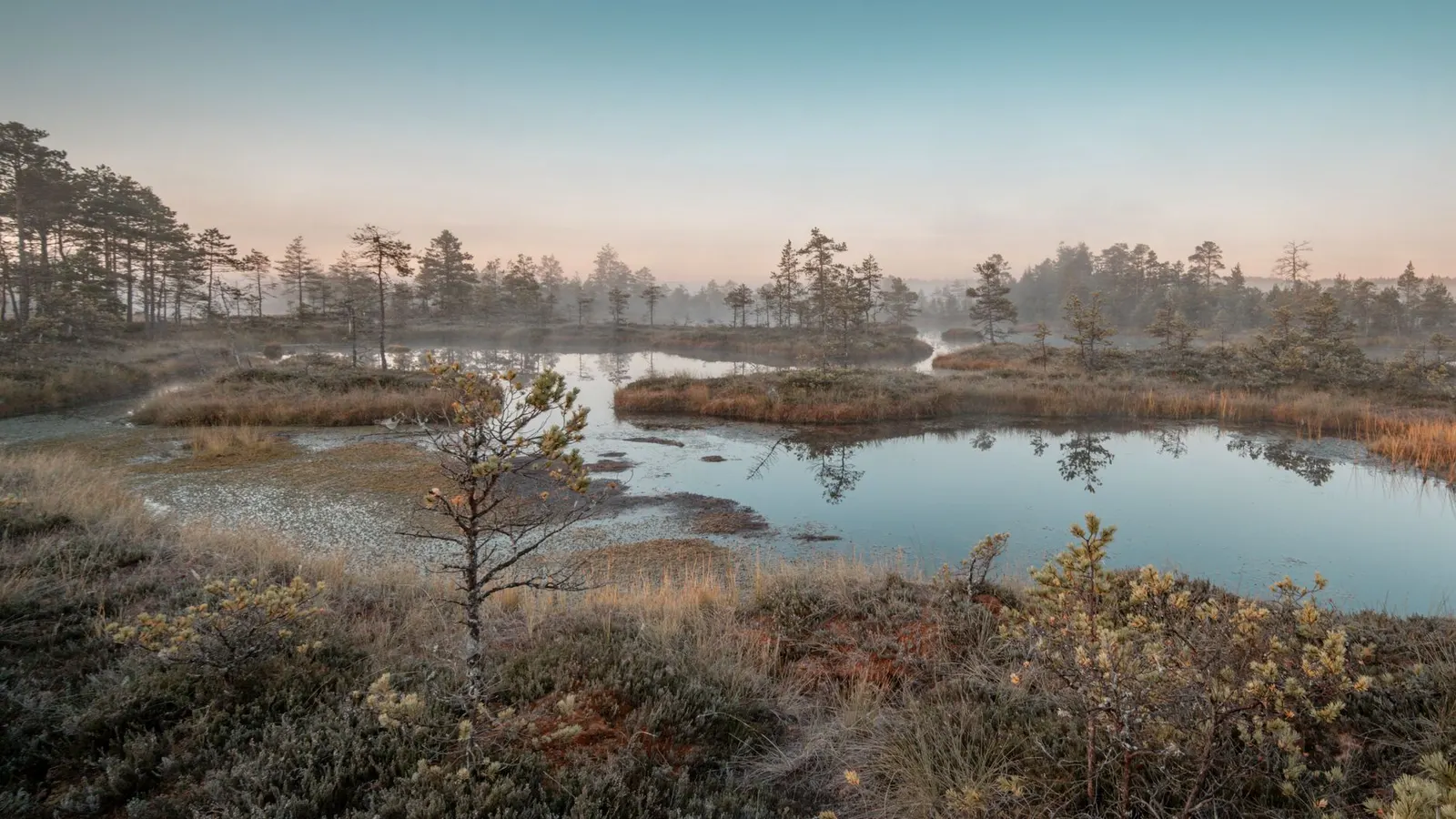
Estonia is small, flat and more than half forest, with around two thousand islands off a Baltic coast that is still rising out of the sea after the last ice age. Tallinn's old town is one of the most complete medieval Hanseatic centres in Europe and, unusually, a working part of the city rather than a preserved shell.
The other Estonia is the digital one - a state that runs almost entirely online, invented e-residency, and votes electronically. For a visitor that mostly shows up as everything being frictionless: free public transport in Tallinn for residents, contactless everywhere, and paperwork that does not exist. The landscape half is bogs with boardwalk trails, forests with lynx and bears, and islands where the pace drops several gears.
Chapter 01
Highlights
Tallinn old town
Intact medieval walls and towers, Toompea hill above and the merchant quarter below. Go at eight in the morning before the day-trippers from the Helsinki ferries arrive.
Lahemaa and the bogs
A national park of forest, manor houses and coastline an hour east of Tallinn, with boardwalk trails across raised bogs. Bog-shoeing in autumn is a genuine local pastime.
Saaremaa and Hiiumaa
The two big islands - windmills, a meteorite crater lake, spa towns and a slower pace. Reached by ferry and worth two or three days.
Tartu
The university town and intellectual capital, with a wooden-house quarter, the Estonian National Museum in a former Soviet airbase, and a student culture that keeps it lively.
Chapter 02
Entry requirements for Estonia
Checking your passport…
up to 90 days · free entry
90 days on arrival
Before you fly
The detail
- Maximum stay
- up to 90 days
- Fee
- free entry
- Passport validity
- Most destinations want validity beyond your stay, and some want six months. Check yours against the return date.
- Onward travel
- Airlines may ask for a return or onward ticket at check-in.
- Health
- No vaccinations required. Healthcare is good; EHIC/GHIC covers EU and UK visitors. Tick-borne encephalitis is prevalent in Estonian forests and vaccination is routine among residents - worth considering for extended time outdoors. Tap water is safe. Cold injury is the winter risk.
- Money
- Euro, and effectively cashless - cards work everywhere including at market stalls and on buses. Tipping is around 10 % and not obligatory. Estonia is the cheapest of the Nordic-adjacent countries but no longer inexpensive; prices have converged considerably with Finland.
Estonia asks a United States passport for no visa and no fee: 90 days in any rolling 180, and the allowance belongs to the twenty-nine-country Schengen area rather than to Estonia - the ferry from Helsinki, which most visitors arrive on, crosses no border and pauses nothing. The window rolls: count backwards 180 days from any date and add up every day you were anywhere in the area, arrival and departure days included. One clarification that belongs on this page more than on most: Estonian e-Residency is a digital identity for administering a company and confers no right to enter, live or stay in Estonia or anywhere else in the area. It is regularly mistaken for an immigration status, including by people who already hold one; a card in your wallet does not add a day to the ninety. The land border with Russia at Narva remains open in principle, but crossings have been restricted and Russian entry rules for foreign visitors have tightened substantially - do not plan a trip around it, and do not treat it as an exit that resets anything. Since 10 April 2026 the Entry/Exit System has been fully operational, after a phased start in October 2025: your first crossing records a facial image and fingerprints, the passport is no longer stamped, and the count is now kept by a machine rather than by an officer finding the right inky page. ETIAS was announced but not required at the time of writing; check when you book. Your passport must be valid three months beyond your intended departure from the Schengen area.
Check another destination with this passport →
Entry details: Editorial synthesis - Schengen Borders Code (Regulation 2016/399), Estonian Police and Border Guard Board guidance, EU Entry/Exit System rollout (2025–2026) · compiled 17 Sept 2026
Who needs a visa for Estonia
12 common passports| Passport | Requirement | Stay | Process |
|---|---|---|---|
| United States | Visa-free | up to 90 days | No process · €0 / $0 |
| United Kingdom | Visa-free | up to 90 days | No process · €0 / $0 |
| Germany | Visa-free | - | No process · €0 / $0 |
| India | Visa required | - | No Other passports record yet |
| China | Visa required | - | No Other passports record yet |
| Brazil | Visa-free | up to 90 days | No Other passports record yet |
| Nigeria | Visa required | - | No Other passports record yet |
| Indonesia | Visa required | - | No Other passports record yet |
| Philippines | Visa required | - | No Other passports record yet |
| Vietnam | Visa required | - | No Other passports record yet |
| Egypt | Visa required | - | No Other passports record yet |
| Nepal | Visa required | - | No Other passports record yet |
Holding a passport that is not listed? The picker above answers for any of them. See where your passport takes you. Source: Passport Index, updated 14 Aug 2026.
Chapter 03
When to go
BestMay–Aug. AvoidJan–Feb, November.
Green, mild and long-dayed - the season opens.
The band above each month is our editorial verdict - it weighs crowds, prices and access as well as weather. The line is average daily temperature, the bars are monthly rainfall. Select a month for the figures. Climate figures: ERA5 reanalysis via Open-Meteo, 2005–2024 normals.
Chapter 04
What it costs
A day in Estonia
Comfortable · sample day
≈ $92
Line items are real prices we track. The daily budget is an editorial estimate for this level, not their sum.
Where this sits among 244 countries we have costed
Tallinn rises from June to August and again for the Christmas market weeks; Pärnu and the islands fill in July and largely close from October to April. The rest of the year is materially cheaper. Prices have converged toward Finnish levels over the past decade and Estonia is no longer the bargain it was in 2010.
Updated Aug 2026 · Editorial synthesis - Statistics Estonia price data, operator fares, accommodation sampling (2025–2026) · confidence high
Excludes international flights - they depend on where you fly from.
Chapter 05
Regions to know
5Tallinn & the north
The medieval capital, Lahemaa national park with its bogs and manor houses, and the coastal cliffs east of the city.
The western islands
Saaremaa and Hiiumaa - windmills, a meteorite crater, lighthouses and juniper heathland.
Tartu & the south
The university city, Setomaa's distinct culture on the Russian border, and the country's only hills.
Pärnu & the west coast
The summer capital with its beach and spa tradition, plus Soomaa's flooded forest in the spring fifth season.
The east & Peipsi
Lake Peipsi's Old Believer villages, Narva's castle facing Russia across the river, and the Ida-Viru shale country.
Chapter 06
Practical guide
Getting there
Tallinn (TLL) takes flights from across Europe and is a compact, well-run airport 15 minutes from the centre by tram. Ferries from Helsinki cross in two hours and run constantly; ferries also reach Stockholm. Buses connect to Riga, Vilnius and St Petersburg historically, though the Russian route is suspended.
Getting around
Buses cover the country cheaply and comfortably and are the main option; the rail network reaches Tartu, Narva and Pärnu. Ferries serve the islands and need booking with a car in summer. Tallinn has trams and buses, and public transport is free for registered residents, which does not extend to visitors. A car is useful for Lahemaa and the islands.
Money & costs
Euro, and effectively cashless - cards work everywhere including at market stalls and on buses. Tipping is around 10 % and not obligatory. Estonia is the cheapest of the Nordic-adjacent countries but no longer inexpensive; prices have converged considerably with Finland.
Safety
Very safe with low crime. Petty theft in Tallinn old town in summer is the main risk. The genuine hazards are winter - ice, cold and very short days - and ticks in forests. The Russian border region around Narva is calm but sensitive; do not photograph border installations.
Health
No vaccinations required. Healthcare is good; EHIC/GHIC covers EU and UK visitors. Tick-borne encephalitis is prevalent in Estonian forests and vaccination is routine among residents - worth considering for extended time outdoors. Tap water is safe. Cold injury is the winter risk.
SIM & internet
EU roaming applies. Estonia has excellent connectivity - extensive free public wifi, fast mobile data and coverage in most forests. Everything administrative is online, which is occasionally a barrier for visitors without an Estonian digital ID.
Chapter 07
Driving
Winter tyres are legally required from December to March and studded tyres are normal. Elk and deer on rural roads at dawn and dusk are the main hazard. In hard winters, official ice roads open across the sea to the islands - they have their own rules including no seatbelts, so you can get out quickly.
Rules change - verify with an official source before you rent.
ExplWorld VerifiedNo verified partners here yet - all 6 country seats are open.
Become ExplWorld Verified →Chapter 08
Itineraries through this country
Chapter 09
From the Journal
Chapter 10
Before you go
EstoniaChapter 11
Frequently asked questions
How long do I need?
Tallinn is a long weekend. A week lets you add Lahemaa, Tartu and one island; ten days covers Saaremaa properly. The country is small - Tallinn to Tartu is two and a half hours, and nothing is more than four hours from anything.
Is it worth visiting in winter?
For Tallinn, yes - the Christmas market in the town-hall square is among the best in Europe and the old town in snow is remarkable. Days are very short, around six hours in December, and the islands and countryside largely close. The sea occasionally freezes solid enough for ice roads to the islands, which is a genuine local institution.
How does it compare with Latvia and Lithuania?
Estonia is the most Nordic of the three - closest to Finland in language and outlook, most digitised, slightly more expensive. Latvia has the grandest capital in Riga; Lithuania has the deepest Catholic and Polish-influenced history. All three are worth combining, and buses between the capitals take four to five hours.