Itinerary · Europe · 12 days · Easy
Estonia, East to West
Tallinn→Lennusadam, Tallinn→Käsmu→Kohtla-Nõmme→Narva→Tartu+6 stops
From a medieval Hanseatic capital to the oil-shale towns on the Russian border, down through the university city and the Seto villages, then west across the bogs to an island where the women run things. Twelve days, almost all of it on buses and trains that cost less than lunch.
Tallinn old town
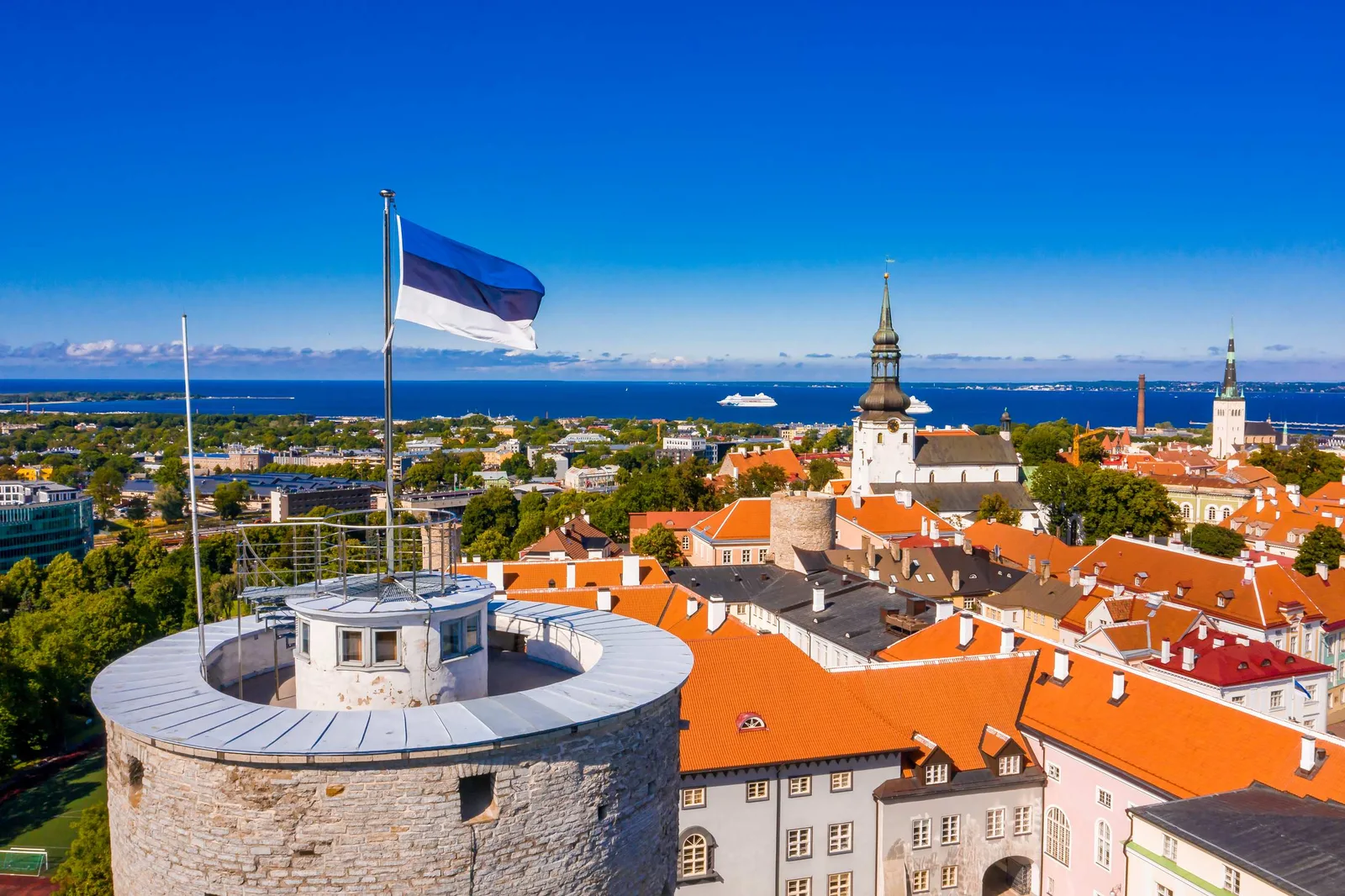
One of the most complete medieval town centres in northern Europe, and unusually a working part of the city rather than a preserved shell. Do it early: the ferries from Helsinki dock through the morning and Raekoja plats is a different place by eleven. Toompea for the layout, the lower town for the merchant houses, and the walls, which are still mostly standing.
Kalamaja, Lennusadam and Patarei
The wooden-house district north of the walls, which was the workers' quarter and is now where Tallinn eats. The Seaplane Harbour hangars were poured in 1916 as thin concrete shells for the Tsar's naval fortress and hold the submarine Lembit, built in Britain in 1936. Patarei, a sea fortress that served as a prison from 1920 until 2002, is along the shore; it opened in June 2026 as the memorial museum to the victims of communism, and it is not a comfortable hour.
Lahemaa: the bog and the captains' village
East into the first national park the Soviet Union ever designated, in 1971. The Viru bog boardwalk is a flat three and a half kilometres over raised peat with an observation tower in the middle; go at first light or after five. Käsmu on the coast produced so many ships' masters that it was known as the captains' village, and half the houses were built on smuggling.
Into the shale country
Further east into Ida-Virumaa, which is where Estonia dug its energy out of the ground for a century. At Kohtla-Nõmme you go underground in a real mine with a former miner, on the mine train, to a working face. Twenty minutes away the hill above Kiviõli is spent shale - a hundred-odd metres of industrial waste with a ski slope, a tubing run and a motocross track on it.
Narva and the coast
Narva was almost entirely destroyed in 1944 and rebuilt as a Soviet town for workers brought in from across the union, which is why it is still overwhelmingly Russian-speaking. Hermann castle faces the fortress of Ivangorod across the river at a distance you could shout over. Sillamäe on the way is worth the stop: a closed town built to process uranium ore, laid out in Stalinist classicism with a staircase down to a sea it was not allowed to look at.
South to Tartu
A transfer day across the middle of the country, most of it forest. Tartu is the university town - the university was founded in 1632 by the Swedish crown - and it has the student population, the bookshops and the arguments to go with it. It was European Capital of Culture in 2024 and has not quite come down from it.
Tartu: Raadi and Supilinn
The Estonian National Museum stands on the Raadi airfield, a Soviet bomber base that made this a closed city, and the building is deliberately aligned on the old runway - the roof lifts off the tarmac and keeps going. Then Toomemägi above the town, and Supilinn, the Soup Town, where the streets are named after vegetables and the wooden houses were slums within living memory.
Piusa and Setomaa
South-east to the corner the maps argue about. The Piusa caves are abandoned glass-sand mines, now the largest bat wintering site in the Baltics - the galleries are closed but the guided tour goes into one of them. Around them is Setomaa, Orthodox rather than Lutheran, with its own language and a polyphonic singing tradition, leelo, on the UNESCO list since 2009. The 1945 border put a large part of the Seto homeland on the Russian side.
West to Viljandi
A long bus day back across the south, changing in Tartu. Viljandi sits on a ridge above a lake with the ruins of a Livonian Order castle falling into it, and it is the folk music capital of the country - the festival at the end of July puts more visits through the town than its seventeen thousand residents. Book that week months ahead or come in a different one.
Soomaa
Forty kilometres west into the bogs. Soomaa floods every spring when the snowmelt has nowhere to go and the locals call it the fifth season, when roads disappear and people move about by boat. The boat is a haabjas, a single log opened out with steam and water, and the practice went on the UNESCO intangible list in 2021. Out of flood season, walk the Riisa bog trail and take a canoe on the Raudna.
Pärnu
The seaside town, which has been a spa since the 1830s and still runs on mud baths and sanatoria as much as on beach holidays. A shallow, slow-warming bay, a long wooden pier, and a summer population several times the winter one. Good day to do nothing before the boat.
Kihnu
The ferry from Munalaid crosses in about an hour to an island of under seven hundred people where the men were away at sea for months and the women kept everything else running - farms, church, songs, funerals. The striped woollen skirt is still worn daily and its colours still carry meaning. Rent a bike or accept a lift in a sidecar, and either take the late boat back to Pärnu or stay the night and leave in the morning.
Good to know
Buses do almost everything here and they are cheap - Tallinn to Tartu is around ten euros - but the national booking site, tpilet.ee, and the train operator Elron sell entirely separate networks and do not show each other's services, so check both before assuming a leg is impossible. Long-distance buses fill on Friday afternoons and Sunday evenings; the rest of the week you can turn up. The Kihnu ferry is weather-dependent and drops to a skeleton timetable outside summer, so never plan it as the day before a flight. Tallinn's public transport is free for registered residents only - visitors pay, and the ticket machine will not explain this to you. Shops may only sell alcohol between 10am and 10pm, which catches people out on the way to a bog. Tick-borne encephalitis is genuinely present in Estonian forests and Estonians vaccinate against it; if you are walking off boardwalks for two weeks, ask a doctor before you come. Winter is a different trip: six hours of daylight in December, most island and countryside services closed, and the ice roads to the islands open only when the Transport Administration says the ice is thick enough, which is not a thing you can put in a plan.
Shorter or longer?
Five more days for Saaremaa and Hiiumaa. From Pärnu the bus runs to Kuressaare via the Virtsu ferry in about three and a half hours; the Kaali meteorite crater, the Panga cliff and the Sõrve peninsula fill three days, and a second ferry gets you to Hiiumaa without going back to the mainland.
Tallinn, Lahemaa, Kohtla-Nõmme and Narva, then straight to Tartu and out. Keeps the two things nowhere else in Europe has - the medieval town and the shale country - and drops the south and the coast entirely.
Practical guide
Visa check for this route
Budget
Mid-range · per person · sharing a double room. Excludes international flights - they depend on where you fly from.
Editorial estimates · checked August 2026
Country guides
Trip essentials
The connectivity placement is our own eSIM store. No affiliate link on this list. How we choose these →