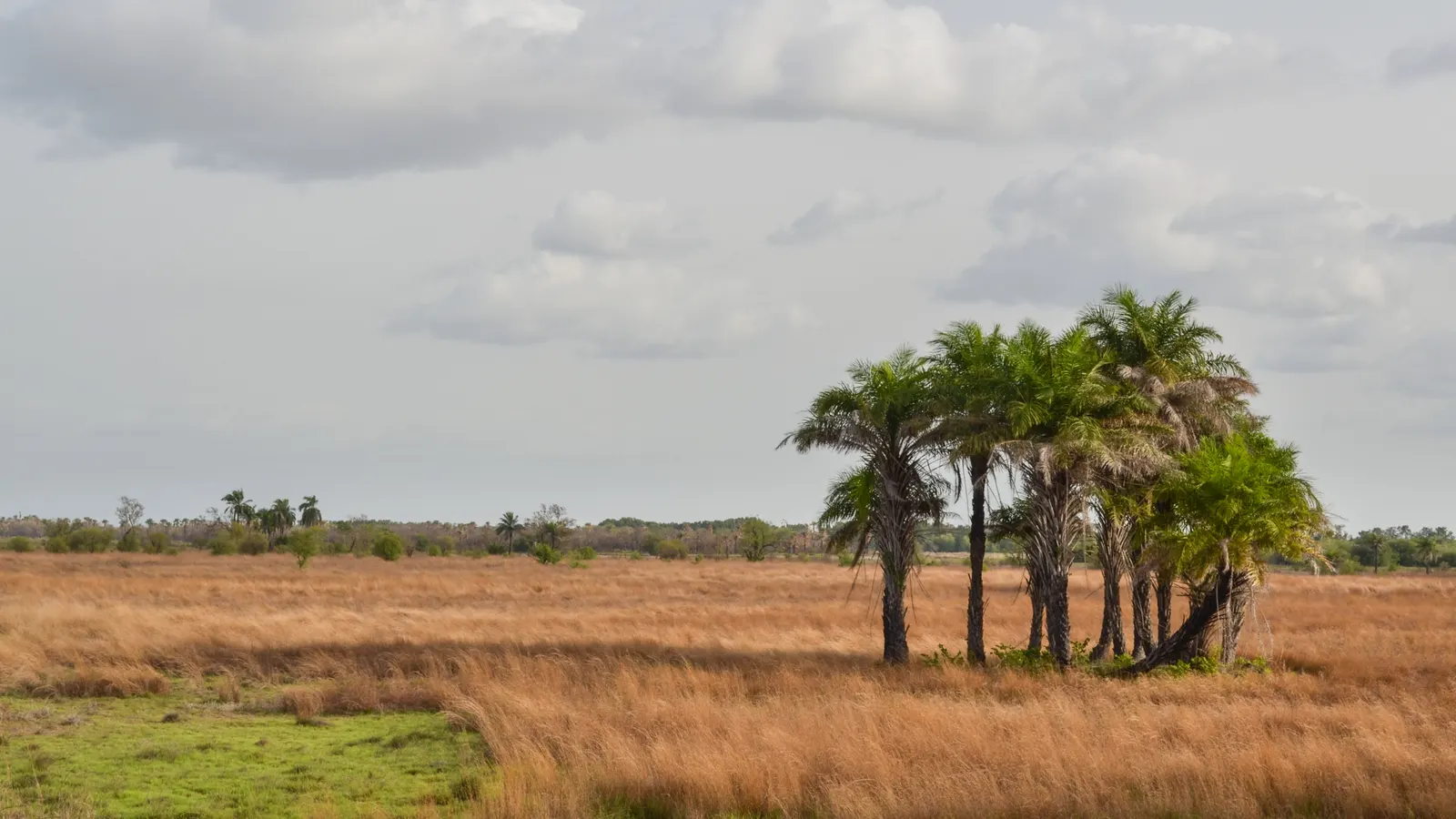
 jbdodane · CC BY 2.0
Country Guide № 070 / 194 · Africa
Guinea-Bissau
Eighty-eight islands, saltwater hippos and the most under-visited archipelago in West Africa.
“Eighty-eight islands, saltwater hippos and the most under-visited archipelago in West Africa.”
The Bijagós archipelago is 88 islands off the Guinea-Bissau coast, about twenty of them permanently inhabited, and it is unlike anywhere else in West Africa. The Bijagó people run a society in which women choose their husbands and initiate the most important religious ceremonies, and the islands were never fully brought under Portuguese control. Orango has hippos that swim in salt water between islands; Poilão hosts one of the largest green turtle nesting colonies in the Atlantic.
The mainland is small, flat and green, with mangrove creeks, the Cantanhez forest holding chimpanzees at the northwestern edge of their range, and Bissau's decaying Portuguese colonial centre. The country has had repeated coups since independence in 1974 and has been described as a narco-transit state; infrastructure is minimal and Portuguese and Creole are what get you through. Almost nobody goes, which is the point for some travellers and the problem for others.
Chapter 01
Highlights
The Bijagós archipelago
A UNESCO biosphere reserve of 88 mangrove and forest islands with matriarchal Bijagó society, sacred sites, and boat travel between them by pirogue. Bubaque is the practical base.
Orango Islands National Park
Saltwater hippos that swim between islands and graze on the shorelines - a population found in this form almost nowhere else - plus manatees and enormous birdlife.
Poilão turtle nesting
One of the largest green turtle rookeries in the Atlantic, with thousands nesting between July and October on a sacred island where access is restricted by Bijagó custom as much as by park rules.
Cantanhez forest
Community-managed forest in the far south holding chimpanzees at the northwestern limit of their range, plus colobus and forest elephants passing through from Guinea.
Chapter 02
Entry requirements for Guinea-Bissau
Checking your passport…
up to 90 days · €85 / $92 · visa on arrival
90 days on arrival
Before you fly
The detail
- Maximum stay
- up to 90 days
- Process
- visa on arrival
- Fee
- €85 / $92
- Passport validity
- Most destinations want validity beyond your stay, and some want six months. Check yours against the return date.
- Onward travel
- Airlines may ask for a return or onward ticket at check-in.
- Health
- Yellow fever certificate compulsory for entry. Malaria year-round nationwide and high on the islands. Cholera outbreaks occur. Medical facilities are among the most limited in the region; evacuation insurance is essential and evacuation from the islands is slow.
- Money
- CFA franc, pegged to the euro. Cash only in practice. ATMs in Bissau; nothing on the islands, so draw everything you need before leaving the capital. Cards essentially do not work.
Guinea-Bissau issues the visa at the counter. A United States passport is not exempt, and the route that has been continuously available is the one at Osvaldo Vieira in Bissau on arrival: you queue, you pay, you are stamped in. The fee is charged in CFA francs and is of the order of 55,000, about €85 - the CFA is pegged to the euro so the figure does not move with the exchange rate, but the amount itself has changed more than once, so carry more than you expect to need and carry it in cash. Nothing here runs on a card. Guinea-Bissau has operated an online pre-authorisation at various points and it has not been reliably reachable; if it is working when you book it will shorten the queue, but do not build the trip on it, and do not pay an intermediary who says they can obtain one for you - several sites advertise a Guinea-Bissau e-visa and none of them is the government. Ask for the period you actually need when the visa is written rather than assuming the maximum; it is not always issued for the full term and extending it means a visit to the immigration service in Bissau. The land crossings - São Domingos from Senegal, Boké from Guinea - are the part to plan around: issuing a visa at a land post is inconsistent, so arrange one at the Guinea-Bissau embassy in Dakar or Conakry before you cross rather than arriving at a barrier and hoping. The passport wants six months of validity beyond arrival. Citizens of the Economic Community of West African States move freely into Guinea-Bissau and need neither a visa nor an authorisation. That is a right of movement under the ECOWAS protocol rather than a concession granted to visitors, which is why a West African travelling companion may be waved through the same counter that asks you to pay. A yellow fever certificate is a condition of entry to Guinea-Bissau for every arrival, not only for travellers coming from an affected country, and it is checked before immigration rather than after - a missing certificate is dealt with at the airport, at your expense and occasionally by vaccination on the spot. The injection has to be given at least ten days before you travel for the certificate to be valid, which is the part that catches a late booking; the certificate itself then lasts a lifetime. It is also what the next country will want if you spend MORE than twelve hours in an airport here on the way to it.
Check another destination with this passport →
Entry details: Editorial synthesis - Guinea-Bissau Serviço de Migração e Fronteiras visa-on-arrival practice, regional mission guidance (2025–2026) · compiled 18 Sept 2026
Who needs a visa for Guinea-Bissau
12 common passports| Passport | Requirement | Stay | Process |
|---|---|---|---|
| United States | Visa on arrival | - | Visa on arrival · €85 / $92 |
| United Kingdom | Visa on arrival | - | Visa on arrival · €85 / $92 |
| Germany | Visa on arrival | - | Visa on arrival · €85 / $92 |
| India | Visa on arrival | - | Visa on arrival · €85 / $92 |
| China | Visa on arrival | - | Visa on arrival · €85 / $92 |
| Brazil | Visa on arrival | - | Visa on arrival · €85 / $92 |
| Nigeria | Visa-free | - | Visa on arrival · €85 / $92 |
| Indonesia | Visa on arrival | - | Visa on arrival · €85 / $92 |
| Philippines | Visa on arrival | - | Visa on arrival · €85 / $92 |
| Vietnam | Visa on arrival | - | Visa on arrival · €85 / $92 |
| Egypt | Visa on arrival | - | Visa on arrival · €85 / $92 |
| Nepal | Visa on arrival | - | Visa on arrival · €85 / $92 |
Holding a passport that is not listed? The picker above answers for any of them. See where your passport takes you. Source: Passport Index, updated 14 Aug 2026.
Chapter 03
When to go
BestNov–Mar. AvoidMay–Sep.
Dry and warm; the best month for the islands.
The band above each month is our editorial verdict - it weighs crowds, prices and access as well as weather. The line is average daily temperature, the bars are monthly rainfall. Select a month for the figures. Climate figures: ERA5 reanalysis via Open-Meteo, 2005–2024 normals.
Chapter 04
What it costs
A day in Guinea-Bissau
Comfortable · sample day
≈ $84
Line items are real prices we track. The daily budget is an editorial estimate for this level, not their sum.
Where this sits among 244 countries we have costed
Island accommodation operates mainly from November to May and much of it closes in the rains. The archipelago also draws a small sport-fishing trade that pushes prices up in the dry season.
Updated Aug 2026 · Editorial synthesis - market sampling and operator quotes (2025–2026) · confidence low
Excludes international flights - they depend on where you fly from.
Chapter 05
Regions to know
5Bissau
The capital - the decaying Portuguese Bissau Velho quarter, the Bandim market and the harbour.
The Bijagós
Bubaque, Orango's hippos, Poilão's turtles and the outer islands reached by pirogue.
The northwest
Varela's empty beaches near the Senegalese border, and the Cacheu mangroves and old slave fort.
The south
Cantanhez forest, its chimpanzees and the creeks and rice paddies around Catió and Quinhámel.
The east
Bafatá, Gabú and the drier savanna towards Guinea and Senegal.
Chapter 06
Practical guide
Getting there
Bissau Osvaldo Vieira is served by TAP from Lisbon, Royal Air Maroc, ASKY and Air Senegal. Overland from Senegal at São Domingos and from Guinea at Boké; both crossings are slow.
Getting around
Bush taxis and minibuses on the mainland; the roads are flat but poor and become difficult in the rains. To the islands, ferries and pirogues from Bissau, governed by tides. Nothing runs to a published timetable.
Money & costs
CFA franc, pegged to the euro. Cash only in practice. ATMs in Bissau; nothing on the islands, so draw everything you need before leaving the capital. Cards essentially do not work.
Safety
Low crime against visitors. Political instability and periodic coup attempts. Sea travel in overloaded pirogues is a genuine risk - refuse a boat that looks wrong, and note that life jackets are rare.
Health
Yellow fever certificate compulsory for entry. Malaria year-round nationwide and high on the islands. Cholera outbreaks occur. Medical facilities are among the most limited in the region; evacuation insurance is essential and evacuation from the islands is slow.
SIM & internet
MTN and Orange; SIM registration requires a passport. Coverage in Bissau and the main towns; patchy on Bubaque and absent on the outer islands.
Chapter 07
Driving
Mainland roads are flat but heavily potholed and deteriorate badly in the rains. Few visitors drive themselves. Checkpoints are frequent and may seek informal payments.
Rules change - verify with an official source before you rent.
ExplWorld VerifiedNo verified partners here yet - all 6 country seats are open.
Become ExplWorld Verified →Chapter 08
Itineraries through this country
Photographs: jbdodane (CC BY 2.0)
Chapter 09
From the Journal
Chapter 10
Before you go
Guinea-BissauChapter 11
Frequently asked questions
How do I reach the islands?
Public ferries and pirogues from Bissau to Bubaque run on an irregular schedule, taking several hours. Charter boats are faster and much more expensive. Once on Bubaque, onward travel to Orango or the outer islands is by arranged pirogue. Tides govern everything, so nothing runs to a clock.
What should I know about the Bijagó?
Many sites in the archipelago are sacred and access is governed by community decision, not by park regulation. Ask, accept a no, and do not photograph ceremonies or people without permission. Visiting through a community-linked operator is both the practical and the right way to do it.
Is it stable?
Politically, not reliably - there have been repeated coups and attempted coups, most recently in the 2020s, and demonstrations occur. For visitors, ordinary crime is low and the main practical constraints are infrastructure, transport and health facilities rather than security. Check advisories before booking.