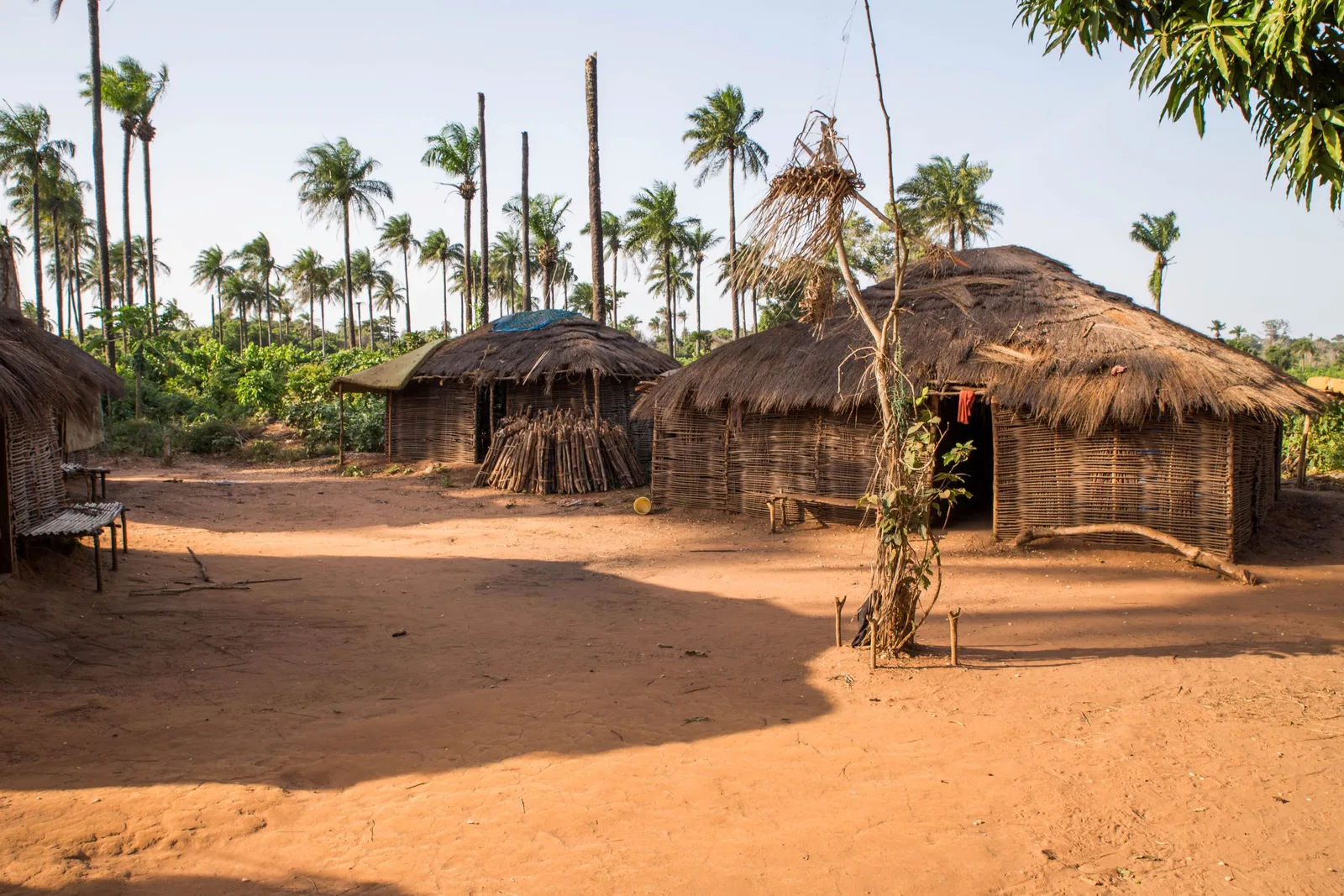
 Damian / stock.adobe.com
Country Guide № 069 / 194 · Africa
Guinea
The water tower of West Africa - where the Niger, Senegal and Gambia rivers all begin.
“The water tower of West Africa - where the Niger, Senegal and Gambia rivers all begin.”
Four major West African rivers rise in Guinea - the Niger, the Senegal, the Gambia and the Konkouré - which is why it is called the region's water tower. The Fouta Djallon highlands in the middle of the country are green sandstone plateaux cut by gorges and waterfalls, with genuinely good hiking between Fulani villages at altitudes cool enough to sleep comfortably.
Guinea was the only French African colony to vote for immediate independence in 1958, and France withdrew abruptly and comprehensively. Under Sékou Touré, Les Ballets Africains carried Guinean percussion and dance around the world; the djembé tradition here is the source of what is taught in drumming schools everywhere. Politically the country has been through coups as recently as 2021, and the practical difficulties of travel - roads, power, bureaucracy - are substantial.
Chapter 01
Highlights
Fouta Djallon
Sandstone highlands around Labé, Pita and Dalaba with the Kambadaga and Ditinn falls, the Chutes du Kinkon and hiking routes between Fulani villages. The best trekking country in West Africa.
Mount Nimba
A UNESCO-listed range on the Liberian and Ivorian border with high-altitude grassland, viviparous toads found nowhere else and forest below. Access is restricted and requires permits.
Conakry and the Îles de Los
The peninsula capital with the Grand Mosque and the national museum, and the Îles de Los offshore - beaches and forest a short boat ride from the city.
The djembé tradition
Guinea is where Les Ballets Africains and the state ensembles formalised a percussion and dance tradition that spread worldwide. Drumming courses in Conakry and the Fouta run for weeks at a time.
Chapter 02
Entry requirements for Guinea
Checking your passport…
up to 90 days · €90 / $97 · e-visa
90 days on arrival
Official portal only
Paid look-alike sites charge for a process that is free or cheap on the government portal. Use the link below and nothing else.
paf.gov.gn →Before you fly
The detail
- Maximum stay
- up to 90 days
- Process
- e-visa
- Fee
- €90 / $97
- Processing time
- Processing takes 3–15 days - apply with room to spare.
- Passport validity
- Most destinations want validity beyond your stay, and some want six months. Check yours against the return date.
- Onward travel
- Airlines may ask for a return or onward ticket at check-in.
- Health
- Yellow fever certificate compulsory for entry. Malaria year-round nationwide. Cholera outbreaks occur. Medical facilities are very limited; evacuation insurance is essential.
- Money
- The Guinean franc in cash, in large bundles - the largest note is worth only a few euros. ATMs in Conakry are limited and often out of service for foreign cards. Bring euros and change at a bank or licensed bureau.
Guinea requires a visa of a United States passport and the route is electronic: the application is made before travel on the portal run by the Police de l’Air et des Frontières, the border police, and the visa is issued or confirmed on arrival at Conakry against the approval you bring with you. Apply well before you fly - three days is the fast case and a fortnight is not unusual - and travel with the approval PRINTED as well as on the phone, because the arrivals hall is not a place to be hunting for a PDF and a land crossing may have no way to look one up at all. Budget around €90 for a short single-entry stay, and check the current figure on the portal itself rather than on any account of it, this one included: the fee and the portal’s own behaviour have both changed more than once since 2021 and there is no reason to expect them to have stopped. Nobody needs an intermediary to complete the form, and the sites that charge a premium to do it are connected to the government in no way. Overland from Senegal, Mali, Sierra Leone, Liberia or Côte d’Ivoire is possible and slow; carry the printed approval, expect checkpoints on the road afterwards, and do not drive at night. The passport wants six months of validity beyond arrival. Citizens of the Economic Community of West African States move freely into Guinea and need neither a visa nor an authorisation. That is a right of movement under the ECOWAS protocol rather than a concession granted to visitors, which is why a West African travelling companion may be waved through the same counter that asks you to pay. A yellow fever certificate is a condition of entry to Guinea for every arrival, not only for travellers coming from an affected country, and it is checked before immigration rather than after - a missing certificate is dealt with at the airport, at your expense and occasionally by vaccination on the spot. The injection has to be given at least ten days before you travel for the certificate to be valid, which is the part that catches a late booking; the certificate itself then lasts a lifetime. It is also what the next country will want if you spend MORE than twelve hours in an airport here on the way to it.
Check another destination with this passport →
Entry details: Editorial synthesis - Guinean Police de l’Air et des Frontières e-visa terms and published fee schedule (2025–2026) · compiled 18 Sept 2026
Who needs a visa for Guinea
12 common passports| Passport | Requirement | Stay | Process |
|---|---|---|---|
| United States | e-Visa | - | e-Visa · €90 / $97 · 3–15 d |
| United Kingdom | e-Visa | - | e-Visa · €90 / $97 · 3–15 d |
| Germany | e-Visa | - | e-Visa · €90 / $97 · 3–15 d |
| India | e-Visa | - | e-Visa · €90 / $97 · 3–15 d |
| China | e-Visa | - | e-Visa · €90 / $97 · 3–15 d |
| Brazil | e-Visa | - | e-Visa · €90 / $97 · 3–15 d |
| Nigeria | Visa-free | - | e-Visa · €90 / $97 · 3–15 d |
| Indonesia | e-Visa | - | e-Visa · €90 / $97 · 3–15 d |
| Philippines | e-Visa | - | e-Visa · €90 / $97 · 3–15 d |
| Vietnam | e-Visa | - | e-Visa · €90 / $97 · 3–15 d |
| Egypt | Visa-free | - | e-Visa · €90 / $97 · 3–15 d |
| Nepal | e-Visa | - | e-Visa · €90 / $97 · 3–15 d |
Holding a passport that is not listed? The picker above answers for any of them. See where your passport takes you. Source: Passport Index, updated 14 Aug 2026.
Chapter 03
When to go
BestNov–Feb. AvoidMay–Sep.
Dry and cooler; the best month for the Fouta.
The band above each month is our editorial verdict - it weighs crowds, prices and access as well as weather. The line is average daily temperature, the bars are monthly rainfall. Select a month for the figures. Climate figures: ERA5 reanalysis via Open-Meteo, 2005–2024 normals.
Chapter 04
What it costs
A day in Guinea
Comfortable · sample day
≈ $73
Line items are real prices we track. The daily budget is an editorial estimate for this level, not their sum.
Where this sits among 244 countries we have costed
Conakry rates are driven by the mining and NGO sectors and barely move. Fouta guesthouse prices are flat year-round.
Updated Aug 2026 · Editorial synthesis - market sampling and operator quotes (2025–2026) · confidence low
Excludes international flights - they depend on where you fly from.
Chapter 05
Regions to know
5Conakry and the coast
The peninsula capital, the Îles de Los, and the mangrove coast north and south.
Basse-Guinée
Kindia, the Voile de la Mariée falls and the bauxite country between the coast and the highlands.
The Fouta Djallon
Labé, Pita, Dalaba and Mali-ville - waterfalls, gorges, cool nights and the country's best hiking.
Haute-Guinée
Kankan, the upper Niger and the dry savanna towards the Malian border.
Guinée Forestière
Nzérékoré, the Ziama massif and Mount Nimba in the far southeast - rainforest and endemic species.
Chapter 06
Practical guide
Getting there
Conakry Ahmed Sékou Touré is served by Air France, Brussels Airlines, Turkish, Royal Air Maroc, Ethiopian and ASKY. Overland from Senegal, Mali, Sierra Leone, Liberia and Côte d'Ivoire; crossings are slow and conditions vary.
Getting around
Shared taxis and minibuses cover the country; the Conakry–Mamou–Labé road is the main artery. A hired 4x4 with driver is the practical way to see the Fouta properly. Domestic flights are minimal.
Money & costs
The Guinean franc in cash, in large bundles - the largest note is worth only a few euros. ATMs in Conakry are limited and often out of service for foreign cards. Bring euros and change at a bank or licensed bureau.
Safety
Petty crime and armed robbery in Conakry, particularly at night. Political demonstrations can turn violent quickly. Checkpoints are frequent and may seek informal payments. Road safety is poor; do not travel at night.
Health
Yellow fever certificate compulsory for entry. Malaria year-round nationwide. Cholera outbreaks occur. Medical facilities are very limited; evacuation insurance is essential.
SIM & internet
Orange, MTN and Cellcom; SIM registration requires a passport. 4G in Conakry and the larger towns. Internet restrictions have been imposed during periods of unrest.
Chapter 07
Driving
Conakry's peninsula geography funnels all traffic onto one congested axis. Roads outside the main corridors are poor and often impassable in the rains. Hire a driver rather than self-driving.
Rules change - verify with an official source before you rent.
ExplWorld VerifiedNo verified partners here yet - all 6 country seats are open.
Become ExplWorld Verified →Chapter 08
Itineraries through this country
Chapter 09
From the Journal
Chapter 10
Before you go
GuineaChapter 11
Frequently asked questions
How difficult is travel here?
Genuinely difficult. Roads outside the Conakry–Kindia–Mamou axis are poor and much worse in the rains; power cuts are constant; French is essential; and bureaucracy at checkpoints and offices takes time. It rewards patience and a flexible schedule, and is not a good first trip to the region.
What is the political situation?
A military junta took power in a 2021 coup and a transition has been repeatedly extended. Demonstrations occur and have turned violent, and internet restrictions have been imposed. Check your government's current advisory, avoid political gatherings, and register with your embassy if it has a presence.
When should I visit the Fouta?
November to April is dry and the trekking is at its best, though the waterfalls are lower. Late in the rains - September and October - the falls are spectacular and the trails muddy. December to February has cool nights at altitude, which is a relief anywhere in the region.