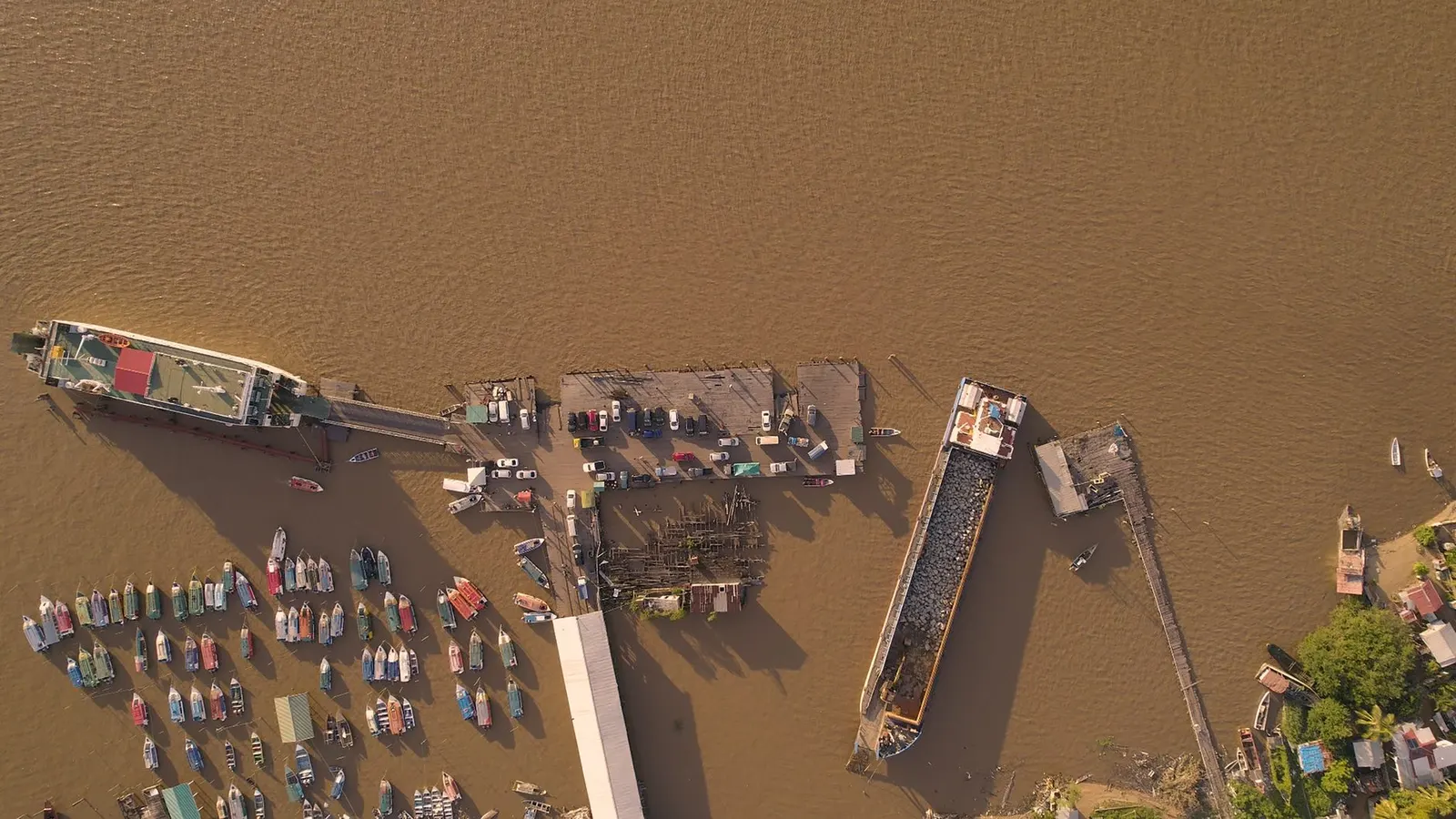
 Saliem Moeslan · Pexels License
Country Guide № 071 / 194 · South America
Guyana
South America's last frontier - one giant waterfall, a million acres of green.
“South America's last frontier - one giant waterfall, a million acres of green.”
Guyana sits on the South American mainland but faces the Caribbean: English is the official language, cricket is the religion, and the coastal culture - Indo-Guyanese roti shops, Afro-Guyanese rhythm, colonial wooden cathedrals - feels like Port of Spain transplanted onto a muddy Atlantic shore. Behind that coastal strip lies the point: pristine rainforest and savannah covering most of the country, with fewer annual visitors than Machu Picchu receives in a week.
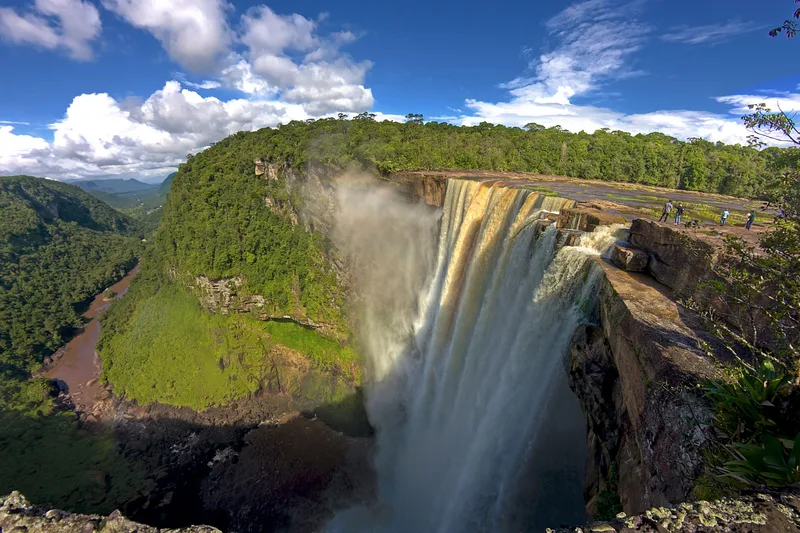
The set piece is Kaieteur - a single 226-metre drop of tea-coloured water into a jungle gorge, usually shared with a dozen other people. Beyond it, the Rupununi savannah offers ranch stays, giant river otters and giant anteaters, and Iwokrama's canopy walkway puts you at eye level with the forest. It is logistics-heavy and not cheap for the region - that is precisely why it still feels like discovery.
Chapter 01
Highlights
Kaieteur Falls
The world's largest single-drop waterfall by volume - 226 m of amber water into pristine gorge, reached by light aircraft over unbroken forest. No railings, no queues, often no other plane.
Rupununi savannah
Golden grassland dotted with Amerindian villages and working ranches - ride out from Karanambu or Waikin for giant anteaters, black caimans and river otters.
Iwokrama canopy walkway
A 30-metre-high walkway through a million-acre living laboratory of rainforest; red howlers at dawn, and one of the world's best chances of a wild jaguar crossing the road.
Georgetown
Wooden colonial capital below sea level - St George's Cathedral, the Stabroek Market clock tower, seawall limes at sunset and the best roti and pepperpot in the Caribbean.
Chapter 02
Entry requirements for Guyana
Checking your passport…
up to 90 days · free entry
90 days on arrival
Before you fly
The detail
- Maximum stay
- up to 90 days
- Fee
- free entry
- Passport validity
- Most destinations want validity beyond your stay, and some want six months. Check yours against the return date.
- Onward travel
- Airlines may ask for a return or onward ticket at check-in.
- Health
- Yellow fever vaccination is expected (and required if arriving from endemic countries) - carry the certificate. Malaria is a genuine consideration for interior stays: discuss prophylaxis before travel, and layer repellent regardless for dengue. Drink bottled or treated water outside good Georgetown hotels. Medical care beyond the capital is minimal and evacuation is by air - insurance with medevac cover is a condition of the trip, not an option.
- Money
- Guyanese dollars (roughly GYD 240 to the euro); US dollars are widely accepted and often quoted for tourism. Cards work at Georgetown hotels and better restaurants - the interior is cash-only, and there are no ATMs beyond the coast, so carry the full interior budget in notes (USD or GYD) before flying inland. Cambios give better rates than banks. Tipping ~10 % where service isn't added.
No visa and no form to file before you fly: a US passport is admitted on arrival and the officer writes the number of days granted into the stamp, up to 90. Read it before you leave the hall, because the figure is discretionary and thirty days is as common as ninety for a visitor who cannot say where they are going next. Two things are asked at the desk often enough to be worth having ready rather than improvising - a ticket out of the country and an address for the first night - and the airline will ask for the onward ticket at check-in before Guyana ever gets the chance. Extensions are handled at the Central Immigration and Passport Office in Georgetown and are routine if you go early rather than in the last few days. A yellow fever certificate is a condition of entry if you are arriving from a country where the disease is present, and a transit counts once it runs beyond twelve hours in the airport of such a country, so check it against your actual routing rather than against the country you think of yourself as coming from. Six months of passport validity.
Check another destination with this passport →
Entry details: Editorial synthesis - Guyana Ministry of Home Affairs, Central Immigration and Passport Office, WHO International Health Regulations yellow fever requirements (2025–2026) · compiled 18 Sept 2026
Who needs a visa for Guyana
12 common passports| Passport | Requirement | Stay | Process |
|---|---|---|---|
| United States | Visa-free | up to 90 days | No process · €0 / $0 |
| United Kingdom | Visa-free | up to 90 days | No process · €0 / $0 |
| Germany | Visa-free | up to 90 days | No process · €0 / $0 |
| India | e-Visa | - | No Other passports record yet |
| China | e-Visa | - | No Other passports record yet |
| Brazil | Visa-free | up to 90 days | No Other passports record yet |
| Nigeria | e-Visa | - | No Other passports record yet |
| Indonesia | Visa-free | up to 30 days | No Other passports record yet |
| Philippines | e-Visa | - | No Other passports record yet |
| Vietnam | e-Visa | - | No Other passports record yet |
| Egypt | e-Visa | - | No Other passports record yet |
| Nepal | e-Visa | - | No Other passports record yet |
Holding a passport that is not listed? The picker above answers for any of them. See where your passport takes you. Source: Passport Index, updated 15 Aug 2026.
Chapter 03
When to go
BestFeb–Apr, Sep–Nov.
First dry window opens; good all-round access.
The band above each month is our editorial verdict - it weighs crowds, prices and access as well as weather. The line is average daily temperature, the bars are monthly rainfall. Select a month for the figures. Climate figures: ERA5 reanalysis via Open-Meteo, 2005–2024 normals.
Chapter 04
What it costs
A day in Guyana
Comfortable · sample day
≈ $97
Line items are real prices we track. The daily budget is an editorial estimate for this level, not their sum.
Where this sits among 244 countries we have costed
Prices are driven by logistics, not season: interior flights and full-board lodges cost the same year-round, but the wet seasons (May–July, December–January) can force costly rebookings when airstrips or savannah roads close. Georgetown hotels spike for cricket internationals and the Easter Rupununi Rodeo. Coastal street food and minibuses stay cheap in any month - the budget divide is coast versus interior, roughly 1:3.
Updated Aug 2026 · Editorial synthesis - operator/lodge published rates, Budget Your Trip, regional travel cost guides (2025–2026) · confidence medium
Excludes international flights - they depend on where you fly from.
Chapter 05
Regions to know
5Georgetown & the coast
The wooden capital, seawall sunsets and the market din of Stabroek - plus Dutch-era canals draining a coast that sits below the Atlantic.
Kaieteur & the Potaro highlands
The great fall and its gorge, golden frogs in the bromeliads, and the tepui-fringed wilderness of the Pakaraima foothills.
Iwokrama & the rainforest corridor
A million protected acres on the Essequibo: canopy walkway, Turtle Mountain, and the jaguar-crossed road to the south.
The Rupununi
Savannah, ranches and Amerindian villages toward the Brazilian border - Karanambu's otters, Surama's community lodge, rodeo at Easter.
The Essequibo & river country
The third-biggest river system on the continent: island forts from the Dutch era, river lodges and boat days out of Bartica.
Chapter 06
Practical guide
Getting there
No direct flights from Europe: connect via New York, Miami, Toronto or Caribbean hubs (Port of Spain, Barbados) to Georgetown's Cheddi Jagan airport (GEO), 41 km south of town - 16–20 hours from Central Europe with one or two stops. Overland arrivals exist from Brazil (Bonfim–Lethem) and by ferry from Suriname (South Drain–Moleson Creek); both feed multi-day overland routes rather than casual hops.
Getting around
The interior runs on light aircraft: scheduled and charter flights (Trans Guyana, Air Services) link Georgetown with Kaieteur, Lethem and airstrip lodges - book through your lodges or a Georgetown operator, who bundle the logistics that make this country work. The Georgetown–Lethem road is a 14–18-hour 4x4/minibus epic through Iwokrama, worth doing one way. On the coast, shared minibuses are cheap, loud and driven with conviction; river taxis cross the big estuaries.
Money & costs
Guyanese dollars (roughly GYD 240 to the euro); US dollars are widely accepted and often quoted for tourism. Cards work at Georgetown hotels and better restaurants - the interior is cash-only, and there are no ATMs beyond the coast, so carry the full interior budget in notes (USD or GYD) before flying inland. Cambios give better rates than banks. Tipping ~10 % where service isn't added.
Safety
Interior: about as safe as travel gets - brief your lodge on any solo walking and respect river and wildlife guidance. Georgetown: real but manageable street-crime risk; hotel taxis after dark, no flashed phones or jewellery near Stabroek, and ask your guesthouse which blocks to skip. Avoid informal gold-mining areas and unstaffed border zones. Politics is noisy but rarely touches visitors - election seasons deserve a news check.
Health
Yellow fever vaccination is expected (and required if arriving from endemic countries) - carry the certificate. Malaria is a genuine consideration for interior stays: discuss prophylaxis before travel, and layer repellent regardless for dengue. Drink bottled or treated water outside good Georgetown hotels. Medical care beyond the capital is minimal and evacuation is by air - insurance with medevac cover is a condition of the trip, not an option.
SIM & internet
GTT and Digicel SIMs are cheap and easy at the airport; 4G covers Georgetown and the coastal strip. The interior is gloriously offline - some lodges have Starlink or satellite wifi windows, many have nothing. Download maps, tell people your schedule, and treat the disconnection as a feature; every operator coordinates by WhatsApp when you resurface.
Chapter 07
Driving
Guyana drives on the LEFT - with Suriname, the continental exception. Self-driving makes sense only on the coastal strip; the Linden–Lethem laterite road wants a serious 4x4, spares and dry-season timing. Most visitors fly and let operators drive.
Rules change - verify with an official source before you rent.
ExplWorld VerifiedNo verified partners here yet - all 6 country seats are open.
Become ExplWorld Verified →Chapter 08
Itineraries through this country

Chapter 09
From the Journal
Chapter 10
Before you go
GuyanaChapter 11
Frequently asked questions
Is Guyana safe for travellers?
The interior - where you will spend most of the trip - is extremely safe; lodges and ranches are small communities where crime is essentially absent. Georgetown needs genuine caution: use hotel-arranged taxis rather than walking after dark, keep valuables out of sight around Stabroek Market, and treat the seawall as a daytime spot unless with locals. Nothing about it should cancel the trip; it is a city that rewards street sense.
When is the best time to visit?
The dry seasons: September–November (the prime window, best Rupununi access) and February–April. The long May–July wet season floods savannah roads and grounds itineraries - though Kaieteur thunders at its mightiest with rain behind it.
How much does a day in Guyana cost?
More than its neighbours - count on €90 per day comfortable and €45 backpacker on the coast, but the interior sets the budget: eco-lodges run ~€110–150 full board and the Kaieteur day flight is ~€190. A 10-day trip realistically lands at €1,200–2,000 excluding international flights.