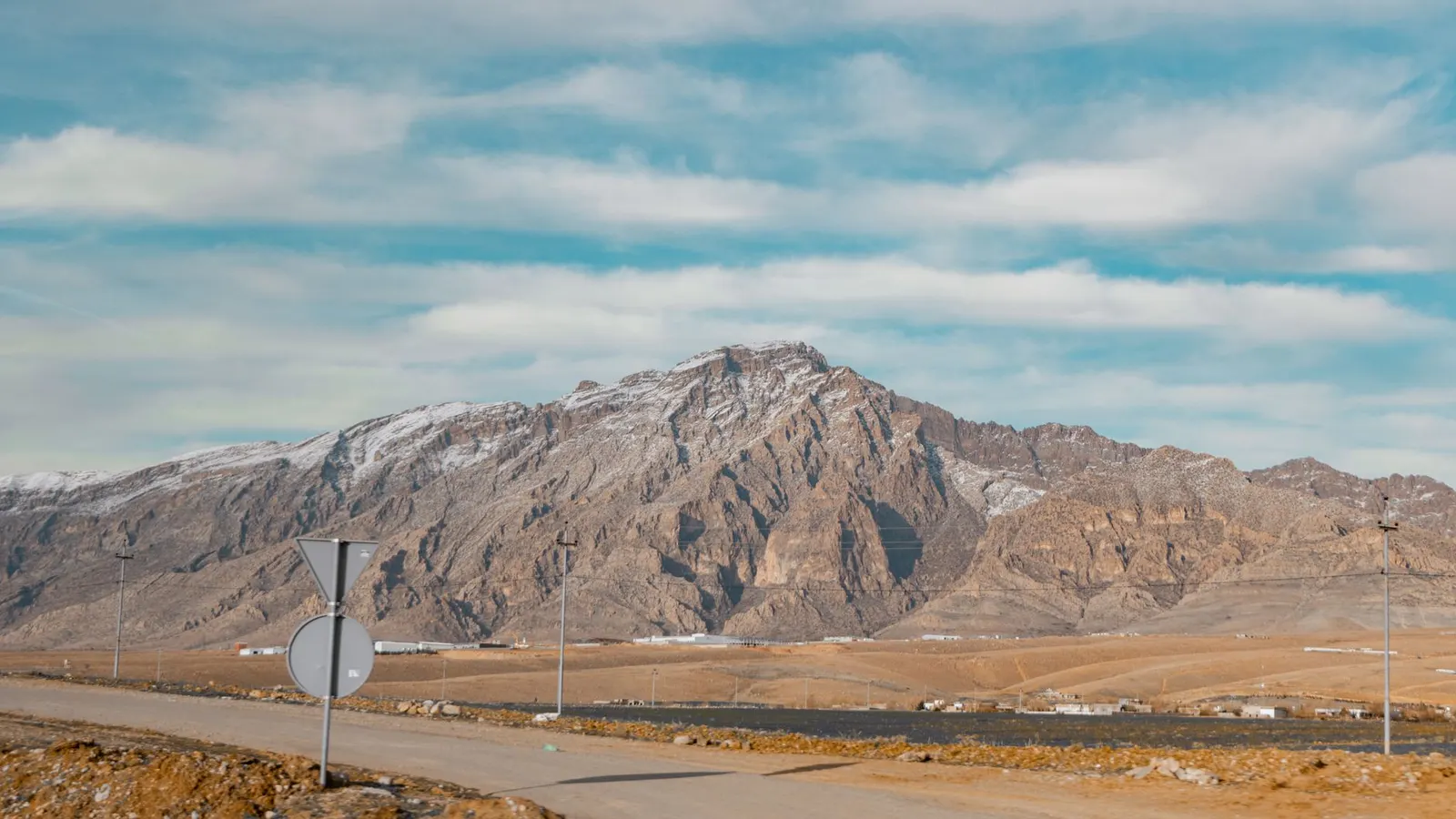
 Dextar Studio ™ · Pexels License
Country Guide № 079 / 194 · Middle East
Iraq
Where cities were invented, and where the advisory has to be read by governorate.
Advisory - travel not recommended · checked 26 Sept 2026
Foreign ministries advise against all or all-but-essential travel to Iraq, the Kurdistan Region included, with parts of several governorates at the stricter level. Iranian strikes have reached the Kurdistan Region in 2026, and unexploded ordnance, kidnapping risk and militia attacks on foreign and Western targets are the standing concerns. Read the advisory by governorate rather than by country.
Official advisory →Every advisory in force →“Where cities were invented, and where the advisory has to be read by governorate.”
Iraq is Mesopotamia - the place where writing, cities and law were first assembled. Ur's ziggurat, Babylon's walls, the Assyrian sites around Mosul and the spiral minaret at Samarra are all here, along with the Mesopotamian Marshes, drained by Saddam Hussein and partly restored since, where a way of life continues on reed islands.
It is also a country most governments advise against travelling to, with the important qualification that several treat the Kurdistan Region in the north as a separate and much lower-risk case. Erbil and Sulaymaniyah receive visitors and issue their own entry permits. The federal south has opened to tourism since 2021 and small numbers do go. Read the advisory by governorate, understand that unexploded ordnance and kidnapping risk are real, and know that ordinary insurance will not cover any of it.
Chapter 01
Highlights
Erbil and the Kurdistan Region
A citadel claimed as the longest continuously inhabited site on earth, above a modern city, with the Zagros mountains, Rawanduz gorge and Amedi's mesa town to the north.
Babylon and the southern sites
The Ishtar Gate's foundations and the reconstructed walls, plus Ur's ziggurat near Nasiriyah and Uruk, where writing appears to have begun.
The Mesopotamian Marshes
Reed islands and buffalo herding in the south, UNESCO-listed, drained in the 1990s and partly reflooded - a landscape and a way of life that very nearly ended.
Samarra and the spiral minaret
The Malwiya, a 52-metre spiral minaret from the ninth century, in a UNESCO-listed Abbasid city north of Baghdad. Access depends on the security situation.
Chapter 02
Entry requirements for Iraq
Advisory - travel not recommended · checked 26 Sept 2026
Foreign ministries advise against all or all-but-essential travel to Iraq, the Kurdistan Region included, with parts of several governorates at the stricter level. Iranian strikes have reached the Kurdistan Region in 2026, and unexploded ordnance, kidnapping risk and militia attacks on foreign and Western targets are the standing concerns. Read the advisory by governorate rather than by country.
Official advisory →Every advisory in force →Checking your passport…
up to 60 days · €70 / $76 · e-visa
60 days on arrival
Before you fly
The detail
- Maximum stay
- up to 60 days
- Process
- e-visa
- Fee
- €70 / $76
- Passport validity
- Most destinations want validity beyond your stay, and some want six months. Check yours against the return date.
- Onward travel
- Airlines may ask for a return or onward ticket at check-in.
- Arrival form
- Visa on arrival or Kurdistan Region entry permit, plus in some periods a PCR or health requirement - check current rules.
- Health
- Hepatitis A and B, typhoid and polio are standard; rabies for rural stays. Healthcare is variable and under strain; serious cases mean evacuation, usually to Jordan or Türkiye. Do not drink tap water. Extreme summer heat - Basra has recorded above 53 °C - is a genuine hazard. Dust storms are frequent.
- Money
- Dinar, cash-dominant. US dollars are widely used alongside it. Foreign cards work at a small number of hotels in Erbil and Baghdad and essentially nowhere else - bring cash. ATMs are unreliable for foreign cards. The note denominations are large; count carefully.
What changed
Iraq admits a United States passport, and the thing to understand before anything else is that there are two Iraqs at the border. Federal Iraq has issued visas to around thirty-eight nationalities since 2021, including this one, for about US$77 and 60 days - obtainable online in advance through the government’s own site and, in practice, also issued at Baghdad, Basra and Najaf and at some land crossings. Apply online. The on-arrival route has been suspended and restored more than once, it is decided by an officer rather than by a rule, and a visa in hand is the difference between a delay and a flight home. Anything that charges a service fee on top is an agency and not the government. The Kurdistan Region operates its own entry permit, issued on arrival at Erbil and Sulaymaniyah to many nationalities, free or nearly so, and it is valid only in the Region. This is the detail that derails itineraries: a permit issued at Erbil does not admit you to Baghdad, the boundary between the Region and the federal governorates is a real checkpoint with real document checks, and travelling on requires the federal visa you did not buy. Decide your route before you land, and if it includes both, hold the federal visa from the start. The reverse - federal visa first, then north - is the straightforward direction. Beyond the visa: cash is the currency of the country and American cards are of little use outside a handful of hotels; registration with the residency authorities has been required for longer stays in some periods and your hotel will know; and photography of checkpoints, bridges and anything military is a serious matter rather than an awkward one. An Israeli passport is not admitted to Iraq, and evidence of a visit to Israel in any other passport - an Israeli stamp, an entry or exit card, or a stamp from the Jordanian or Egyptian side of a land crossing that serves only Israel - has been treated as grounds for refusal. Israel stopped stamping passports at Ben Gurion years ago, which removes the commonest form of that evidence and none of the others. And one thing that is not a visa rule and matters more than one of them. An advisory is not the border’s answer and the border’s answer is not permission: whatever Iraq asks for at the counter, it is your own ministry’s current advice that decides what your insurer will cover and what a consulate could do for you, and that advice is revised far more often than any account of visa procedure. Read it in the days before you travel rather than the months before, and read the regional detail rather than the headline. On Iraq that last point has unusual force, because several ministries write about the Kurdistan Region separately and less restrictively than about the rest of the country, and the difference between the two is the whole of the planning question.
Check another destination with this passport →
Entry details: Editorial synthesis - Iraqi Ministry of Interior visa scheme and government visa portal, Kurdistan Regional Government entry rules, foreign-ministry advisories (2025–2026) · compiled 18 Sept 2026
Who needs a visa for Iraq
12 common passports| Passport | Requirement | Stay | Process |
|---|---|---|---|
| United States | e-Visa | - | e-Visa · €70 / $76 |
| United Kingdom | e-Visa | - | e-Visa · €70 / $76 |
| Germany | e-Visa | - | e-Visa · €70 / $76 |
| India | e-Visa | - | e-Visa · €70 / $76 |
| China | e-Visa | - | e-Visa · €70 / $76 |
| Brazil | e-Visa | - | e-Visa · €70 / $76 |
| Nigeria | e-Visa | - | e-Visa · €70 / $76 |
| Indonesia | e-Visa | - | e-Visa · €70 / $76 |
| Philippines | e-Visa | - | e-Visa · €70 / $76 |
| Vietnam | e-Visa | - | e-Visa · €70 / $76 |
| Egypt | e-Visa | - | e-Visa · €70 / $76 |
| Nepal | e-Visa | - | e-Visa · €70 / $76 |
Holding a passport that is not listed? The picker above answers for any of them. See where your passport takes you. Source: Passport Index, updated 14 Aug 2026.
Chapter 03
When to go
BestMar–Apr, Oct–Nov. AvoidJun–Sep.
Warm and green - the best month, with Nowruz in the Kurdish north.
The band above each month is our editorial verdict - it weighs crowds, prices and access as well as weather. The line is average daily temperature, the bars are monthly rainfall. Select a month for the figures. Climate figures: ERA5 reanalysis via Open-Meteo, 2005–2024 normals.
Chapter 04
What it costs
A day in Iraq
Comfortable · sample day
≈ $86
Line items are real prices we track. The daily budget is an editorial estimate for this level, not their sum.
Where this sits among 244 countries we have costed
Season is not the variable that matters. Prices are shaped by security arrangements and by the pilgrimage calendar - Arbaeen brings millions of pilgrims to Karbala and fills every road and hotel in the centre and south for weeks. Hard-currency prices are otherwise stable and modest, apart from Erbil hotels, which are priced for business and NGO travel.
Updated Aug 2026 · Editorial synthesis - operator and fixer quotations, site tariffs, specialist insurer rates (2025–2026) · confidence low
Excludes international flights - they depend on where you fly from.
Chapter 05
Regions to know
5The Kurdistan Region
Erbil's citadel, Sulaymaniyah, the Zagros mountains and Rawanduz gorge - treated separately by most advisories.
Baghdad & the centre
The capital, the National Museum, Samarra's spiral minaret and Babylon south of the city.
Nineveh & the north
Mosul, the Assyrian sites at Nimrud and Nineveh, and Hatra's Parthian ruins - much of it damaged and under advisory.
The shrine cities
Najaf and Karbala, among the most important sites in Shia Islam, receiving millions of pilgrims each year.
The south & the marshes
Ur and Uruk, Basra on the Shatt al-Arab, and the Mesopotamian Marshes with their reed islands.
Chapter 06
Practical guide
Getting there
Baghdad (BGW), Erbil (EBL), Sulaymaniyah (ISU) and Basra (BSR) take regional flights from Turkey, Jordan, the Gulf and some European cities. The land border with Türkiye at Ibrahim Khalil is used for the Kurdistan Region; the Iranian and Jordanian borders operate with conditions. Federal and Kurdistan entry permits are separate.
Entry formalities
Visa on arrival or Kurdistan Region entry permit, plus in some periods a PCR or health requirement - check current rules.
Getting around
Domestic flights link Baghdad, Erbil, Sulaymaniyah and Basra. Roads between cities pass through numerous checkpoints and journey times are unpredictable. Hiring a driver and fixer is the standard arrangement and is close to necessary. There is a limited rail service between Baghdad and Basra. Travel between the Kurdistan Region and federal Iraq involves an internal checkpoint and, sometimes, a separate permit.
Money & costs
Dinar, cash-dominant. US dollars are widely used alongside it. Foreign cards work at a small number of hotels in Erbil and Baghdad and essentially nowhere else - bring cash. ATMs are unreliable for foreign cards. The note denominations are large; count carefully.
Safety
This is the central consideration. Kidnapping risk, unexploded ordnance and mine contamination - Iraq is among the most contaminated countries in the world - militia activity, and periodic missile and drone exchanges affecting the north and the Gulf approaches. Never leave paved surfaces in areas that saw fighting. Checkpoints are numerous and require documents. Consular capacity is limited. The Kurdistan Region is calmer and not risk-free.
Health
Hepatitis A and B, typhoid and polio are standard; rabies for rural stays. Healthcare is variable and under strain; serious cases mean evacuation, usually to Jordan or Türkiye. Do not drink tap water. Extreme summer heat - Basra has recorded above 53 °C - is a genuine hazard. Dust storms are frequent.
SIM & internet
Local SIMs are cheap and widely available. Coverage is good in cities and along main roads. Internet shutdowns have been used during exams and unrest. Assume monitored connectivity and avoid photographing checkpoints, military sites and government buildings.
Chapter 07
Driving
Checkpoints govern every intercity journey and a local driver is what makes them straightforward. Roadside ordnance contamination means never pulling off the paved surface in former conflict areas. Fuel is cheap and widely available.
Rules change - verify with an official source before you rent.
ExplWorld VerifiedNo verified partners here yet - all 6 country seats are open.
Become ExplWorld Verified →Chapter 08
Itineraries through this country
Chapter 09
From the Journal
Chapter 10
Before you go
IraqChapter 11
Frequently asked questions
Is Kurdistan really different?
In advisory terms, yes - several governments issue distinctly less restrictive advice for the Kurdistan Region than for federal Iraq, and it has its own entry permit issued on arrival at Erbil and Sulaymaniyah for many nationalities. It has been visited steadily for years. That is a difference of degree, not a guarantee: the region has seen missile strikes and border operations, and conditions change.
Can I travel independently in the south?
Federal Iraq introduced visas on arrival for many nationalities in 2021 and small numbers of independent travellers do go to Baghdad, Babylon, Karbala and the marshes. Most use a local fixer, both for the practical navigation of checkpoints and because the security picture varies by road and by week. Going without one is not advisable regardless of what the visa permits.
What will insurance cover?
Almost certainly nothing. Standard policies void cover for travel against a government advisory, and an advisory is in force for most or all of the country depending on your nationality. Specialist high-risk cover exists and costs accordingly. Medical evacuation from Iraq is expensive and complicated.