 Dextar Studio ™ · Pexels License
Itinerary · Middle East · 11 days · Challenging
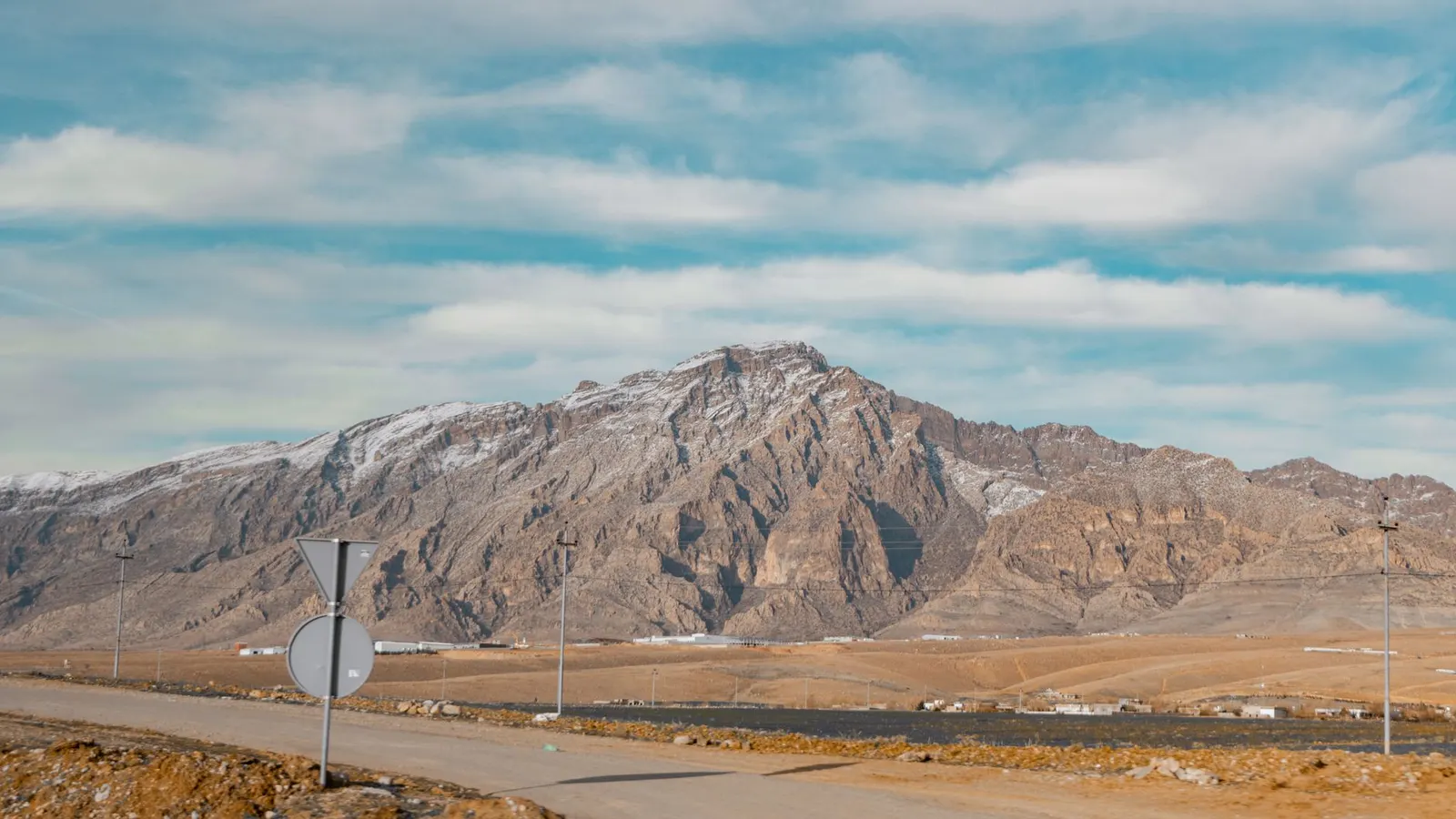
The Kurdistan Region
Erbil Citadel→Ainkawa, Erbil→Akre→Lalish→Amedi→Gali Ali Beg+5 stops
Advisory - travel not recommended · checked 26 Sept 2026
Iraq
Foreign ministries advise against all or all-but-essential travel to Iraq, the Kurdistan Region included, with parts of several governorates at the stricter level. Iranian strikes have reached the Kurdistan Region in 2026, and unexploded ordnance, kidnapping risk and militia attacks on foreign and Western targets are the standing concerns. Read the advisory by governorate rather than by country.
Official advisory →Every advisory in force →Read the advisory first: foreign ministries advise against all or all-but-essential travel to most of Iraq, and this route is published for the day that changes rather than as an invitation for today. It works only the Kurdistan Region and the Kurdish-administered districts on its edge, which several of those ministries treat separately and less restrictively - Erbil and its citadel, Duhok and the Bahdinan valleys, the Rawanduz gorge, Shanidar Cave and Sulaymaniyah - and it goes nowhere near Baghdad, Mosul, Kirkuk, Basra or the southern marshes, nor into the frontier strips along the Turkish and Iranian borders where foreign militaries operate. Two of its days sit in the disputed territories, which are Kurdish-run but federally inside Nineveh governorate; the notes explain why that distinction is your insurer's, not a technicality.
Erbil, the citadel
The citadel sits on a tell about 30 m (100 ft) above the streets that circle it, and the claim made for the mound - occupation running back some six thousand years - is what UNESCO inscribed in 2014. The restoration authority moved the last residents off the top in 2007, roughly eight hundred families, and deliberately kept a single household in place so that the claim of unbroken habitation would not be broken by the restoration itself. Most of the interior is still a building site behind hoardings; the Kurdish Textile Museum is the one house properly finished and open. Come down through the south gate into the Qaysari bazaar, which is the working half of the same block and has not been restored at all.
Erbil, the minaret and the museum
The Mudhafaria minaret stands on its own in a park south-west of the citadel: about 36 m (118 ft) of brick on an octagonal base, two bands of muqarnas, and a lean it has had for a long time. It went up under Muzaffar al-Din Gökböri, who held Erbil for the Ayyubids from 1190 until his death in 1233 and whose mosque around it is gone. The Civilization Museum a few streets away is small and worth an hour for the Assyrian material. In the afternoon walk Ainkawa, the Chaldean and Assyrian district north of the centre, which absorbed a large share of the people who left the Nineveh plain in August 2014 and where a good deal of the region's Christian life is now concentrated.
West to Akre and on to Duhok
Akre is built in tiers up both sides of a narrow valley, so that the town reads as a single stepped facade from the road below, and the old quarter behind it is stone and largely intact. It is also the first place the route leaves the Kurdistan Region on paper without leaving it in practice: Akre district has been Kurdish-administered since 1991 and is run from Duhok, but federal law still counts it part of Nineveh governorate, and that is the word your advisory is indexed under. On the evening of 20 March the whole town carries torches up the hill for Newroz, the Kurdish new year, and the fire line visible from the valley floor is the largest of its kind anywhere; if your dates are anywhere near it, build the route around it. Then west and north to Duhok, which is a university town under a ridge with a reservoir behind a 1980s dam above it, and the base for the next two days.
Lalish
An hour east of Duhok, in the same Kurdish-run but federally Nineveh sliver as Akre, a valley of conical fluted spires that is the holiest place in the Yazidi religion. The shrine holds the tomb of Sheikh Adi ibn Musafir, who settled here in the twelfth century and died about 1162, and every Yazidi is expected to reach it at least once. Shoes come off at the gate and stay off for the whole site, and thresholds are stepped over rather than on - the rules are not decorative and they are watched. Ask before photographing anyone. Twenty minutes away at Khinis, Sennacherib cut reliefs of himself before the gods into the rock at the head of a canal system he built to water Nineveh around 690 BC, and the aqueduct that carried it stands in fields at Jerwan. The Yazidi centre of gravity, Sinjar, is four hours south-west and inside the area the advisory covers; what happened there from August 2014 is why much of the congregation at Lalish now lives in camps around Duhok.
Amedi
Amedi stands on a flat-topped rock at about 1,200 m (3,900 ft) with cliffs on every side, one road up, and room for nothing beyond the streets that were already there - the town cannot grow, so it has not. The Bahdinan gate cut into the eastern face carries worn reliefs of figures in Assyrian dress, and the minaret above the town is dated to the 1170s. Below it Sulav has waterfalls, a row of restaurants and the entire population of Duhok on a Friday. This is where the route stops. The valleys north of here running up to the Turkish frontier have been the ground for Turkish operations against the PKK for years, with bases inside Iraqi territory and strikes that have killed civilians; several ministries name that strip specifically, and this itinerary does not enter it.
Across to the Rawanduz gorge
A long transfer with the best road in the country at the end of it. A. M. Hamilton, a New Zealand engineer working for the British administration, drove a road from Erbil to the Iranian frontier between 1928 and 1932 and wrote a book about it afterwards; the section through the Rawanduz gorge is cut into the wall of a limestone canyon with the river a long way below, and it is still the alignment traffic uses. Gali Ali Beg falls are at the junction of two valleys and are on the five-thousand-dinar note. Bekhal, a few kilometres on, is where the water comes out of the mountain. Arrive with light to spare and drive the gorge slowly.
Shanidar Cave
North-west into the Baradost mountains to a single chamber high in a limestone face, still used by the village below as a winter shelter for animals. Ralph Solecki dug here across four seasons between 1951 and 1960 and took out the remains of ten Neanderthals. Shanidar 1 was an adult male with a withered right arm, a crushed eye socket and healed fractures, who had lived years after injuries that would have left him dependent on the people around him. Shanidar 4 became the flower burial, after clumps of pollen turned up in the grave soil; a 1999 paper argued that a burrowing gerbil had brought the flower heads in, the argument has run ever since, and it is not settled. A Cambridge-led team reopened the trench in 2014 and found another individual, Shanidar Z, from 2018. The climb from the road takes about twenty minutes and the view down the valley is the reason people lived here.
South through Ranya to Sulaymaniyah
Out of the mountains and down the length of the region. Ranya is where the March 1991 uprising started: on the fifth of the month, days after the ceasefire in Kuwait, the town took the local security building, and within a fortnight the rising had spread across Kurdistan and, separately and at the same time, through the Shia south. It was put down inside a month, and the retreat that followed put well over a million people on the Turkish and Iranian borders in freezing weather - which is what produced the northern no-fly zone, and eventually the region this route has been driving through. Dukan lake below the town is the reservoir behind a dam finished in 1959, and the road runs along the water for an hour.
Sulaymaniyah
Amna Suraka - Red Security - was the Ba'ath party's regional security headquarters until the city took it in March 1991, and it has been left as it was taken: walls perforated by the fire that ended it, armour in the courtyard, the cells and interrogation rooms open. One hall is lined with 182,000 shards of mirror glass and 4,500 small lights, one shard for each person the Kurdistan Region counts as killed in the Anfal campaign of 1988 and one light for each village destroyed. That figure is the regional government's; other estimates are considerably lower and the number is contested, which is worth knowing while standing in the room. The Slemani Museum in the afternoon is the second collection in the country after Baghdad, and in 2011 it bought a tablet from a smuggler that turned out to carry twenty previously unknown lines of the fifth tablet of Gilgamesh, published in 2014. Then the bazaar and the tea houses on Mawlawi street.
Halabja and Darbandikhan
On 16 March 1988, in the closing months of the Iran–Iraq war, Iraqi aircraft attacked Halabja with chemical weapons; estimates of the dead that morning run from about three thousand two hundred upwards, and people are still being treated for the consequences. The monument and museum on the edge of town were built in 2003, burned by local protesters in 2006 who objected to the town's condition being used as a backdrop, and rebuilt. Halabja was made Iraq's nineteenth governorate by a parliamentary vote in April 2024, thirty-six years after the attack and a decade after the region first asked. On the way back, Darbandikhan sits under a dam of 1961 that was cracked by the magnitude 7.3 earthquake of 12 November 2017, whose epicentre was just over the Iranian border; the town took the worst structural damage in Iraq. The hills here are among the most heavily mined ground in the country - stay on surfaced roads and marked paths.
Hazar Merd, then out
Half an hour south-west of the city, on the flank of Baranan, the Hazar Merd caves were excavated by Dorothy Garrod in 1928 - the same season she worked at Zarzi to the north, whose material gave its name to the Zarzian, the late Palaeolithic industry of these mountains. She was in her thirties, digging under the British mandate, and in 1939 became the first woman to hold a professorial chair at Cambridge. The caves are unmarked, unfenced and empty, which after a week of museums is the right last morning. Then the airport, and leave a wide margin: schedules out of Sulaymaniyah and Erbil are the first thing to move when the region does, and Sulaymaniyah is the thinner of the two - with Turkish airspace shut to it, every onward connection from here routes through a Gulf or Levant hub.
Good to know
Start with the advisory, because it decides the shape of this route. Foreign ministries advise against all or all-but-essential travel to most of Iraq, and most of them treat the Kurdistan Region separately and less restrictively than the federal governorates - which is why every night on this itinerary is spent in Erbil, Duhok, Soran or Sulaymaniyah. It does not go to Baghdad, Mosul, Kirkuk, Salah al-Din, Diyala, Anbar, Basra or the southern marshes, and it stops short of the frontier strips along the Turkish and Iranian borders, where Turkish operations against the PKK and Iranian strikes on Kurdish opposition parties have both killed people in recent years.
One qualification matters more than it looks, because advisories are written by governorate and two days of this route are not where the map says they are. Akre and Lalish - with Khinis and Jerwan beside it - lie in the disputed territories: Kurdish-administered since 1991, policed by the Asayish, reached from Duhok or Erbil without crossing a federal checkpoint, but under federal law inside Nineveh governorate rather than Duhok. Several ministries advise against all travel to Nineveh. Whether your own ministry and your underwriter follow the administrative line or the practical one is a question to settle in writing beforehand rather than at a claim; if either draws it at the governorate, those two days come out and the remaining nine stand unchanged. Read your advisory the week you travel rather than the month you book - it is what your insurance follows.
Insurance is the practical consequence. An ordinary travel policy is void in a country your government advises against travelling to, and it will not tell you that at the point of sale - it will tell you at the point of claim. Specialist cover from the handful of underwriters who write this region runs to something like €300–450 for a fortnight, and the clause to read is medical evacuation, because commercial flights stop before anything else does. Check whether the policy excludes acts of war and terrorism, since a policy that covers the destination while excluding those has excluded the actual risk.
The entry rule is the one thing people get wrong. The Kurdistan Region runs its own immigration and issues its own entry stamp, generally thirty days on arrival for most European, British, North American, Australian and Japanese passports, at Erbil and Sulaymaniyah airports and at the Ibrahim Khalil crossing from Turkey. That stamp is valid in the Kurdistan Region only. It does not admit you to federal Iraq: the checkpoints on the roads towards Kirkuk and Mosul are a real border for this purpose, and turning up at one with a KRG stamp means being turned back. Federal Iraq has issued visas on arrival to a list of around three dozen nationalities since 2021, but the list, the fee and whether that visa can be obtained after you have already flown into Erbil have all changed more than once - if any part of your plan touches federal Iraq, settle it in writing with a local operator and your airline before you book, and assume the answer you find online is out of date.
Getting in is by air in practice, and the two airports do not have the same network. Erbil (EBL) is the connected one - Istanbul, Amman, Beirut and the Gulf hubs, plus a thin and frequently changing set of European points. Sulaymaniyah (ISU) is not: Turkey closed its airspace to flights to and from Sulaymaniyah in April 2023 over the PKK presence in the province and has extended the closure repeatedly since, so there is no Istanbul connection there at all and the airport runs on Gulf and Levant routes. This route lands at Erbil and leaves from Sulaymaniyah, which is a real open jaw - price and confirm that outbound leg before you commit to the shape, and if it will not build, run the route in reverse or add the road transfer back to Erbil. Baghdad barred international flights to both airports for six months after the independence referendum in 2017, and Iraqi airspace has since been closed at no notice during regional escalations, with flights cancelled or diverted for days. Erbil is not outside that: rockets and drones have reached the city and the ground around the airport repeatedly since 2021, and a ballistic missile strike on a residential district in January 2024 killed civilians. Keep a buffer day before any onward international connection and enough money to rebook. The land crossing from Turkey at Ibrahim Khalil works and is used, but it sits in the strip this route otherwise avoids.
No guide or escort is compulsory here - unlike several of Iraq's neighbours, the Kurdistan Region imposes no minder and no permit regime on ordinary visitors, and independent travel is legal and normal. A car with a driver is nonetheless the practical unit, because the distances are long, the good bits are between towns and a local driver reads a checkpoint faster than you will. You will pass through many: Asayish and peshmerga posts on every intercity road, passports checked, occasionally a phone call made about you. Carry your passport rather than a copy, be patient, and photograph no checkpoint, no soldier and no military installation anywhere in the country.
Money is cash, in Iraqi dinars. The official rate was revalued to 1,320 to the US dollar in February 2023 and the street rate has traded above it since. Dollars are accepted in hotels and by drivers and should be clean, unmarked and in small denominations; foreign cards work in a small and growing number of places in Erbil and Sulaymaniyah and nowhere reliably, and ATMs are not a plan. Bring more cash than you expect to need and split it.
Season decides whether this is enjoyable. Erbil runs past 45 °C (113 °F) through July and August and the lowland days become unusable; Sulaymaniyah, some 400 m (1,300 ft) higher, is a few degrees cooler and still too hot to walk a site at midday. April to early June and late September to early November are the route's seasons; the Rawanduz gorge and the road to Amedi hold snow into March and can close for a day at a time in winter. Newroz on 20–21 March is the single best reason to shift the dates, and Akre is where to be for it. During Ramadan, restaurants outside hotels shut in daylight in most towns.
Two last things. Mine and unexploded-ordnance contamination from the Iran–Iraq war and the Anfal campaign is heavy across the Sulaymaniyah, Halabja and Penjwen districts and along the border ranges, and clearance is still running decades on - stay on surfaced roads and established paths and take a local guide for anything off them, whether or not a law requires one. And alcohol is sold openly in Erbil and Sulaymaniyah and is restricted or absent in more conservative districts; dress and behave accordingly, particularly at Lalish and in the smaller towns.
Shorter or longer?
Add five days for the massifs behind the city - Goizha and Azmar on the doorstep, Piramagrun at around 2,600 m (8,500 ft) as a two-day outing, and the villages along Dukan lake. Go with a local walking outfit rather than alone: nothing here is permitted or escorted, but the mine contamination in these mountains makes a guide who knows which ground has been cleared a genuine safety requirement rather than a convenience.
Erbil and Sulaymaniyah only - the citadel and the bazaar, the Rawanduz gorge as a long day out of Erbil, then Amna Suraka, the Slemani Museum and Halabja. Cuts Duhok, Lalish, Amedi and Shanidar along with every transfer over three hours, and keeps both nights' bases within an hour of an airport.
Practical guide
Visa check for this route
Budget
Mid-range · per person · sharing a double room. Excludes international flights - they depend on where you fly from.
Editorial estimates · checked August 2026
Country guides
Trip essentials
The connectivity placement is our own eSIM store. No affiliate link on this list. How we choose these →