 merwak. raw · Pexels License
Country Guide № 082 / 194 · Europe
Italy
More UNESCO sites than any other country, and the food is still the reason.
“More UNESCO sites than any other country, and the food is still the reason.”
Italy holds more UNESCO World Heritage sites than any other country, which tells you something about the density and nothing about the experience. The famous triangle of Rome, Florence and Venice is genuinely extraordinary and genuinely overwhelmed - Venice now charges a day-tripper fee to manage the crush. The rest of the country is where Italy still feels like itself.
That rest is enormous. The Dolomites are among the finest mountains in Europe; Puglia has whitewashed towns and empty coastline; Sicily is a Greek, Arab and Norman palimpsest with the best street food in the country. Regional cooking is not a marketing angle here - the food genuinely changes every hundred kilometres, and asking for parmesan on a seafood pasta will get you a look.
Chapter 01
Highlights
Rome at opening time
The Forum and Colosseum before nine, the Pantheon on a wet morning, and Trastevere for dinner. Book timed entry for everything - walk-up queues have effectively ceased to exist.
The Dolomites
Limestone towers above alpine meadows, with a rifugio network that lets you hut-to-hut for a week. The Tre Cime loop is the classic and July to September the window.
Puglia and Matera
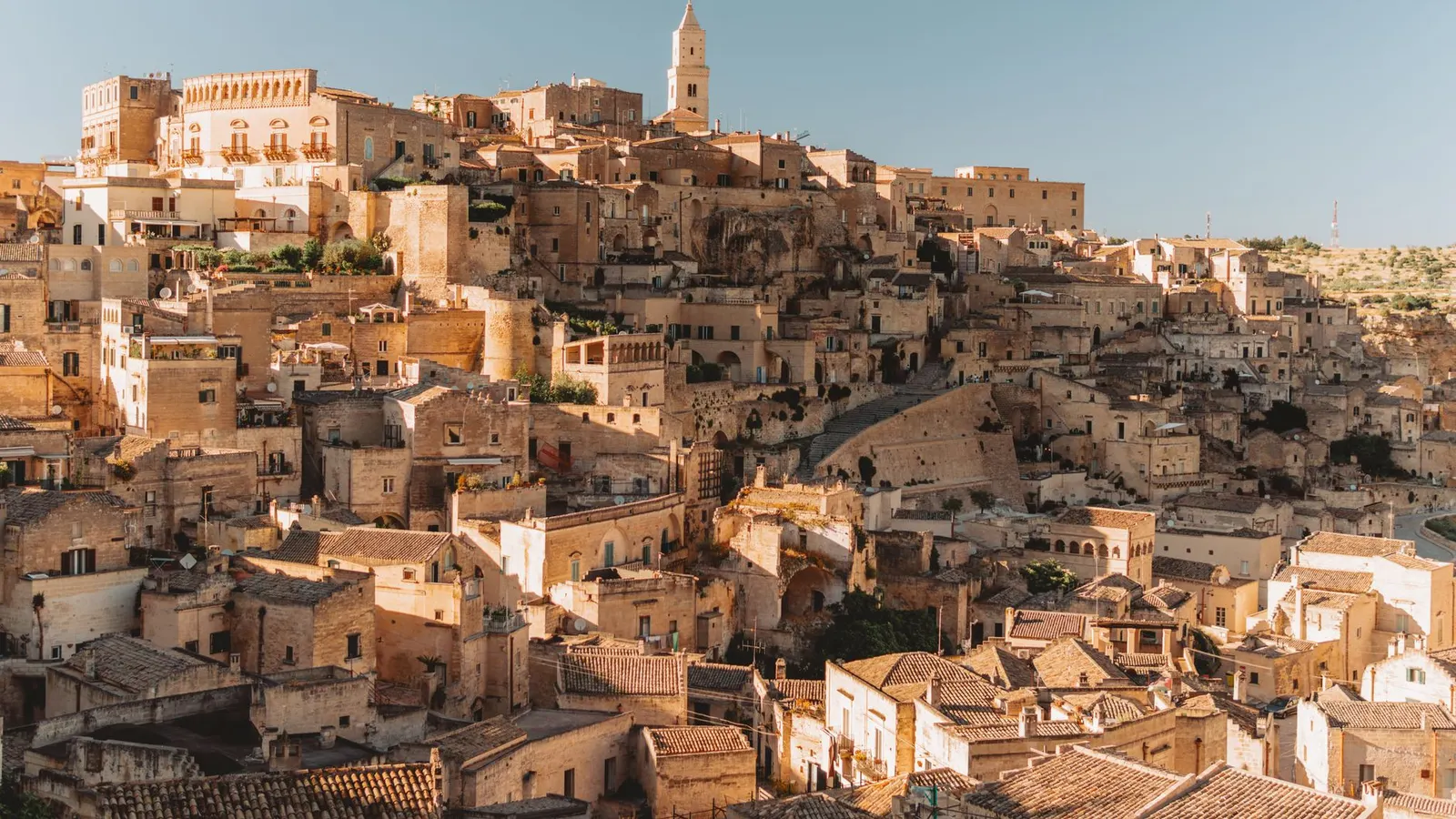
Trulli houses at Alberobello, baroque Lecce, the Salento coast, and the cave city of Matera an hour inland - inhabited continuously for nine thousand years.
Sicily
Greek temples at Agrigento, Norman mosaics at Monreale, Etna smoking above Catania, and a street-food culture in Palermo that outclasses most of the mainland.
Chapter 02
Entry requirements for Italy
Checking your passport…
up to 90 days · free entry
90 days on arrival
Before you fly
The detail
- Maximum stay
- up to 90 days
- Fee
- free entry
- Passport validity
- Most destinations want validity beyond your stay, and some want six months. Check yours against the return date.
- Onward travel
- Airlines may ask for a return or onward ticket at check-in.
- Health
- No vaccinations required; healthcare is good and EHIC/GHIC covers EU and UK visitors for state care. Pharmacies handle minor issues. Tap water is safe and public fountains in Rome (nasoni) are drinkable and free. Heat is the main summer risk. Insurance for skiing and mountain activity should be checked for rescue cover.
- Money
- Cards are accepted almost everywhere by law, including for small amounts, though some small businesses still push cash. Coperto (a cover charge) appears on restaurant bills and is normal, not a scam. Tipping is not expected. Free ATMs at banks; avoid the standalone machines in tourist areas.
A United States passport needs no visa for Italy: 90 days in any rolling 180, and the ninety are shared with the other twenty-eight Schengen countries rather than reset at the Italian border. The practical consequence is that a long European summer is planned against one number - count backwards 180 days from any date and add up every day anywhere in the area. Italy has a rule of its own that surprises visitors staying with friends or in an unregistered flat: every non-EU national must be declared to the police, and a hotel does it for you within twenty-four hours of check-in, which is why the passport is taken at the desk. Arriving in Italy directly from outside the Schengen area, your border record is the declaration and there is nothing to file; arriving from elsewhere inside the area - a train from France, a flight from Germany - and staying somewhere that does not register you, you are expected to file a declaration of presence at a police station within eight days. Since 10 April 2026 the Entry/Exit System has been fully operational at Fiumicino, Malpensa and every land and sea crossing: a facial image and fingerprints on the first entry, no stamp afterwards, and a machine-kept record of the ninety days. An overstay is a fine and can be an entry ban across the whole area, and there is now no missed stamp to hide behind. ETIAS - the online authorisation announced to sit in front of these same ninety days - was not required at the time of writing; check when you book. Your passport must be valid three months beyond your intended departure from the Schengen area.
Check another destination with this passport →
Entry details: Editorial synthesis - Schengen Borders Code, Italian Ministry of the Interior guest-registration and declaration-of-presence rules, EU Entry/Exit System rollout (2025–2026) · compiled 16 Sept 2026
Who needs a visa for Italy
12 common passports| Passport | Requirement | Stay | Process |
|---|---|---|---|
| United States | Visa-free | up to 90 days | No process · €0 / $0 |
| United Kingdom | Visa-free | up to 90 days | No process · €0 / $0 |
| Germany | Visa-free | - | No process · €0 / $0 |
| India | Visa required | - | No Other passports record yet |
| China | Visa required | - | No Other passports record yet |
| Brazil | Visa-free | up to 90 days | No Other passports record yet |
| Nigeria | Visa required | - | No Other passports record yet |
| Indonesia | Visa required | - | No Other passports record yet |
| Philippines | Visa required | - | No Other passports record yet |
| Vietnam | Visa required | - | No Other passports record yet |
| Egypt | Visa required | - | No Other passports record yet |
| Nepal | Visa required | - | No Other passports record yet |
Holding a passport that is not listed? The picker above answers for any of them. See where your passport takes you. Source: Passport Index, updated 14 Aug 2026.
Chapter 03
When to go
BestApr–Jun, Sep–Oct. AvoidJul–Aug.
Warm, green and pre-season, though Easter fills everything.
The band above each month is our editorial verdict - it weighs crowds, prices and access as well as weather. The line is average daily temperature, the bars are monthly rainfall. Select a month for the figures. Climate figures: ERA5 reanalysis via Open-Meteo, 2005–2024 normals.
Chapter 04
What it costs
A day in Italy
Comfortable · sample day
≈ $119
Line items are real prices we track. The daily budget is an editorial estimate for this level, not their sum.
Where this sits among 244 countries we have costed
Coastal and lake accommodation doubles in July and August; the Dolomites peak twice, in February for skiing and August for walking. Rome, Florence and Venice are expensive from April to October and noticeably cheaper in November, January and February. Rail fares rise as departure approaches on high-speed routes and are fixed on regional ones.
Updated Aug 2026 · Editorial synthesis - Trenitalia and Italo published fares, ministry monument tariffs, hotel rate sampling (2025–2026) · confidence high
Excludes international flights - they depend on where you fly from.
Chapter 05
Regions to know
5Rome & the centre
The capital, Ostia Antica, and the hill towns and Etruscan sites of Lazio and Umbria.
Tuscany & the north-centre
Florence, Siena, the Val d'Orcia, Bologna's food and the mosaics of Ravenna.
The north & the Alps
Milan, Venice, the lakes, and the Dolomites - mountains, hut networks and a bilingual German-speaking province.
The south
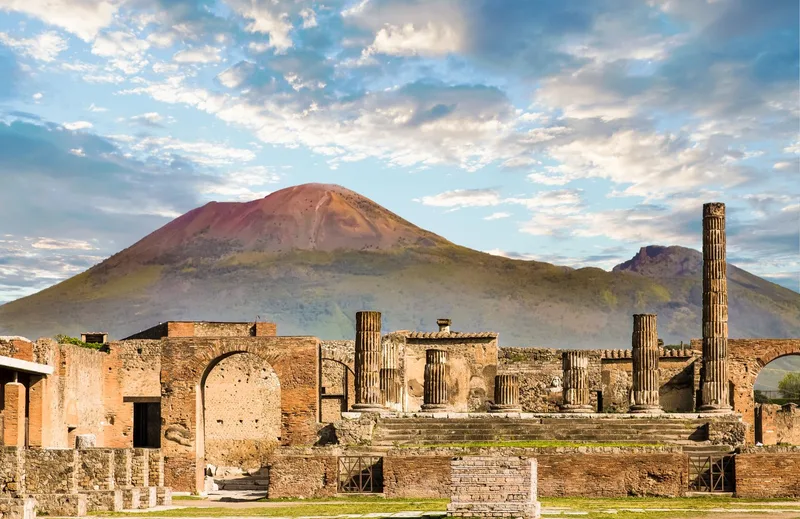
Naples and Pompeii, the Amalfi coast, Matera's cave city and Puglia's trulli and coastline.
Sicily & Sardinia
Greek temples, Norman-Arab palaces and Etna on one island; Bronze Age nuraghi and the best beaches in Italy on the other.
Chapter 06
Practical guide
Getting there
Rome Fiumicino (FCO) and Milan Malpensa (MXP) are the main hubs, with Venice, Naples, Bologna, Pisa, Catania and Palermo well served by low-cost carriers from across Europe. Trains link Milan to Zurich, Munich, Paris and Vienna; ferries connect to Greece, Croatia, Sardinia, Sicily and Tunisia.
Getting around
High-speed rail down the spine from Turin and Milan through Bologna, Florence, Rome and Naples - book ahead on Trenitalia or Italo. Regional trains reach the rest. A car is worth it for Tuscany, Puglia, Sicily and the Dolomites and a liability in every city. Ferries serve the islands. City transport is adequate; Rome's metro is limited by the archaeology under it.
Money & costs
Cards are accepted almost everywhere by law, including for small amounts, though some small businesses still push cash. Coperto (a cover charge) appears on restaurant bills and is normal, not a scam. Tipping is not expected. Free ATMs at banks; avoid the standalone machines in tourist areas.
Safety
Safe, with pickpocketing and scams concentrated in Rome's Termini area, Naples, and on crowded transport - the 64 bus in Rome and the circumvesuviana to Pompeii are notorious. Bag snatching from scooters happens in Naples. Organised crime does not target visitors. Summer heatwaves in the cities are severe and worsening.
Health
No vaccinations required; healthcare is good and EHIC/GHIC covers EU and UK visitors for state care. Pharmacies handle minor issues. Tap water is safe and public fountains in Rome (nasoni) are drinkable and free. Heat is the main summer risk. Insurance for skiing and mountain activity should be checked for rescue cover.
SIM & internet
EU roaming covers European SIMs; others should buy an eSIM. 4G and 5G coverage is good, thinner in the Apennines and parts of the south. Wifi is common in accommodation and on high-speed trains.
Chapter 07
Driving
The ZTL zones are the thing to understand before you turn a key here - camera-enforced restricted centres in nearly every historic town, with fines that arrive months later. Mountain roads in the Dolomites and on the Amalfi coast are narrow and busy; the Amalfi coast in particular is not a relaxing drive in season.
Rules change - verify with an official source before you rent.
ExplWorld VerifiedNo verified partners here yet - all 6 country seats are open.
Become ExplWorld Verified →Chapter 08
Itineraries through this country
Chapter 09
From the Journal
Chapter 10
Before you go
ItalyChapter 11
Frequently asked questions
How do I handle the crowds in Venice, Florence and Rome?
Book everything with timed entry weeks ahead, start at opening or go in the last two hours, and sleep in the centre so you have the early morning to yourself. Venice charges a day-visitor access fee on peak dates, which is one more reason to stay overnight. April, May, September and October are busy; July and August are worse and hotter.
Are the trains any good?
The high-speed network is excellent - Rome to Florence in 90 minutes, Rome to Milan in three hours, with two competing operators (Trenitalia and Italo) that keep fares down. Book ahead for the cheap tickets. Regional trains are slower, cheaper and reliable enough; validate paper tickets before boarding or you will be fined.
What are the ZTL zones and will they fine me?
Almost every historic centre has a limited traffic zone (ZTL) enforced by camera. Driving into one without a permit brings a fine that reaches your rental company months later, with an administrative charge on top. It is the single most common way visitors lose money in Italy. Park outside the walls and walk.