 X1ntao ZHOU · Pexels License
Country Guide № 105 / 194 · Europe
Malta
Temples older than the pyramids, on an island you can cross in an hour.
“Temples older than the pyramids, on an island you can cross in an hour.”
Malta holds the oldest free-standing stone structures on earth - the Ġgantija temples on Gozo predate the Egyptian pyramids by around a thousand years - on an archipelago smaller than the Isle of Wight. Everything since has left a layer: Phoenician, Roman, Arab, the Knights of St John who built Valletta as a fortress city in the 1560s, and 150 years of British rule that left English as an official language and the driving on the left.
It is dense, dry, and almost entirely built of the same honey-coloured limestone. The main island is developed and busy; Gozo is slower and greener; Comino is essentially a beach. The water is the other reason to come - visibility of thirty metres, wrecks that were scuttled for divers, and the Blue Hole off Gozo.
Chapter 01
Highlights
Valletta
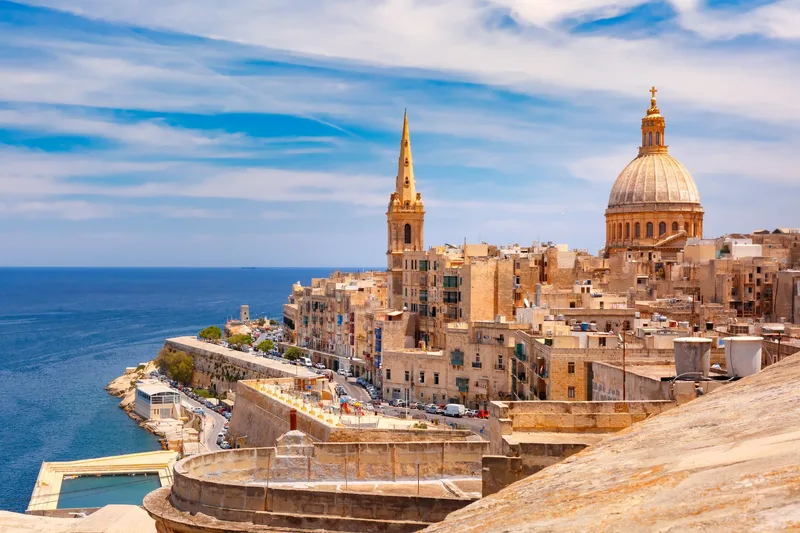
A planned fortress city from 1566, UNESCO-listed and walkable end to end in twenty minutes - St John's Co-Cathedral with its Caravaggio, the Upper Barrakka Gardens and the Grand Harbour below.
The megalithic temples
Ġgantija on Gozo, Ħaġar Qim and Mnajdra on the south coast, and the Hypogeum - an underground burial complex limited to a handful of visitors a day and booked months ahead.
Gozo
The second island - the Citadel at Victoria, salt pans, the Xlendi and Dwejra coastline, and a pace that makes the main island feel frantic.
Diving
Thirty-metre visibility, deliberately scuttled wrecks, and shore dives you can walk into. The Blue Hole and Inland Sea at Dwejra are the best known; several are accessible to snorkellers.
Chapter 02
Entry requirements for Malta
Checking your passport…
up to 90 days · free entry
90 days on arrival
Before you fly
The detail
- Maximum stay
- up to 90 days
- Fee
- free entry
- Passport validity
- Most destinations want validity beyond your stay, and some want six months. Check yours against the return date.
- Onward travel
- Airlines may ask for a return or onward ticket at check-in.
- Health
- No vaccinations required. Healthcare is good; EHIC/GHIC covers EU and UK visitors. Tap water is desalinated and safe but tastes poor, so most people drink bottled. Heat and dehydration are the main summer risks. There is a decompression chamber, which matters given the diving.
- Money
- Euro. Cards are accepted almost everywhere. Tipping is around 10 %. Malta is cheaper than Italy or France but no longer inexpensive - accommodation in summer is the main cost. English is an official language, which removes any friction.
Malta asks a United States passport for no visa and no fee: 90 days in any rolling 180, and the allowance belongs to the twenty-nine-country Schengen area rather than to Malta, which is in both the EU and Schengen with no carve-outs - so days here come out of the same ninety as days in Italy or Spain. The window rolls: count backwards 180 days from any date and add up every day you were anywhere in the area, arrival and departure days included. Every arrival is by air or sea, and which one decides where the border is: the catamaran and ferry to Sicily are internal Schengen crossings with no control, while a sailing or a flight to Tunisia or Libya leaves the area entirely and the return to Malta is a fresh external entry counted against the same ninety. Since 10 April 2026 the Entry/Exit System has been fully operational, after a phased start in October 2025: your first crossing records a facial image and fingerprints, the passport is no longer stamped, and the count is now kept by a machine rather than by an officer finding the right inky page - at Luqa if you flew in from outside the area, and somewhere else in Europe if you came via Italy. Maltese accommodation providers register their guests and take identification at check-in, which is a legal obligation rather than a formality, so expect the passport to be asked for and photographed. ETIAS was announced but not required at the time of writing; check when you book. Your passport must be valid three months beyond your intended departure from the Schengen area.
Check another destination with this passport →
Entry details: Editorial synthesis - Schengen Borders Code (Regulation 2016/399), Identità Malta guidance, EU Entry/Exit System rollout (2025–2026) · compiled 17 Sept 2026
Who needs a visa for Malta
12 common passports| Passport | Requirement | Stay | Process |
|---|---|---|---|
| United States | Visa-free | up to 90 days | No process · €0 / $0 |
| United Kingdom | Visa-free | up to 90 days | No process · €0 / $0 |
| Germany | Visa-free | - | No process · €0 / $0 |
| India | Visa required | - | No Other passports record yet |
| China | Visa required | - | No Other passports record yet |
| Brazil | Visa-free | up to 90 days | No Other passports record yet |
| Nigeria | Visa required | - | No Other passports record yet |
| Indonesia | Visa required | - | No Other passports record yet |
| Philippines | Visa required | - | No Other passports record yet |
| Vietnam | Visa required | - | No Other passports record yet |
| Egypt | Visa required | - | No Other passports record yet |
| Nepal | Visa required | - | No Other passports record yet |
Holding a passport that is not listed? The picker above answers for any of them. See where your passport takes you. Source: Passport Index, updated 14 Aug 2026.
Chapter 03
When to go
BestApr–Jun, Sep–Oct. AvoidJul–Aug.
Warm, green and quiet - an excellent month.
The band above each month is our editorial verdict - it weighs crowds, prices and access as well as weather. The line is average daily temperature, the bars are monthly rainfall. Select a month for the figures. Climate figures: ERA5 reanalysis via Open-Meteo, 2005–2024 normals.
Chapter 04
What it costs
A day in Malta
Comfortable · sample day
≈ $103
Line items are real prices we track. The daily budget is an editorial estimate for this level, not their sum.
Where this sits among 244 countries we have costed
Accommodation roughly doubles between the winter low and July and August, and Valletta and Sliema go further during major events. The shoulder months of April, May, September and October are the best value against weather. Buses, ferries and site entry are fixed year-round.
Updated Aug 2026 · Editorial synthesis - Heritage Malta tariffs, Tallinja fares, accommodation sampling (2025–2026) · confidence high
Excludes international flights - they depend on where you fly from.
Chapter 05
Regions to know
5Valletta & the Three Cities
The fortress capital, the harbour, and Vittoriosa, Senglea and Cospicua across the water.
Sliema & St Julian's
The modern coastal strip with most of the hotels, restaurants and nightlife, plus the ferry to Valletta.
The north & Mdina
The silent walled city of Mdina, Rabat's catacombs, and the beaches and Gozo ferry at the northern tip.
The south
The megalithic temples, the Blue Grotto, Marsaxlokk's fishing harbour and the Hypogeum at Paola.
Gozo & Comino
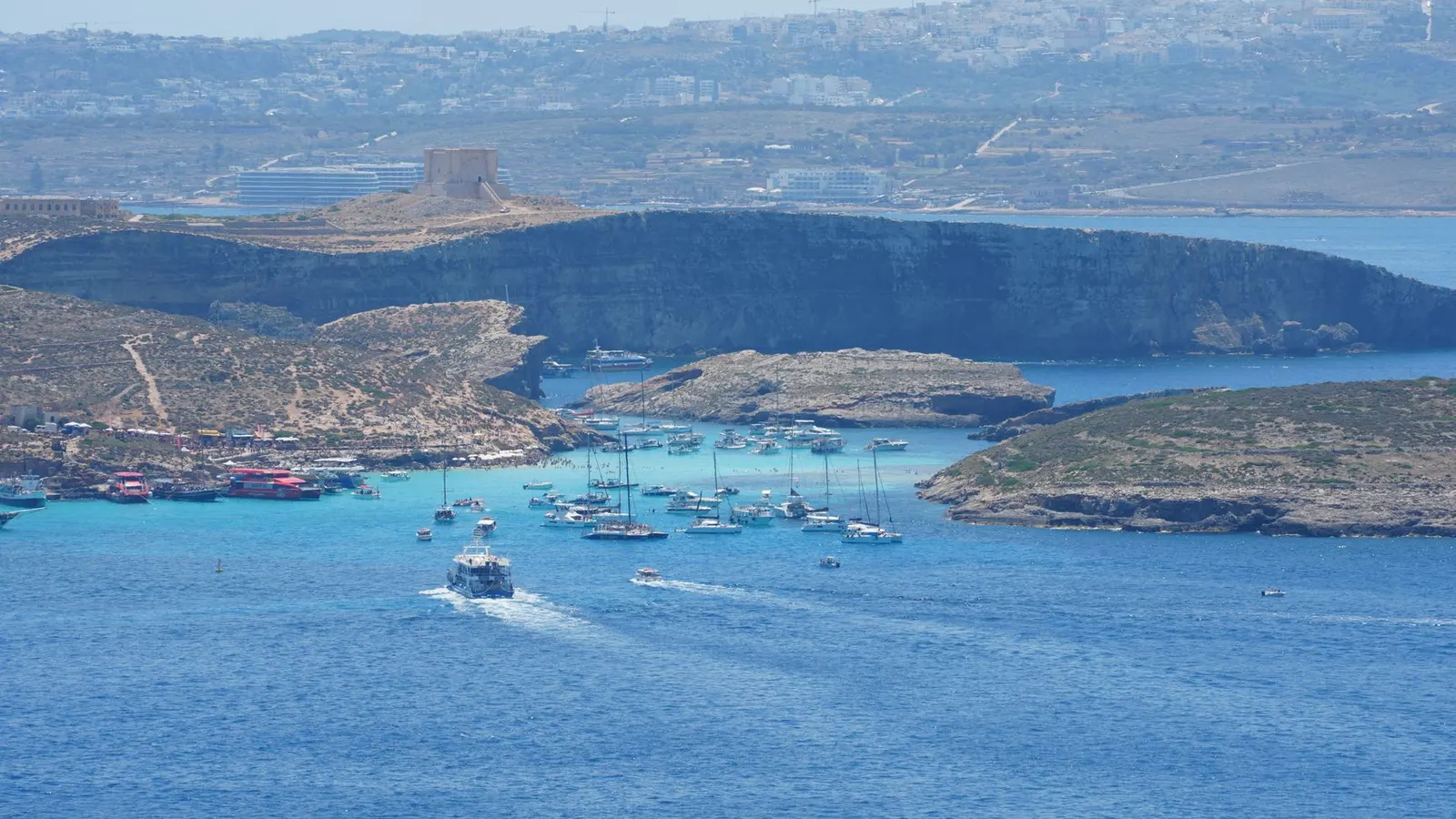
The quieter second island with the Citadel, salt pans and coastal walks, and Comino's Blue Lagoon between them.
Chapter 06
Practical guide
Getting there
Malta International (MLA) is well served by low-cost and legacy carriers from across Europe, twenty minutes from Valletta. Ferries run from Sicily (Pozzallo and Catania) in around two hours. The Gozo ferry from Ċirkewwa runs constantly and takes 25 minutes.
Getting around
Buses cover the whole archipelago from the Valletta terminus for a few euros with a Tallinja card; they are comprehensive and slow. Ferries link Valletta, Sliema and the Three Cities across the harbour and are the pleasant option. A rental car is cheap by European standards. Taxis and ride-hailing (Bolt, eCabs) work well.
Money & costs
Euro. Cards are accepted almost everywhere. Tipping is around 10 %. Malta is cheaper than Italy or France but no longer inexpensive - accommodation in summer is the main cost. English is an official language, which removes any friction.
Safety
Very safe with low crime. The practical hazards are heat and sun in summer, strong currents at some beaches, and the driving - Malta has one of the higher accident rates in the EU relative to its size, and the roads are narrow with assertive local habits. Jellyfish appear on some beaches in warm years.
Health
No vaccinations required. Healthcare is good; EHIC/GHIC covers EU and UK visitors. Tap water is desalinated and safe but tastes poor, so most people drink bottled. Heat and dehydration are the main summer risks. There is a decompression chamber, which matters given the diving.
SIM & internet
EU roaming applies. Coverage is complete across the archipelago and free wifi is widespread. English-language service everywhere makes everything straightforward.
Chapter 07
Driving
Driving is on the left, a British legacy. Roads are narrow, junctions are informal and parking in Valletta, Sliema and St Julian's is the real problem - use the park-and-ride at Floriana. The Gozo ferry takes cars and you pay only on the way back.
Rules change - verify with an official source before you rent.
ExplWorld VerifiedNo verified partners here yet - all 6 country seats are open.
Become ExplWorld Verified →Chapter 08
Itineraries through this country
Chapter 09
From the Journal
Chapter 10
Before you go
MaltaChapter 11
Frequently asked questions
How long do I need?
Four to five days for the main island and a day trip to Gozo; a week if Gozo gets two nights of its own, which it deserves. The country is 27 kilometres long, so nothing is far - but bus journeys take much longer than the distance suggests.
Do I need a car?
Not necessarily. Buses reach everywhere from Valletta for a few euros, though they are slow and crowded in summer. A car makes the south coast and Gozo far easier, with the caveats that driving is on the left, roads are narrow and parking in Valletta and Sliema is genuinely difficult.
Is summer too hot?
July and August regularly pass 35 °C with very little shade and no rain at all - Malta gets essentially none from June to September. It is also the busiest and most expensive period. April to June and September to October are warm, swimmable and much more comfortable.