 Ben Khatry · Pexels License
Country Guide № 107 / 194 · Africa
Mauritania
Chinguetti's desert libraries and the longest train in the world.
“Chinguetti's desert libraries and the longest train in the world.”
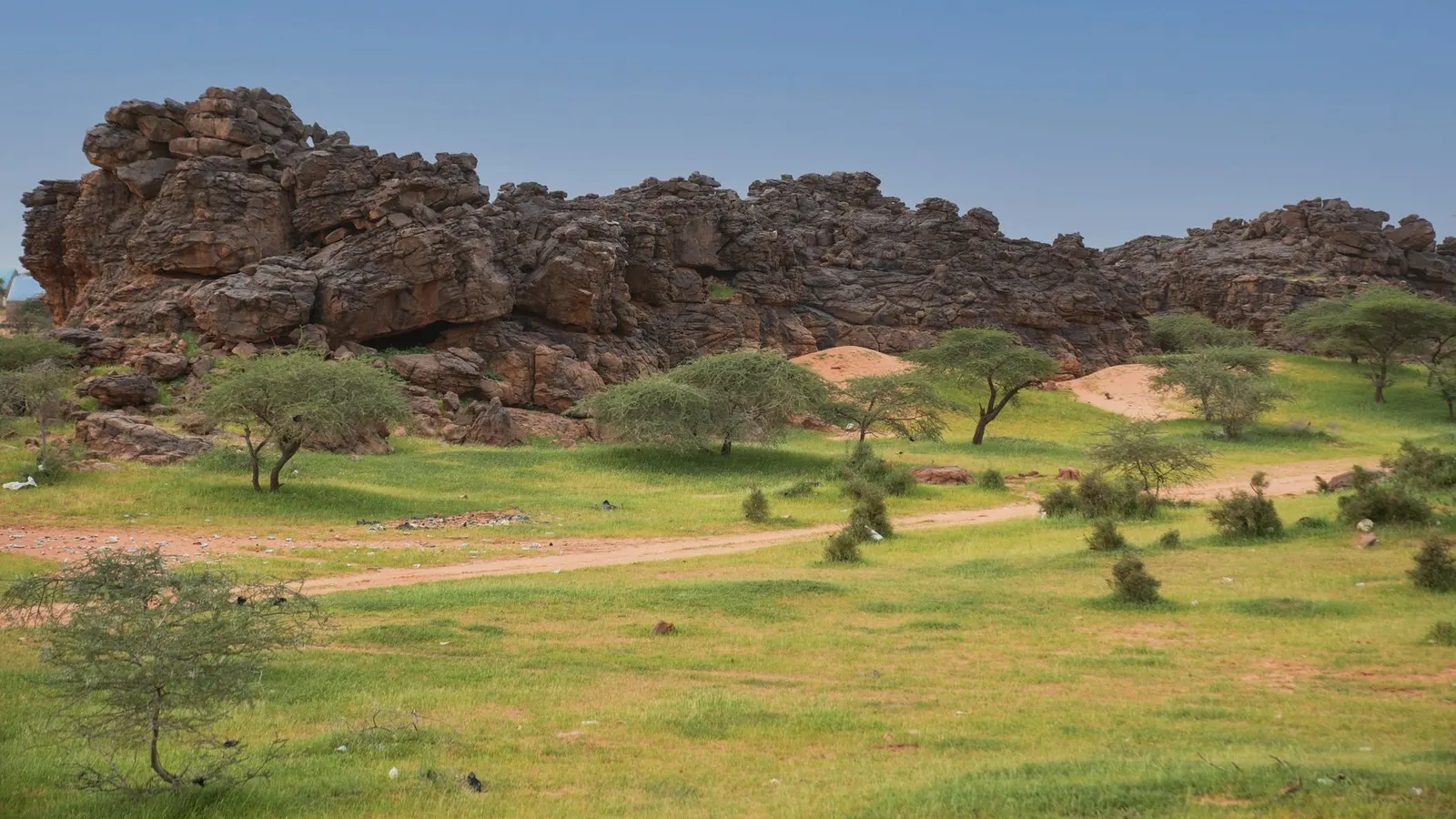
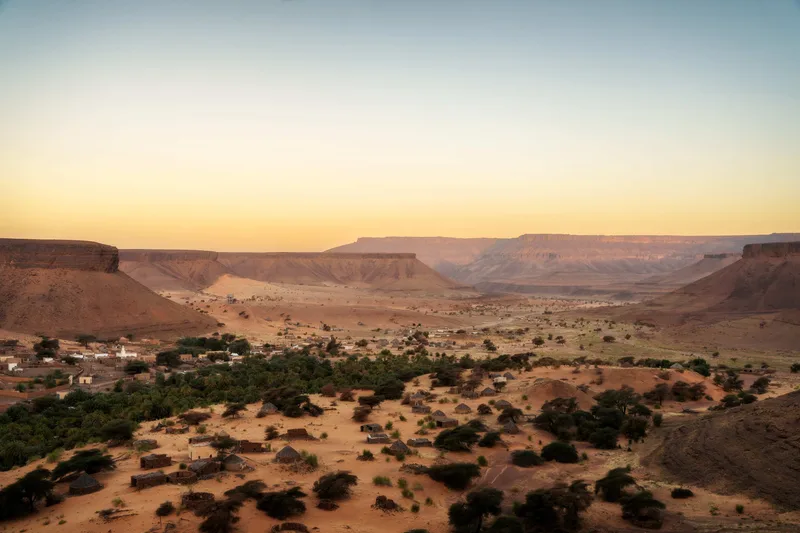
Mauritania is mostly Sahara, and the four ancient caravan towns of Ouadane, Chinguetti, Tichitt and Oualata are UNESCO-listed together - Chinguetti still holds family libraries of medieval Islamic manuscripts kept in stone houses at the edge of the dunes. The Adrar plateau around them has canyons, oases and rock art, and the desert here is reachable in a way that Mali's and Niger's currently are not.
The other famous thing is the iron-ore train: up to 2.5 kilometres long, running from Zouérat to Nouadhibou, and one of the very few trains anywhere that visitors ride on top of open ore wagons for sixteen hours through the desert. On the coast, the Banc d'Arguin national park is one of the most important wintering sites for migratory waders on earth. Security advisories still cover the eastern and border regions, but the Adrar circuit has reopened and a small tourist trade has returned, including a seasonal charter from Paris to Atar.
Chapter 01
Highlights
Chinguetti
The seventh holiest city in Islam by local tradition, with a twelfth-century minaret and family-held libraries of manuscripts on astronomy, law and mathematics, kept in stone rooms as the dunes advance on the old town.
The iron-ore train
Up to 2.5 kilometres of ore wagons hauled from Zouérat to Nouadhibou. Riding on top of the ore is free, freezing at night, filthy and one of the great overland journeys; a passenger carriage exists for those who prefer it.
Banc d'Arguin
A UNESCO-listed coastal park where the Sahara meets the Atlantic - sandbanks, seagrass and up to two million wintering waders, fished by Imraguen communities using traditional sailing boats.
The Adrar plateau
Terjit's palm oasis, the Amogjar pass rock art, Ouadane's ruins and the dunes around Atar. The core of the country's desert circuit and reachable on organised trips.
Chapter 02
Entry requirements for Mauritania
Checking your passport…
up to 30 days · €55 / $59 · visa on arrival
30 days on arrival
Before you fly
The detail
- Maximum stay
- up to 30 days
- Process
- visa on arrival
- Fee
- €55 / $59
- Passport validity
- Most destinations want validity beyond your stay, and some want six months. Check yours against the return date.
- Onward travel
- Airlines may ask for a return or onward ticket at check-in.
- Health
- Malaria risk in the south during and after the rains; the desert is free of it. Yellow fever certificate required from endemic countries. Medical facilities are limited outside Nouakchott; evacuation insurance is essential for desert trips.
- Money
- The ouguiya was redenominated in 2018, dropping a zero - old prices still circulate in conversation. Cash dominates. ATMs in Nouakchott and Nouadhibou; nothing reliable in the desert. Bring euros.
What changed
Mauritania issues an American passport its visa at the border, and the border means Nouakchott-Oumtounsy airport, Nouadhibou, and the two land crossings that matter: Rosso coming up from Senegal and Guerguerat coming down through Western Sahara. It costs about €55, it is single entry for thirty days, and it is paid IN CASH - euros are what everyone pays in, the amount should be as close to exact as you can manage, and no card is going to work. Your fingerprints and photograph are taken at the counter, which is why the queue moves slowly and why nothing about this can be done in advance for you by anybody charging a fee to do it. Bring a passport with six months of validity and be ready to name where you are staying. Some published sources describe an electronic application route into Mauritania; what travellers actually use is the desk, so treat the cash in your pocket as the plan and anything online as a bonus rather than the other way round. Mauritania asks for a yellow fever certificate from anyone arriving from a country where the disease is a risk of transmission - the International Health Regulations list, which is wider than the handful of countries people think of as endemic - and the threshold that catches travellers is not the ticket but the layover: a transit of MORE THAN TWELVE HOURS in an airport of such a country brings the requirement with it, while a shorter connection does not. The certificate counts only from ten days after the injection, so it is a fortnight’s job rather than a week’s, and one that has been reissued or replaced should travel with the original. Read your own itinerary for the length of the stop before you decide you do not need one. Arriving overland from Senegal or Mali, that is not a hypothetical: both are countries where the disease is a risk, and the certificate is sometimes asked for at Rosso. Two things about the land borders that are worth more than any amount of paperwork advice. Rosso is notorious for charges that do not exist - the visa fee is the only official payment on the Mauritanian side and it comes with a receipt, so ask for one and treat anything else as a negotiation rather than a fee. And Guerguerat is a few kilometres of no man’s land between the Moroccan and Mauritanian posts: cross it in daylight, stay strictly on the marked track, and do not wander off it for a photograph, because the ground on either side is mined. Once inside the country, print two or three dozen copies of a slip carrying your passport number, visa number, nationality, occupation and destination - the police checkpoints between towns ask for them constantly, and handing over a piece of paper instead of your passport is the difference between a two-minute stop and a twenty-minute one.
Check another destination with this passport →
Entry details: Editorial synthesis - Mauritanian arrival-visa practice at Nouakchott-Oumtounsy, Nouadhibou, Rosso and Guerguerat, and published foreign-ministry travel advice (2025–2026) · compiled 18 Sept 2026
Who needs a visa for Mauritania
12 common passports| Passport | Requirement | Stay | Process |
|---|---|---|---|
| United States | e-Visa | - | Visa on arrival · €55 / $59 |
| United Kingdom | e-Visa | - | Visa on arrival · €55 / $59 |
| Germany | e-Visa | - | Visa on arrival · €55 / $59 |
| India | e-Visa | - | Visa on arrival · €55 / $59 |
| China | e-Visa | - | Visa on arrival · €55 / $59 |
| Brazil | e-Visa | - | Visa on arrival · €55 / $59 |
| Nigeria | e-Visa | - | Visa on arrival · €55 / $59 |
| Indonesia | e-Visa | - | Visa on arrival · €55 / $59 |
| Philippines | e-Visa | - | Visa on arrival · €55 / $59 |
| Vietnam | e-Visa | - | Visa on arrival · €55 / $59 |
| Egypt | e-Visa | - | Visa on arrival · €55 / $59 |
| Nepal | e-Visa | - | Visa on arrival · €55 / $59 |
Holding a passport that is not listed? The picker above answers for any of them. See where your passport takes you. Source: Passport Index, updated 15 Aug 2026.
Chapter 03
When to go
BestNov–Mar. AvoidMay–Sep.
Cool, dry and clear - peak desert season.
The band above each month is our editorial verdict - it weighs crowds, prices and access as well as weather. The line is average daily temperature, the bars are monthly rainfall. Select a month for the figures. Climate figures: ERA5 reanalysis via Open-Meteo, 2005–2024 normals.
Chapter 04
What it costs
A day in Mauritania
Comfortable · sample day
≈ $76
Line items are real prices we track. The daily budget is an editorial estimate for this level, not their sum.
Where this sits among 244 countries we have costed
Desert operators run from November to March only. The winter charter to Atar sets the price of the whole circuit for those months.
Updated Aug 2026 · Editorial synthesis - operator tariffs and market sampling (2025–2026) · confidence medium
Excludes international flights - they depend on where you fly from.
Chapter 05
Regions to know
5Nouakchott
The capital on the Atlantic, its enormous fishing beach and the port de pêche at the afternoon landing.
The Adrar
Atar, Chinguetti, Ouadane, Terjit and the dunes - the core desert circuit.
The coast and Banc d'Arguin
The wader-rich sandbanks, Imraguen villages and Nouadhibou's ship graveyard at the northern end.
The Tagant and Oualata
Tichitt and Oualata's painted houses on the eastern desert edge - remote and under advisory.
The Senegal river valley
The green south around Rosso and Kaédi, the country's farmland and its Halpulaar and Soninké communities.
Chapter 06
Practical guide
Getting there
Nouakchott–Oumtounsy is served by Air France, Turkish, Royal Air Maroc, Tunisair and Mauritania Airlines. A seasonal charter connects Paris with Atar in winter for the desert circuit. Overland from Morocco through Western Sahara at Guerguerat, and from Senegal at Rosso - the latter has a reputation for aggressive touting.
Getting around
Shared 4x4s and minibuses cover the paved routes. The Nouakchott–Nouadhibou and Nouakchott–Atar roads are tarred. Desert travel requires a 4x4 and a guide. The ore train is the classic north–south crossing.
Money & costs
The ouguiya was redenominated in 2018, dropping a zero - old prices still circulate in conversation. Cash dominates. ATMs in Nouakchott and Nouadhibou; nothing reliable in the desert. Bring euros.
Safety
The Adrar and coast are calm; eastern and border regions carry advisories. Rosso border touts are persistent. Desert travel without a guide is genuinely dangerous - navigation, water and unmarked mined areas near the Western Sahara berm.
Health
Malaria risk in the south during and after the rains; the desert is free of it. Yellow fever certificate required from endemic countries. Medical facilities are limited outside Nouakchott; evacuation insurance is essential for desert trips.
SIM & internet
Mauritel, Chinguitel and Mattel; SIM registration requires a passport. Coverage along the main roads and in towns; nothing in the deep desert.
Chapter 07
Driving
Sand drifts across the tarmac roads and is a real hazard at speed. Desert driving requires convoy discipline, navigation and recovery gear. Alcohol is illegal throughout the country. Police checkpoints are frequent - carry photocopies of your passport and visa to hand over, which speeds things up considerably.
Rules change - verify with an official source before you rent.
ExplWorld VerifiedNo verified partners here yet - all 6 country seats are open.
Become ExplWorld Verified →Chapter 08
Itineraries through this country
Chapter 09
From the Journal
Chapter 10
Before you go
MauritaniaChapter 11
Frequently asked questions
Is Mauritania safe to visit?
More than its neighbours. The Adrar circuit and the coast have reopened to organised tourism, and a seasonal charter flies Paris–Atar in winter. Advisories still cover the eastern regions, the Malian border zone and parts of the far north near Western Sahara. Travel with an operator, do not improvise routes near borders, and check current advice.
How do I ride the ore train?
It runs daily from Zouérat to Nouadhibou, roughly sixteen hours. Riding on top of the ore is free and unregulated; there is one passenger carriage at the rear for a small fare. Bring goggles, a scarf, warm clothing for the night, water and food. It is dusty beyond description and genuinely cold after dark.
Do I need a visa in advance?
No. Most nationalities get a visa on arrival at Nouakchott and Nouadhibou airports and at the main land borders for around €55, paid in euros or ouguiya. Bring the exact amount in cash, and a yellow fever certificate if you are arriving from an endemic country.