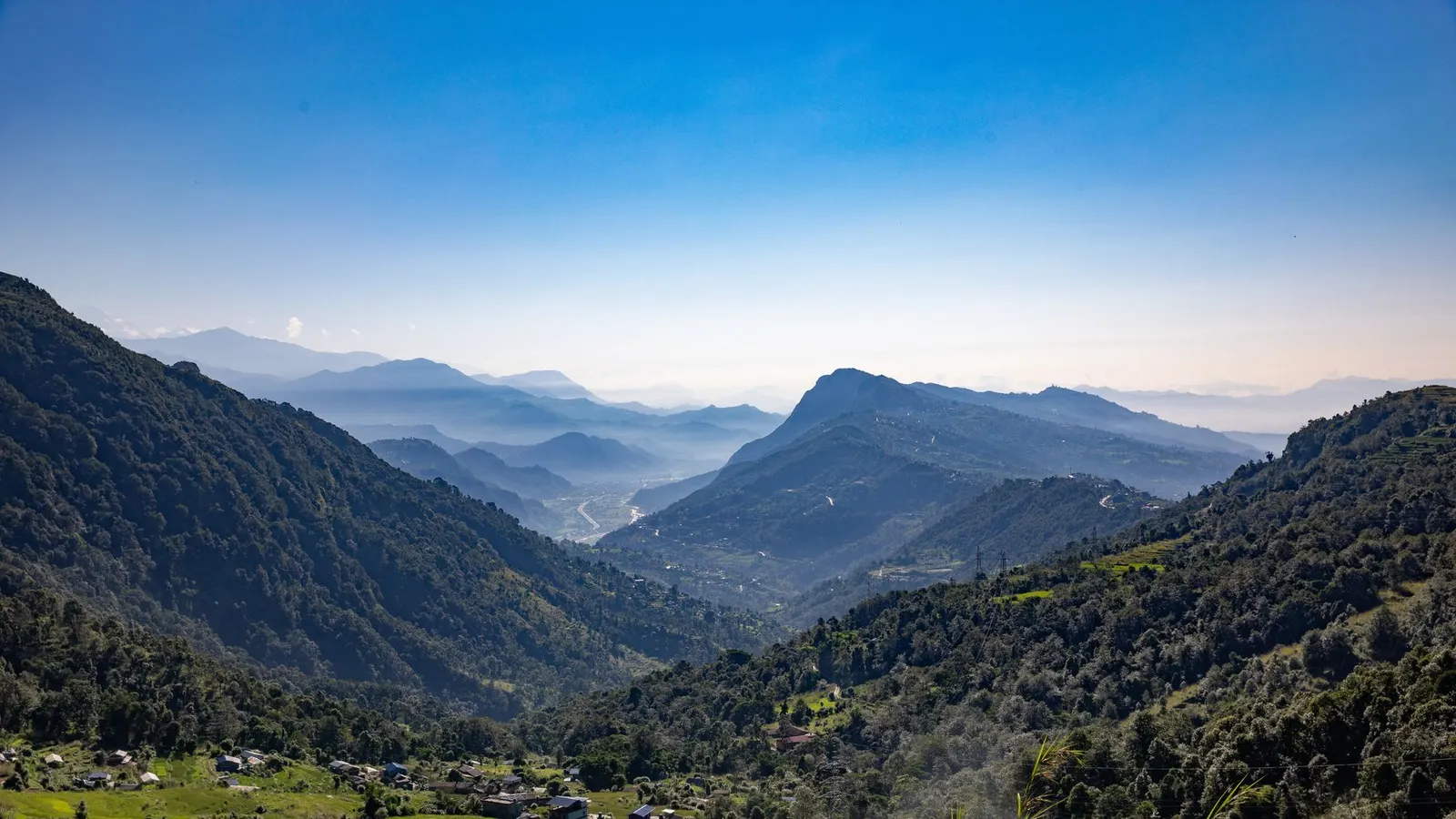
 Volker Meyer · Pexels License
Country Guide № 120 / 194 · Asia
Nepal
Eight of the world's fourteen highest mountains, and teahouses under all of them.
“Eight of the world's fourteen highest mountains, and teahouses under all of them.”
Nepal packs the greatest altitude range of any country into 800 kilometres - from 60 metres in the Terai to 8,849 at the summit of Everest. What makes it extraordinary for travellers is not the mountains alone but the teahouse system beneath them: a network of village lodges that lets you walk for three weeks with a daypack, sleeping under a roof and eating dal bhat every night.
Kathmandu Valley is the other half of the country and often gets short-changed. Bhaktapur and Patan are medieval Newar cities with square after square of pagoda temples, much of it painstakingly rebuilt after the 2015 earthquake. Add Chitwan for rhinos and Pokhara for the lake and the Annapurna skyline, and a three-week trip covers the country properly.
Chapter 01
Highlights
The Annapurna Base Camp trek
Seven to eleven days into a glacial amphitheatre ringed by 7,000-metre peaks, through rhododendron forest and Gurung villages. The best first Himalayan trek - teahouses the whole way, no technical ground.
Everest Base Camp
Twelve to fourteen days from Lukla to 5,364 metres. The mountain views are extraordinary and the altitude is the whole story - build in acclimatisation days and do not skip them.
Bhaktapur and Patan
Two Newar cities in the Kathmandu Valley with more surviving medieval architecture than anywhere in the Himalaya. Stay overnight in Bhaktapur - the day-trippers leave at five.
Chitwan National Park
Greater one-horned rhinos, gharial crocodiles and, with luck and patience, a tiger. Choose operators who walk or drive rather than ride elephants.
Chapter 02
Entry requirements for Nepal
Checking your passport…
up to 30 days · €46 / $50 · visa on arrival
30 days on arrival
Official portal only
Paid look-alike sites charge for a process that is free or cheap on the government portal. Use the link below and nothing else.
nepaliport.immigration.gov.np →Before you fly
The detail
- Maximum stay
- up to 30 days
- Process
- visa on arrival
- Fee
- €46 / $50
- Passport validity
- Most destinations want validity beyond your stay, and some want six months. Check yours against the return date.
- Onward travel
- Airlines may ask for a return or onward ticket at check-in.
- Arrival form
- Pre-arrival online form for visa on arrival, filled within 15 days of travel - it produces a QR code that speeds the airport kiosk.
- Health
- Hepatitis A, typhoid and tetanus standard; rabies worth considering; Japanese encephalitis for the Terai. Altitude illness is the dominant medical risk. Malaria risk is limited to the southern lowlands; dengue has been increasing in Kathmandu. Do not drink tap water - use filtration or purification rather than buying plastic on trek. The CIWEC clinic in Kathmandu is excellent; on trek, medical care means a helicopter, so insurance that explicitly covers trekking to your maximum altitude and helicopter evacuation is essential. Check the small print: many policies cap at 4,000 metres.
- Money
- Cash-dominant. ATMs in Kathmandu and Pokhara accept foreign cards with a €3–4 fee and low caps; on trek there are no ATMs at all past the roadhead, so carry enough rupees for the whole walk plus a margin. Cards work in hotels, trekking agencies and larger restaurants in the two main cities. Indian rupees are accepted in border areas but 2,000-rupee notes are not legal tender in Nepal.
Nepal issues its tourist visa on arrival to United States passports at Kathmandu and at the main land borders, in three bands: US$30 for 15 days, US$50 for 30 and US$125 for 90, multiple entry throughout, and the figure stored here is the 30-day band most visitors buy. Fill in the online form on the Department of Immigration’s site in the fifteen days before you travel and print the receipt; the arrival-hall kiosks that do the same job are famously out of order, and the queue behind them is the one people describe. Pay in cash - US dollars, euros and sterling are all taken, and the card terminals fail often enough that cash is the plan rather than the fallback. The annual cap is what catches returning trekkers: a tourist may hold no more than 150 days of visa in one calendar year, whatever combination of bands was bought. Trekking permits are an entirely separate matter - TIMS plus the conservation-area or national-park fee for your route - and since 2023 the national parks require a licensed guide rather than allowing solo walking.
Check another destination with this passport →
Entry details: Editorial synthesis - Nepal Department of Immigration tourist visa rules, Nepal Tourism Board trekking permits (2025–2026) · compiled 15 Sept 2026
Who needs a visa for Nepal
11 common passports| Passport | Requirement | Stay | Process |
|---|---|---|---|
| United States | Visa on arrival | - | Visa on arrival · €46 / $50 |
| United Kingdom | Visa on arrival | - | Visa on arrival · €46 / $50 |
| Germany | Visa on arrival | - | Visa on arrival · €46 / $50 |
| India | Visa-free | - | Visa on arrival · €46 / $50 |
| China | Visa on arrival | - | Visa on arrival · €46 / $50 |
| Brazil | Visa on arrival | - | Visa on arrival · €46 / $50 |
| Nigeria | Visa required | - | Not this passport's route |
| Indonesia | Visa on arrival | - | Visa on arrival · €46 / $50 |
| Philippines | Visa on arrival | - | Visa on arrival · €46 / $50 |
| Vietnam | Visa on arrival | - | Visa on arrival · €46 / $50 |
| Egypt | Visa on arrival | - | Visa on arrival · €46 / $50 |
Holding a passport that is not listed? The picker above answers for any of them. See where your passport takes you. Source: Passport Index, updated 14 Aug 2026.
Chapter 03
When to go
BestMar–Apr, Oct–Nov. AvoidJun–Aug.
Spring trekking season begins; rhododendrons in flower.
The band above each month is our editorial verdict - it weighs crowds, prices and access as well as weather. The line is average daily temperature, the bars are monthly rainfall. Select a month for the figures. Climate figures: ERA5 reanalysis via Open-Meteo, 2005–2024 normals.
Chapter 04
What it costs
A day in Nepal
Comfortable · sample day
≈ $41
Line items are real prices we track. The daily budget is an editorial estimate for this level, not their sum.
Where this sits among 244 countries we have costed
Trekking-season pricing is the whole story. October–November and March–April fill teahouses and lift lodge prices on the main routes; the monsoon empties them. Teahouse food and lodging also rise steeply with altitude - everything above the roadhead arrives by porter or mule, so a plate of dal bhat costs more than twice as much at 4,000 metres as in Kathmandu. Lukla flights are expensive year-round and get re-routed via Ramechhap in peak season.
Updated Aug 2026 · Editorial synthesis - Nepal Tourism Board permit tariffs, teahouse and agency rate sampling (2025–2026) · confidence high
Excludes international flights - they depend on where you fly from.
Chapter 05
Regions to know
5Kathmandu Valley
Three medieval Newar cities - Kathmandu, Patan and Bhaktapur - plus Boudhanath and Swayambhunath stupas.
The Annapurna region
Pokhara's lake and the trekking hub for Base Camp, the Circuit and the Mustang rain shadow beyond.
The Everest region
Khumbu - Lukla, Namche Bazaar, Sherpa villages and the walk to Base Camp and Kala Patthar.
The Terai
The southern lowland plain: Chitwan and Bardia national parks, and Lumbini, birthplace of the Buddha.
The far west & east
Dolpo's trans-Himalayan valleys and Kanchenjunga in the east - restricted, remote and almost empty.
Chapter 06
Practical guide
Getting there
Kathmandu (KTM) is the only international airport of consequence, served from the Gulf, Istanbul, Delhi, Bangkok, Kuala Lumpur and Chinese cities - expect one stop from Europe. The land borders with India (Sunauli, Kakarbhitta, Birgunj) are used regularly by overland travellers; the Chinese border crossings require a Chinese group visa arranged in advance.
Entry formalities
Pre-arrival online form for visa on arrival, filled within 15 days of travel - it produces a QR code that speeds the airport kiosk.
Getting around
Domestic flights save days but come with a safety caveat: Nepali carriers have been on the EU air-safety list for years, and the mountain airstrips at Lukla and Jomsom are genuinely demanding. Tourist buses on the Kathmandu–Pokhara–Chitwan triangle are cheap and slow; a private car with driver costs €70–90 for that route and is faster and safer. In Kathmandu, taxis by meter or negotiation, and Pathao for bikes.
Money & costs
Cash-dominant. ATMs in Kathmandu and Pokhara accept foreign cards with a €3–4 fee and low caps; on trek there are no ATMs at all past the roadhead, so carry enough rupees for the whole walk plus a margin. Cards work in hotels, trekking agencies and larger restaurants in the two main cities. Indian rupees are accepted in border areas but 2,000-rupee notes are not legal tender in Nepal.
Safety
Crime against visitors is uncommon. The real risks are altitude, road accidents on mountain highways, and the aviation record on domestic mountain routes. Earthquakes are a live hazard - the 2015 quake killed nearly 9,000 people. Trekking alone is now restricted partly because of the number of solo trekkers who went missing. In cities, watch for petty theft and the usual overcharging; trekking-agency quality varies enormously, so choose on reputation rather than price.
Health
Hepatitis A, typhoid and tetanus standard; rabies worth considering; Japanese encephalitis for the Terai. Altitude illness is the dominant medical risk. Malaria risk is limited to the southern lowlands; dengue has been increasing in Kathmandu. Do not drink tap water - use filtration or purification rather than buying plastic on trek. The CIWEC clinic in Kathmandu is excellent; on trek, medical care means a helicopter, so insurance that explicitly covers trekking to your maximum altitude and helicopter evacuation is essential. Check the small print: many policies cap at 4,000 metres.
SIM & internet
Ncell and Nepal Telecom sell cheap tourist SIMs; Ncell has better valley coverage, NTC better remote coverage. Signal reaches surprisingly far up the main trekking routes but is not dependable. Teahouses sell wifi by the hour at increasing prices with altitude. Power for charging is also sold by the hour on trek - bring a power bank and a solar panel if you are out for weeks.
Chapter 07
Driving
Mountain highways are narrow, landslide-prone and shared with overloaded buses. Night driving between cities is a bad idea. Motorbiking the Annapurna and Mustang roads is popular but the surfaces are rough and rescue is slow.
Rules change - verify with an official source before you rent.
ExplWorld VerifiedNo verified partners here yet - all 6 country seats are open.
Become ExplWorld Verified →Chapter 08
Itineraries through this country
Chapter 09
From the Journal
Chapter 10
Before you go
NepalChapter 11
Frequently asked questions
Do I need a guide to trek?
Yes, on most routes. Since April 2023 the Nepal Tourism Board has required a licensed guide for foreign trekkers in national park areas, ending the era of solo teahouse trekking on the main circuits. Expect €25–35 a day for a guide, more for a guide plus porter. Enforcement varies by route and checkpoint, but permits are checked and the rule is not worth testing at 4,000 metres.
How serious is altitude sickness?
Serious enough to kill several trekkers a year, and almost entirely preventable. The rules are ascend slowly above 3,000 metres (300–500 m of sleeping altitude a day), take rest days, drink water, and descend immediately if symptoms worsen. Diamox helps but does not substitute for a schedule. The pressure to keep to a booked flight home is what kills people - build in spare days.
Which permits do I need?
For most treks, a TIMS card plus the relevant national park or conservation-area permit - for Annapurna that is ACAP, for Everest the Sagarmatha park fee plus a local municipality fee. Restricted areas like Upper Mustang and Manaslu need a special permit, a registered agency and a minimum group size. Permits are bought in Kathmandu or Pokhara, and your guide or agency will normally handle it.