Itinerary · Asia · 18 days · Challenging
Annapurna, and What Comes After
Kathmandu→Pokhara→Ghandruk→Chhomrong→Bamboo→Deurali+12 stops
The Annapurna Base Camp trek with the acclimatisation days it actually needs, then the Kathmandu valley and Chitwan - a first Himalayan trip that does not treat the mountain as the only thing in the country.
Kathmandu
Arrive, sort permits - TIMS and ACAP, both obtained in a morning - and buy or hire whatever you are missing in Thamel. Sleep low before going high.
To Pokhara
Tourist bus, seven hours on a road that is slower than the distance suggests, or a twenty-five-minute flight with mountain views on the right.
Nayapul to Ghandruk
Drive to the trailhead and walk up through terraced farmland to a Gurung village with the first real view of Annapurna South.
Ghandruk to Chhomrong
Down to the river and a long climb back up. Chhomrong is the gateway village and where the sanctuary route properly begins.
Chhomrong to Bamboo
Into the gorge. Rhododendron and bamboo forest, steep stone stairs, and the walls closing in on either side.
Bamboo to Deurali
Climbing steadily to 3,200 m. This is where altitude starts to be a question rather than a word.
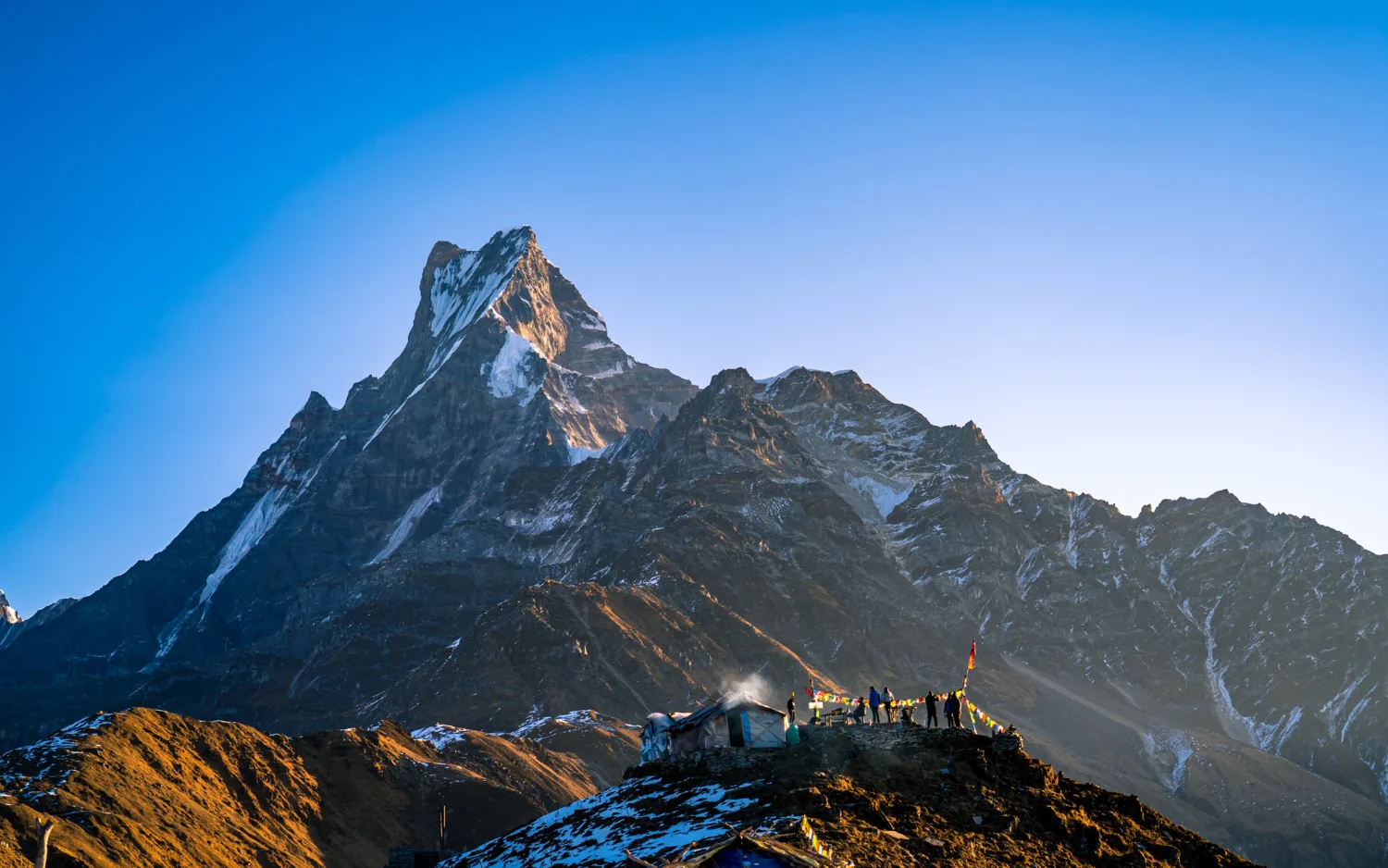
Deurali to Machhapuchhre Base Camp
A short day on purpose - 400 m of gain and stop. Going straight to ABC from here is what puts people on a helicopter.
To Annapurna Base Camp
Two hours up into the sanctuary, arriving in the morning while it is clear. An amphitheatre of mountains with the tenth-highest in the world at the head of it.
Down to Bamboo
A long descent. Knees, not lungs, are the problem in this direction; poles help more than pride allows.
To Jhinu Danda
Out of the gorge and down to the hot springs by the river, twenty minutes below the village. This is the best night of the trek.
Out to Pokhara
Walk down to the road and drive back. A bed with a mattress, a shower and a lake.
Pokhara
A day off doing nothing. Boat on Phewa Tal, the World Peace Pagoda for the view, and paragliding off Sarangkot if the weather holds.
To Chitwan
South to the lowland Terai - a different climate, a different Nepal, and about five hours by road.
Chitwan on foot
A walking safari with a licensed naturalist. Greater one-horned rhino, gaur, and if the year is generous, a tiger's pugmarks. Refuse elephant-back safaris; the park has been phasing them out and so should visitors.
Chitwan, second day
Canoe on the Rapti at dawn for gharial and birds, then the Tharu villages, whose community forestry is why the buffer zone still has trees.
To Bhaktapur
Back up to the valley, but stay in Bhaktapur rather than Kathmandu - medieval, mostly car-free, and rebuilt with visible effort since 2015.
Patan and Swayambhunath
Patan Durbar Square and its museum, which is the best in the country, then the hilltop stupa above Kathmandu in the late afternoon.
Kathmandu, out
Boudhanath at dusk with the circumambulating crowd, then the airport. Leave a buffer day before an international flight - mountain weather delays domestic legs regularly.
Good to know
October–November and March–April are the trekking seasons; the monsoon closes the views and the winter closes the high passes. Permits (TIMS and ACAP) are bought in Kathmandu or Pokhara in a morning and are checked. Teahouses need no booking outside peak weeks and no camping gear. Altitude is the real risk on this route - the short day to MBC exists for a reason, and diamox is not a substitute for it. Insurance must explicitly cover trekking above 4,000 m and helicopter evacuation.
Shorter or longer?
A four-day loop from Nayapul with the same villages and the famous dawn, topping out below 3,200 m. The right choice for a first trek or a short trip.
Two to three weeks and the Thorong La at 5,416 m. A serious step up in altitude and commitment from the sanctuary route.
Practical guide
Visa check for this route
Budget
Mid-range · per person · sharing a double room. Excludes international flights - they depend on where you fly from.
Editorial estimates · checked August 2026
Country guides
Trip essentials
The connectivity placement is our own eSIM store. No affiliate link on this list. How we choose these →